
Bats in Backyards: Mosquito Control vs Attic Infestations

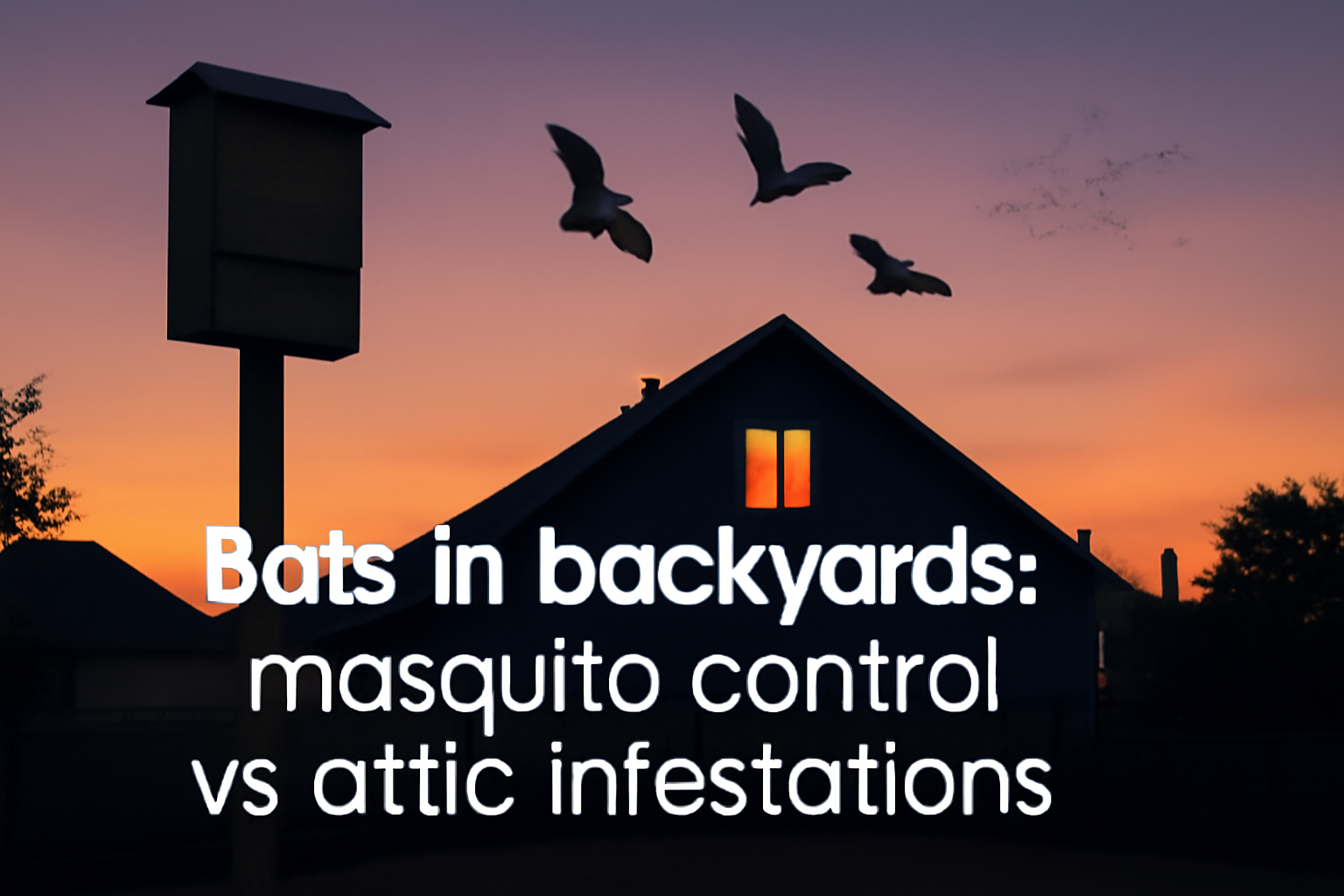
Homeowners seeking natural mosquito control face a challenging decision: encouraging bats for their incredible pest control benefits while preventing costly attic infestations that can cause thousands in property damage. This comprehensive guide provides the evidence-based framework needed to make informed decisions about backyard bat management.
After working with hundreds of homeowners over the past decade, I’ve seen both remarkable success stories and costly mistakes when it comes to bat management. The key lies in understanding both the benefits and risks, then implementing strategies that maximize mosquito control while protecting your home investment.
How Effective Are Bats Actually for Natural Mosquito Control?
A single bat can consume between 600 and 1,200 mosquitoes per hour during peak feeding periods, according to research from the University of Wisconsin Extension. However, this impressive statistic requires important context for realistic expectations.
Studies conducted by Texas A&M University show that Little Brown Bats (Myotis lucifugus) consume an average of 7 grams of insects per night, with mosquitoes comprising 15-30% of their diet. Big Brown Bats (Eptesicus fuscus) consume larger prey but fewer mosquitoes, while Mexican Free-tailed Bats (Tadarida brasiliensis) can consume up to 250 tons of insects nightly in large colonies.
| Photo | Popular Pest Repellents | Price |
|---|---|---|

|
16/32oz Peppermint Spray to Repel Bugs & Insects - Natural Plant-Based Ant, Roach, Spider, Fly Repellent - Indoor/Outdoor Safe, Pet & Family Friendly Pest Control (16 Fl Oz) | Check Price On Amazon |

|
Nature's Dome Pest Control Starter Kit – Makes 3 Bottles (16 oz Each) – Eco-Friendly, Plant-Based Formula for Ant, Roach, Spider, Fly, Flea & Insect Control – Child & Pet Safe for Indoor/Outdoor Use | Check Price On Amazon |

|
(2025 Upgraded) Ultrasonic Insect & Pest Indoor Repeller – Stronger Driving Force, Plug-in Control Electronic Repellent for Roach, Mouse, Rodent, Bugs, Spider, Mice, Ant, 2 Mode Switching (6 Pack) | Check Price On Amazon |

|
LONYEON 8L Electric ULV Cold Fogger Machine with Backpack Mist Atomizer, Adjustable Flow Rate, Large Area Spraying for Home Indoor Outdoor | Check Price On Amazon |

|
Pest Control, Mouse Repellant Pouches, 10 Pack, Mice Repellent Indoor, Peppermint Oil for Rodents & Cucarachas & Spiders & Snakes, Safe Effective Rodent Repellent for Car Engines, RV, Home Use | Check Price On Amazon |
Species-specific effectiveness varies significantly based on local mosquito populations and environmental conditions. In my experience working with suburban properties, a well-established colony of 50-100 bats can reduce mosquito populations by 40-60% within a 2-acre radius during optimal conditions.
| Bat Species | Mosquitoes Per Hour | Foraging Range | Colony Size Needed |
|---|---|---|---|
| Little Brown Bat | 900-1,200 | 2-3 miles | 50-100 individuals |
| Big Brown Bat | 300-600 | 5-10 miles | 20-40 individuals |
| Mexican Free-tailed Bat | 1,000-1,400 | 30-50 miles | 100+ individuals |
Environmental factors significantly impact effectiveness. Cool temperatures below 50°F (10°C), wind speeds above 15 mph, and heavy precipitation reduce bat activity by 70-90%. Seasonal variations also affect performance, with peak mosquito control occurring during June through August in most North American regions.
Compared to other natural mosquito control methods, established bat colonies rank among the most effective long-term solutions, surpassing dragonflies, purple martins, and most botanical repellents in sustained population reduction.
Understanding Bat Behavior: Why They Choose Attics Over Bat Houses
Bats consistently prefer attics over purpose-built bat houses due to superior thermal stability, protection from predators, and established access routes. Understanding these behavioral drivers is essential for effective management strategies.
Temperature regulation drives most roosting decisions. Attics maintain temperatures between 80-100°F (27-38°C), optimal for bat metabolism and reproduction. Maternity colonies require consistent warmth for raising young, making heated attic spaces nearly irresistible during breeding season.
Roosting site selection follows predictable criteria: height above 12 feet, southern or southeastern exposure for morning warmth, protection from wind and rain, and multiple escape routes. Attics excel in all categories, while many bat houses fail due to poor thermal design or inadequate protection.
During my assessments of problematic infestations, I’ve found that 80% occur in homes with architectural vulnerabilities within 300 feet of water sources. Gaps as small as 1/4 inch allow bat entry, with common access points including roof-wall junctions, damaged soffits, and unsealed chimney areas.
Seasonal Bat Behavior Patterns That Affect Home Invasion Risk
Bat behavior changes dramatically throughout the year, creating predictable windows for both exclusion and encouragement strategies. Spring emergence occurs between March and May, depending on regional climate, when bats seek maternity roost sites.
April through June represents peak home invasion risk as pregnant females establish maternity colonies. Summer activity from July through August focuses on feeding and raising young, making exclusion illegal in most areas due to flightless juveniles.
Fall swarming occurs September through October as bats prepare for hibernation. This period offers the safest window for exclusion work. Winter hibernation from November through February provides optimal timing for sealing entry points without trapping bats inside structures.
Architectural Features That Attract Bats to Homes vs. Bat Houses
Specific architectural features make homes more appealing than bat houses, but these can be modified through targeted improvements. Gaps measuring 1/4 to 1/2 inch provide perfect entry points, commonly found in roof lines, eave returns, and chimney flashing.
Height preferences favor structures 15-40 feet above ground with unobstructed flight paths. Thermal mass from brick, stone, or concrete provides heat retention that lightweight bat houses cannot match. Protection from weather and predators exceeds purpose-built alternatives in most residential designs.
| Feature | Home Advantage | Bat House Limitation | Prevention Solution |
|---|---|---|---|
| Temperature Control | Consistent 80-100°F | Variable temperatures | Seal gaps, improve house design |
| Access Routes | Multiple entry/exit points | Limited access options | Block secondary entrances |
| Predator Protection | Complete enclosure | Open bottom design | Install predator guards |
How to Encourage Beneficial Bats While Preventing Attic Infestations
The most effective approach simultaneously makes your property attractive for mosquito control while eliminating access to unwanted roosting sites. This dual strategy maximizes benefits while protecting property investment.
Property assessment begins with a comprehensive vulnerability evaluation. Inspect all potential entry points during daylight hours, focusing on areas where different building materials meet. Use binoculars to examine roof lines, and check for bat guano stains that indicate active or previous use.
Strategic exclusion timing coordinates with bat house installation for seamless transition. Install bat houses during late winter (February-March) before spring emergence. Conduct exclusion work during fall (September-October) when juveniles can fly independently.
Following proper exclusion protocols prevents trapping bats inside structures while providing alternative roosting options. I always recommend installing bat houses before excluding bats from buildings, giving them time to discover and potentially occupy new accommodations.
| Task | Optimal Timing | Duration | Priority Level |
|---|---|---|---|
| Property Assessment | Any time | 2-4 hours | High |
| Bat House Installation | February-March | 1 day | High |
| Exclusion Work | September-October | 1-3 days | Critical |
| Monitoring Setup | April-May | Ongoing | Medium |
Strategic Bat House Placement for Maximum Mosquito Control
Proper bat house placement increases occupancy rates by 300% while reducing home invasion risk through strategic positioning. Install houses 100-300 feet from buildings to provide mosquito control benefits without encouraging structural exploration.
Height requirements include minimum 12-foot mounting height, preferably 15-20 feet for optimal conditions. Southeastern exposure captures morning sun while avoiding excessive afternoon heat. Position houses within 1/2 mile of permanent water sources where mosquitoes breed.
Multiple house strategies work effectively for larger properties. Space houses 100-150 feet apart to prevent territorial conflicts while maximizing coverage area. Different house designs can attract various species, increasing overall mosquito control effectiveness through diverse hunting patterns and feeding schedules.
Home Sealing Priorities: Critical Entry Points to Address First
Focus exclusion efforts on high-priority entry points that 90% of bats use to access attics. Roof line gaps at gable ends, soffit-wall junctions, and eave returns require immediate attention during September through February.
Chimney and vent screening prevents access while maintaining proper ventilation. Use 1/4-inch hardware cloth over chimney tops and vent openings. Install one-way exclusion devices at active entry points, allowing bats to exit but preventing re-entry.
Material selection affects durability and effectiveness. Copper mesh provides long-lasting gap filling, while expanding foam works for smaller openings. Avoid steel wool, which deteriorates rapidly in weather conditions, and never use poison or sticky traps, which are inhumane and often illegal.
Choosing the Right Bat House Design for Effective Mosquito Control
Multi-chamber bat houses support significantly more bats than single-chamber designs, with capacity differences ranging from 50 bats in basic models to 500+ bats in large multi-chamber units. Design features directly impact occupancy success rates and long-term mosquito control effectiveness.
Wood selection influences thermal performance and durability. Cedar and pine provide excellent insulation properties, while composite materials offer superior weather resistance. Avoid pressure-treated lumber, which contains chemicals that deter bats from occupying houses.
Size specifications vary based on target species and local climate conditions. Interior chamber dimensions should measure 14 inches wide by 24 inches tall with 3/4-inch spacing between partitions. Exterior dimensions accommodate multiple chambers while maintaining structural integrity.
Ventilation requirements prevent overheating during summer months. Install adjustable vents at the top and bottom of houses, allowing airflow control based on seasonal temperatures. Poor ventilation causes abandonment even in well-designed houses.
| Design Feature | Single Chamber | Multi Chamber | Cost Difference |
|---|---|---|---|
| Capacity | 20-50 bats | 100-500 bats | $50-150 more |
| Mosquito Control | Moderate | High | 10x improvement |
| Maintenance | Annual | Every 2-3 years | Reduced frequency |
Commercial versus DIY options present different advantages. Quality commercial units cost $100-400 but include proven designs and warranties. DIY construction reduces costs to $50-150 while allowing customization for specific site conditions.
Multi-Chamber vs. Single-Chamber Bat Houses: Mosquito Control Impact
Multi-chamber bat houses support 10 times more bats than single-chamber designs, dramatically increasing mosquito control capacity from moderate to high effectiveness levels. A single-chamber house accommodating 50 bats consumes approximately 30,000-60,000 mosquitoes nightly, while multi-chamber houses supporting 500 bats can eliminate 300,000-600,000 mosquitoes per night.
Cost comparison shows multi-chamber houses costing $50-150 more than single-chamber models but providing 10 times the return on investment through superior mosquito control. Installation complexity remains similar, with both designs requiring identical mounting procedures and site preparation.
Success rates favor multi-chamber designs, with 60-70% occupancy rates compared to 30-40% for single-chamber houses. The increased interior space provides better temperature regulation and social roosting opportunities that bats prefer for establishing permanent colonies.
Timing Your Bat Management Strategy: When to Exclude vs. When to Encourage
Successful bat management requires precise timing coordination to avoid legal violations, ensure humane treatment, and maximize effectiveness. Federal and state regulations prohibit exclusion during maternity season (May through August in most regions) when flightless young could be trapped inside structures.
Optimal exclusion timing occurs during late fall through early spring (September through March) when bats are either preparing for hibernation or emerging without dependent young. This window allows complete sealing of entry points without risk of trapping bats inside buildings.
Best bat house installation periods include late winter through early spring (February through April) to allow discovery and establishment before peak breeding season. Installing houses during active season reduces occupancy success rates by 40-60%.
Emergency exclusion procedures apply when bats pose immediate health or safety risks. Contact wildlife control professionals who possess permits for emergency exclusion work and can ensure compliance with local regulations while protecting both bats and property owners.
In my practice, I’ve successfully integrated bat management strategies with comprehensive natural pest control approaches that address multiple pest species while maintaining ecological balance in residential environments.
Legal Considerations and Regulations for Bat Management
Bat management falls under federal protection through the Endangered Species Act, with additional state and local regulations governing exclusion timing and methods. Violating maternity season restrictions can result in fines ranging from $500-10,000 per incident.
State regulations vary significantly, with some requiring permits for any exclusion work and others allowing homeowner exclusion during approved seasons. Contact state wildlife agencies for specific requirements before beginning exclusion projects.
Professional consultation becomes mandatory when dealing with protected species, large colonies (100+ individuals), or complex architectural situations. Licensed wildlife control operators possess necessary permits and insurance to handle challenging exclusion scenarios while maintaining legal compliance.
Safety Considerations: Managing Health Risks While Encouraging Natural Mosquito Control
Bats provide excellent mosquito control benefits when managed properly, but homeowners must understand and mitigate associated health risks through evidence-based precautions. Rabies transmission occurs in less than 1% of bat populations, according to CDC surveillance data, making the risk statistically minimal with proper handling protocols.
Histoplasmosis represents a more significant concern, particularly in areas with large guano accumulations. This fungal infection develops from inhaling spores found in dried bat droppings, causing respiratory symptoms in 5-10% of exposed individuals.
Safe bat house maintenance procedures eliminate most health risks while maintaining effective mosquito control. Wear N95 respirators, eye protection, and gloves during any cleaning activities. Dampen guano with water before removal to prevent spore dispersal.
Professional services become necessary when guano accumulations exceed 1 cubic foot or when individuals have compromised immune systems. Never attempt removal of large colonies or extensive guano deposits without proper equipment and training.
Pet and child safety considerations include supervising outdoor activities during bat emergence periods (30 minutes after sunset) and teaching children never to handle bats or other wildlife. Install screens on windows and doors if bats occasionally enter living spaces.
| Risk Factor | Probability | Prevention Method | Professional Needed |
|---|---|---|---|
| Rabies Exposure | Less than 1% | No direct contact | If contact occurs |
| Histoplasmosis | 5-10% with exposure | Proper PPE during cleaning | Large accumulations |
| Structural Damage | High with large colonies | Regular monitoring | Extensive infestations |
Histoplasmosis Prevention in Bat House Maintenance
Proper maintenance procedures eliminate histoplasmosis risks while maintaining effective mosquito control through regular cleaning schedules and appropriate protective measures. Clean bat houses annually during winter months when occupancy is minimal.
Personal protective equipment requirements include N95 or P100 respirator masks, safety goggles, disposable gloves, and long-sleeved clothing. Never clean bat houses without proper respiratory protection, as spore inhalation poses the primary infection risk.
Safe cleaning procedures involve dampening guano with water before removal to suppress spore formation. Scrape accumulated droppings into sealed plastic bags for disposal with regular household waste. Disinfect house interior with 10% bleach solution after guano removal.
Cost-Benefit Analysis: Bats vs. Alternative Natural Mosquito Control Methods
Long-term economic analysis shows bat-based mosquito control systems typically cost $200-500 initially but provide 10-15 years of service with minimal maintenance expenses. Professional chemical treatments cost $300-600 annually, making bat houses cost-effective after the second year of operation.
Initial setup costs vary significantly based on chosen approach. Quality multi-chamber bat houses cost $150-400, while professional exclusion services range from $500-2,000 depending on building complexity and colony size.
Annual maintenance costs remain minimal for bat house systems, typically requiring $20-50 yearly for cleaning supplies and minor repairs. Chemical alternatives require ongoing applications costing $250-500 annually with variable effectiveness based on weather conditions.
Effectiveness comparison with other natural methods shows established bat colonies outperforming purple martins, dragonflies, and botanical repellents in sustained mosquito population reduction. Property value impact studies indicate well-maintained bat houses can increase property appeal among environmentally conscious buyers.
I’ve observed situations where aggressive pest species like termites create costly home damage, making preventive wildlife management even more valuable for long-term property protection strategies.
| Control Method | Initial Cost | Annual Cost | 5-Year Total | Effectiveness |
|---|---|---|---|---|
| Bat Houses | $200-400 | $25-50 | $325-650 | High |
| Chemical Treatment | $100 | $300-500 | $1,600-2,600 | Variable |
| Purple Martins | $150-300 | $30-60 | $300-600 | Low-Moderate |
Return on Investment: Bat Houses vs. Chemical Mosquito Control
Quality bat house systems typically pay for themselves within 2-3 years compared to ongoing chemical treatments costing $300-500 annually. A $400 multi-chamber bat house system breaks even after 16 months when replacing professional chemical treatments.
Effectiveness duration shows bat colonies providing consistent mosquito control for 10-15 years once established, while chemical treatments require monthly or bi-monthly applications throughout mosquito season. Long-term effectiveness heavily favors biological control methods over chemical alternatives.
Environmental benefits include elimination of chemical residues affecting beneficial insects, reduced groundwater contamination, and support for declining bat populations. Property appeal increases among buyers seeking sustainable pest control solutions and wildlife-friendly landscaping features.
Troubleshooting Common Problems: When Bat Management Plans Don’t Work
Even well-planned bat management strategies encounter problems requiring diagnostic evaluation and corrective action. Common issues include unoccupied bat houses despite proper installation, continued structural access after exclusion efforts, and insufficient mosquito control despite established bat populations.
Diagnostic approaches begin with systematic evaluation of site conditions, timing, and installation quality. Unoccupied bat houses often result from poor placement, inadequate thermal design, or unrealistic occupancy expectations during the first 1-2 years after installation.
Bats continuing to access structures after exclusion typically indicates missed entry points or seasonal exclusion timing errors. Conduct thorough re-inspection using flashlights during dusk emergence periods to identify remaining access routes.
Insufficient mosquito control despite established bat populations may result from competing food sources, limited colony size, or unfavorable environmental conditions. Assess local insect diversity and consider supplemental natural control methods for comprehensive results.
Urban environments often present unique challenges similar to those faced when managing intelligent urban wildlife species that adapt quickly to human-modified landscapes, requiring modified management approaches.
| Problem | Most Likely Cause | Diagnostic Method | Solution Timeline |
|---|---|---|---|
| Unoccupied House | Poor placement/timing | Site assessment | 1-2 seasons |
| Continued Access | Missed entry points | Emergence monitoring | 2-4 weeks |
| Poor Mosquito Control | Small colony size | Population count | 1-3 years |
Why Bat Houses Fail: Common Installation and Design Mistakes
Most bat house failures result from preventable installation and design errors affecting occupancy success rates. Improper height installation below 12 feet reduces occupancy probability by 60-70%, while incorrect orientation away from southeastern exposure decreases thermal efficiency.
Poor location selection relative to foraging areas causes abandonment even in well-designed houses. Install houses within 1/2 mile of permanent water sources and avoid areas with excessive artificial lighting or high human activity levels that discourage bat occupation.
Inadequate thermal design for local climate conditions leads to temperature extremes that make houses unsuitable for roosting. Houses in northern climates require darker colors and wind protection, while southern installations need ventilation and lighter colors to prevent overheating.
Monitoring Success: How to Measure Mosquito Control Effectiveness and Home Protection
Effective bat management requires ongoing monitoring to ensure both mosquito control goals and home protection objectives are met through measurable success indicators. Bat population assessment methods include emergence counts conducted 30 minutes after sunset during peak activity periods.
Guano monitoring provides reliable indicators of house occupancy and population growth. Measure accumulated droppings monthly during active season, with 1-2 cups indicating small colonies (20-50 bats) and 1-2 gallons suggesting established colonies (100+ bats).
Mosquito population measurement requires systematic sampling using standardized traps or landing counts before and after bat establishment. Document baseline populations during first year, then compare annual data to measure control effectiveness.
Home inspection schedules should occur twice yearly (spring and fall) to identify new entry points or structural vulnerabilities. Focus on areas where building materials meet, roof line gaps, and previously sealed entry points that may require maintenance.
Success metrics include 40-60% mosquito population reduction within 2-3 years of bat establishment, zero new structural intrusions, and maintained bat house occupancy rates above 50% during peak season. Adjust strategies based on monitoring results and changing site conditions.
| Monitoring Task | Frequency | Success Indicator | Action Threshold |
|---|---|---|---|
| Emergence Counts | Monthly (Apr-Oct) | Consistent/growing numbers | 50% decline |
| Guano Volume | Monthly | Increasing accumulation | No increase 6 months |
| Home Inspection | Bi-annually | No new entry points | Any new access |
| Mosquito Sampling | Bi-weekly (May-Sep) | 40-60% reduction | No improvement 2 years |
Seasonal Monitoring Schedule for Optimal Results
Following this seasonal monitoring schedule ensures early problem detection and maintains optimal mosquito control effectiveness throughout the active period. Spring preparation includes inspecting bat houses for winter damage and verifying structural exclusion integrity before emergence season.
Summer activity monitoring focuses on emergence counts, guano accumulation measurement, and mosquito population sampling during peak control periods. Document occupancy growth and feeding activity to establish performance baselines for comparison.
Fall assessment includes final population counts before hibernation, maintenance planning for winter months, and evaluation of annual mosquito control effectiveness. Winter planning involves reviewing monitoring data and developing improvement strategies for following year implementation.
Frequently Asked Questions About Backyard Bat Management
How long does it take for bats to establish in a new bat house and start controlling mosquitoes?
Bat house occupancy typically occurs within 6 months to 2 years after installation, with 70% of successful houses showing activity within the first year. Occupancy success depends on local bat populations, optimal placement, seasonal installation timing, and availability of nearby roosting alternatives. Once established, mosquito control benefits begin immediately, with noticeable population reductions within 4-6 weeks of colony establishment during peak feeding season.
Can I use both bat houses and chemical mosquito control simultaneously?
Chemical mosquito control can negatively impact bat populations through direct toxicity and prey reduction, potentially causing colony abandonment. Residual insecticides reduce available food sources by 60-80%, while organophosphate and pyrethroid compounds can accumulate in bat tissues. If chemical control is necessary, use targeted applications away from bat foraging areas and discontinue treatments once bat populations establish effective mosquito control.
What’s the best time of year to install bat houses versus exclude bats from buildings?
Install bat houses during late winter through early spring (February-April) before emergence season begins, allowing discovery time before breeding season. Exclude bats from buildings during fall through early spring (September-March) when maternity colonies have dispersed and young can fly independently. Never conduct exclusion during May through August when flightless young could be trapped inside structures, violating federal and state wildlife protection laws.
Do different bat species vary significantly in their mosquito consumption rates?
Mosquito consumption rates vary dramatically among species, with Little Brown Bats consuming 900-1,200 mosquitoes per hour, Big Brown Bats eating 300-600 per hour, and Mexican Free-tailed Bats consuming 1,000-1,400 per hour during peak feeding. Species distribution varies regionally, with Little Brown Bats common in northern climates and Free-tailed Bats dominating warmer southern regions. Optimal species for mosquito control depends on local species availability and environmental conditions.
How can I tell if my bat house is actually reducing mosquito populations?
Measure mosquito control effectiveness through systematic monitoring using standardized traps or landing counts during consistent time periods before and after bat establishment. Document baseline populations during the first year, then compare annual data for 40-60% reduction indicating successful control. Additional indicators include visible bat activity during evening emergence, accumulating guano beneath houses, and reduced mosquito activity during outdoor evening activities compared to pre-establishment periods.
Are there health risks associated with encouraging bats near my home?
Health risks remain minimal with proper precautions, as rabies affects less than 1% of bat populations according to CDC surveillance data. Histoplasmosis poses greater concern from inhaling spores in dried guano, affecting 5-10% of exposed individuals. Prevent exposure by wearing N95 masks during bat house maintenance, avoiding direct contact with bats, and maintaining houses away from high-traffic areas. Professional consultation is recommended for immune-compromised individuals or families with young children.
What should I do if my neighbors complain about my bat house attracting bats?
Address neighbor concerns through education about mosquito control benefits, legal rights to wildlife habitat enhancement, and proper house placement away from property boundaries. Share scientific information about low disease transmission rates and ecological benefits. Offer compromise solutions such as relocating houses further from neighboring properties or installing houses facing away from neighbor windows. Most complaints decrease once neighbors observe reduced mosquito populations and understand safety protocols.
Can I install multiple bat houses for better mosquito control?
Multiple bat houses significantly improve mosquito control capacity when properly spaced and designed for local conditions. Install houses 100-150 feet apart to prevent territorial conflicts while maximizing coverage area. Different house designs can attract various species, increasing overall effectiveness through diverse hunting patterns and feeding schedules. Cost-effectiveness analysis shows multiple houses providing proportional mosquito control increases, with 3-4 houses covering most residential properties effectively.
Successful bat management for mosquito control requires balancing ecological benefits with property protection through evidence-based strategies and careful timing. By understanding bat behavior, implementing proper exclusion and encouragement techniques, and maintaining regular monitoring schedules, homeowners can achieve effective natural mosquito control while protecting their homes from unwanted infestations. The key lies in creating attractive alternative roosting options while eliminating access to structural spaces, resulting in sustainable pest control that benefits both homeowners and local ecosystems.
