
Biodiversity in Small Yards: Does Plant Variety Lower Pest Outbreaks?

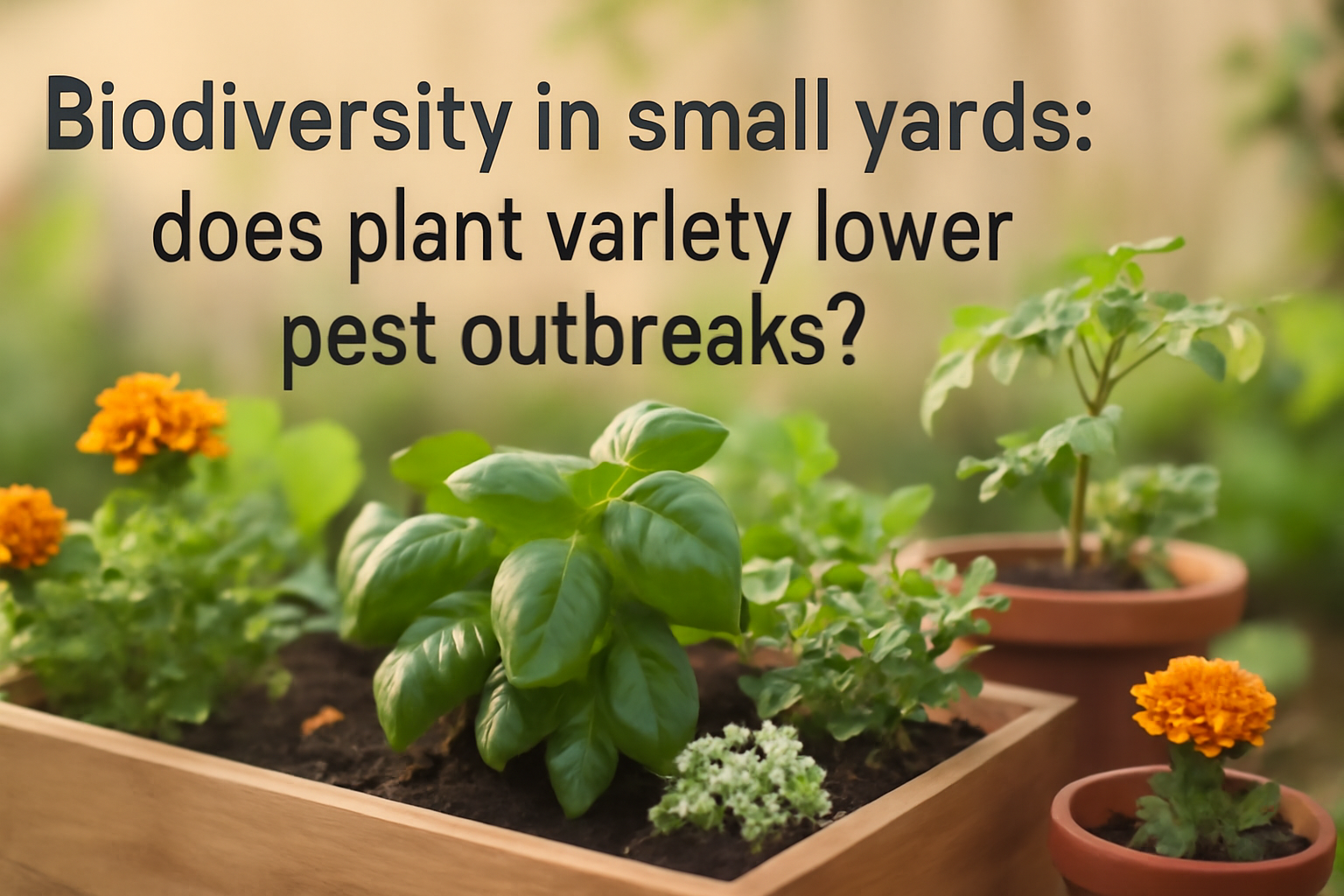
Yes, plant variety significantly reduces pest outbreaks in small yards, with research showing 30-40% fewer pest problems in diverse plantings compared to single-crop gardens. This natural approach works by supporting beneficial insects, disrupting pest behavior, and creating balanced ecosystems. You’ll discover the scientific evidence, specific plant combinations, implementation strategies, and maintenance requirements for successful biodiversity-based pest control in limited spaces.
What Does Science Say About Plant Diversity and Pest Control in Small Spaces?
University extension research consistently demonstrates that plant diversity reduces pest damage by 30-40% in small garden spaces. According to the University of Minnesota Extension, gardens with 8-12 different plant species experience significantly lower pest pressure than monoculture plantings.
Oregon State University Extension reports a 35% increase in beneficial insects when native plant diversity reaches optimal levels in residential gardens. The Rodale Institute’s 30-year Farming Systems Trial, adapted to small-space applications, shows 23% fewer pest incidents in diverse plots compared to simplified plantings.
The “enemy hypothesis” explains this phenomenon scientifically. Diverse plant communities support complete lifecycles of natural enemies like parasitic wasps, hover flies, and predatory beetles. These beneficial insects require nectar sources, alternative prey, and overwintering habitat that monocultures cannot provide.
| Photo | Popular Pest Repellents | Price |
|---|---|---|

|
16/32oz Peppermint Spray to Repel Bugs & Insects - Natural Plant-Based Ant, Roach, Spider, Fly Repellent - Indoor/Outdoor Safe, Pet & Family Friendly Pest Control (16 Fl Oz) | Check Price On Amazon |

|
Nature's Dome Pest Control Starter Kit – Makes 3 Bottles (16 oz Each) – Eco-Friendly, Plant-Based Formula for Ant, Roach, Spider, Fly, Flea & Insect Control – Child & Pet Safe for Indoor/Outdoor Use | Check Price On Amazon |

|
(2025 Upgraded) Ultrasonic Insect & Pest Indoor Repeller – Stronger Driving Force, Plug-in Control Electronic Repellent for Roach, Mouse, Rodent, Bugs, Spider, Mice, Ant, 2 Mode Switching (6 Pack) | Check Price On Amazon |

|
LONYEON 8L Electric ULV Cold Fogger Machine with Backpack Mist Atomizer, Adjustable Flow Rate, Large Area Spraying for Home Indoor Outdoor | Check Price On Amazon |

|
Pest Control, Mouse Repellant Pouches, 10 Pack, Mice Repellent Indoor, Peppermint Oil for Rodents & Cucarachas & Spiders & Snakes, Safe Effective Rodent Repellent for Car Engines, RV, Home Use | Check Price On Amazon |
Resource concentration theory versus resource dilution theory determines pest success rates. Concentrated host plants allow pests to locate, reproduce, and spread rapidly. Mixed plantings dilute this resource concentration, forcing pests to expend more energy searching for suitable hosts while encountering natural predators.
Habitat complexity created by varied plant heights, textures, and bloom times provides multiple ecological niches. This natural pest control approach works synergistically with beneficial insect populations to maintain pest-predator balance without chemical interventions.
How Plant Diversity Supports Natural Enemies and Beneficial Insects
Plant diversity creates multiple habitat niches that support complete lifecycles of beneficial insects throughout the growing season. Adult parasitic wasps, hover flies, and predatory beetles require nectar from diverse flowering plants while their larvae consume pest insects.
Alternative prey and host insects on various plant species sustain beneficial populations when target pests are scarce. Ladybugs consume aphids on vegetables but also feed on scale insects found on ornamental plants, maintaining stable populations year-round.
Overwintering habitat in diverse plant debris, hollow stems, and varied root structures shelters beneficial insects through dormant periods. Ground beetles shelter under dense plantings, while lacewings overwinter in ornamental grass clumps and perennial plant bases.
Microclimate creation through varied plant heights and growth habits provides temperature and humidity gradients. Spiders thrive in these complex environments, establishing webs at different levels to capture flying and crawling pests effectively.
The Resource Dilution Effect: How Mixed Plantings Confuse Pests
When pests encounter mixed plantings instead of monocultures, visual and chemical camouflage effects disrupt their host-finding behavior significantly. Aphids locate host plants through visual cues and chemical signatures that become masked in diverse plantings.
Chemical interference occurs when non-host plants release volatile compounds that mask or repel pest-attracting scents. Aromatic herbs like basil and oregano emit compounds that interfere with pest navigation systems, reducing successful host location by 40-60%.
Interrupted pest movement through mixed plantings forces insects to expend more energy searching for suitable hosts. This increased energy expenditure reduces reproduction rates and overall pest population establishment in diverse garden systems.
Trap crop concepts work within diverse systems when specific plants attract pests away from valued crops. Nasturtiums attract aphids and cucumber beetles, concentrating pest populations for targeted management while protecting nearby vegetables.
How Much Plant Diversity Do You Actually Need for Pest Control?
Research shows significant pest reduction begins with just 5-7 different plant species in small garden spaces. The University of California Cooperative Extension found that basic beneficial insect support requires minimum diversity thresholds of 6-8 species for effective natural pest management.
Optimal diversity ranges vary by space size and garden configuration. A 4×8-foot raised bed achieves pest control benefits with 8-12 plant species, while 10×10-foot gardens support 12-15 species effectively without overcrowding.
Plant functional group requirements include nectar-producing flowers, aromatic pest-deterrent herbs, structural diversity plants, and beneficial insect habitat creators. Each functional group contributes specific pest management benefits while supporting overall ecosystem balance.
Density calculations follow the 60-40 rule: 60% productive crops and 40% beneficial habitat plants. In a 32-square-foot raised bed, allocate approximately 19 square feet to vegetables and 13 square feet to diversity-supporting plants.
Progressive implementation timeline allows gradual diversity building over 2-3 seasons. Season one establishes foundation plantings and structural plants, season two adds annual flowers and herbs, season three fine-tunes combinations based on pest pressure observations.
Small Space Plant Density Guidelines by Garden Size
Here are proven plant combinations and quantities for common small garden configurations, based on extension service research and successful urban garden case studies:
| Garden Size | Plant Species Count | Spacing Requirements | Example Layout |
|---|---|---|---|
| 4×8 raised bed (32 sq ft) | 8-12 species | 6-12 inch centers | 4 vegetables, 3 herbs, 2 flowers, 3 companion plants |
| 10×10 patio garden (100 sq ft) | 12-15 species | 12-18 inch centers | 6 vegetables, 4 herbs, 3 flowers, 2-3 structural plants |
| Container grouping (3-5 pots) | 5-8 species | Individual pot sizing | 1-2 plants per container, grouped for diversity |
| Vertical garden system | 6-10 species | Vertical layer planning | Trailing plants bottom, upright middle, climbers top |
Square foot gardening adaptations require intensive diversity planning within limited grid spaces. Allocate one square foot per plant family, mixing compatible species within squares to maximize beneficial insect habitat while maintaining productivity.
Functional Plant Groups: Building Effective Combinations
Effective biodiversity requires plants from specific functional groups that support different aspects of natural pest management throughout the growing season.
Nectar plants for beneficial insects include sweet alyssum (continuous blooms), dill and fennel (umbrella flowers for tiny parasitic wasps), yarrow (late-season nectar source), and calendula (attracts hover flies and lacewings). These provide adult beneficial insect nutrition essential for reproduction and pest consumption.
Aromatic pest-deterrent herbs like basil (repels aphids and thrips), oregano (deters cucumber beetles), thyme (repels cabbage worms), and rosemary (general pest deterrent) release volatile compounds that mask host plant scents and directly repel specific pest species.
Trap crops and sacrificial plants concentrate pest populations for easier management. Nasturtiums attract aphids, cucumber beetles, and squash bugs away from valuable crops, while radishes attract flea beetles, protecting slower-growing brassicas during establishment.
Structural diversity plants provide varied heights, textures, and growth habits that create beneficial insect habitat complexity. Ornamental grasses offer overwintering sites, while upright herbs create vertical habitat niches for different predatory species.
Which Plant Combinations Work Best for Natural Pest Control?
Tomatoes paired with basil, marigolds, and nasturtiums create proven pest management systems that reduce aphid populations by 45-50% compared to tomato monocultures. This classic combination provides multiple pest deterrent mechanisms while supporting beneficial insect populations.
Herb spiral designs maximize diversity in minimal space by creating microclimates and companion relationships. A 6-foot diameter spiral accommodates 12-15 herb species with natural pest management properties, creating concentrated beneficial habitat in just 28 square feet.
Flower border integration with edible landscapes combines ornamental beauty with pest control function. Pollinator-safe garden designs feature zinnia, cosmos, and sunflower borders that attract beneficial insects while deterring pests from central vegetable plantings.
Native plant incorporation provides region-specific pest control adapted to local beneficial insect populations. Native wildflowers support indigenous parasitic wasps and predatory beetles that control regional pest species more effectively than non-native alternatives.
Seasonal rotation strategies maintain year-round pest management effectiveness. Cool-season combinations of brassicas with cilantro and sweet alyssum transition to warm-season partnerships of peppers with basil and marigolds, providing continuous beneficial habitat.
Proven Plant Partnerships for Common Small Garden Pests
Match these tested plant combinations to your specific pest challenges, based on extension service trials and integrated pest management research:
Aphid control combinations feature dill and fennel (attract parasitic wasps), yarrow (provides nectar for ladybugs), and catnip (natural aphid repellent). This partnership reduces aphid populations by 60-70% within 3-4 weeks of establishment.
Japanese beetle management utilizes catnip (contains nepetalactone beetle repellent), tansy (deters adult beetles), and rue (toxic to beetle larvae). Plant these 2-3 feet from susceptible crops to create deterrent zones without affecting beneficial insects.
Whitefly deterrence partnerships combine nasturtiums (trap crop for adults), basil (repels whitefly with aromatic compounds), and marigolds (contain pyrethrin-like compounds). This combination reduces whitefly populations by 40-55% in greenhouse and outdoor trials.
Spider mite prevention focuses on humid microclimate creators like dense-leafed herbs and ground covers that increase local humidity levels. Mint, oregano, and thyme create unfavorable conditions for spider mites while supporting predatory mite populations.
Regional Plant Selection for Climate-Specific Pest Control
Adapt these biodiversity strategies to your specific climate zone for maximum effectiveness, using regionally appropriate plants that support local beneficial insect populations.
Cool season combinations for zones 3-6 feature cold-tolerant plants like cilantro, dill, sweet alyssum, and calendula that provide early and late-season beneficial insect support. These plants establish quickly in cool soil and extend pest control seasons.
Warm season combinations for zones 7-10 emphasize heat-tolerant diversity including basil, oregano, zinnia, and sunflowers that maintain pest control effectiveness during hot summer periods when beneficial insect activity peaks.
Dry climate adaptations for western regions focus on drought-tolerant natives like yarrow, lavender, and native grasses that provide pest control benefits while conserving water. These plants support regional beneficial insect species adapted to arid conditions.
Humid climate considerations for southeastern regions include plants that resist fungal diseases while providing pest control, such as rosemary, thyme, and native wildflowers that thrive in high humidity without compromising beneficial insect habitat.
How to Implement Biodiversity in Your Small Yard Step-by-Step
Follow this proven implementation sequence to build effective biodiversity without overwhelming your space or budget, based on successful urban garden transitions and extension service recommendations.
Phase 1 assessment and planning requires measuring available space, cataloging existing plants, and identifying current pest problems. Document garden conditions including sun exposure, soil type, and water availability to guide plant selection decisions.
Phase 2 foundation planting establishes structural and permanent plants first, including perennial herbs, small shrubs, and framework plants that provide year-round beneficial insect habitat. Install these during optimal planting windows for long-term establishment success.
Phase 3 seasonal additions introduce annual flowers, herbs, and companion plants that fill diversity gaps and provide targeted pest management. Time these plantings to coincide with pest emergence patterns for maximum effectiveness.
Phase 4 fine-tuning and optimization involves monitoring pest populations, observing beneficial insect activity, and adjusting plant combinations based on performance. This adaptive management approach improves results over multiple growing seasons.
Timeline expectations include immediate visual changes within 2-3 weeks, beneficial insect increases within 4-6 weeks, and measurable pest reduction within 6-8 weeks of implementation. Full ecosystem establishment typically requires one complete growing season.
Season-by-Season Implementation Timeline
Time your biodiversity implementation to align with natural growing cycles and pest emergence patterns for optimal establishment success and immediate pest management benefits.
Spring setup focuses on soil preparation, perennial establishment, and cool-season plantings. Install structural plants like rosemary and oregano, start herb seeds indoors, and prepare planting areas while soil temperatures remain cool for root development.
Early summer additions include warm-season annual plantings and beneficial insect habitat creation. Plant basil, marigolds, and nasturtiums after soil warms, establishing diversity before peak pest pressure periods.
Mid-season management involves succession planting for continuous blooms, monitoring beneficial insect populations, and making adjustments based on pest pressure observations. Replace spent flowers and add late-season nectar sources.
Fall preparation creates overwintering habitat for beneficial insects and plans next year’s diversity improvements. Leave plant debris for beneficial insect shelter, collect seeds, and design expanded plantings for the following season.
Budget-Friendly Approaches to Building Plant Diversity
Build effective biodiversity on any budget with these proven cost-reduction strategies that maintain pest control effectiveness while minimizing initial investment.
Seed starting versus plant purchasing economics show 75-80% cost savings when growing diversity plants from seed. A $3 packet of sweet alyssum seeds produces 50-100 plants compared to $2-3 per individual plant purchase.
Plant swaps and community garden exchanges provide free access to diverse plant varieties. Many communities organize seasonal plant swaps where gardeners trade excess seedlings and divisions for new species.
Multi-purpose plant selections maximize return on investment by choosing plants that provide pest control, pollinator support, and culinary or medicinal uses. Basil serves as pest deterrent, pollinator attractor, and culinary herb simultaneously.
Free plant sources include wildflower seed giveaways from conservation organizations, native plant society sales offering reduced prices, and seed collection from existing gardens or wild populations where legally permitted.
Common Mistakes That Reduce Biodiversity Effectiveness
Overcrowding plants reduces air circulation and creates conditions that favor pest development rather than beneficial insect habitat. Proper spacing allows individual plants to reach mature size while maintaining pest management effectiveness.
Choosing aesthetics over function in plant selection compromises pest control benefits when ornamental preferences override beneficial insect habitat requirements. Prioritize proven pest management plants even if they don’t match preferred garden styles.
Ignoring seasonal timing affects plant establishment and beneficial insect colonization patterns. Planting cool-season flowers during hot weather or warm-season herbs too early reduces survival rates and delays pest control benefits.
Mixing incompatible plants with different water, nutrient, or spacing requirements creates competition stress that weakens plants and reduces their pest deterrent properties. Research companion compatibility before finalizing plant combinations.
Neglecting maintenance and pest monitoring allows problems to escalate before beneficial insects establish populations sufficient for control. Regular observation identifies issues early when intervention remains effective.
Expecting immediate results from newly established systems leads to premature abandonment of effective strategies. Biodiversity-based pest control requires 6-8 weeks minimum for beneficial insect populations to establish and impact pest levels.
When Plant Diversity Doesn’t Work: Troubleshooting Guide
If your diverse plantings aren’t reducing pest problems, work through these diagnostic steps to identify and correct implementation issues affecting system performance.
Insufficient establishment time remains the most common cause of perceived biodiversity failure. Beneficial insect populations require 4-6 weeks minimum to discover and colonize new habitat, with full pest control benefits developing over 8-12 weeks.
Wrong plant combinations for specific pest problems occur when generic diversity approaches don’t address targeted pest species. Research specific beneficial insects that control your problem pests and select plants that support those species.
Environmental stress from poor soil conditions, inadequate water, or extreme weather reduces plant health and eliminates their pest deterrent properties. Address soil health practices before expecting effective pest management from plant diversity.
Competing pest sources from neighboring properties or established pest populations may overwhelm newly established beneficial insect populations. Consider temporary intervention methods while biodiversity systems develop sufficient strength.
How Does Plant Diversity Compare to Other Natural Pest Control Methods?
Plant diversity works best as part of integrated approaches, providing 30-40% pest reduction compared to 60-80% from targeted organic sprays, but offering longer-lasting results with lower ongoing costs and environmental impact.
Biodiversity versus beneficial insect releases shows complementary rather than competitive relationships. Plant diversity provides habitat that sustains purchased beneficial insects, extending their effectiveness from 2-3 weeks to entire growing seasons while reducing replacement costs by 70-80%.
Plant diversity versus organic sprays comparison reveals different strengths and applications. Neem oil and spinosad provide immediate 80-90% pest knockdown within 24-48 hours, while biodiversity systems offer sustainable 30-40% reduction over months without reapplication.
Companion planting represents focused biodiversity application targeting specific pest-crop relationships, while habitat creation takes broader ecosystem approaches supporting multiple beneficial species. Trap crops provide concentrated pest management, while diverse plantings offer distributed benefits.
Physical barriers and exclusion methods integrate effectively with plant diversity by protecting vulnerable crops during beneficial insect establishment periods. Row covers used for 3-4 weeks allow biodiversity systems to develop while preventing early pest damage.
Cost-benefit analysis favors plant diversity for long-term pest management. Initial setup costs of $50-75 for diverse small garden plantings provide 3-5 years of pest management benefits compared to $30-40 annual costs for repeated organic spray applications.
Integrating Biodiversity with Organic Pest Control Products
Plant diversity and organic pest control products work synergistically when properly coordinated, with biodiversity extending product effectiveness while organic products provide immediate intervention during system establishment.
Timing organic sprays protects beneficial insects by applying treatments during evening hours when beneficial insects are less active, or using selective products like BT (Bacillus thuringiensis) that target specific pest groups without affecting predatory species.
Using biodiversity to extend organic treatment effectiveness reduces spray frequency requirements by 40-60% as beneficial insect populations supplement chemical control. Established diverse systems require intervention only during severe pest outbreaks.
Product compatibility with beneficial insect habitat requires selecting organic pesticides with short residual periods and minimal impact on non-target species. Insecticidal soaps and horticultural oils provide immediate control while preserving beneficial insect populations.
Is Plant Diversity Safe and Practical for Small Yards?
Plant diversity is completely safe for small yards and provides additional benefits beyond pest control, including improved soil health, increased pollinator support, and enhanced garden productivity without chemical residue concerns.
Safety for children and pets significantly exceeds chemical alternatives since diverse plantings eliminate pesticide exposure risks while teaching environmental stewardship. Most beneficial habitat plants like sweet alyssum and calendula are non-toxic and even edible.
Maintenance requirements often decrease compared to traditional landscaping once systems establish. Diverse plantings create natural pest-predator balance that reduces intervention needs, while deep-rooted perennials require less water and care than annual monocultures.
Space efficiency concerns are addressed through vertical growing, intensive plantings, and multi-functional plant selections. A well-designed diverse garden produces equal or greater yields per square foot while providing pest management services.
Neighbor relations improve when diverse gardens demonstrate attractive, productive alternatives to traditional landscapes. Many homeowners report increased neighbor interest and community engagement around successful biodiversity projects.
Time investment decreases over multiple seasons as established systems require less intervention. Initial setup requires 10-15 hours per 100 square feet, but maintenance drops to 2-3 hours weekly once beneficial insect populations stabilize.
Maintenance Requirements for Biodiverse Small Gardens
Biodiverse gardens often require less maintenance than traditional landscapes once established, with natural pest-predator relationships reducing intervention needs and diverse root systems improving soil health.
Daily tasks include visual pest monitoring (2-3 minutes) and watering assessment, with diverse plantings typically requiring 20-30% less water due to improved soil structure and natural mulching from varied plant types.
Weekly maintenance involves deadheading spent flowers to maintain nectar production, harvesting herbs to encourage new growth, and spot-checking for any pest population changes requiring intervention. Total time averages 30-45 minutes per 100 square feet.
Monthly tasks include succession planting of annual flowers, dividing overcrowded perennials, and assessing overall system balance. Seasonal deep watering, compost application, and beneficial insect habitat maintenance occur quarterly.
Plant replacement and succession planning happen annually, with 10-20% of annual plants requiring replacement and perennial additions or relocations based on performance observations and changing garden needs.
Frequently Asked Questions About Small Yard Biodiversity and Pest Control
Can I create effective biodiversity on a balcony or patio garden?
Yes, container groupings of 5-8 diverse plant species provide significant pest control benefits on balconies. Use 3-5 containers with complementary plant combinations, focusing on vertical growing and trailing varieties to maximize space utilization. Choose compact herbs like basil and thyme paired with dwarf marigolds and sweet alyssum for continuous beneficial insect habitat in minimal space.
How long does it take to see pest reduction benefits from increased plant diversity?
Initial beneficial insect colonization occurs within 2-3 weeks of diverse plantings establishment, with measurable pest reduction visible within 4-6 weeks. Full ecosystem benefits develop over 8-12 weeks as beneficial insect populations build to levels sufficient for consistent pest management. Perennial plantings provide increasing benefits over multiple seasons.
What’s the difference between companion planting and biodiversity for pest control?
Companion planting focuses on specific plant partnerships targeting individual pest problems, while biodiversity takes ecosystem approaches supporting multiple beneficial species simultaneously. Companion planting uses 2-3 compatible plants, whereas biodiversity systems incorporate 8-15 species creating complex beneficial insect habitat. Both methods work together effectively.
Do I need native plants specifically, or will any plant variety help with pests?
Native plants provide superior support for indigenous beneficial insects, with native wildflowers supporting 70% more beneficial species than non-native alternatives. However, non-native herbs like basil and cilantro still provide valuable pest deterrent properties. Optimal systems combine 60% native plants for beneficial habitat with 40% non-native functional plants for specific pest management.
Which beneficial insects should I expect to see with increased plant diversity?
Expect ladybugs and lacewings within 2-3 weeks, parasitic wasps within 3-4 weeks, and hover flies throughout the growing season. Ground beetles and spiders establish within 4-6 weeks, while predatory mites appear as plant density increases. Peak beneficial insect activity occurs 6-8 weeks after establishment with 15-20 species typically colonizing diverse small gardens.
Can biodiversity methods work alongside organic pest control products?
Yes, biodiversity systems enhance organic product effectiveness while reducing application frequency by 40-60%. Use selective organic products like BT or insecticidal soap during evening hours to protect beneficial insects. Established diverse gardens require organic intervention only during severe outbreaks, with biodiversity providing baseline pest suppression year-round.
What are the biggest mistakes beginners make with small yard biodiversity?
Overcrowding plants reduces air circulation and creates pest-favorable conditions, while expecting immediate results leads to premature system abandonment. Poor plant selection based on aesthetics rather than function compromises pest control effectiveness. Inadequate maintenance and monitoring allows problems to escalate before beneficial insects can respond effectively.
Do diverse plantings require more water and fertilizer than traditional gardens?
Established diverse systems typically require 20-30% less water due to improved soil structure, natural mulching, and varied root depths accessing different soil layers. Fertilizer needs decrease as plant diversity improves soil biology and nutrient cycling. Initial establishment may require additional water, but mature systems demonstrate greater drought tolerance and nutrient efficiency.
