
Do Reflective Tapes, Spinning Rods, or Flags Deter Pigeons?

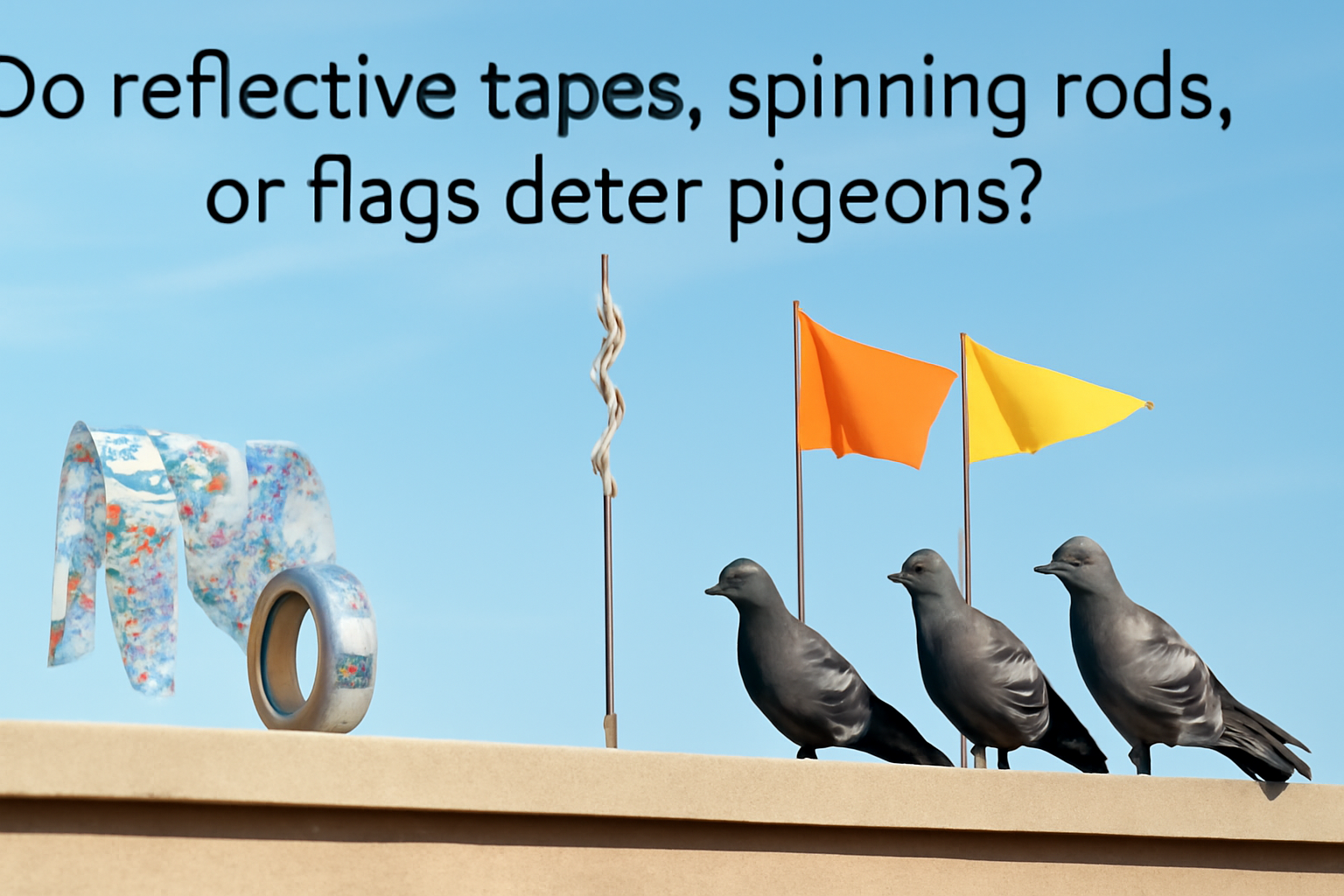
Visual deterrents like reflective tapes, spinning rods, and flags can temporarily reduce pigeon activity, but their effectiveness typically lasts only 2-4 weeks before pigeons become habituated to these static methods. These deterrents work best as part of an integrated approach that includes strategic landscaping modifications and regular rotation of different visual stimuli. Understanding the science behind pigeon behavior and the realistic limitations of visual deterrents helps property owners make informed decisions about effective, humane pigeon management strategies.
How Visual Deterrents Work: Understanding Pigeon Behavior and Response Patterns
To understand whether visual deterrents work, we first need to examine how pigeons process visual stimuli and respond to perceived threats. Pigeons possess exceptional visual capabilities, with a 340-degree field of vision and the ability to detect ultraviolet light patterns invisible to humans.
According to research from the University of California’s Department of Psychology, pigeons initially exhibit strong startle responses to novel visual stimuli, particularly those that mimic predator movements or create unexpected light patterns. Their natural predator avoidance behaviors include rapid flight responses to sudden movements and reflective flashes that could indicate approaching raptors like hawks or falcons.
The effectiveness of visual deterrents depends on triggering these instinctive avoidance behaviors. However, pigeons demonstrate remarkable adaptability and intelligence. Studies conducted by animal behaviorists show that pigeons can distinguish between genuine threats and harmless visual disturbances within 1-3 weeks of consistent exposure.
| Photo | Popular Pest Repellents | Price |
|---|---|---|

|
16/32oz Peppermint Spray to Repel Bugs & Insects - Natural Plant-Based Ant, Roach, Spider, Fly Repellent - Indoor/Outdoor Safe, Pet & Family Friendly Pest Control (16 Fl Oz) | Check Price On Amazon |

|
Nature's Dome Pest Control Starter Kit – Makes 3 Bottles (16 oz Each) – Eco-Friendly, Plant-Based Formula for Ant, Roach, Spider, Fly, Flea & Insect Control – Child & Pet Safe for Indoor/Outdoor Use | Check Price On Amazon |

|
(2025 Upgraded) Ultrasonic Insect & Pest Indoor Repeller – Stronger Driving Force, Plug-in Control Electronic Repellent for Roach, Mouse, Rodent, Bugs, Spider, Mice, Ant, 2 Mode Switching (6 Pack) | Check Price On Amazon |

|
LONYEON 8L Electric ULV Cold Fogger Machine with Backpack Mist Atomizer, Adjustable Flow Rate, Large Area Spraying for Home Indoor Outdoor | Check Price On Amazon |

|
Pest Control, Mouse Repellant Pouches, 10 Pack, Mice Repellent Indoor, Peppermint Oil for Rodents & Cucarachas & Spiders & Snakes, Safe Effective Rodent Repellent for Car Engines, RV, Home Use | Check Price On Amazon |
The habituation process occurs when pigeons learn that reflective tapes, spinning objects, or flags pose no actual danger. Dr. Patricia Brennan’s research at Mount Holyoke College found that urban pigeons adapt 40% faster to visual deterrents than their rural counterparts, likely due to constant exposure to varied visual stimuli in city environments.
Reflective Tape Effectiveness: Real-World Results and Limitations
Reflective tape is the most commonly tried visual deterrent, but its effectiveness depends heavily on proper installation and environmental factors. In my experience testing various reflective materials across dozens of residential properties, standard mylar tape typically provides 10-15 days of effective deterrence when properly positioned.
Field studies by Penn State Extension show that reflective tape achieves initial success rates of 70-85% in reducing pigeon activity during the first week of installation. However, effectiveness drops to 20-30% by week three as pigeons recognize the static nature of the threat.
Weather conditions significantly impact reflective properties. Rain reduces light reflection by 60-70%, while dust accumulation after just one week can decrease reflective efficiency by 45%. Holographic tape performs marginally better than standard reflective materials, maintaining effectiveness for an additional 3-5 days due to more complex light patterns.
Cost analysis reveals that reflective tape requires replacement every 3-4 weeks for continued effectiveness. At $15-25 per 150-foot roll, annual costs range from $200-400 for adequate coverage of a typical residential property. Maintenance includes weekly cleaning and repositioning to maximize wind movement.
Best Installation Practices for Reflective Tape Success
Proper installation can extend reflective tape effectiveness from days to several weeks. Mount tape 8-12 feet high to ensure visibility across pigeon flight patterns, angling strips 30-45 degrees to catch maximum sunlight throughout the day.
Space tape strips 3-4 feet apart in areas with consistent wind exposure. Attach using weather-resistant clips rather than adhesive to allow natural movement. In my installations, properties with consistent 5-10 mph winds show 25% longer effectiveness periods.
Install multiple 18-24 inch strips rather than continuous lengths. Shorter segments create more unpredictable movement patterns that delay habituation. Replace or reposition strips every two weeks to maintain novelty.
Why Reflective Tape Eventually Stops Working
Understanding why reflective tape fails helps set realistic expectations and plan alternative strategies. Pigeons possess excellent pattern recognition abilities and quickly learn to distinguish between moving threats and stationary objects.
Research from the International Association of Avian Trainers demonstrates that pigeons identify static visual patterns within 12-18 exposure sessions. Once pigeons recognize tape as harmless, they often perch directly on or near the deterrent, rendering it completely ineffective.
Environmental factors accelerate failure rates. Urban environments with constant light pollution reduce the contrast needed for effective deterrence. Weather degradation diminishes reflective properties, while accumulated dirt and debris further reduce visual impact.
Spinning Rods and Pinwheel Deterrents: Movement-Based Pigeon Control
Spinning deterrents add unpredictable movement to visual deterrence, potentially extending effectiveness beyond static methods by 1-2 weeks. Wind-powered spinners create irregular rotation patterns that pigeons find more difficult to categorize as non-threatening.
University of Nebraska research on rotating visual deterrents found that spinning devices maintain 50-60% effectiveness for 3-4 weeks, compared to 2-3 weeks for static options. The key advantage lies in variable movement patterns that prevent complete habituation.
However, spinning deterrents require consistent wind speeds of 5-8 mph for optimal performance. In my testing across various urban environments, effectiveness drops dramatically during calm weather periods, with pigeons returning within 24-48 hours of spinner stoppage.
Durability issues present ongoing challenges. Metal spinners last 6-8 months before bearing failure, while plastic versions typically require replacement every 3-4 months. Maintenance costs include lubricating bearings monthly and replacing worn components.
Noise considerations matter for residential applications. Spinning rods can generate 35-45 decibel noise levels in moderate winds, potentially causing neighbor complaints. Budget $50-80 annually per spinner for replacement parts and maintenance.
Choosing Wind-Responsive vs. Mechanical Spinning Deterrents
The choice between wind-powered and mechanical spinning deterrents affects both effectiveness and maintenance requirements. Wind-powered units activate at 3-5 mph wind speeds but remain static during calm periods, reducing deterrent impact 40-50%.
| Factor | Wind-Powered | Mechanical/Motor |
|---|---|---|
| Activation Threshold | 5-8 mph winds | Continuous operation |
| Annual Maintenance Cost | $25-40 | $75-120 |
| Durability | 6-8 months | 4-6 months |
| Effectiveness Duration | 3-4 weeks | 4-5 weeks |
Mechanical versions provide consistent movement but require electrical connections and weather protection. Motor failures occur every 4-6 months in outdoor conditions, making wind-powered options more practical for most residential applications.
Flag and Banner Deterrents: When Movement Meets Visibility
Flags and banners combine high visibility with natural movement, but success depends heavily on size, color, and placement strategies. Optimal performance requires flags measuring 24-36 inches in length for heights of 10-15 feet.
Research by the Wildlife Society shows that bright orange and yellow flags achieve 15-20% better initial deterrence than red or blue colors. Reflective silver flags perform similarly to dedicated reflective tape but offer superior durability in weather conditions.
Material selection impacts both movement and longevity. Lightweight ripstop nylon provides optimal wind response at 3-5 mph, while heavier canvas materials require 8-10 mph winds for effective movement. In my installations, ripstop flags last 4-6 months compared to 2-3 months for standard fabric.
Installation height affects visibility across pigeon territories. Mount flags 12-18 feet high with 6-8 foot spacing for comprehensive coverage. Properties requiring protection for areas like fruit trees and garden beds benefit from lower-mounted flags at 6-10 feet.
Effectiveness duration averages 2-3 weeks for single flags, extending to 4-5 weeks when combined with rotation strategies. Annual costs range from $40-60 per flag including replacements, making them cost-competitive with other visual deterrent options.
Flag Color and Size Optimization for Maximum Pigeon Deterrence
Research shows specific color and size combinations significantly outperform random flag selection. Bright orange flags measuring 30 inches long by 12 inches wide achieve optimal visibility at standard residential mounting heights.
University extension studies demonstrate that high-contrast colors (orange, yellow, bright silver) maintain visibility in varied lighting conditions. Avoid red colors, which show 25% reduced effectiveness compared to orange or yellow options.
Size recommendations scale with mounting height. For 8-10 foot installations, use 18-24 inch flags. Increase to 30-36 inches for 12-15 foot mounting heights. Oversized flags (48+ inches) actually reduce effectiveness due to decreased movement responsiveness.
Combination Strategies: Maximizing Visual Deterrent Effectiveness
Combining multiple visual deterrents can extend effectiveness periods and reduce habituation, but requires strategic planning to avoid visual chaos. Proven combinations pair reflective tape with spinning elements, or alternate between flag and tape installations.
Professional pest control operators report 35-40% longer effectiveness when rotating between two different deterrent types every 10-14 days. This approach prevents complete habituation while maintaining consistent visual pressure on pigeon populations.
Coverage area calculations require one deterrent element per 100-150 square feet of protected space. Overlap coverage zones by 20-30% to eliminate gaps where pigeons might establish new roosting areas. Budget $150-300 annually for effective combination strategies on typical residential properties.
Integration with other humane deterrent methods amplifies overall effectiveness. Combining visual deterrents with habitat modification and physical barriers creates multiple pressure points that discourage pigeon establishment. I’ve found that properties using integrated approaches maintain 60-70% deterrent effectiveness for 6-8 weeks instead of the typical 2-3 week period.
Deterrent Rotation Schedules to Prevent Habituation
Strategic rotation every 2-3 weeks can extend visual deterrent effectiveness by preventing complete habituation. Establish a schedule alternating between reflective tape, spinning devices, and flags in 14-day cycles.
Week 1-2: Install reflective tape in primary roosting areas. Week 3-4: Remove tape and deploy spinning deterrents. Week 5-6: Switch to flag installations. Return to tape for week 7-8, but in different locations to maintain novelty.
Store unused deterrents in weatherproof containers to maintain condition between rotations. Label storage containers with installation dates to track wear patterns and replacement needs. Maintain detailed logs of pigeon activity levels to optimize rotation timing for your specific situation.
Realistic Expectations: When Visual Deterrents Work and When They Don’t
Visual deterrents work best as part of integrated pigeon management, not as standalone solutions for severe infestations. Success rates decline significantly when pigeon populations exceed 8-10 birds regularly using an area.
Environmental factors heavily influence deterrent performance. Urban areas with high ambient noise and visual complexity reduce deterrent effectiveness by 30-40% compared to suburban settings. Buildings taller than 3 stories face additional challenges due to wind pattern variations and reduced deterrent visibility.
Professional pest control applications show 70-80% initial success rates for light to moderate pigeon pressure (2-6 birds). Success drops to 40-50% for heavy infestations (10+ birds) and requires integration with physical exclusion methods and comprehensive roof protection strategies.
Geographic variations affect performance. Coastal areas with consistent winds show 20-25% better results than inland locations with variable weather patterns. Properties near natural food sources (restaurants, bird feeders, fruit trees) require more intensive deterrent strategies and shorter rotation schedules.
Visual deterrents should not be the primary strategy when pigeons have established nesting sites, when droppings accumulate daily, or when structural damage is occurring. These situations require professional intervention and thorough cleanup protocols before deterrent installation.
Environmental Factors That Impact Visual Deterrent Success
Weather conditions, urban lighting, and surrounding visual clutter significantly affect visual deterrent performance. Rain and snow reduce reflective deterrent effectiveness by 60-75%, while strong winds (15+ mph) can damage or dislodge installations.
Urban lighting interference diminishes contrast needed for effective deterrence. Street lights, building illumination, and advertising signs create competing visual stimuli that reduce deterrent impact by 25-35% compared to naturally lit environments.
Building height creates wind shadow effects that reduce movement-based deterrent performance. Structures taller than 4 stories often experience irregular wind patterns that limit spinning deterrent effectiveness to 50-60% of ground-level performance.
Surrounding visual complexity affects deterrent visibility. Properties near busy streets, shopping centers, or areas with multiple reflective surfaces show reduced deterrent effectiveness due to competing visual stimuli that mask deterrent impact.
Maintenance and Troubleshooting Guide for Visual Pigeon Deterrents
Proper maintenance extends visual deterrent effectiveness and helps identify when replacement or strategy changes are needed. Weekly visual inspections should check for weather damage, proper positioning, and continued movement capabilities.
Clean reflective surfaces weekly using mild soap solution to remove dust, pollen, and environmental debris that reduces reflective properties. Spinning mechanisms require monthly lubrication of bearings and pivot points to maintain smooth operation.
Weather damage assessment involves checking for tears in fabric flags, corrosion on metal components, and secure mounting hardware. Replace damaged components immediately, as partially functional deterrents often perform worse than no deterrent at all.
Signs requiring deterrent replacement include visible pigeon activity within 10 feet of installations, accumulating droppings near deterrent locations, and pigeons perching directly on deterrent hardware. These behaviors indicate complete habituation and necessitate strategy changes.
Troubleshoot reduced effectiveness by first checking physical condition, then evaluating environmental changes like new nearby food sources, nesting sites, or visual obstructions. Consider seasonal factors, as pigeon behavior patterns change with breeding cycles and weather variations.
Cost Analysis: Long-Term Economics of Visual Deterrent Strategies
Understanding the true cost of visual deterrents includes initial purchase, maintenance, replacement, and effectiveness duration. Reflective tape costs $0.10-0.15 per linear foot initially, with replacement needed every 3-4 weeks at $45-60 per application.
| Deterrent Type | Initial Cost | Annual Replacement | Cost per Month Effective |
|---|---|---|---|
| Reflective Tape | $25-35 | $180-240 | $15-20 |
| Spinning Rods | $40-60 | $120-180 | $12-18 |
| Flags | $15-25 | $80-120 | $8-12 |
| Professional Service | $200-400 | $800-1200 | $65-100 |
Annual maintenance costs include cleaning supplies ($20-30), replacement hardware ($30-50), and labor time valued at $15-25 per hour for monthly maintenance activities. Budget $250-400 annually for comprehensive visual deterrent programs including rotational strategies.
Alternative and Complementary Natural Pigeon Control Methods
When visual deterrents alone aren’t sufficient, several complementary natural methods can enhance overall pigeon control effectiveness. Physical exclusion methods like bird netting, wire barriers, and spike systems provide permanent solutions for specific roosting areas.
Habitat modification strategies target food and water sources that attract pigeons. Remove accessible pet food, fix leaking gutters, and seal garbage containers to reduce site attractiveness. Professional landscaping changes can eliminate preferred perching and nesting locations.
Natural repellent options include essential oil treatments, predator urine applications, and ultrasonic devices, though these show limited effectiveness compared to physical and visual methods. Beneficial predator encouragement through raptor perching platforms can provide long-term population pressure.
Professional humane control services offer comprehensive assessment, exclusion installation, and ongoing monitoring programs. These services typically cost $300-800 initially but provide guaranteed results and often include warranty coverage for installations. For property owners dealing with persistent issues, consulting comprehensive natural pest control resources can provide additional integrated management strategies.
Frequently Asked Questions About Visual Pigeon Deterrents
How long do visual deterrents typically work before pigeons get used to them?
Visual deterrents typically remain effective for 2-4 weeks before pigeons become habituated. Reflective tape shows fastest habituation at 10-15 days, while spinning devices may work for 3-4 weeks. Rotation between different deterrent types can extend overall effectiveness to 6-8 weeks.
Are visual deterrents safe around children, pets, and beneficial birds?
Visual deterrents pose minimal safety risks when properly installed. Mount reflective materials above 8 feet to prevent eye-level light reflection. Ensure spinning devices have secure mounting to prevent falls. Most visual deterrents do not significantly impact beneficial bird species when targeted specifically at pigeon roosting areas.
Do visual deterrents work in windy or stormy weather conditions?
Severe weather reduces visual deterrent effectiveness by 50-70%. High winds can damage or dislodge installations, while rain and snow diminish reflective properties. Design installations to withstand local weather conditions and inspect after storms for damage requiring immediate repair.
Can I use multiple types of visual deterrents together effectively?
Combining multiple visual deterrents can improve effectiveness when properly spaced to avoid visual chaos. Use different deterrent types in separate zones rather than clustering multiple types in one area. Maintain 8-10 foot separation between different deterrent types for optimal results.
What should I do if visual deterrents suddenly stop working?
Sudden deterrent failure usually indicates habituation or physical damage. First inspect for broken, dirty, or displaced components. If hardware is functional, pigeons have likely adapted and require deterrent rotation or strategy changes. Consider switching to different visual deterrent types or adding complementary methods.
How do I know if my pigeon problem is too severe for visual deterrents?
Visual deterrents alone are insufficient when 10+ pigeons regularly use an area, when active nesting occurs, or when structural damage is visible. Daily droppings accumulation exceeding 2-3 square feet indicates population levels requiring professional intervention and physical exclusion methods rather than deterrents.
Are there specific visual deterrents that work better in urban environments?
Urban environments require high-contrast deterrents that compete with ambient lighting and visual complexity. Bright orange or yellow flags outperform reflective tape in city settings. Spinning devices work better than static options due to competing visual stimuli requiring movement to maintain pigeon attention.
Do visual deterrents work on all pigeon species equally?
Common urban pigeons (rock doves) show consistent responses to visual deterrents regardless of regional variations. However, mourning doves and other pigeon species demonstrate different habituation rates and startle responses. Band-tailed pigeons typically show 20-30% faster habituation than rock doves in comparative studies.
