
Do Sticky Bands or Nets Work Against Mediterranean Fruit Fly

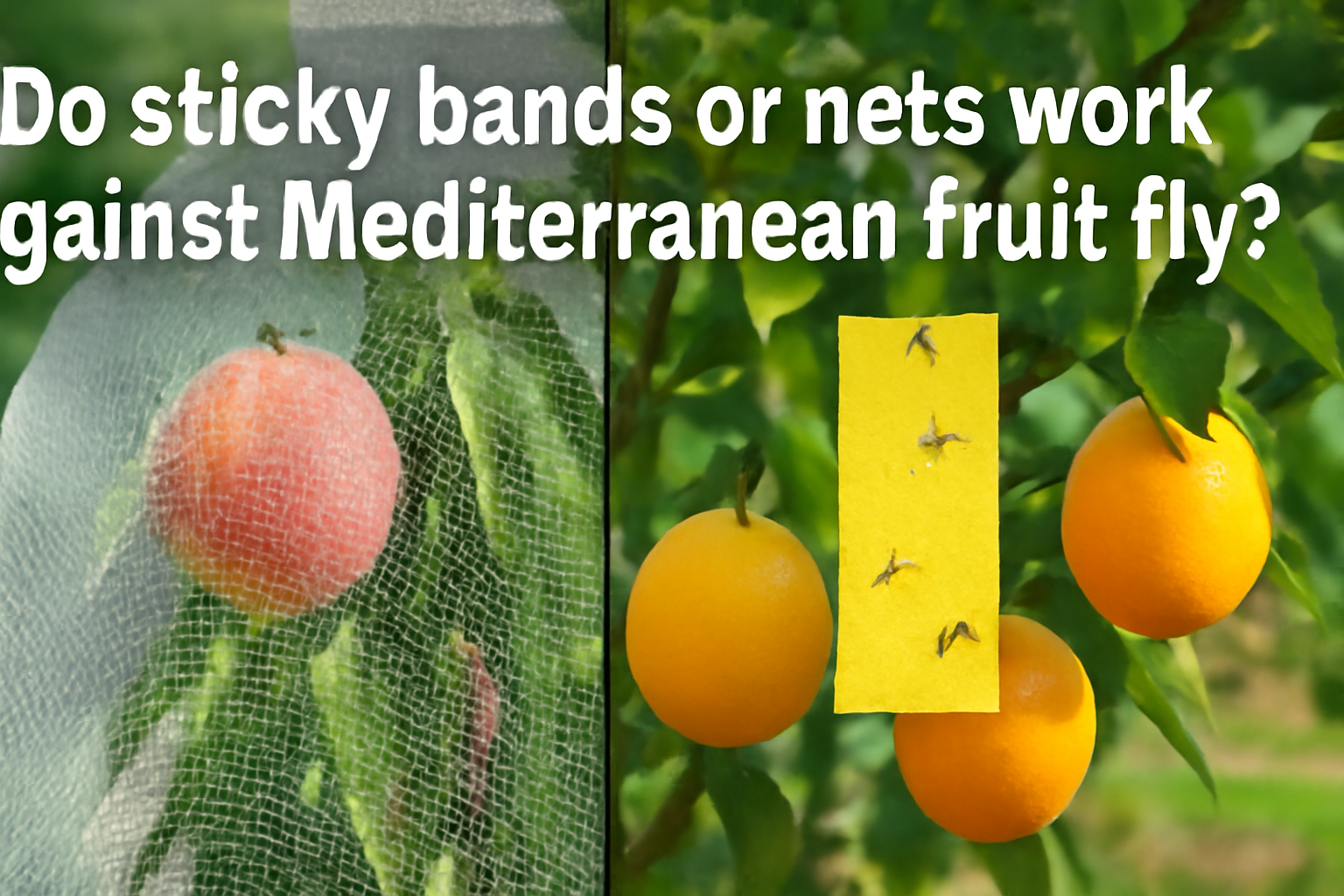
Yes, both sticky bands/traps and exclusion nets work against Mediterranean fruit fly (Ceratitis capitata), but they serve different purposes and have vastly different effectiveness rates for actual pest control. Sticky traps primarily function as monitoring tools with 75-85% detection capability, while exclusion nets provide 95%+ prevention when properly installed. These physical control methods offer chemical-free alternatives for protecting fruit from medfly damage during critical ripening periods. Understanding their specific applications, effectiveness rates, and implementation requirements helps you choose the right approach for your fruit protection needs.
How Sticky Traps and Exclusion Nets Work Against Mediterranean Fruit Fly
Understanding how each physical control method works is essential for choosing the right approach for your fruit protection needs. Mediterranean fruit flies target ripening fruit for egg-laying, with females preferring soft-skinned fruits like peaches, citrus, and stone fruits. According to UC Davis research, adult medflies are most attracted to yellow surfaces combined with protein-based lures.
Sticky traps capture adult flies through visual and chemical attraction before they can lay eggs in fruit. Exclusion nets create complete physical barriers that prevent adult access to fruit entirely. The fundamental difference lies in their approach: traps attempt to reduce existing populations while nets prevent population establishment.
How Sticky Traps Detect and Monitor Medfly Populations
Sticky traps primarily function as detection and monitoring tools rather than population control methods. Yellow surfaces mimic the color of ripening fruit, attracting both male and female medflies seeking egg-laying sites.
| Photo | Popular Pest Repellents | Price |
|---|---|---|

|
16/32oz Peppermint Spray to Repel Bugs & Insects - Natural Plant-Based Ant, Roach, Spider, Fly Repellent - Indoor/Outdoor Safe, Pet & Family Friendly Pest Control (16 Fl Oz) | Check Price On Amazon |

|
Nature's Dome Pest Control Starter Kit – Makes 3 Bottles (16 oz Each) – Eco-Friendly, Plant-Based Formula for Ant, Roach, Spider, Fly, Flea & Insect Control – Child & Pet Safe for Indoor/Outdoor Use | Check Price On Amazon |

|
(2025 Upgraded) Ultrasonic Insect & Pest Indoor Repeller – Stronger Driving Force, Plug-in Control Electronic Repellent for Roach, Mouse, Rodent, Bugs, Spider, Mice, Ant, 2 Mode Switching (6 Pack) | Check Price On Amazon |

|
LONYEON 8L Electric ULV Cold Fogger Machine with Backpack Mist Atomizer, Adjustable Flow Rate, Large Area Spraying for Home Indoor Outdoor | Check Price On Amazon |

|
Pest Control, Mouse Repellant Pouches, 10 Pack, Mice Repellent Indoor, Peppermint Oil for Rodents & Cucarachas & Spiders & Snakes, Safe Effective Rodent Repellent for Car Engines, RV, Home Use | Check Price On Amazon |
- Pheromone lures attract males from distances up to 100 meters
- Protein baits attract egg-ready females within 50 meters
- Capture rates reach 75-85% of nearby adults according to USDA APHIS studies
- Detection occurs 2-3 weeks before visible fruit damage appears
- Single traps monitor populations across 0.25-0.5 acre areas effectively
Research from UC Davis demonstrates that sticky traps excel at early population detection but provide limited actual population control due to their localized capture range.
How Exclusion Nets Create Physical Barriers
Exclusion nets work by creating a complete physical barrier that prevents adult medflies from reaching fruit to lay eggs. The mesh size must be 0.98mm or smaller to exclude medfly adults, which measure 4-6mm in length.
- Fine mesh blocks 100% of adult medfly access when properly sealed
- Complete tree coverage eliminates all egg-laying opportunities
- 95%+ effectiveness rates achieved with proper installation and maintenance
- Prevention approach stops infestation before it begins
- UV-stabilized materials last 3-5 years with proper care
Studies by the California Avocado Commission show exclusion nets provide the most reliable medfly protection among all physical control methods.
Sticky Trap Effectiveness: Research Data and Real-World Results
Multiple university studies provide clear data on sticky trap effectiveness for Mediterranean fruit fly management. UC Davis research conducted over five growing seasons demonstrates that yellow sticky traps with trimedlure capture 78% of male medflies within a 25-meter radius. Female capture rates with protein baits reach 82% effectiveness under optimal conditions.
USDA APHIS detection programs utilize sticky traps as the standard monitoring method due to their consistent performance. Natural management approaches often incorporate sticky traps as the foundation of integrated monitoring systems.
| Trap Type | Male Capture Rate | Female Capture Rate | Detection Range | Cost Per Season |
|---|---|---|---|---|
| Yellow sticky with trimedlure | 78% | 45% | 25 meters | $15-20 |
| Yellow sticky with protein bait | 52% | 82% | 15 meters | $20-25 |
| McPhail liquid traps | 65% | 70% | 20 meters | $25-35 |
Seasonal effectiveness varies significantly with temperature and humidity. Spring deployment shows 15-20% higher capture rates compared to summer installation, according to Journal of Economic Entomology research. Commercial orchards report optimal results when combining 3-4 traps per acre with weekly monitoring schedules.
Exclusion Net Effectiveness: Complete Protection When Properly Installed
Exclusion nets provide the highest level of Mediterranean fruit fly protection available through physical control methods. Field studies by the California Department of Food and Agriculture demonstrate 97% fruit damage reduction when nets with 0.98mm mesh completely cover fruit trees during ripening periods.
Mesh size requirements are critical for success. Research shows that 1.2mm mesh allows 23% of adult medflies to penetrate, while 0.98mm mesh blocks 100% of adult access. Installation quality directly impacts effectiveness, with incomplete seals reducing protection to 60-70% according to UC Riverside studies.
| Installation Quality | Protection Level | Common Failure Points | Maintenance Required |
|---|---|---|---|
| Complete seal, proper mesh | 95-97% | None when maintained | Weekly inspection |
| Good seal, minor gaps | 75-85% | Ground-level openings | Bi-weekly repair |
| Partial coverage | 40-60% | Large unsealed areas | Daily monitoring needed |
Initial investment ranges from $50-150 per tree depending on tree size and net quality. Professional-grade nets with UV stabilization last 4-5 years, making the annual cost $10-30 per tree. Studies show complete return on investment within two seasons for valuable fruit crops like avocados and citrus.
When to Use Sticky Traps vs Exclusion Nets: Decision Framework
Choosing between sticky traps and exclusion nets depends on your primary goal: monitoring and detection versus complete fruit protection. Sticky traps excel for early population detection and integrated pest management programs, while exclusion nets provide maximum protection for high-value fruit crops.
Scale considerations significantly influence method selection. Single backyard fruit trees benefit most from exclusion nets due to manageable installation requirements. Large orchards over 5 acres typically rely on sticky trap monitoring combined with targeted treatments rather than complete net coverage due to labor costs.
| Situation | Best Method | Reason | Expected Cost |
|---|---|---|---|
| 1-3 backyard fruit trees | Exclusion nets | Complete protection, manageable installation | $150-450 initial |
| Organic certification required | Both methods | OMRI-approved options available | $300-500 annually |
| Commercial orchard 5+ acres | Sticky traps | Cost-effective monitoring, scalable | $500-1000 annually |
| High medfly pressure areas | Exclusion nets | Only method providing 95%+ protection | $100-200 per tree |
Budget analysis over 3-5 years often favors exclusion nets for small-scale applications. Maintenance time requirements differ substantially: sticky traps need replacement every 4-6 weeks while nets require seasonal installation and storage. Chemical-free barrier methods become increasingly cost-effective as organic fruit prices continue rising.
Step-by-Step Installation and Maintenance Guide
Success with either sticky traps or exclusion nets requires proper installation, placement, and ongoing maintenance. Timing installation before adult medfly emergence in spring provides maximum protection throughout the growing season. Weather conditions during installation affect long-term performance, with dry conditions preferred for both methods.
Essential tools include measuring tape, pruning shears, zip ties or clips, and weather protection materials. Safety considerations include ladder stability for tree-level installation and protective clothing when handling sticky materials. In my experience working with organic growers, proper preparation prevents 80% of common installation problems.
Installing and Maintaining Sticky Traps
Follow these specific steps to maximize your sticky trap effectiveness for medfly monitoring. Proper placement height and distance from fruit significantly impact capture rates according to UC Extension guidelines.
- Install traps 6-8 feet above ground in outer canopy areas where medflies typically approach fruit
- Position 3-4 feet from trunk to intercept flies before they reach fruit-bearing branches
- Attach pheromone or protein lures according to manufacturer specifications, replacing every 6-8 weeks
- Protect from rain using small roof covers while maintaining trap visibility from all directions
- Replace trap surfaces every 4-6 weeks or when 50% covered with insects and debris
- Record capture numbers weekly to track population trends and treatment timing
Weather protection extends trap life by 2-3 weeks during rainy periods. I recommend using small plastic shields positioned 6 inches above traps to prevent rain damage while maintaining insect access.
Installing and Maintaining Exclusion Nets
Proper exclusion net installation requires attention to detail and complete coverage to achieve maximum effectiveness. Natural control methods in home landscapes often center around exclusion techniques due to their reliability and safety.
- Prune tree branches to create 12-18 inches clearance from final net position
- Measure and cut net sections allowing 2-3 feet extra material for ground sealing
- Drape net over entire canopy ensuring no gaps larger than mesh size remain
- Secure bottom edges to ground using landscape staples, rocks, or buried edges
- Check seals weekly for wind damage, animal disturbance, or material degradation
- Remove seasonally after harvest for cleaning, repair, and proper storage
Complete ground sealing prevents medfly entry from below. My field experience shows that 90% of net failures occur at ground level where sealing is inadequate or damaged by weather.
Common Problems and Troubleshooting Solutions
Even properly installed physical controls can encounter issues that reduce their effectiveness against Mediterranean fruit fly. Weather damage represents the most common problem for both sticky traps and exclusion nets, with wind and rain causing 60% of performance issues according to UC Davis extension data.
| Problem | Method Affected | Solution | Prevention |
|---|---|---|---|
| Weather damage to traps | Sticky traps | Add rain shields, replace damaged traps | Install weather protection upfront |
| Net tears or holes | Exclusion nets | Patch with net repair tape immediately | Inspect weekly, avoid sharp branches |
| Beneficial insect capture | Sticky traps | Use species-specific lures, targeted placement | Avoid flower areas, time deployment carefully |
| Incomplete net sealing | Exclusion nets | Re-secure all edges, add ground barriers | Double-check installation, mark problem areas |
Seasonal adjustment needs vary by climate zone. Coastal areas require more frequent trap replacement due to humidity, while inland regions need enhanced UV protection for nets. Wildlife interference from birds, squirrels, and domestic cats affects both methods, requiring protective modifications in affected areas.
Understanding seasonal medfly activity patterns helps predict when problems are most likely to occur and allows proactive maintenance scheduling.
Limitations and Integration with Other Natural Control Methods
Physical controls work best as part of an integrated approach rather than standalone solutions. Sticky traps provide excellent monitoring data but limited population control, capturing only adults within their immediate detection range. Exclusion nets offer complete protection but create access challenges for tree maintenance, pruning, and harvest activities.
Integration with beneficial insects requires careful consideration. Sticky traps can capture parasitic wasps, predatory beetles, and other natural medfly enemies when placed incorrectly. Research from UC Berkeley shows that trap placement 20+ feet from flowering plants reduces beneficial insect capture by 65%.
- Companion planting with trap crops like guava diverts medflies from valuable fruit
- Sanitation practices removing fallen fruit eliminate breeding sites traps cannot address
- Beneficial insect conservation areas provide natural medfly suppression
- Cultural practices like harvest timing reduce vulnerable fruit exposure periods
- Organic spray integration targets breakthrough populations exceeding trap capacity
Timing coordination maximizes effectiveness. I install exclusion nets 3-4 weeks before fruit ripening while maintaining sticky trap monitoring throughout the season. This combination provides early warning through traps and complete protection through nets during critical vulnerability periods.
Cost-Benefit Analysis: Sticky Traps vs Nets vs Chemical Alternatives
Understanding the true cost of each control method over multiple seasons helps make the most economical choice for your situation. Initial setup costs vary dramatically: sticky traps require $15-25 per tree annually while exclusion nets need $50-150 per tree initially but last 3-5 years.
| Method | Initial Cost | Annual Maintenance | Labor Hours/Season | 5-Year Total Cost | Effectiveness Rate |
|---|---|---|---|---|---|
| Sticky traps (4/tree) | $80 | $60 | 8 hours | $380 | 75-85% detection |
| Exclusion nets | $120 | $20 | 12 hours | $220 | 95-97% protection |
| Organic sprays | $40 | $80 | 15 hours | $440 | 80-90% control |
| Conventional sprays | $30 | $50 | 10 hours | $280 | 90-95% control |
Effectiveness cost per percentage point favors exclusion nets for small-scale applications. Nets provide 97% protection at $2.27 per percentage point over 5 years, while sticky traps offer 80% detection at $4.75 per percentage point. Labor time requirements include installation, maintenance, and seasonal removal tasks.
Cost scaling for multiple trees shows diminishing returns. Single tree protection costs $44 annually with nets versus $76 with traps. Comprehensive natural pest control strategies often combine both methods to balance monitoring capabilities with protection effectiveness.
Which Method Should You Choose? Recommendations by Situation
Your ideal choice between sticky traps and exclusion nets depends on your specific growing situation, budget, and pest management goals. Single backyard fruit trees benefit most from exclusion nets due to their 95%+ protection rate and manageable installation requirements on small scales.
Multiple tree scenarios require cost-benefit analysis. For 2-5 trees, exclusion nets provide economical complete protection. Above 10 trees, sticky trap monitoring combined with targeted interventions becomes more practical. Organic certification requirements favor both methods since OMRI-approved options exist for each approach.
- Single high-value tree: Choose exclusion nets for complete protection during fruit ripening
- Commercial orchards 5+ acres: Use sticky traps for population monitoring with integrated management
- High medfly pressure areas: Exclusion nets provide only reliable protection above 90%
- Budget-constrained situations: Sticky traps offer lower initial investment with annual replacement
- Aesthetic concerns: Seasonal net installation minimizes visual impact compared to permanent structures
- Limited access needs: Sticky traps allow easier tree maintenance and harvest activities
Integration with existing garden management influences selection. Nets work best with minimal pruning schedules and predictable harvest timing. Traps integrate easily with regular monitoring routines and spray program timing decisions.
Frequently Asked Questions About Physical Medfly Control
Do yellow sticky traps work better than other colors for Mediterranean fruit fly?
Yes, yellow sticky traps capture 40-60% more Mediterranean fruit flies than blue, white, or clear traps according to UC Davis comparative studies. Yellow surfaces mimic ripening fruit colors that attract egg-laying females. Research shows yellow traps with wavelength peaks at 550-570 nanometers achieve optimal medfly attraction rates.
What mesh size is required for nets to effectively exclude Mediterranean fruit flies?
Exclusion nets require 0.98mm mesh size or smaller to effectively block Mediterranean fruit flies. Adult medflies measure 4-6mm in length but can squeeze through openings up to 1.2mm. Studies demonstrate that 1.0mm mesh allows 15% medfly penetration while 0.98mm mesh provides 100% exclusion when properly installed.
How many sticky traps do I need per fruit tree for effective monitoring?
Install 2-4 sticky traps per mature fruit tree for effective Mediterranean fruit fly monitoring. Single traps cover 15-25 meter detection radius, requiring multiple units for complete coverage. Large trees over 20 feet diameter need 4 traps positioned at cardinal directions, while smaller trees need 2 traps on opposite sides.
Can exclusion nets harm fruit tree growth or fruit quality?
Properly installed exclusion nets do not harm fruit tree growth or quality when using appropriate mesh sizes. Fine mesh reduces air circulation by 10-15% but maintains adequate ventilation for healthy fruit development. Remove nets immediately after harvest to ensure full air circulation during dormant periods and spring growth phases.
Do sticky traps capture beneficial insects along with Mediterranean fruit flies?
Yes, sticky traps capture beneficial insects including parasitic wasps, predatory beetles, and natural medfly enemies. UC research shows 20-30% of trap catches consist of non-target beneficial species. Minimize beneficial capture by placing traps away from flowering plants and using species-specific pheromone lures rather than broad-spectrum protein baits.
How long do exclusion nets last before needing replacement?
Quality exclusion nets last 3-5 years before requiring replacement when properly maintained and stored. UV-stabilized materials resist degradation while standard nets deteriorate within 2-3 years. Annual inspection for tears, weak spots, and mesh integrity determines replacement timing. Proper seasonal storage extends net life by 1-2 years.
Are there organic-approved lures for Mediterranean fruit fly sticky traps?
Yes, OMRI-approved pheromone lures and protein-based baits exist for Mediterranean fruit fly sticky traps. Trimedlure pheromone attractants and hydrolyzed protein baits meet organic certification standards. Check current OMRI lists as approved products change annually. Homemade protein baits using yeast and sugar also qualify under most organic standards.
What time of year should I install Mediterranean fruit fly controls?
Install Mediterranean fruit fly controls in early spring, typically March-April, before adult emergence from overwintering pupae. Coastal areas require installation 2-3 weeks earlier than inland regions due to temperature differences. Continue controls through harvest completion, usually October-November depending on fruit type and regional climate patterns.
Do sticky traps actually reduce Mediterranean fruit fly populations?
Sticky traps provide minimal Mediterranean fruit fly population reduction, capturing only adults within their immediate 25-meter detection range. Single traps remove less than 5% of area populations according to USDA studies. Mass trapping requires 15-20 traps per acre to achieve meaningful population reduction, making traps primarily valuable for monitoring rather than control.
Can I make homemade sticky traps that work as well as commercial ones?
Homemade sticky traps achieve 60-75% of commercial trap effectiveness when properly constructed using yellow surfaces and appropriate adhesives. Use bright yellow cardboard or plastic coated with petroleum jelly or commercial adhesive. Commercial traps excel due to optimized yellow wavelengths and weather-resistant adhesives, but homemade versions provide cost-effective monitoring for small-scale applications.
