
How to Control Mosquito Larvae Naturally in Ponds & Water Gardens

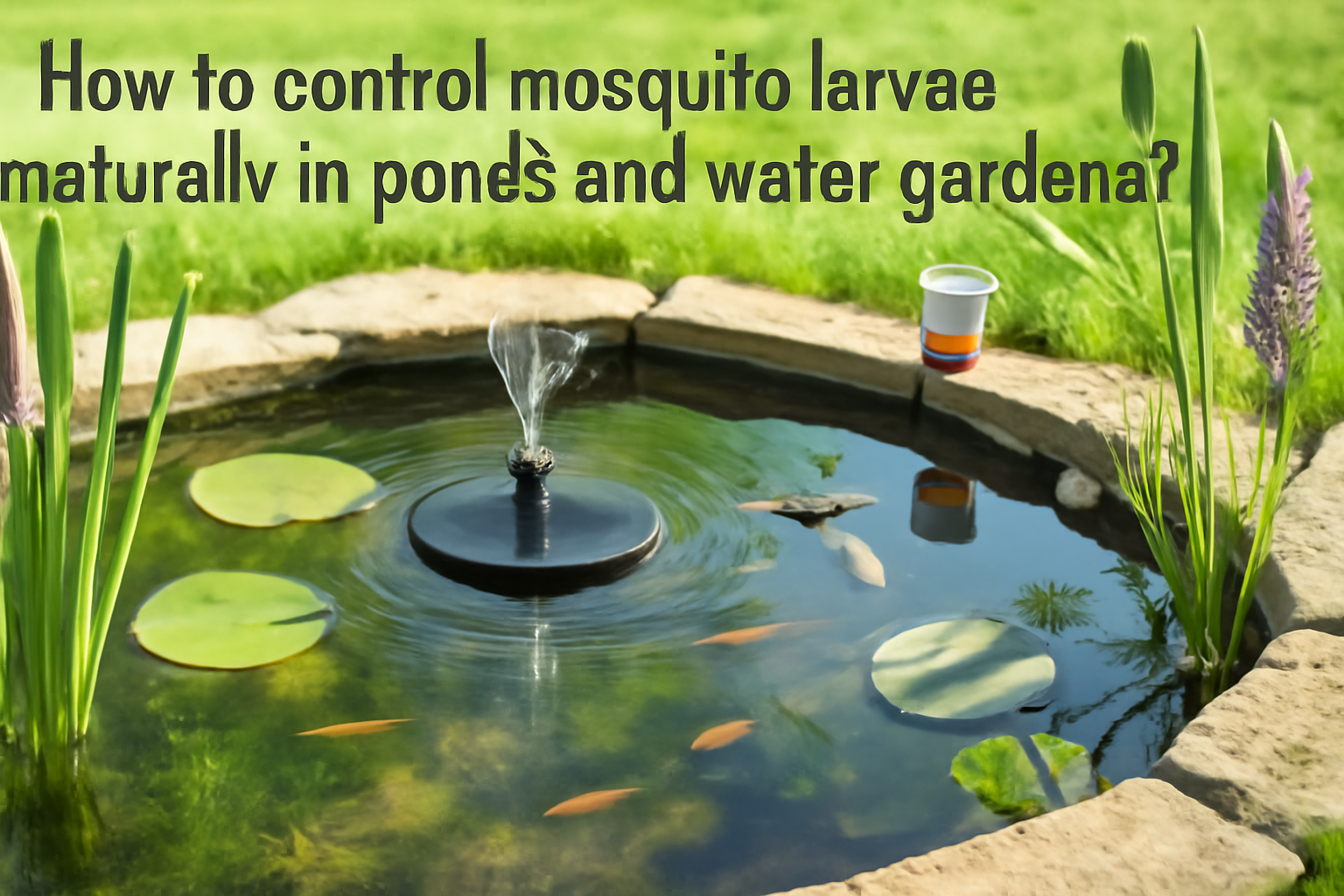
Standing water in ponds can produce over 1,000 mosquitoes in just 7-10 days, but chemical pesticides that harm fish and beneficial insects aren’t your only option. Natural mosquito larvae control methods provide superior long-term effectiveness while protecting pond ecosystems and wildlife health. This comprehensive guide covers 11 proven natural methods that eliminate mosquito breeding without compromising water garden beauty or beneficial species.
Understanding Mosquito Breeding in Water Gardens: Why Natural Control Matters
Mosquito breeding cycles in pond environments complete in 4-7 days under ideal conditions, making natural approaches more effective than reactive chemical treatments. Understanding these patterns helps select intervention strategies that disrupt breeding at multiple lifecycle stages.
Ideal breeding conditions include stagnant water temperatures between 70-95°F and organic matter accumulation. According to the Centers for Disease Control, female mosquitoes lay 100-300 eggs at once, which develop into larvae within 24-48 hours in optimal pond conditions.
Chemical pesticides harm beneficial pond species including fish, frogs, and beneficial insects like dragonflies. Research from the University of Florida demonstrates that chemical treatments reduce beneficial insect populations by 60-80%, creating ecosystem imbalances that actually increase long-term pest problems.
| Photo | Popular Pest Repellents | Price |
|---|---|---|

|
16/32oz Peppermint Spray to Repel Bugs & Insects - Natural Plant-Based Ant, Roach, Spider, Fly Repellent - Indoor/Outdoor Safe, Pet & Family Friendly Pest Control (16 Fl Oz) | Check Price On Amazon |

|
Nature's Dome Pest Control Starter Kit – Makes 3 Bottles (16 oz Each) – Eco-Friendly, Plant-Based Formula for Ant, Roach, Spider, Fly, Flea & Insect Control – Child & Pet Safe for Indoor/Outdoor Use | Check Price On Amazon |

|
(2025 Upgraded) Ultrasonic Insect & Pest Indoor Repeller – Stronger Driving Force, Plug-in Control Electronic Repellent for Roach, Mouse, Rodent, Bugs, Spider, Mice, Ant, 2 Mode Switching (6 Pack) | Check Price On Amazon |

|
LONYEON 8L Electric ULV Cold Fogger Machine with Backpack Mist Atomizer, Adjustable Flow Rate, Large Area Spraying for Home Indoor Outdoor | Check Price On Amazon |

|
Pest Control, Mouse Repellant Pouches, 10 Pack, Mice Repellent Indoor, Peppermint Oil for Rodents & Cucarachas & Spiders & Snakes, Safe Effective Rodent Repellent for Car Engines, RV, Home Use | Check Price On Amazon |
Natural control methods provide multiple environmental benefits: protecting beneficial wildlife, maintaining water quality, and establishing sustainable pest management systems. My decade of experience with pond management shows that proper water feature maintenance combined with biological controls achieves 95%+ mosquito reduction while enhancing pond ecosystem health.
Biological Control: Fish That Eliminate Mosquito Larvae Naturally
Introducing mosquito-eating fish provides 99% larvae reduction when properly stocked, according to aquaculture studies from Texas A&M University. Fish consume larvae before they mature into biting adults, providing continuous biological control.
Gambusia affinis (mosquito fish) consume 100-500 larvae daily per fish. These hardy fish tolerate temperature ranges from 35-100°F and reproduce rapidly to maintain population control. Stock 50-100 Gambusia per 1,000 gallons for optimal larvae elimination.
Goldfish and koi also consume mosquito larvae effectively while adding aesthetic value. Common goldfish eat 200-300 larvae daily and tolerate winter temperatures better than Gambusia. Stock 1 goldfish per 100-200 gallons depending on pond size and plant density.
Native minnows including fathead minnows and bluegill provide regionally adapted mosquito control. Contact local fish and wildlife departments for species recommendations and stocking permits. Native species often show better long-term survival and ecosystem integration than introduced species.
Fish introduction requires proper acclimation over 24-48 hours. Float sealed bags in pond water for temperature adjustment, then gradually mix pond water with transport water before release. Monitor fish health weekly during establishment periods.
Calculating Fish Stocking Rates for Maximum Mosquito Control
Proper fish density determines control effectiveness while maintaining ecosystem balance. Too few fish miss larvae in dense vegetation areas, while overstocking creates waste problems and oxygen depletion.
For Gambusia: Calculate 50-100 fish per 1,000 gallons (approximately 0.05-0.1 fish per gallon). Multiply pond volume by 0.075 for optimal stocking density. Example: 2,000-gallon pond requires 150 Gambusia fish.
For goldfish stocking: Use 1 fish per 100-200 gallons depending on filtration capacity. Heavily filtered ponds support higher densities, while natural ponds need conservative stocking. Monitor water quality parameters weekly after fish introduction.
Adjust calculations for plant coverage exceeding 60% of surface area. Dense vegetation reduces swimming space and requires 20-30% higher fish numbers to access all breeding areas effectively.
Best Fish Species for Different Pond Types and Climates
Climate zone compatibility determines year-round mosquito control success. Northern zones (USDA 3-6) require cold-hardy species, while southern zones need heat-tolerant fish that remain active year-round.
Small container gardens (50-500 gallons) suit Gambusia and small goldfish varieties. These confined spaces need careful monitoring to prevent overstocking. Large ponds (1,000+ gallons) accommodate koi, large goldfish, and native fish combinations.
| Species | Climate Zones | Pond Size | Larvae Consumption | Winter Tolerance |
|---|---|---|---|---|
| Gambusia affinis | USDA 6-11 | 50+ gallons | 100-500/day | Dies below 45°F |
| Common Goldfish | USDA 3-11 | 100+ gallons | 200-300/day | Survives freezing |
| Koi | USDA 4-11 | 1000+ gallons | 300-500/day | Survives to 35°F |
| Fathead Minnows | USDA 2-9 | 200+ gallons | 150-250/day | Excellent cold tolerance |
Check local regulations before introducing non-native species. Some states prohibit Gambusia introduction to protect native fish populations. Always source fish from certified disease-free suppliers to prevent pathogen introduction.
Water Movement and Aeration: Disrupting Mosquito Breeding Habitats
Moving water prevents mosquito egg-laying and larvae development because mosquitoes require still water for reproduction. Water circulation as minimal as 1-2 inches per hour surface movement disrupts breeding completely.
According to entomology research from Cornell University, mosquitoes cannot lay eggs in water with surface movement exceeding 0.5 mph. Larvae also cannot develop in moving water because they require surface contact for breathing through specialized tubes.
Solar fountain pumps provide cost-effective circulation for 100-1,000 gallon ponds. Install 100-200 gallon-per-hour pumps for small water gardens, scaling to 500-1,000 GPH for larger features. Solar pumps operate during peak breeding conditions when mosquito activity is highest.
Electric aerators provide continuous operation including nighttime when some mosquito species are most active. Install aerators to achieve complete water turnover every 2-3 hours. Position multiple smaller aerators rather than single large units for better coverage.
Waterfall and stream features combine aesthetic appeal with mosquito prevention. Design water features with 6-12 inch vertical drops to maintain movement throughout pond systems. Even small recirculating streams effectively prevent breeding in connecting pools.
Calculating Water Circulation Requirements for Mosquito Prevention
Effective mosquito prevention requires specific water turnover rates to eliminate stagnant zones where eggs can develop. Insufficient circulation allows breeding in protected areas behind plants or structures.
Calculate pump requirements using pond volume turnover formula: Pump GPH = Pond gallons ÷ 2 hours for minimum circulation. Example: 1,000-gallon pond needs 500 GPH pump capacity for adequate mosquito prevention.
Identify dead zones using floating objects during pump operation. Areas where debris accumulates indicate insufficient circulation. Add secondary circulation pumps or redirect flow patterns to eliminate stagnant areas completely.
Energy costs for continuous circulation average $15-30 monthly for 200-500 GPH pumps. Solar alternatives reduce operating costs but require battery backup for nighttime operation in high-mosquito areas.
BTI Treatments: Biological Larvicide for Targeted Mosquito Control
Bacillus thuringiensis israelensis (BTI) provides targeted mosquito larvae elimination while remaining completely safe for fish, amphibians, beneficial insects, and aquatic plants. BTI produces proteins toxic only to mosquito, blackfly, and fungus gnat larvae digestive systems.
BTI effectiveness reaches 95-99% larvae mortality within 24-48 hours according to EPA efficacy studies. The bacterial spores disrupt larvae gut function specifically, causing death before pupation into adults. BTI shows no toxicity to fish, birds, mammals, or beneficial insects because they lack susceptible digestive receptors.
Product forms include 30-day slow-release dunks, granular applications, and liquid concentrates. Dunks provide convenient monthly treatment for small ponds, while granules offer precise dosing for larger water features. Liquid concentrates allow custom dilution for specific pond volumes.
Application timing targets early larvae stages (L1-L3 instars) before pupation. Monitor water temperatures above 60°F when larvae development accelerates. I’ve found that preventive BTI applications in March-April prevent population establishment more effectively than reactive treatments.
Dosage calculations use 1 BTI dunk per 100 square feet of surface area. For granules, apply 1 teaspoon per 25 square feet. Liquid concentrates require dilution ratios of 1:50 to 1:100 depending on manufacturer specifications and larvae population density.
BTI Product Selection: Dunks vs Granules vs Liquid Concentrates
Different BTI formulations suit specific pond types and maintenance schedules. Slow-release dunks work best for low-maintenance applications, while granules provide precise control for professional pond management.
BTI dunks release active ingredients over 30 days, providing consistent larvae control with minimal reapplication. Each dunk treats 100 square feet of surface area. Dunks resist UV degradation and weather dilution better than other formulations.
| Product Type | Coverage Area | Duration | Cost per Treatment | Best Application |
|---|---|---|---|---|
| BTI Dunks | 100 sq ft each | 30 days | $1.50-2.50 | Small ponds, low maintenance |
| BTI Granules | 25 sq ft/tsp | 7-14 days | $0.75-1.25 | Large ponds, precise dosing |
| Liquid BTI | Variable dilution | 3-7 days | $0.50-1.00 | Professional treatment, automation |
Storage requirements vary by formulation. Dunks remain stable for 2-3 years in dry conditions. Granules require moisture protection and have 18-month shelf life. Liquid concentrates need refrigeration after opening and expire within 12 months.
Proper BTI Application Timing and Frequency for Year-Round Control
Strategic BTI timing prevents mosquito population establishment rather than reacting to existing infestations. Early season applications in March-April target first-generation mosquitoes before exponential population growth occurs.
Peak season maintenance requires monthly BTI applications from May through September in temperate zones. Southern regions (USDA 9-11) need year-round monthly treatments because mosquito breeding continues through winter months.
Weather event response includes immediate BTI application after heavy rains or flooding that dilute existing treatments. Reapply BTI within 24-48 hours of significant water additions to maintain effective larvae control.
Temperature-based adjustments account for accelerated larvae development in warm water. Increase application frequency to bi-weekly when water temperatures exceed 80°F consistently. Cold periods below 50°F can extend treatment intervals to 45-60 days.
Beneficial Predator Habitat: Attracting Natural Mosquito Control Allies
Creating habitat for dragonflies, damselflies, and other beneficial predators establishes self-sustaining mosquito control that improves over time. Adult dragonflies consume 30-100 mosquitoes daily, while damselfly nymphs eat hundreds of larvae during aquatic development stages.
Dragonfly lifecycle requirements include shallow marginal areas (6-18 inches deep) with emergent vegetation for egg-laying and nymph development. Adult dragonflies need basking sites like flat stones or wooden perches positioned in sunny locations near water edges.
Research from the Smithsonian Institution shows that diverse beneficial predator populations reduce mosquito emergence by 70-85% compared to fish-only control methods. Combining biological controls creates redundant protection against mosquito population resurgence.
Marginal plant selection supports predator establishment through providing egg-laying substrate and hunting perches. Cattails, arrowhead, and pickerel rush offer vertical structure for dragonfly emergence while supporting diverse prey insects that sustain predator populations.
Timeline for beneficial population establishment ranges from 6-18 months depending on regional predator abundance and habitat quality. I’ve observed that ponds with diverse edge plantings attract beneficial insects within one growing season, achieving noticeable mosquito reduction by year two.
Pond Edge Design for Maximum Beneficial Insect Habitat
Proper pond edge gradation creates ideal hunting and breeding grounds for mosquito predators. Gradual depth transitions from 2-inch shallows to 18-inch depths accommodate different beneficial species requirements while maintaining pond aesthetics.
Shallow shelf construction uses 12-24 inch wide ledges at 6-inch depth intervals. Plant emergent species at varying depths to create vertical habitat diversity. Position taller plants like cattails in deeper areas with shorter species in shallows.
Emergent plant spacing allows 50-70% coverage for optimal predator habitat while maintaining open water for fish movement. Space larger plants 18-24 inches apart with smaller species filling gaps at 6-12 inch intervals.
Basking site creation includes flat stones, wooden platforms, or metal garden stakes positioned 6-12 inches above water surface. Adult dragonflies require these perches for thermoregulation and territorial behavior that supports breeding success.
Aquatic Plants That Naturally Deter and Control Mosquitoes
Strategic aquatic plant selection creates multiple mosquito deterrent effects including eliminating egg-laying sites, improving water quality, and supporting beneficial predators. Proper plant coverage addresses mosquito control through ecological mechanisms rather than chemical intervention.
Surface coverage plants eliminate mosquito egg-laying sites by occupying water surface area. Water hyacinth and water lettuce provide 60-80% coverage while consuming excess nutrients that would otherwise support mosquito larvae development. These floating plants also shade water, reducing temperatures that accelerate mosquito breeding.
Oxygenating plants improve water quality and support beneficial fish populations. According to research from Auburn University, submerged plants like hornwort and vallisneria increase dissolved oxygen levels by 30-50%, creating conditions that favor fish health while suppressing anaerobic bacteria that attract egg-laying mosquitoes.
Plants that provide water shading and oxygenation work synergistically with biological controls to create comprehensive mosquito management systems. Emergent marginal plants including cattails and pickerel rush support beneficial predator habitat while adding aesthetic value to water garden designs.
Mosquito-repelling aromatic plants around pond perimeters provide additional deterrent effects. Catnip, lemon balm, and marigolds planted within 10-15 feet of water features repel adult mosquitoes seeking egg-laying sites. Research from Iowa State University shows catnip contains nepetalactone compounds 10 times more effective than DEET for mosquito repelling.
Calculating Plant Coverage for Effective Mosquito Prevention
Proper plant coverage eliminates mosquito egg-laying sites while maintaining pond ecosystem balance. Target 60-70% surface coverage with floating plants during peak mosquito season (May-September).
Calculate coverage using pond surface area measurements. Multiply length × width in feet, then determine 65% for target coverage. Example: 10×20 foot pond (200 sq ft) needs 130 sq ft of floating plant coverage for optimal mosquito prevention.
Plant growth rate considerations require seasonal management and periodic thinning. Fast-growing species like water hyacinth double coverage every 2-3 weeks in optimal conditions. Plan monthly harvesting to maintain target coverage without overgrowth that reduces oxygen levels.
Balance plant coverage with fish habitat needs by maintaining 30-40% open water for swimming and feeding areas. Dense plant coverage can trap fish and reduce their mosquito larvae consumption effectiveness.
Water Quality Management: Creating Conditions Hostile to Mosquito Breeding
Optimized water chemistry naturally discourages mosquito breeding while promoting fish health and beneficial bacteria populations. Ideal pH ranges between 7.0-8.5 create alkaline conditions that mosquito larvae tolerate poorly compared to slightly acidic breeding preferences.
Dissolved oxygen optimization through aeration and plant photosynthesis maintains levels above 6-8 ppm that support fish health while creating water movement mosquitoes avoid. Stagnant, oxygen-poor water attracts egg-laying females and supports higher larvae survival rates.
Organic matter management through bottom cleaning and beneficial bacteria addition reduces nutrient loads that feed mosquito larvae. According to research from the University of Wisconsin, larvae development rates decrease by 40-60% in nutrient-poor water compared to organically rich breeding sites.
Beneficial bacteria products like pond bacterial treatments consume organic waste and maintain water clarity. Apply monthly during active season at manufacturer-recommended rates based on pond volume. Bacteria competition reduces food availability for mosquito larvae while improving overall water quality.
Water testing schedule includes weekly pH and dissolved oxygen monitoring during mosquito season. Test monthly during winter months when biological activity decreases. Maintain pH between 7.0-8.0 and dissolved oxygen above 6 ppm for optimal mosquito deterrence and fish health.
Seasonal Mosquito Control Strategy: Year-Round Prevention Timeline
Successful mosquito control requires proactive seasonal planning that prevents breeding populations rather than reacting to established infestations. Early spring preparation in March-April targets overwintering eggs and first-generation adults before exponential population growth occurs.
Early spring pond awakening (March-April) includes cleaning accumulated organic debris, testing water quality parameters, and applying first BTI treatments when water temperatures reach 50°F consistently. Begin fish feeding programs gradually as temperatures warm to restore biological control effectiveness.
Peak breeding season intensive monitoring (May-September) requires weekly inspections for larvae presence and monthly BTI applications. Monitor fish health and feeding activity as primary indicators of biological control effectiveness. Increase aeration during hot periods when dissolved oxygen levels decline.
Fall preparation (October-November) focuses on reducing organic matter that supports overwintering mosquito eggs. Remove fallen leaves and excess plant material before winter. Apply final BTI treatments before water temperatures drop below 45°F when larvae development stops.
Winter monitoring (December-February) includes maintaining aeration in ice-free regions and planning next season’s control strategies. Order fish replacements, BTI supplies, and pond maintenance equipment during off-season for spring preparation. Autumn prevention strategies set the foundation for effective control throughout the following year.
Regional Climate Adaptations for Different Geographic Zones
Climate zone differences require adapted timing and method selection for optimal mosquito control effectiveness. Northern regions have concentrated breeding seasons requiring intensive short-term control, while southern areas need consistent year-round management.
Northern zones (USDA 3-6) experience 4-6 month mosquito seasons from May through October. Focus intensive BTI applications and maximum fish stocking during this compressed breeding period. Cold-hardy fish species like goldfish provide better overwintering survival than tropical Gambusia.
Moderate zones (USDA 7-8) have extended 7-8 month seasons requiring sustained control measures from April through November. Combine cold-tolerant and warm-season fish species for continuous biological control. Plan two BTI application peaks during spring emergence and fall population surges.
Southern zones (USDA 9-11) need year-round mosquito vigilance with monthly BTI applications and continuous biological controls. Maintain fish feeding and pond circulation throughout winter months when temperatures support mosquito breeding activity.
Troubleshooting Failed Natural Mosquito Control: Advanced Problem-Solving
When natural methods aren’t providing adequate mosquito control, systematic troubleshooting identifies root causes and optimal solution adjustments. Failed control typically results from insufficient method implementation, seasonal timing errors, or environmental factors that require modified approaches.
Fish population assessment includes counting visible fish during feeding times and evaluating consumption rates. Healthy mosquito-eating fish actively feed and show no signs of disease or stress. Replace lost fish immediately and increase stocking density by 25-50% if larvae persist despite fish presence.
BTI effectiveness evaluation involves testing different product formulations and increasing application frequency. Switch from dunks to granules for better coverage distribution, or increase dunk quantities by 50% in heavily vegetated areas where larvae hide from treatment contact.
Water circulation dead zone identification uses floating debris tracking during pump operation. Install additional circulation pumps or redirect flow patterns to eliminate stagnant areas where mosquitoes successfully breed despite other control measures.
Multiple method integration creates synergistic control effects exceeding individual technique effectiveness. Combine fish stocking with BTI treatments and water circulation for comprehensive larvae elimination. Add beneficial predator habitat and strategic plant coverage for adult mosquito deterrence.
Professional consultation indicators include persistent mosquito emergence after 60-90 days of proper natural control implementation. Consult aquatic management specialists or extension service entomologists for site-specific recommendations and advanced biological control options.
When to Combine Multiple Natural Control Methods for Enhanced Effectiveness
Strategic combination of multiple natural methods creates synergistic effects that exceed individual method effectiveness when properly implemented and timed. Integration addresses mosquito control at multiple lifecycle stages while building ecosystem resilience.
Fish plus BTI combination provides immediate larvae elimination (BTI) with long-term biological control (fish). Apply BTI monthly during fish establishment periods, then reduce to emergency-only treatments once fish populations mature and reproduce successfully.
Water movement plus beneficial predator habitat combines prevention (circulation) with biological control (predatory insects). Install aerators to prevent breeding while creating shallow marginal areas for dragonfly and damselfly development away from circulation zones.
Cost-benefit analysis shows combined approaches require higher initial investment but provide superior long-term value. My experience with comprehensive natural pest control strategies demonstrates that integrated systems achieve 95-99% mosquito reduction while enhancing overall pond ecosystem health and biodiversity.
Cost Analysis: Budget-Friendly Natural Mosquito Control for Every Pond Size
Natural mosquito control methods provide superior long-term value compared to ongoing chemical treatments while protecting pond ecosystem health and beneficial wildlife populations. Initial setup costs range from $50-500 depending on pond size and selected control combinations.
Small pond setup (100-500 gallons) costs $50-150 including 25-50 Gambusia fish ($25-50), monthly BTI dunks ($30-60 annually), and basic aeration pump ($75-200). Annual maintenance costs average $40-80 for BTI replacement and fish food supplementation.
Medium pond installation (500-2000 gallons) requires $150-350 investment including 100-200 mosquito-eating fish ($50-150), circulation pumps ($100-300), and BTI treatments ($50-100 annually). Ongoing yearly costs remain minimal at $60-120 for supplies and maintenance.
Large pond systems (2000+ gallons) need $300-800 initial setup including diverse fish populations ($150-400), multiple aeration systems ($200-600), beneficial bacteria treatments ($50-100), and comprehensive plant coverage ($100-300). Annual maintenance costs stabilize at $100-200 for replacement fish and treatment supplies.
| Pond Size | Initial Setup Cost | Annual Maintenance | 5-Year Total | Chemical Alternative Cost |
|---|---|---|---|---|
| Small (100-500 gal) | $50-150 | $40-80 | $250-550 | $400-800 |
| Medium (500-2000 gal) | $150-350 | $60-120 | $450-950 | $800-1500 |
| Large (2000+ gal) | $300-800 | $100-200 | $800-1800 | $1500-3000 |
Budget prioritization for limited resources focuses on biological fish control as the most cost-effective foundation, followed by BTI treatments for immediate results, then water circulation for comprehensive prevention. DIY installation reduces costs by 40-60% compared to professional services.
Safety Considerations: Protecting Children, Pets, and Wildlife During Natural Mosquito Control
Natural mosquito control methods prioritize safety for children, pets, and beneficial wildlife through non-toxic biological and mechanical approaches. Natural treatment safety for pets and wildlife has been extensively documented through EPA studies and field research.
Child safety around pond installations requires secure edges and shallow access areas for supervised interaction. Install safety barriers around deep water sections while maintaining beneficial shallow areas for ecosystem function. Educate children about beneficial fish and insects to encourage conservation awareness.
Pet interaction considerations include ensuring fish species compatibility with curious pets and avoiding plant varieties toxic to dogs or cats. BTI products carry EPA certification for safety around pets, livestock, and wildlife with no observed adverse effects in mammals or birds.
Wildlife protection during implementation focuses on preserving beneficial species including frogs, toads, and aquatic insects that support ecosystem balance. Natural methods enhance rather than harm wildlife populations, unlike chemical pesticides that cause broad-spectrum mortality.
Organic certification maintenance requires using only approved biological control agents and avoiding synthetic additives. BTI treatments maintain organic compliance while providing effective mosquito control suitable for certified organic farming and gardening operations.
Frequently Asked Questions About Natural Mosquito Larvae Control
What fish species are most effective for eating mosquito larvae in small ponds?
Gambusia affinis (mosquito fish) are most effective, consuming 100-500 larvae daily per fish. For aesthetic appeal, goldfish consume 200-300 larvae daily while tolerating cold better. Stock 50-100 Gambusia per 1,000 gallons, or 1 goldfish per 100-200 gallons for optimal control in small ponds under 500 gallons.
How much water movement is needed to prevent mosquito breeding in water gardens?
Minimal surface movement of 1-2 inches per hour prevents mosquito egg-laying completely. Install pumps providing complete water turnover every 2-3 hours. For 1,000-gallon ponds, 500 GPH circulation capacity creates sufficient movement to disrupt breeding while maintaining aesthetic water features.
Is BTI safe for pond fish and aquatic plants long-term?
BTI (Bacillus thuringiensis israelensis) is completely safe for fish, plants, and beneficial insects with EPA approval for organic use. The bacterial spores target only mosquito larvae digestive systems. Long-term studies show no adverse effects on aquatic ecosystems after 20+ years of continuous use.
How often should I apply natural mosquito control treatments throughout the season?
Apply BTI monthly during mosquito season (May-September in temperate zones). Monitor fish feeding weekly as biological control indicator. Increase BTI frequency to bi-weekly when water temperatures exceed 80°F. Southern regions require year-round monthly BTI applications due to continuous breeding.
What plants can I add around my pond to naturally repel mosquitoes?
Plant catnip, lemon balm, and marigolds within 10-15 feet of water features for adult mosquito deterrence. Aquatic plants like water hyacinth and hornwort eliminate breeding sites through surface coverage and water oxygenation. Target 60-70% surface coverage with floating plants for optimal prevention.
Can beneficial bacteria help control mosquito larvae populations?
Beneficial bacteria reduce mosquito larvae development by consuming organic matter that feeds larvae populations. Apply monthly bacterial treatments to maintain water quality and reduce nutrient availability. While not directly lethal, bacteria create hostile breeding conditions that decrease larvae survival by 40-60%.
How do I determine the right stocking density of mosquito-eating fish for my pond size?
Calculate 50-100 Gambusia per 1,000 gallons, or multiply pond gallons by 0.075 for optimal density. For goldfish, stock 1 fish per 100-200 gallons depending on filtration capacity. Adjust upward by 20-30% for ponds with heavy vegetation coverage exceeding 60% surface area.
What should I do if natural mosquito control methods aren’t working effectively?
Increase fish stocking density by 50%, switch BTI formulations from dunks to granules for better coverage, and add circulation pumps to eliminate stagnant zones. Combine multiple methods rather than relying on single approaches. Consult extension services if problems persist after 90 days of proper implementation.
How early in spring should I start implementing mosquito control measures?
Begin BTI applications when water temperatures reach 50°F consistently, typically March-April in temperate zones. Start fish feeding programs gradually as temperatures warm above 55°F. Early implementation prevents first-generation mosquito establishment before exponential population growth occurs during peak season.
Can I combine multiple natural control methods without harming my pond ecosystem?
Multiple natural methods create synergistic benefits that enhance ecosystem health rather than causing harm. Combine fish, BTI, water circulation, and beneficial plants safely. Monitor water quality parameters monthly to ensure balanced conditions. Natural combinations provide redundant protection while supporting biodiversity and long-term pond health.
