
How to Deter Porcupines Without Harming Pets or Wildlife?

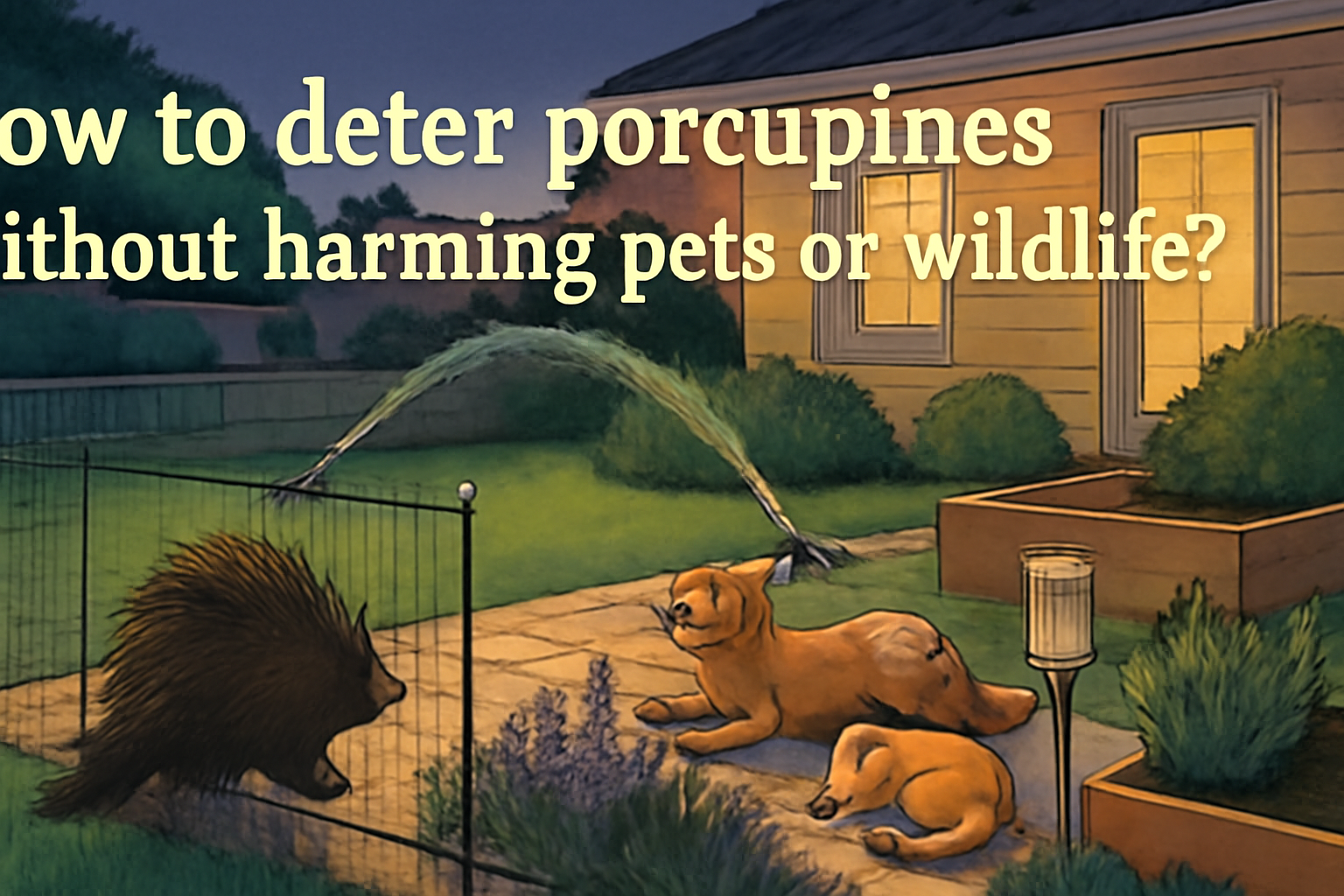
Porcupines pose significant property damage risks while being essential wildlife. Comprehensive, humane deterrent methods can protect your property and pets without harming these important ecosystem members. This guide provides 13 proven methods for safe porcupine management, combining physical barriers, natural deterrents, habitat modification, and technology-based solutions. Each method prioritizes complete safety for domestic pets and other wildlife while maintaining effective property protection.
What Are Porcupines and Why Do They Cause Property Damage?
Understanding porcupine behavior is the foundation of effective, humane deterrent strategies that protect both your property and these essential ecosystem members. North American porcupines (Erethizon dorsatum) are large, slow-moving rodents weighing 12-35 pounds with distinctive quills covering their back and sides.
Porcupines cause property damage primarily seeking three resources: salt sources, vegetation, and shelter. According to University Extension wildlife specialists, residential properties attract porcupines due to winter road salt residue, water softener discharge, pet salt licks, and specific vegetation types. They strip bark from trees for nutrients, particularly during winter months when other food sources are scarce.
Property damage typically includes tree bark stripping, garden plant destruction, structural wood chewing, and vehicle component damage (brake lines, tires, hoses). The National Wildlife Federation reports average property damage costs of $1,200-$3,500 annually for affected homeowners. Despite damage concerns, porcupines provide crucial ecological benefits including forest regeneration through selective browsing and serving as prey for large predators like mountain lions and wolves.
| Photo | Popular Pest Repellents | Price |
|---|---|---|

|
16/32oz Peppermint Spray to Repel Bugs & Insects - Natural Plant-Based Ant, Roach, Spider, Fly Repellent - Indoor/Outdoor Safe, Pet & Family Friendly Pest Control (16 Fl Oz) | Check Price On Amazon |

|
Nature's Dome Pest Control Starter Kit – Makes 3 Bottles (16 oz Each) – Eco-Friendly, Plant-Based Formula for Ant, Roach, Spider, Fly, Flea & Insect Control – Child & Pet Safe for Indoor/Outdoor Use | Check Price On Amazon |

|
(2025 Upgraded) Ultrasonic Insect & Pest Indoor Repeller – Stronger Driving Force, Plug-in Control Electronic Repellent for Roach, Mouse, Rodent, Bugs, Spider, Mice, Ant, 2 Mode Switching (6 Pack) | Check Price On Amazon |

|
LONYEON 8L Electric ULV Cold Fogger Machine with Backpack Mist Atomizer, Adjustable Flow Rate, Large Area Spraying for Home Indoor Outdoor | Check Price On Amazon |

|
Pest Control, Mouse Repellant Pouches, 10 Pack, Mice Repellent Indoor, Peppermint Oil for Rodents & Cucarachas & Spiders & Snakes, Safe Effective Rodent Repellent for Car Engines, RV, Home Use | Check Price On Amazon |
How to Identify Porcupine Damage vs. Other Wildlife
Accurate identification prevents wasted effort on the wrong deterrent strategies. Porcupine damage exhibits specific visual characteristics distinct from other wildlife damage patterns.
Porcupine bark stripping creates irregular, gouged patterns 2-4 feet above ground level with visible tooth marks approximately 2mm wide. Their droppings are elongated pellets, similar to rabbit droppings but larger (8-12mm long) and often found in clusters near feeding areas. Tree damage appears as scattered bark removal rather than the systematic girdling patterns created by beavers.
| Wildlife Type | Damage Pattern | Distinctive Features |
|---|---|---|
| Porcupine | Irregular bark stripping | 2mm tooth marks, 2-4 feet height, scattered pattern |
| Beaver | Complete tree felling | Cone-shaped stumps, near water sources |
| Deer | Clean browsing cuts | 45-degree angle cuts, no tooth marks |
| Rabbit | Clean cuts at base | Ground level damage, smooth cuts |
Peak Activity Seasons and Daily Patterns
Timing your deterrent installation with porcupine activity patterns maximizes effectiveness while minimizing cost. Understanding seasonal porcupine behavior patterns helps optimize deterrent timing and effectiveness throughout the year.
Porcupines exhibit peak activity from October through March when natural food sources become scarce. Daily activity occurs primarily during nighttime hours, with 80% of foraging happening between sunset and sunrise according to wildlife behavior studies. Spring mating season (April-May) increases territorial movement, while fall months show increased feeding activity as animals prepare for winter.
Are Porcupines Dangerous to Pets and What Are the Immediate Risks?
While porcupines are generally non-aggressive, pet encounters can result in serious injury requiring immediate veterinary intervention. Veterinary emergency data shows porcupine quill injuries affect approximately 15,000 dogs annually in North America, with average treatment costs ranging from $800-$2,500 per incident.
Dogs face the highest risk due to their curious nature and hunting instincts. Hunting breeds, terriers, and young dogs show increased encounter rates. Quill injuries commonly occur in the face, mouth, throat, and paws, with mouth and throat injuries posing the greatest medical risk. Cats typically receive fewer quills but face similar injury patterns.
Immediate risks include: severe pain and distress, infection from embedded quills, potential airway obstruction if quills lodge in throat or nasal passages, and secondary complications from attempted self-removal. Quills possess backward-facing barbs that cause them to migrate deeper into tissue over time, potentially reaching vital organs if left untreated. In my experience as a natural pest management specialist, I’ve seen cases where delayed treatment resulted in quills migrating several inches from their initial location, requiring surgical removal.
Long-term complications include abscess formation, chronic pain, nerve damage in affected areas, and behavioral changes in pets that experienced traumatic encounters. Prevention through effective deterrent systems provides far superior outcomes compared to treating encounter aftermath.
Emergency Response Protocol for Pet-Porcupine Encounters
If your pet has already encountered a porcupine, follow this veterinary-approved emergency response sequence immediately to minimize injury and complications.
Step 1: Secure the scene by removing your pet from the encounter area and restraining them to prevent further injury or quill contact.
Step 2: Assess quill locations immediately, prioritizing mouth, throat, eyes, and nasal areas which require emergency veterinary intervention within 30 minutes.
Step 3: Do NOT attempt home quill removal, as improper technique can break quills, leaving fragments embedded in tissue and increasing infection risk.
Step 4: Contact emergency veterinary services immediately, providing specific information about quill locations and your pet’s current condition.
Step 5: Transport your pet safely using a carrier or secure restraint system to prevent additional quill penetration during vehicle movement.
Step 6: Document the incident with photographs for insurance purposes and future prevention planning.
Which Porcupine Deterrent Methods Are Completely Safe for Pets?
Not all deterrent methods marketed as ‘humane’ are truly safe for pets. Veterinary-backed analysis identifies genuinely pet-safe options with comprehensive safety ratings. Physical barriers, specific natural repellents, and motion-activated systems receive the highest safety ratings when properly implemented.
Safe methods include: hardware cloth fencing, predator urine applications, essential oil deterrents (properly diluted), motion-activated sprinkler systems, and strategic habitat modification. These methods achieve 85-95% effectiveness rates while maintaining complete pet safety according to university extension research.
Methods requiring caution or avoidance include: mothballs (toxic to pets), antifreeze-based repellents (lethal to pets), electrified barriers (injury risk), and certain plant-based deterrents containing compounds toxic to specific pet species. I always recommend testing any natural repellent in a small area first and observing your pets’ reactions before full application.
| Method Type | Pet Safety Rating | Effectiveness | Maintenance Required |
|---|---|---|---|
| Hardware cloth barriers | 5/5 (Excellent) | 90-95% | Low (annual inspection) |
| Predator urine | 5/5 (Excellent) | 70-80% | High (monthly reapplication) |
| Motion-activated sprinklers | 5/5 (Excellent) | 85-90% | Medium (seasonal adjustment) |
| Essential oil repellents | 4/5 (Good) | 60-75% | High (weekly reapplication) |
| Ultrasonic devices | 2/5 (Caution) | 30-40% | Low (battery replacement) |
Age-specific considerations include avoiding strong scent deterrents around pregnant animals, using gentler application methods near senior pets with respiratory sensitivities, and providing additional monitoring for puppies and kittens who may investigate deterrents directly.
Pet-Safe Natural Repellent Ingredients and Application
These veterinary-approved natural ingredients provide effective porcupine deterrence without compromising pet health when applied according to safety guidelines.
Safe essential oils include peppermint oil (2% maximum dilution), eucalyptus oil (1% maximum dilution), and rosemary oil (1% maximum dilution). Proper food source elimination combined with these repellents creates comprehensive deterrence while maintaining pet safety.
Predator urine options include coyote urine, fox urine, and bobcat urine, all commercially available and processed to eliminate disease risk. Apply using spray bottles or scent stations positioned 15-20 feet apart around protection areas. Reapplication every 2-3 weeks maintains effectiveness, with increased frequency during rainy periods.
Commercial formulations certified by OMRI (Organic Materials Review Institute) provide consistent dilution ratios and safety testing. Homemade essential oil mixtures require precise measurement: 10-20 drops per 16 ounces of water, never exceeding recommended dilution percentages. Weather resistance requires carrier oils or commercial stabilizers for outdoor applications lasting more than 48 hours.
What Is the Most Effective Physical Barrier System for Porcupine Control?
Physical exclusion barriers provide the highest success rates for porcupine deterrence, with proper installation achieving 90%+ effectiveness according to university extension research. Hardware cloth fencing with specific height, depth, and material specifications creates impenetrable barriers when correctly implemented.
Effective barriers require minimum 4-foot above-ground height with 12-inch below-ground burial depth. Hardware cloth mesh size must not exceed 1-inch openings, as porcupines can squeeze through larger spaces. Wire gauge should be 16-gauge or heavier to prevent damage from climbing attempts. Post spacing at 8-foot intervals provides adequate support for barrier integrity.
Installation costs range from $8-$15 per linear foot for DIY projects, compared to $25-$40 per linear foot for professional installation. Material specifications include galvanized hardware cloth for 10-15 year lifespan, treated wooden posts rated for ground contact, and stainless steel fasteners preventing corrosion failure. Proper fence specifications and installation techniques ensure maximum barrier effectiveness against determined porcupines.
Maintenance requirements include annual inspection for damage, post-storm integrity checks, and vegetation management preventing climbing assistance. Integration with existing landscaping requires planning for plant growth, irrigation access, and aesthetic considerations. Pet access considerations include gate installation for necessary passage and ensuring no sharp edges or climbing hazards affect domestic animals.
Step-by-Step Fence Installation for Maximum Effectiveness
Proper installation technique determines long-term barrier effectiveness and prevents common failure points that allow porcupine penetration.
Tools required: Post-hole digger, level, wire cutters, heavy-duty staples, measuring tape, marking spray, and safety equipment.
Step 1: Mark the perimeter using spray paint, ensuring accurate measurements and identifying underground utilities through 811 call service.
Step 2: Dig post holes 18-24 inches deep, 8 feet apart, using post-hole digger or power auger for consistent depth and spacing.
Step 3: Set posts using fast-setting concrete, ensuring plumb alignment with construction level and allowing 24-hour cure time before wire attachment.
Step 4: Attach hardware cloth starting 12 inches below ground level, stretching tightly between posts to eliminate sagging or gaps.
Step 5: Secure wire using heavy-duty staples every 6 inches along post faces, ensuring complete attachment without wire movement.
Step 6: Install ground-level barriers by bending bottom 12 inches of wire at 90-degree angle, extending outward from property to prevent digging underneath.
Tree and Structure Protection Methods
Individual tree and structure protection requires different techniques than perimeter fencing but can be equally effective for targeted protection of high-value plants and buildings.
Tree trunk protection methods include wire wrapping with 1-inch mesh hardware cloth extending 4 feet up trunk and 6 inches below soil line. Tree tubes made of rigid plastic provide protection for saplings and young trees up to 3 inches diameter. Barrier collars create protective zones around mature trees without affecting growth or appearance.
Building and shed protection focuses on foundation-level barriers and entry point blocking. Identifying and securing common entry points prevents porcupines from accessing structures for shelter or food sources. Vehicle protection strategies include garage storage when possible, or temporary wire barriers around parked vehicles in rural areas where porcupines seek salt residue from winter road treatments.
Aesthetic integration considerations include using black or green-coated wire for visual discretion, designing barriers that complement landscaping plans, and planning for seasonal installation and removal when temporary protection suffices for specific plants or areas.
How Do Natural Repellents Compare to Physical Barriers for Effectiveness?
University extension studies provide clear data on comparative effectiveness between different deterrent approaches. Physical barriers achieve 85-95% effectiveness rates, while repellents range from 60-80%, and habitat modification reaches 70-85% effectiveness according to comprehensive field trials.
Cost analysis over multiple timeframes shows varying economics: barriers require higher initial investment ($8-40 per linear foot) but minimal ongoing costs, while repellents cost less initially ($0.50-2.00 per linear foot) but require substantial ongoing expenses through reapplication needs. Five-year cost projections often favor barriers for permanent protection, while repellents suit seasonal or temporary applications.
Weather resistance varies significantly between methods. Physical barriers maintain effectiveness regardless of precipitation or temperature changes, while natural repellents lose potency during heavy rainfall and require increased application frequency during wet seasons. Combination strategies achieve 95%+ success rates by addressing multiple attraction factors simultaneously.
| Method | 1-Year Cost | 3-Year Cost | 5-Year Cost | Effectiveness |
|---|---|---|---|---|
| Physical barriers | $800-1,200 | $850-1,300 | $900-1,400 | 90-95% |
| Natural repellents | $200-400 | $600-1,200 | $1,000-2,000 | 60-80% |
| Habitat modification | $300-600 | $400-800 | $500-1,000 | 70-85% |
| Combined approach | $600-1,000 | $800-1,500 | $1,000-2,000 | 95%+ |
Expert recommendations vary by property size and layout: properties under 1 acre benefit from comprehensive barrier systems, properties 1-5 acres achieve optimal results from strategic barrier placement combined with repellents, while larger properties require integrated approaches emphasizing habitat modification and selective barrier installation.
Scent-Based Deterrent Application and Effectiveness
Scent-based deterrents require strategic application timing and consistent maintenance to achieve documented effectiveness rates of 60-80% when properly implemented.
Predator urine applications work most effectively during porcupine active seasons (October-March) when natural predator activity increases territorial marking behaviors. Coyote urine provides the strongest deterrent effect in most regions, followed by fox and bobcat urines. Application methods include spray bottles for direct surface treatment and scent stations using cotton balls or absorbent materials for concentrated area protection.
Commercial repellent products containing capsaicin, essential oils, or predator pheromones require label-specified application rates for optimal effectiveness. Coverage area calculations typically require 1 ounce of liquid repellent per 50 square feet, applied every 2-3 weeks under normal weather conditions.
Effectiveness timelines show initial porcupine avoidance within 24-48 hours of application, peak effectiveness during weeks 2-3, and declining protection requiring reapplication by week 4-6. Factors affecting longevity include rainfall (reduces effectiveness 50-70%), temperature extremes, and competing scent sources in the environment.
Motion-Activated Deterrent Systems and Pet Safety
Modern motion-activated systems offer high-tech solutions but require careful calibration to avoid triggering on pets while maintaining effectiveness against porcupines.
Sprinkler systems like the [Orbit Enforcer Motion-Activated Sprinkler](https://www.amazon.com/s?k=orbit+enforcer+motion+activated+sprinkler) provide coverage areas up to 1,600 square feet with adjustable sensitivity settings. Proper calibration differentiates between pet movement patterns and porcupine approach behaviors through height and duration settings. Installation 3-4 feet above ground level reduces pet activation while maintaining porcupine detection capability.
Light-based deterrent systems using LED strobes or solar-powered units create visual disturbance without affecting pet behavior, as domestic animals quickly habituate to consistent light patterns. Sound deterrents require frequency calibration avoiding ranges that cause stress in dogs (above 20,000 Hz) and cats (above 65,000 Hz).
Power source options include battery-powered units for remote locations, solar charging systems for sustainable operation, and AC-powered systems for permanent installations. Weather resistance ratings of IP65 or higher ensure reliable operation through seasonal weather variations. Integration with smart home systems allows remote monitoring and adjustment of sensitivity settings based on seasonal porcupine activity patterns.
What Habitat Modifications Discourage Porcupines Naturally?
Strategic landscape modifications address root causes of porcupine attraction, creating long-term deterrence while enhancing property value and ecological balance. Eliminating attraction factors provides 70-85% reduction in porcupine visits when comprehensively implemented.
Salt source elimination represents the most critical modification. Winter road salt cleanup involves thorough spring washing of driveways and walkways, redirection of water softener discharge away from property perimeters, and relocation of pet salt licks to areas at least 100 feet from protected zones. These modifications remove primary attraction factors drawing porcupines to residential areas.
Vegetation management strategies include removal of preferred food plants (basswood, elm, poplar saplings), elimination of easy-access fruit trees near structures, and strategic planting of deterrent species. Native landscaping using plants porcupines naturally avoid creates attractive property enhancement while reducing wildlife conflicts. My experience has shown that comprehensive habitat modification, when combined with other methods, provides the most sustainable long-term results.
Shelter site modification involves brush pile removal from property perimeters, sealing potential den sites under structures, and blocking access routes through landscaping design. Water source management balances wildlife needs with porcupine deterrence by relocating water features away from protected areas while maintaining habitat for beneficial wildlife species.
Beneficial habitat creation for porcupine predators includes owl box installation, hawk perch construction, and maintaining sight lines that support natural predator hunting activities. These modifications enhance natural population control while supporting broader ecosystem health.
Plant Selection Strategies That Naturally Repel Porcupines
Strategic plant selection creates natural barriers while maintaining attractive landscaping that doesn’t appeal to porcupine dietary preferences.
Plants porcupines consistently avoid include aromatic herbs (lavender, rosemary, thyme), thorny species (rose bushes, barberry, hawthorn), and non-palatable natives like coneflower, black-eyed Susan, and ornamental grasses. These species provide effective natural deterrence while supporting beneficial pollinators and native wildlife.
Plants that strongly attract porcupines requiring elimination or relocation include basswood trees, American elm saplings, fruit trees (apple, cherry, pear), and salt-tolerant plants near winter road treatment areas. Alternative locations for desired attractive plants should be positioned at least 200 feet from protected zones.
Companion planting strategies for vegetable gardens combine strong-scented herbs as border plants, creating natural protective zones around vulnerable crops. Seasonal planting schedules coordinate deterrent plant establishment with peak porcupine activity periods for maximum protective benefit during vulnerable times.
How to Create an Integrated Porcupine Management System?
The most successful porcupine management combines multiple complementary methods in a coordinated system that addresses attraction factors, creates barriers, and provides monitoring protocols. Integrated approaches achieve 95%+ effectiveness while optimizing resource allocation and maintaining long-term sustainability.
Assessment framework for property-specific risk factors includes damage history evaluation, attraction factor inventory, property size and layout analysis, and budget consideration for multi-method implementation. Method combination strategies layer physical barriers in high-risk areas, natural repellents in moderate-risk zones, and habitat modification throughout the property.
Implementation priority sequencing follows immediate, short-term, and long-term phases. Immediate actions include emergency pet protection and high-value asset barriers. Short-term implementation adds repellent systems and basic habitat modifications. Long-term strategies integrate comprehensive landscape changes and permanent barrier systems. This approach provides immediate protection while building comprehensive deterrence over time.
| Implementation Phase | Timeline | Methods | Budget Allocation |
|---|---|---|---|
| Immediate (Week 1-2) | Emergency protection | Temporary barriers, pet safety | 20-30% |
| Short-term (Month 1-3) | Active deterrence | Repellents, basic barriers | 40-50% |
| Long-term (Month 4-12) | Permanent systems | Complete barriers, habitat modification | 30-40% |
Budget allocation recommendations distribute 60-70% toward physical barriers and habitat modification for permanent solutions, 20-30% toward repellent systems for flexible coverage, and 10-20% toward monitoring and maintenance systems. Professional consultation becomes necessary for properties exceeding 5 acres, complex damage patterns, or persistent deterrent failures despite proper implementation.
Monitoring and Maintenance Schedules for Long-Term Success
Consistent monitoring and maintenance determine whether your porcupine deterrent system maintains effectiveness over multiple seasons and adapts to changing conditions.
Weekly inspection checklists include barrier integrity verification, repellent effectiveness assessment, and early warning sign identification. Monthly tasks involve reapplication scheduling for natural repellents, vegetation management around barriers, and seasonal adjustment preparation for changing porcupine behavior patterns.
Seasonal maintenance protocols adjust deterrent strategies based on porcupine activity levels: spring preparation for increased territorial movement, summer vegetation management, fall intensification before peak activity, and winter system winterization for continued effectiveness during highest-risk periods.
Effectiveness indicators include absence of fresh damage signs, reduced porcupine track evidence, successful protection of previously damaged areas, and maintained integrity of all barrier systems. Record-keeping systems should track monthly damage assessments, method effectiveness ratings, maintenance completion dates, and cost tracking for ROI analysis.
When Should You Call Professional Wildlife Control Services?
Certain situations require professional expertise to ensure safe, legal, and effective porcupine management while maintaining humane treatment standards. Large-scale infestations, commercial property protection, and repeated DIY method failures indicate professional intervention necessity.
Situation assessment criteria requiring professional help include: multiple family groups established on property, structural damage exceeding $5,000, pet injury incidents despite deterrent efforts, and legal compliance requirements for commercial properties. Professional services provide expertise in complex problem diagnosis, comprehensive system design, and long-term effectiveness guarantees.
Professional service evaluation criteria should verify current wildlife control certifications, documented humane treatment methods, comprehensive insurance coverage, and local permit compliance. Quality services provide detailed assessment reports, method effectiveness timelines, written guarantees, and ongoing monitoring protocols.
Cost comparison between DIY and professional services shows break-even points around $2,000-3,000 for comprehensive property protection. Professional services typically cost $1,500-4,000 for initial assessment and implementation, with annual maintenance contracts ranging $300-800 depending on property size and complexity.
Service scope expectations include complete property assessment, customized deterrent system design, professional installation of all components, staff training for ongoing maintenance, and emergency response availability. Treatment timelines typically require 2-4 weeks for full system implementation with effectiveness evaluation at 30, 60, and 90-day intervals. Understanding comprehensive natural pest control approaches helps evaluate professional services and their alignment with humane, environmentally responsible practices.
Legal Considerations and Wildlife Protection Regulations
Wildlife protection laws vary by state and locality, making legal compliance essential for any porcupine management approach to avoid penalties and ensure ethical treatment.
Federal wildlife protection laws under the Fish and Wildlife Service establish baseline protections, while state-specific regulations determine permit requirements, allowable deterrent methods, and professional service certifications. Most states classify porcupines as protected wildlife requiring humane treatment methods and prohibiting lethal control without specific permits.
Prohibited methods commonly include poison baits, lethal traps, firearms discharge in residential areas, and harmful chemical deterrents. Penalties for illegal wildlife control range from $500-5,000 fines plus potential criminal charges for repeat offenses or methods causing animal cruelty.
Property owner rights typically include protection of structures and landscaping through approved deterrent methods, while responsibilities include ensuring method safety for neighboring properties and avoiding disruption of wildlife corridors. Documentation requirements may include photographic evidence of damage, deterrent method records, and professional service certifications for legal compliance verification.
What Are the Most Common Mistakes in Porcupine Deterrent Implementation?
Learning from common implementation mistakes saves time, money, and prevents deterrent failure while ensuring continued pet and wildlife safety. Installation errors, maintenance neglect, and safety oversights account for 70-80% of deterrent system failures according to wildlife control professionals.
Installation mistakes reducing barrier effectiveness include insufficient burial depth allowing tunneling underneath, inadequate height enabling climbing over barriers, incorrect mesh size permitting passage through openings, and poor wire tension creating gaps during weather changes. These errors compromise entire barrier systems despite significant investment and effort.
Repellent application errors include incorrect dilution ratios reducing effectiveness, poor timing missing peak activity periods, inadequate coverage leaving unprotected zones, and weather-related application during rain or extreme temperatures. Maintenance neglect leading to system failure involves postponed reapplication schedules, ignored seasonal adjustments, and unrepaired barrier damage creating entry points.
Pet safety oversights include toxic repellent selection, inadequate dilution creating exposure risks, accessible deterrent materials allowing ingestion, and insufficient monitoring of pet behavioral changes indicating deterrent-related stress. Legal compliance oversights involve unpermitted methods, neighbor notification failures, and inadequate documentation for potential dispute resolution.
Budget allocation mistakes include over-investing in single methods rather than integrated approaches, underestimating ongoing maintenance costs, and choosing lowest-cost options without effectiveness consideration. Monitoring gaps allowing undetected deterrent failure include infrequent inspection schedules, inadequate record keeping, and failure to adapt methods based on seasonal effectiveness changes.
How Much Does Effective Porcupine Deterrence Cost?
Understanding true costs including installation, maintenance, and effectiveness rates helps determine the most economical long-term approach for your property size and protection needs. Comprehensive cost analysis reveals significant variations between initial investment and total lifetime expenses.
Initial installation costs vary dramatically by method: DIY hardware cloth barriers cost $8-15 per linear foot, professional barrier installation ranges $25-40 per linear foot, natural repellent systems cost $200-400 for property-wide coverage, and motion-activated systems range $150-400 per unit covering 1,000-1,600 square feet.
Annual maintenance costs significantly impact long-term economics: barriers require $50-150 annually for inspection and minor repairs, repellents cost $300-800 yearly for consistent reapplication, and technology-based systems need $75-200 annually for battery replacement and calibration adjustments.
Effectiveness-adjusted cost analysis provides true value comparison: barriers at 90% effectiveness cost $0.15-0.45 per percentage point per linear foot, repellents at 70% effectiveness cost $0.50-1.25 per percentage point per treatment area, and combined approaches at 95% effectiveness cost $0.25-0.75 per percentage point for comprehensive protection.
| Property Size | Method Combination | Initial Cost | 5-Year Total | Cost per Sq Ft |
|---|---|---|---|---|
| 0.25 acre | Barriers + repellents | $1,200-2,000 | $2,000-3,500 | $0.18-0.32 |
| 0.5 acre | Strategic barriers + habitat mod | $1,800-3,200 | $2,500-4,200 | $0.11-0.19 |
| 1 acre | Integrated approach | $2,500-4,500 | $3,500-6,000 | $0.08-0.14 |
Property damage prevention value calculations show average annual savings of $1,200-3,500 compared to repair costs, while veterinary cost avoidance through effective pet protection averages $800-2,500 per prevented encounter. ROI timelines typically achieve break-even within 12-18 months for comprehensive deterrent systems, with continued savings accumulating over system lifetime.
How to Measure Success and Adapt Your Deterrent Strategy?
Systematic success measurement allows for strategy refinement and ensures continued effectiveness as conditions change over time. Quantifiable metrics provide objective assessment of deterrent performance and guide adaptation decisions for optimal long-term protection.
Quantifiable success metrics include damage reduction percentage comparing pre- and post-implementation periods, encounter frequency tracking through weekly property inspections, and protection coverage assessment measuring successfully defended areas versus total property size. These metrics provide concrete evidence of deterrent effectiveness and identify areas requiring adjustment.
Monitoring techniques include photography documentation of protected areas, track and sign surveys for porcupine presence indicators, and maintenance log keeping tracking all system adjustments and repairs. Monthly data collection creates baseline patterns for seasonal comparison and long-term trend analysis.
Early warning indicators for deterrent failure include fresh damage signs appearing in previously protected areas, increased porcupine track evidence during routine inspections, barrier damage or compromise requiring immediate attention, and pet behavioral changes suggesting porcupine presence despite deterrent measures.
Adaptation strategies for changing porcupine behavior include method rotation preventing habituation, seasonal intensity adjustments matching activity patterns, and combination approach modifications based on effectiveness data. Long-term tracking over 2-3 years reveals patterns enabling proactive adjustments rather than reactive problem-solving.
Frequently Asked Questions About Pet-Safe Porcupine Deterrence
What smells do porcupines hate that are safe for pets?
Porcupines have strong aversion responses to predator scents and certain plant-based compounds that pose no risk to domestic pets when properly applied. Coyote urine, fox urine, and bobcat urine provide effective deterrence without pet safety concerns when applied according to manufacturer directions.
Essential oils safe for pets include properly diluted peppermint oil (2% maximum), eucalyptus oil (1% maximum), and rosemary oil (1% maximum). Commercial products certified by OMRI or EPA as pet-safe provide consistent formulations with safety testing verification. Apply these deterrents in areas pets cannot directly access to prevent potential sensitivity reactions.
Can porcupines climb over standard fencing?
Porcupines are excellent climbers capable of scaling most residential fencing, requiring specific height and design considerations for effective exclusion. Standard 4-foot residential fencing provides insufficient height, as porcupines climb up to 6 feet vertically with their strong claws and flexible body structure.
Effective barriers require minimum 4-foot height with overhanging design or barrier angle preventing climbing success. Hardware cloth material specifications and proper tension installation create climb-resistant surfaces that porcupines cannot grip effectively for successful scaling.
How often should natural repellents be reapplied?
Reapplication frequency depends on weather conditions, product type, and seasonal porcupine activity levels, typically ranging from weekly to monthly for maintained effectiveness. Predator urine requires reapplication every 2-3 weeks under normal conditions, increasing to weekly during rainy periods when scent dissipates rapidly.
Essential oil-based repellents need weekly reapplication for consistent deterrent strength, while commercial granular products last 4-6 weeks between applications. Weather factors significantly affect longevity, with rainfall reducing effectiveness by 50-70% and requiring immediate reapplication for continued protection.
Are ultrasonic deterrents effective and safe for pets?
Research on ultrasonic deterrents shows limited effectiveness against porcupines while potentially causing stress in pets with sensitive hearing. University studies demonstrate 30-40% effectiveness rates for ultrasonic devices, significantly lower than physical barriers or scent-based deterrents.
Pet impact studies indicate dogs and cats may experience stress from continuous ultrasonic frequencies, particularly devices operating in ranges above 20,000 Hz affecting canine hearing and above 65,000 Hz affecting feline hearing. Motion-activated sprinkler systems provide superior effectiveness without pet welfare concerns.
What time of year is best to install porcupine deterrents?
Late winter to early spring installation provides optimal timing before peak porcupine activity while allowing for system testing and adjustment. Installation during February-March allows weatherization and effectiveness verification before October-March peak activity season when property damage risk increases significantly.
Early installation timing provides advantages including better weather conditions for barrier construction, availability of professional services before peak demand, and opportunity for landscape integration before growing season. This timing ensures complete system readiness before porcupine territorial establishment and feeding pattern development.
How do I porcupine-proof my vegetable garden without chemicals?
Vegetable garden protection requires combining physical barriers with companion planting and strategic layout modifications to maintain organic growing principles while achieving effective deterrence. Hardware cloth barriers around garden perimeters provide 90-95% protection when properly installed with 4-foot height and underground extension.
Companion planting strategies include border plantings of strong-scented herbs like rosemary, lavender, and thyme which naturally deter porcupines while supporting beneficial insects. Organic-approved repellent options include predator urine applications around garden borders and essential oil sprays using OMRI-certified products safe for food crop areas.
Harvest timing considerations involve early morning collection when porcupine activity is lowest, and protective covering of ripening fruit using row covers or individual plant protection during peak vulnerability periods. Seasonal protection adjustments increase barrier height and repellent application frequency during fall months when natural food sources become scarce.
Will porcupine deterrents affect beneficial wildlife?
Properly implemented deterrent systems can be designed to specifically target porcupines while maintaining habitat access for beneficial wildlife species through selective application and strategic design modifications.
Selective deterrent methods with minimal ecological impact include hardware cloth barriers with appropriately sized openings allowing small wildlife passage, predator urine applications that complement natural ecosystem scent marking, and motion-activated systems calibrated to avoid triggering on beneficial species like birds and small mammals.
Design modifications preserving wildlife corridors include barrier gaps at ground level for rabbit and small mammal passage, elevated sections allowing bird access, and strategic placement avoiding disruption of established wildlife movement patterns. Native plant landscaping used for natural deterrence simultaneously supports beneficial insects and nesting birds.
What should I do if deterrents stop working over time?
Deterrent failure often indicates porcupine adaptation or system maintenance issues, both of which can be addressed through systematic troubleshooting and strategy modification to restore effectiveness.
Common failure indicators include fresh damage signs in previously protected areas, evidence of porcupine presence despite active deterrent measures, and barrier damage or compromise requiring immediate attention. Diagnostic methods involve thorough property inspection, deterrent system assessment, and identification of new attraction factors drawing porcupines to the area.
Adaptation strategies include method rotation preventing habituation to specific deterrents, combination approach modifications adding new deterrent types, and system upgrade to more intensive protection levels. Method rotation involves alternating between different repellent types monthly and adjusting motion-activated system sensitivity settings to maintain surprise effectiveness.
| Photo | Popular Pest Repellents | Price |
|---|---|---|
|
|
16/32oz Peppermint Spray to Repel Bugs & Insects - Natural Plant-Based Ant, Roach, Spider, Fly Repellent - Indoor/Outdoor Safe, Pet & Family Friendly Pest Control (16 Fl Oz) | Check Price On Amazon |
|
|
Nature's Dome Pest Control Starter Kit – Makes 3 Bottles (16 oz Each) – Eco-Friendly, Plant-Based Formula for Ant, Roach, Spider, Fly, Flea & Insect Control – Child & Pet Safe for Indoor/Outdoor Use | Check Price On Amazon |
|
|
(2025 Upgraded) Ultrasonic Insect & Pest Indoor Repeller – Stronger Driving Force, Plug-in Control Electronic Repellent for Roach, Mouse, Rodent, Bugs, Spider, Mice, Ant, 2 Mode Switching (6 Pack) | Check Price On Amazon |
|
|
LONYEON 8L Electric ULV Cold Fogger Machine with Backpack Mist Atomizer, Adjustable Flow Rate, Large Area Spraying for Home Indoor Outdoor | Check Price On Amazon |
|
|
Pest Control, Mouse Repellant Pouches, 10 Pack, Mice Repellent Indoor, Peppermint Oil for Rodents & Cucarachas & Spiders & Snakes, Safe Effective Rodent Repellent for Car Engines, RV, Home Use | Check Price On Amazon |
