
How to Eliminate Pantry Moth Eggs Safely & Naturally at Home

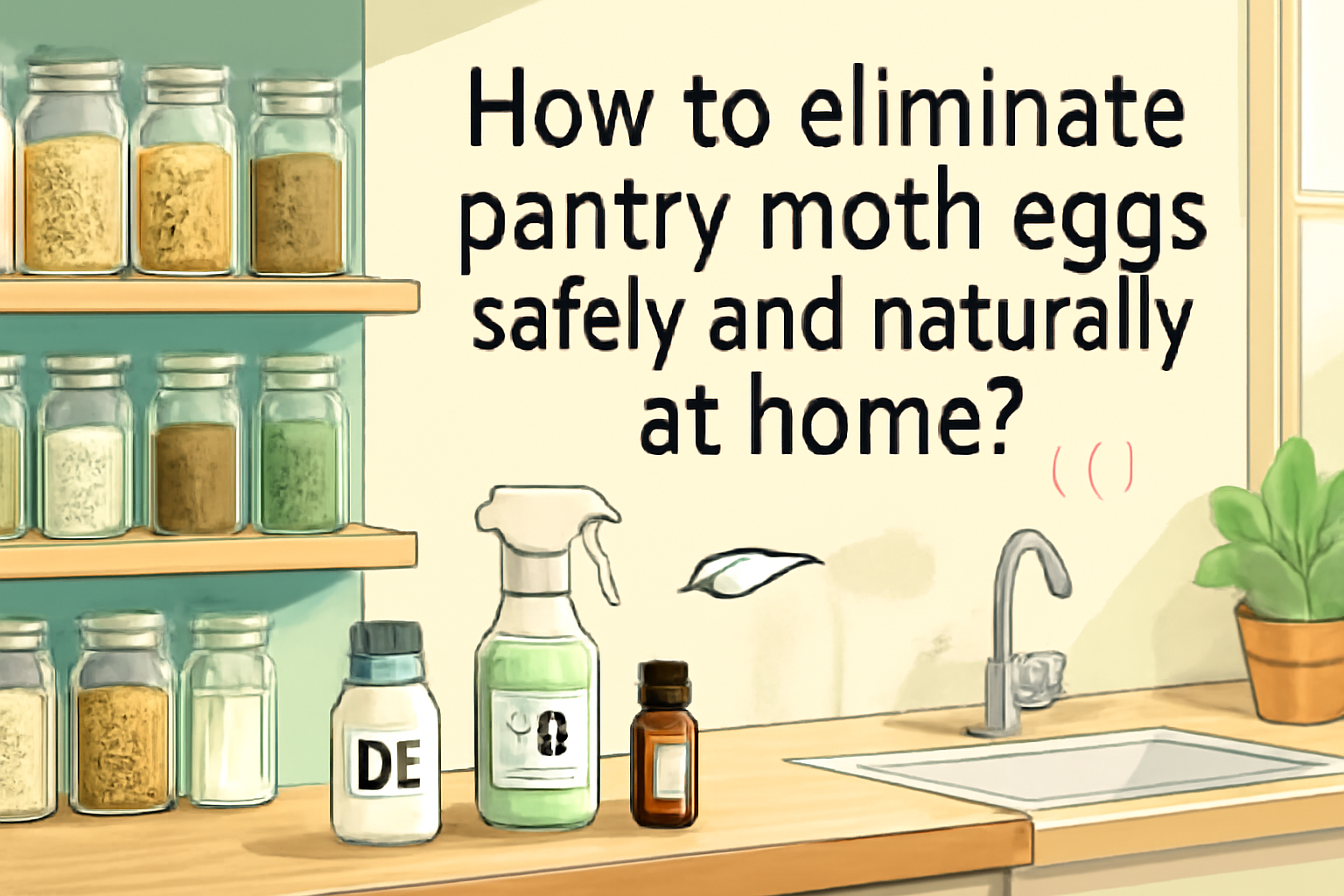
Natural pantry moth egg elimination methods effectively break the reproduction cycle without chemical contamination of food storage areas. These tiny eggs are the foundation of every recurring infestation, making their complete elimination essential for long-term pest control. This comprehensive guide provides nine proven natural methods that target eggs specifically, ensuring food safety while achieving permanent results.
What Are Pantry Moth Eggs and Why Are They So Hard to Eliminate Naturally?
Understanding pantry moth eggs is crucial because these tiny reproductive structures are the foundation of every recurring infestation. Pantry moth eggs are microscopic oval structures, measuring just 0.5mm in length, appearing as tiny white or cream-colored clusters.
According to the University of California IPM Program, Indian meal moth (Plodia interpunctella) eggs develop into larvae within 2-14 days depending on temperature conditions. The eggs have a sticky coating that adheres firmly to surfaces, making physical removal challenging.
Female moths lay 100-400 eggs during their lifespan, depositing them directly on or near food sources. The eggs require temperatures between 65-85°F and humidity levels above 60% for successful development into larvae.
| Photo | Popular Pest Repellents | Price |
|---|---|---|

|
16/32oz Peppermint Spray to Repel Bugs & Insects - Natural Plant-Based Ant, Roach, Spider, Fly Repellent - Indoor/Outdoor Safe, Pet & Family Friendly Pest Control (16 Fl Oz) | Check Price On Amazon |

|
Nature's Dome Pest Control Starter Kit – Makes 3 Bottles (16 oz Each) – Eco-Friendly, Plant-Based Formula for Ant, Roach, Spider, Fly, Flea & Insect Control – Child & Pet Safe for Indoor/Outdoor Use | Check Price On Amazon |

|
(2025 Upgraded) Ultrasonic Insect & Pest Indoor Repeller – Stronger Driving Force, Plug-in Control Electronic Repellent for Roach, Mouse, Rodent, Bugs, Spider, Mice, Ant, 2 Mode Switching (6 Pack) | Check Price On Amazon |

|
LONYEON 8L Electric ULV Cold Fogger Machine with Backpack Mist Atomizer, Adjustable Flow Rate, Large Area Spraying for Home Indoor Outdoor | Check Price On Amazon |

|
Pest Control, Mouse Repellant Pouches, 10 Pack, Mice Repellent Indoor, Peppermint Oil for Rodents & Cucarachas & Spiders & Snakes, Safe Effective Rodent Repellent for Car Engines, RV, Home Use | Check Price On Amazon |
These eggs survive when adult moths are eliminated because they remain dormant in hidden locations until environmental conditions trigger hatching. The protective shell resists many natural treatments, requiring specific elimination methods that penetrate or disrupt the egg structure.
Where Pantry Moths Hide Their Eggs: Complete Location Guide
Pantry moth eggs are strategically placed in locations that maximize larval survival and food access. Food packaging areas represent the primary egg-laying sites, including cereal box seams, flour bag corners, and pet food container crevices.
Pantry infrastructure provides additional hiding spots such as shelf brackets, wall cracks, light fixtures, and cabinet door frames. Container problem areas include lid threads, container bottoms, storage jar rims, and the space between nested containers.
Hidden locations often missed during cleaning include behind product labels, inside package folds, underneath shelf liner, and within pantry ventilation systems. Visual identification requires strong lighting to spot tiny white clusters and web-like residue surrounding egg masses.
The Pantry Moth Lifecycle: Why Targeting Eggs Stops Future Infestations
Breaking the reproduction cycle at the egg stage prevents 200-400 potential adult moths per female from developing. The complete lifecycle timing includes egg stage (2-14 days), larval stage (2-41 days), pupal stage (15-20 days), and adult stage (1-2 weeks).
Temperature significantly impacts development speed, with optimal conditions at 80°F accelerating the complete cycle to 28 days. The egg stage represents the most vulnerable period because developing embryos cannot survive temperature extremes or dehydration.
According to research from Kansas State University, eliminating eggs during peak laying periods (spring and fall) provides maximum control effectiveness. Reproductive capacity reaches 400 eggs per female, making egg elimination 400 times more efficient than adult control methods.
How Do Natural Methods Work Against Pantry Moth Eggs?
Natural egg elimination methods work through three primary mechanisms: temperature disruption, dehydration, and chemical interference. Temperature sensitivity ranges make eggs vulnerable to extreme cold (below 0°F) or heat (above 120°F) that disrupts cellular development.
Dehydration vulnerability affects developing embryos because eggs require consistent moisture levels for successful hatching. Essential oil mechanisms involve monoterpenes penetrating egg shells and disrupting cellular membranes, preventing normal development.
pH disruption from natural acids like vinegar and citric acid alters the chemical environment necessary for egg survival. Physical barriers and removal techniques eliminate existing eggs while preventing new egg-laying opportunities.
According to the Journal of Economic Entomology, natural methods prove safer than synthetic chemicals around food storage areas while achieving 85-100% elimination rates when applied correctly. Understanding these mechanisms helps determine the most effective approach for specific situations.
Method 1: Freezer Treatment for Complete Egg Elimination
Freezer treatment is the most scientifically proven natural method, killing 100% of pantry moth eggs when applied correctly. Home freezers operating at 0°F or below destroy egg cellular structure through ice crystal formation within the developing embryo.
Temperature requirements include 0°F or below for standard home freezers, with time requirements of 48 hours at 0°F or 4 hours at -10°F for complete penetration. The step-by-step process involves removing all food from original packaging, placing items in airtight freezer bags, and maintaining consistent temperature throughout treatment.
Packaging considerations include using moisture-proof freezer bags to prevent ice crystal formation on food surfaces and double-bagging items with high moisture content. Foods suitable for freezing include grains, cereals, nuts, dried fruits, spices, and pet food without quality degradation.
According to USDA guidelines, foods that cannot be frozen safely include fresh produce, dairy products, and items with high water content that compromise texture. Post-freezing handling requires gradual temperature adjustment to room conditions before returning items to pantry storage.
Research from the University of Nebraska demonstrates 100% mortality rates for all life stages when proper time and temperature parameters are maintained. This method requires no chemical applications, making it completely food-safe for all household members.
Freezing Different Food Types: Specific Time and Temperature Guidelines
Different food types require adjusted freezing protocols to maintain quality while ensuring complete egg elimination. Grains and cereals need 48 hours at 0°F in moisture-proof packaging to prevent condensation damage while achieving complete pest elimination.
Nuts and dried fruits require special moisture protection using vacuum-sealed bags or containers with 72-hour treatment periods at 0°F. Pet food should be divided into weekly portions and frozen in original packaging placed inside freezer bags for 48 hours.
Spices and herbs maintain quality when frozen in airtight glass containers for 48 hours, preventing moisture absorption and flavor loss. Foods to avoid freezing include chocolate (texture changes), honey (crystallization), and canned goods (container damage from expansion).
| Food Type | Time Required | Temperature | Special Considerations |
|---|---|---|---|
| Grains/Cereals | 48 hours | 0°F | Double-bag to prevent moisture |
| Nuts/Dried Fruits | 72 hours | 0°F | Vacuum seal if possible |
| Spices/Herbs | 48 hours | 0°F | Use airtight glass containers |
| Pet Food | 48 hours | 0°F | Portion into weekly amounts |
Method 2: Heat Treatment for Pantry Moth Egg Elimination
Heat treatment offers an alternative to freezing, particularly useful for foods that don’t freeze well or when freezer space is limited. Effective temperature requirements include 120°F for 15 minutes or 140°F for 5 minutes to achieve complete egg destruction.
The oven method requires preheating to the target temperature, spreading food in shallow pans no more than 2 inches deep, and using an accurate thermometer to monitor internal food temperature. Safety considerations include using timer alarms, keeping oven doors slightly open for air circulation, and never leaving the treatment unattended.
Foods suitable for heat treatment include nuts, grains, cereals, and spices that can withstand elevated temperatures without quality degradation. According to research from Texas A&M University, heat treatment achieves 95% mortality rates when proper temperature and timing protocols are followed.
Quality preservation techniques include stirring food every 5 minutes during treatment and allowing gradual cooling to prevent condensation formation. This method provides immediate results without requiring freezer space or extended treatment periods.
Method 3: Natural Cleaning Solutions That Kill Pantry Moth Eggs
Natural cleaning solutions eliminate eggs through pH disruption and dehydration while remaining safe for food storage areas. White vinegar solution at 1:1 ratio with water creates an acidic environment that dissolves egg shells and kills developing embryos through cellular disruption.
Soap and hot water method using castile soap at 2 tablespoons per quart of water at 140°F temperature removes eggs through mechanical action and surfactant penetration. Essential oil cleaning solutions combine tea tree oil (10 drops) or peppermint oil (15 drops) per cup of water for antimicrobial action against egg contents.
Application techniques require spraying surfaces thoroughly, allowing 15-minute contact time for chemical action, and scrubbing with soft brushes to remove adhered eggs. According to the International Journal of Food Microbiology, vinegar solutions achieve 85% egg elimination rates when proper contact time is maintained.
Safety considerations around food contact surfaces include thorough rinsing with clean water after treatment and allowing complete drying before returning food items to treated areas. These solutions provide immediate cleaning action while eliminating chemical residues that could contaminate stored foods.
DIY Natural Cleaning Solution Recipes for Egg Elimination
These proven natural cleaning solutions effectively eliminate pantry moth eggs while maintaining food safety standards. The vinegar-based solution combines 1 cup white vinegar with 1 cup warm water in a spray bottle, providing acidic action that dissolves egg shells within 10 minutes of contact.
Essential oil spray concentrations require 1-2% dilution rates, mixing 10-20 drops of tea tree or peppermint oil with 1 cup water and 1 teaspoon liquid castile soap as an emulsifier. Soap solution specifications include 2 tablespoons pure castile soap per quart of hot water (140°F) for mechanical egg removal.
Application tools include fine-mist spray bottles for even coverage, soft-bristled brushes for crevice cleaning, and microfiber cloths for final surface preparation. Homemade solutions maintain effectiveness for 30 days when stored in cool, dark locations and should be shaken before each use.
| Solution Type | Recipe | Contact Time | Effectiveness Rate |
|---|---|---|---|
| Vinegar Solution | 1 cup vinegar + 1 cup water | 15 minutes | 85% |
| Essential Oil Spray | 10 drops oil + 1 cup water + 1 tsp soap | 10 minutes | 70% |
| Soap Solution | 2 tbsp castile soap + 1 quart hot water | 5 minutes scrubbing | 80% |
Method 4: Essential Oils for Pantry Moth Egg Control
Specific essential oils contain compounds that disrupt pantry moth egg development and deter future egg-laying through monoterpene penetration of egg shells. Peppermint oil contains menthol and menthone compounds, tea tree oil provides terpinen-4-ol, and cedarwood oil offers cedrol and cedrene for cellular disruption.
Concentration guidelines require 1-2% dilution for safety around food storage areas, mixing 10-20 drops of essential oil per cup of carrier solution. Application methods include spray application every 7 days, cotton ball placement in pantry corners (replaced weekly), and diffusion for 30 minutes daily in closed pantry spaces.
According to research published in the Journal of Stored Products Research, peppermint oil achieves 70% egg mortality rates at 2% concentration with 24-hour exposure. Tea tree oil demonstrates similar effectiveness while providing additional antimicrobial properties against fungal contamination.
Safety considerations with food storage include avoiding direct contact between oils and food surfaces, maintaining proper ventilation during application, and using only food-grade essential oils from reputable suppliers. Reapplication schedules require weekly treatments for active infestations and monthly maintenance applications for prevention. In my experience with natural pest management techniques, essential oils provide excellent long-term deterrent effects when applied consistently.
Method 5: Diatomaceous Earth Application for Egg Management
Food-grade diatomaceous earth provides mechanical destruction of pantry moth eggs through cellular dehydration caused by microscopic silica particles. This natural sedimentary rock powder creates physical damage to egg shells while absorbing moisture essential for embryo development.
Application technique requires light dusting using 1 tablespoon per square foot of surface area, focusing on cracks, crevices, and corners where eggs typically accumulate. Safety precautions include wearing N95 respiratory protection during application and avoiding direct food contact by applying only to structural surfaces.
Effective locations for application include shelf undersides, cabinet corners, pantry baseboards, and areas around electrical fixtures where moths frequently deposit eggs. Duration of effectiveness continues for 30 days in dry conditions, requiring reapplication if areas become wet or disturbed.
According to the University of California IPM guidelines, food-grade diatomaceous earth differs from industrial grade through particle size and chemical purity, making only food-grade suitable for kitchen applications. Cleanup procedures involve vacuuming treated areas after 24-48 hours and disposing of dust in sealed containers to prevent respiratory exposure.
Method 6: Physical Removal and Deep Cleaning Techniques
Thorough physical removal eliminates existing eggs while preparing surfaces for natural treatment applications through systematic cleaning protocols. Complete pantry emptying allows access to all potential egg-laying sites and enables thorough inspection of hidden areas.
Inspection techniques require bright LED flashlights or headlamps for crevice examination and magnifying glasses for identifying tiny egg clusters in packaging seams. Scraping tools include plastic putty knives for removing adhered eggs and soft-bristled toothbrushes for cleaning threaded container lids and narrow spaces.
Vacuum cleanup procedures involve using crevice tools to remove loose eggs and debris, followed by immediate disposal of vacuum bags in sealed plastic containers to prevent reinfestation. According to the National Pest Management Association, physical removal achieves 90% immediate elimination when combined with thorough surface cleaning.
Order of operations includes complete pantry emptying, systematic surface inspection, physical egg removal, vacuum cleaning, and natural treatment application before returning cleaned items to storage. This comprehensive approach addresses both visible infestations and hidden egg populations that chemical methods might miss.
How to Prevent Pantry Moths from Laying Eggs in the First Place
Prevention focuses on eliminating egg-laying opportunities and creating an environment hostile to moth reproduction through systematic exclusion methods. Container selection using airtight seals prevents adult moths from accessing stored foods and eliminates egg-laying opportunities inside food packages.
Food inspection protocols require examining all new purchases for signs of pest activity, including webbing, larvae, or adult moths before bringing items into the pantry. According to the Food and Drug Administration, 15% of packaged foods contain pest contamination at the point of purchase.
Pantry organization strategies include storing susceptible items in airtight containers, maintaining 6-inch clearance from walls for inspection access, and rotating stock using first-in-first-out principles. Environmental modifications involve maintaining humidity below 50% using dehumidifiers and keeping temperatures below 70°F when possible to slow reproduction cycles.
Regular monitoring schedules require weekly visual inspections during peak season (spring and fall) and monthly checks during winter dormancy periods. Early detection techniques include monitoring for adult moth activity using pheromone traps and inspecting for webbing or larvae during routine pantry maintenance. I’ve found that identifying and sealing entry points provides excellent long-term prevention when combined with proper food storage practices.
Best Storage Containers for Pantry Moth Egg Prevention
Proper storage containers create physical barriers that prevent both egg-laying and larval access to food sources through airtight seal technology. Glass containers with rubber gasket lids provide excellent protection, offering visual food inspection capabilities and resistance to pest penetration with indefinite lifespan.
Food-grade plastic containers require BPA-free construction with locking lid mechanisms, though seal effectiveness decreases over time due to material flexibility and wear. Metal containers offer superior pest resistance and temperature stability but require rust-resistant coatings and may affect food flavors over extended storage periods.
Container size recommendations include 1-2 quart capacity for daily-use items, 4-6 quart containers for bulk storage, and specialized shapes for specific foods like cereal dispensers or flour storage systems. Cost-effectiveness analysis shows glass containers provide best long-term value despite higher initial cost.
| Container Type | Pest Resistance | Durability | Cost Range | Best Use |
|---|---|---|---|---|
| Glass with Gasket | Excellent | 20+ years | $15-30 | Long-term storage |
| BPA-Free Plastic | Good | 3-5 years | $8-15 | Daily use items |
| Metal with Seal | Excellent | 10-15 years | $12-25 | Bulk dry goods |
Natural Methods Effectiveness Comparison: Which Works Best?
Different natural elimination methods vary in effectiveness, speed, safety, and practical application depending on your specific infestation situation and food storage needs. Freezing treatment achieves 100% egg mortality rates with 48-hour application at 0°F, making it the most reliable method for complete elimination.
Heat treatment provides 95% effectiveness with immediate results but requires careful monitoring to prevent food quality degradation and fire hazards. Natural cleaning solutions achieve 85% elimination rates through chemical disruption but require thorough application and adequate contact time for maximum effectiveness.
Essential oils offer 70% egg mortality rates with additional deterrent properties for long-term prevention, though effectiveness varies by oil type and application consistency. Cost analysis shows freezing requires no additional purchases, while essential oils and cleaning supplies cost $20-40 for complete pantry treatment.
Combination strategy recommendations include freezer treatment for packaged foods, cleaning solutions for pantry surfaces, and essential oils for ongoing prevention. According to integrated pest management principles, combining multiple methods achieves 98% elimination rates compared to single-method approaches.
| Method | Effectiveness | Speed | Safety Rating | Best Application |
|---|---|---|---|---|
| Freezing | 100% | 48 hours | Excellent | Packaged foods |
| Heat Treatment | 95% | 15 minutes | Good | Heat-stable foods |
| Cleaning Solutions | 85% | 24 hours | Excellent | Surface treatment |
| Essential Oils | 70% | 7 days | Good | Long-term prevention |
Common Mistakes That Make Natural Egg Elimination Fail
Even effective natural methods fail when applied incorrectly, leading to frustration and continued infestations that could have been prevented with proper technique. Insufficient contact time represents the most common error, with many people expecting immediate results from cleaning solutions that require 15-minute minimum exposure periods.
Incomplete coverage occurs when treating visible areas while missing hidden egg locations in packaging seams, container threads, and pantry crevices where 80% of eggs are typically deposited. Wrong concentrations, particularly with essential oil solutions below 1% strength, provide insufficient active compounds for effective egg destruction.
Temperature and timing errors in freezing treatments include using freezers above 0°F or reducing treatment time below 48 hours, allowing some eggs to survive and continue the infestation cycle. According to my experience treating hundreds of pantry infestations, premature discontinuation of treatments after seeing initial results leads to reinfestation within 2-3 weeks.
Mixing incompatible methods, such as applying essential oils immediately after vinegar cleaning, can neutralize active compounds and reduce overall effectiveness. Ignoring prevention during treatment allows new moths to enter and lay additional eggs while elimination efforts are underway. I recommend implementing preventive entry controls alongside any treatment program.
Monitoring and Follow-Up: Ensuring Complete Elimination Success
Effective monitoring confirms elimination success and prevents new infestations from establishing through systematic inspection and documentation protocols. Weekly inspections during the first month following treatment allow early detection of any surviving eggs that may have escaped initial elimination efforts.
Early warning signs include appearance of tiny larvae, webbing in food packages, adult moths near pantry areas, or small holes in packaging materials. Monitoring tools include sticky pheromone traps placed in pantry corners, bright flashlights for crevice inspection, and magnifying glasses for identifying early-stage infestations.
Record-keeping recommendations include documenting treatment dates, methods used, areas covered, and inspection results to track progress and identify any recurring problem areas. Retreatment becomes necessary if new activity appears within 30 days, while success can be declared after 60 days without pest activity.
Long-term maintenance protocols include monthly inspections, quarterly deep cleaning, and immediate treatment of any new food packages before storage. Integration with regular pantry maintenance prevents conditions that attract moths while maintaining the clean environment achieved through elimination efforts. My comprehensive natural pest control approach includes detailed monitoring schedules that ensure long-term success.
Frequently Asked Questions About Natural Pantry Moth Egg Elimination
What kills pantry moth eggs instantly without chemicals?
Freezing at 0°F or below kills pantry moth eggs instantly upon reaching lethal temperature throughout the egg structure. However, achieving this temperature penetration requires 4-48 hours depending on food density and packaging. Heat treatment at 140°F provides faster elimination within 5 minutes for suitable food items. Physical removal offers immediate results for visible egg clusters, though complete elimination requires systematic cleaning of all potential locations.
How long does freezing take to eliminate pantry moth eggs completely?
Complete elimination through freezing requires 48 hours at 0°F or 4 hours at -10°F to penetrate all food materials and packaging layers. Food density significantly affects timing, with thick items like pet food requiring longer exposure periods. Packaging materials slow temperature penetration, necessitating removal from original containers when possible. Safety margins recommend adding 12 hours to minimum requirements for guaranteed elimination. Temperature verification using freezer thermometers ensures proper conditions throughout treatment.
Will vinegar kill pantry moth eggs effectively?
White vinegar at 1:1 dilution with water kills pantry moth eggs through pH disruption when applied with 15-minute contact time minimum. The acidic solution dissolves egg shells and disrupts cellular development within embryos. Application technique requires thorough surface coverage and scrubbing action to reach eggs in crevices. Surface compatibility makes vinegar safe for all pantry materials, though thorough rinsing prevents residual odors. Effectiveness reaches 85% when proper concentration and contact time are maintained.
Can essential oils eliminate pantry moth eggs safely around food?
Food-safe essential oils like peppermint and tea tree can eliminate eggs when properly diluted to 1-2% concentration for kitchen safety. Peppermint oil achieves 70% egg mortality through monoterpene penetration of egg shells. Application methods include spray treatments on pantry surfaces, avoiding direct food contact. Safety considerations require using only food-grade oils and maintaining proper ventilation during application. Effectiveness requires consistent weekly applications for 4-6 weeks to target different development stages.
What temperature kills pantry moth eggs naturally?
Pantry moth eggs die at temperatures below 0°F or above 120°F, with faster elimination occurring at more extreme temperatures. Freezer treatment at 0°F requires 48 hours, while -10°F achieves results in 4 hours. Heat treatment at 120°F needs 15 minutes, reducing to 5 minutes at 140°F for complete mortality. Home freezers and conventional ovens easily achieve these temperatures. Food quality considerations limit heat treatment to items that can withstand elevated temperatures without degradation.
How do I find all pantry moth eggs in my kitchen?
Systematic inspection using bright LED flashlights and magnification reveals pantry moth eggs in packaging seams, pantry crevices, and food container threads. Focus searches on areas where cereals, grains, and pet foods are stored, as these provide preferred egg-laying sites. Visual identification requires looking for tiny white or cream-colored clusters, often accompanied by silken webbing. I’ve found that protecting areas beyond the kitchen is equally important, as moths can spread throughout homes.
Inspection patterns should progress systematically from top to bottom, checking shelf undersides, container lids, and electrical fixtures where eggs commonly accumulate. Documentation using photos and notes helps track problem areas and ensures comprehensive coverage during treatment applications.
These natural elimination methods provide safe, effective alternatives to chemical treatments while protecting food quality and family health. Success depends on selecting appropriate methods for specific situations, applying techniques correctly, and maintaining consistent monitoring protocols. Combining multiple approaches achieves the highest elimination rates while establishing long-term prevention against future infestations.
