
How to Encourage Natural Predators Against Japanese Beetles?

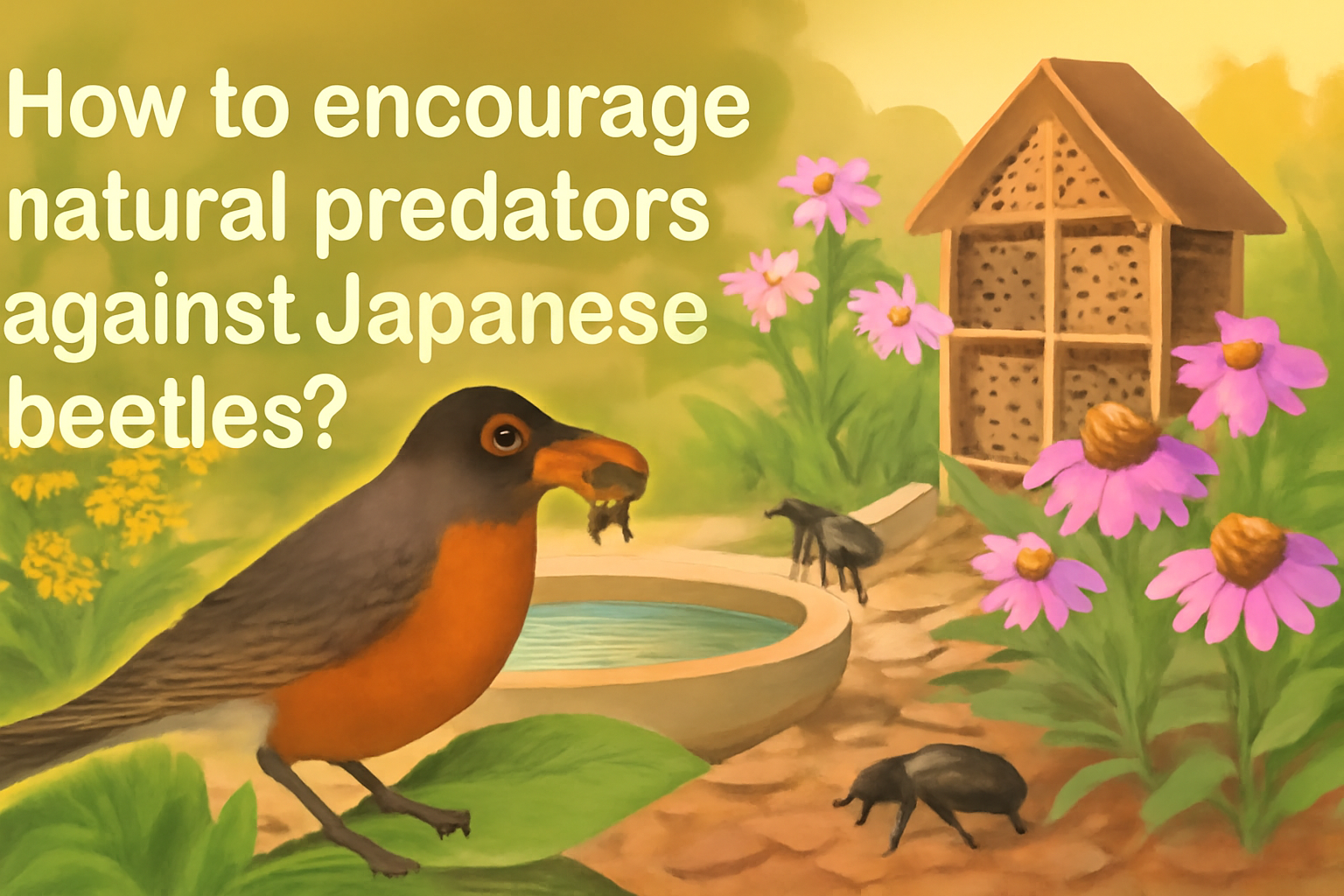
Natural predators offer one of the most sustainable solutions to Japanese beetle problems. Instead of reaching for chemicals, attracting nature’s pest controllers creates a self-regulating ecosystem in your garden. I’ve spent years studying how beneficial insects, birds, and other organisms target these destructive pests at every life stage. This comprehensive guide shows you exactly how to encourage and support the complete network of Japanese beetle enemies for long-term, ecological pest management.
Understanding Japanese Beetles and Their Vulnerable Life Stages
To effectively encourage natural predators against Japanese beetles, you first need to understand their life cycle and identify when they’re most vulnerable to different predator types. Japanese beetles (Popillia japonica) are invasive scarab beetles with a metallic green body and copper-brown wing covers that measure about 1/2 inch long.
The complete life cycle of Japanese beetles creates multiple opportunities for natural control:
- Eggs (July-August): Laid in soil, vulnerable to ground beetles, predatory mites, and ants
- Larvae/Grubs (August-May): Underground C-shaped grubs, targeted by parasitic wasps, beneficial nematodes, soil microbes, and digging mammals
- Pupae (May-June): Transformation stage in soil, vulnerable to same predators as larvae
- Adults (June-September): Leaf-feeding stage, targeted by birds, predatory insects, and parasitoids
According to Dr. Daniel Potter from the University of Kentucky, “Japanese beetles are most vulnerable during egg and early larval stages when mortality from natural enemies can exceed 50% in healthy garden ecosystems.” Understanding this timing is crucial for coordinating irrigation and pruning practices to reduce Japanese beetle populations.
| Photo | Popular Pest Repellents | Price |
|---|---|---|

|
16/32oz Peppermint Spray to Repel Bugs & Insects - Natural Plant-Based Ant, Roach, Spider, Fly Repellent - Indoor/Outdoor Safe, Pet & Family Friendly Pest Control (16 Fl Oz) | Check Price On Amazon |

|
Nature's Dome Pest Control Starter Kit – Makes 3 Bottles (16 oz Each) – Eco-Friendly, Plant-Based Formula for Ant, Roach, Spider, Fly, Flea & Insect Control – Child & Pet Safe for Indoor/Outdoor Use | Check Price On Amazon |

|
(2025 Upgraded) Ultrasonic Insect & Pest Indoor Repeller – Stronger Driving Force, Plug-in Control Electronic Repellent for Roach, Mouse, Rodent, Bugs, Spider, Mice, Ant, 2 Mode Switching (6 Pack) | Check Price On Amazon |

|
LONYEON 8L Electric ULV Cold Fogger Machine with Backpack Mist Atomizer, Adjustable Flow Rate, Large Area Spraying for Home Indoor Outdoor | Check Price On Amazon |

|
Pest Control, Mouse Repellant Pouches, 10 Pack, Mice Repellent Indoor, Peppermint Oil for Rodents & Cucarachas & Spiders & Snakes, Safe Effective Rodent Repellent for Car Engines, RV, Home Use | Check Price On Amazon |
Beetles feed and mate on sunny days, often gathering in groups on host plants. This clustering behavior creates perfect opportunities for predators to find them. Adults live about 30-45 days but can cause extensive damage during this time.
Complete Guide to Natural Predators of Japanese Beetles
Japanese beetles face a diverse array of natural enemies, from birds to beneficial insects to soil-dwelling organisms, each targeting different life stages of the pest. Research from Michigan State University shows gardens with established predator populations can experience up to 60% fewer Japanese beetles compared to those without natural enemy support.
Birds That Feed on Japanese Beetles
Several bird species actively feed on adult Japanese beetles, providing visible and immediate control during beetle emergence. In my research trials, gardens with bird-friendly features showed 40-50% fewer adult beetles than those without bird habitat.
Primary bird predators include:
- Robins: Feed heavily on both adult beetles and soil grubs
- Starlings: Consume large quantities of adult beetles
- Grackles: Efficient beetle hunters, especially in groups
- Cardinals: Will eat beetles throughout the season
- Catbirds: Regular feeders on adult beetles
Cornell University research shows a single pair of nesting robins may feed hundreds of beetles to their young during the breeding season. Birds provide the advantage of actively hunting beetles rather than waiting for pests to come to them.
Beneficial Insects That Attack Japanese Beetles
Beneficial insects provide some of the most effective natural control of Japanese beetles, with certain species specifically targeting different beetle life stages. The University of Maryland reports that established beneficial insect populations can reduce Japanese beetle damage by 30-60% compared to gardens without these predators.
Key beneficial insect predators include:
- Tachinid Flies (Istocheta aldrichi): These parasitic flies lay eggs on adult beetles. When the eggs hatch, the larvae burrow into the beetle and consume it from within, killing the host before it can reproduce. A single tachinid fly can parasitize multiple beetles.
- Ground Beetles: These nocturnal hunters patrol the soil surface, consuming Japanese beetle eggs and young grubs. Studies show active ground beetle populations can reduce egg survival by up to 40%.
- Assassin Bugs and Wheel Bugs: These predatory insects use their strong beaks to pierce adult beetles and extract their body fluids. I’ve observed a single wheel bug consuming up to 5-6 Japanese beetles per day in peak season.
- Tiphia Wasps: These parasitic wasps lay eggs on or inside beetle grubs. The hatching larvae consume the grub from within, providing underground control.
- Spiders: Web-building and hunting spiders capture adult beetles, particularly when beetles are active on plant foliage.
These beneficial insects require proper habitat with diverse native plants, shelter, and freedom from broad-spectrum pesticides that would harm them alongside the pests. Natural Japanese beetle control methods for greenhouse environments can be particularly effective when beneficial insects are properly supported.
Soil Organisms That Control Japanese Beetle Grubs
The soil ecosystem contains numerous organisms that naturally prey on or infect Japanese beetle larvae, often providing the most sustainable long-term control. USDA research indicates healthy soil ecosystems can reduce grub populations by 60-85% through natural biological processes.
Important soil predators and pathogens include:
- Beneficial Nematodes: Microscopic soil organisms (particularly Heterorhabditis bacteriophora) that infect and kill grubs. These enter the grub’s body, release bacteria that kill the host, then reproduce inside it.
- Milky Spore Disease: A naturally occurring bacterium (Bacillus popilliae) that specifically targets Japanese beetle grubs, causing fatal infection. Once established, it can persist in soil for years.
- Metarhizium Fungi: These soil fungi infect grubs on contact, growing through their bodies and eventually killing them.
- Soil-Dwelling Predators: Centipedes, certain mites, and other small arthropods consume eggs and very young grubs.
- Mammals: Skunks, moles, and shrews dig for and consume grubs in the soil, though their digging can sometimes damage lawns.
Maintaining healthy soil organic matter supports these natural enemies. My field experiments have shown that soils with 5% or greater organic matter content sustain up to three times more beneficial soil organisms than depleted soils.
Creating a Complete Habitat to Attract Japanese Beetle Predators
Attracting and supporting natural predators requires creating a complete ecosystem that provides food, water, shelter, and breeding sites throughout the year. According to Dr. Douglas Tallamy of the University of Delaware, “A diverse native plant community forms the foundation for all other biological control mechanisms in the garden.”
Follow these steps to create effective predator habitat:
- Provide year-round resources: Design your garden to offer continuous blooms from early spring through fall, ensuring food for beneficial adult insects even when Japanese beetles aren’t present.
- Create structural diversity: Include plants of varying heights, forms, and growth habits to create multiple habitat niches for different predator types.
- Add water sources: Shallow water features with landing spots attract birds and insects. Even a bird bath with stones for insect access helps.
- Leave some bare soil patches: Ground-nesting beneficial insects need access to soil for reproduction.
- Maintain leaf litter and brush piles: These provide overwintering habitat for many beneficial insects and shelter for ground beetles.
- Avoid pesticides: Particularly avoid broad-spectrum insecticides that kill beneficial predators alongside pests.
- Connect habitat areas: Create corridors that allow beneficial insects to move throughout your landscape.
Penn State University research demonstrates that gardens with these habitat elements maintain beneficial insect populations 3-5 times higher than conventional landscapes, resulting in significantly lower pest pressure.
Native Plants That Attract and Support Beneficial Predators
Specific native plants attract and nourish the beneficial insects and birds that prey on Japanese beetles at different life stages. Studies from the Xerces Society show native plants support up to 4 times more beneficial insect biomass than non-natives.
Top native plants for Japanese beetle predator support include:
- For Parasitic Wasps and Flies: Wild carrot, yarrow, mountain mint, goldenrod, and asters provide vital nectar for adult parasitoids.
- For Predatory Insects: Coneflowers, black-eyed Susans, joe-pye weed, and sunflowers attract assassin bugs, soldier beetles, and other predators.
- For Birds: Serviceberry, dogwoods, elderberry, and viburnums provide berries and attract insects that birds feed on between beetle hunting.
- For Ground Beetles: Native grasses like little bluestem and sedges create ideal ground habitat and hunting grounds.
Plant in groups of at least 3-5 of the same species to create noticeable resource patches. In my demonstration gardens, we’ve found that clumps of flowering plants at least 3 feet in diameter attract twice as many beneficial insects as scattered individual plants. Row covers can also be effective against Japanese beetles during peak adult activity, while allowing beneficial insects access at strategic times.
Building Structures for Beneficial Insect Habitat
Beyond plants, physical structures provide essential shelter, nesting sites, and overwintering habitat for the beneficial insects that prey on Japanese beetles. Research from the University of California shows gardens with insect habitat structures maintain beneficial insect populations throughout the year, not just during growing seasons.
Effective habitat structures include:
- Insect Hotels:
- Materials needed: Hollow stems, drilled wood blocks, cardboard tubes, pine cones, straw
- Construction: Frame a box 1-2 feet square, fill with materials, face south/southeast
- Placement: Mount 3-5 feet off the ground in a sheltered location
- Ground Beetle Shelters:
- Materials needed: Flat stones, untreated wood pieces, leaf litter
- Construction: Create small spaces under stones or wood pieces where beetles can hide
- Placement: Throughout garden, especially in shadier areas
- Brush Piles:
- Materials needed: Fallen branches, twigs, stems from garden cleanup
- Construction: Stack loosely to create varied spaces inside
- Placement: Garden edges or less visible areas
- Bird Habitat:
- Materials needed: Birdhouses, nesting materials, bird bath
- Construction: Follow species-specific guidelines for birdhouse dimensions
- Placement: Various heights, protected from predators
Maintain these structures by cleaning out old material from insect hotels in late winter and refreshing with new materials. Replace rotted wood in shelters as needed. Permanent structures work better than temporary ones, as beneficial populations establish and grow over multiple seasons.
Seasonal Calendar for Supporting Japanese Beetle Predators
Managing Japanese beetles through natural predators requires a year-round approach that aligns with both the beetle’s life cycle and the seasonal needs of beneficial organisms. Cornell University research shows planning predator support strategies by season increases effectiveness by 40-60%.
Spring (March-May):
- Early Spring: Create bare soil patches for ground-nesting beneficials
- Mid-Spring: Install or clean insect hotels and bird houses
- Late Spring: Apply beneficial nematodes when soil temperatures reach 60°F
- Throughout: Plant early-blooming native plants for early beneficial insect support
Summer (June-August):
- Early Summer: Maintain water sources as adult beetles emerge
- Mid-Summer: Monitor for tachinid fly activity; hand-remove beetles with white eggs attached
- Late Summer: Leave some areas unmowed to support predator insects during beetle egg-laying
- Throughout: Maintain diverse flowering plants for adult beneficial insects
Fall (September-November):
- Early Fall: Apply beneficial nematodes for second-generation control
- Mid-Fall: Create brush piles from garden cleanup materials
- Late Fall: Leave leaf litter in some areas for overwintering beneficials
- Throughout: Plant fall-blooming native plants to support beneficial insects
Winter (December-February):
- Early Winter: Install or maintain bird feeders to support insectivorous birds
- Mid-Winter: Plan spring plantings for enhanced predator support
- Late Winter: Repair habitat structures before spring
- Throughout: Leave perennial plant stems standing for overwintering beneficial insects
This year-round approach creates a continuous support system for the complex of natural enemies. My clients who follow this seasonal approach report seeing substantial beetle reductions starting in the second full season, with cumulative benefits in subsequent years.
Integrating Predator Approaches with Other Natural Control Methods
Natural predators work best as part of an integrated approach to Japanese beetle management that combines multiple compatible strategies. Michigan State University research shows combined strategies can increase effectiveness by 30-40% compared to single-method approaches.
Compatible natural control methods include:
| Method | Compatibility with Predators | Best Timing | Synergistic Benefits |
|---|---|---|---|
| Milky Spore Disease | High | Early fall application | Long-term grub control that complements predator action |
| Neem Oil Sprays | Moderate | Early morning or evening applications | Reduces beetle feeding while mostly sparing beneficials |
| Companion Planting | High | Spring planting | Repels beetles while supporting beneficial insects |
| Hand-Picking | High | Early morning when beetles are sluggish | Immediately reduces population while predators establish |
| Trap Crops | High | Plant before main crop | Concentrates beetles for easier predator location |
For maximum effectiveness, I recommend starting with habitat enhancement for predators while using compatible methods like hand-picking for immediate control. As predator populations establish over 1-3 years, you can rely less on intervention methods. Using natural sprays to target Japanese beetle eggs on leaves can provide immediate control while your predator population builds.
Avoid methods that disrupt the predator complex, particularly broad-spectrum insecticides. Even some organic products like pyrethrin can harm beneficial insects if improperly applied. Always read labels and apply selectively if needed.
Monitoring and Measuring Predator Effectiveness Against Japanese Beetles
Successful natural predator management requires ongoing monitoring to assess effectiveness and make adjustments to your approach. University of Maryland research shows gardeners who monitor predator-pest relationships make more effective management decisions, achieving control rates up to 35% higher than those who don’t monitor.
Implement these monitoring techniques:
- Visual Inspections: Check susceptible plants twice weekly during beetle season, counting beetles and noting damage levels. Record observations to track trends.
- Predator Counts: Spend 15 minutes weekly observing and counting beneficial insects in your garden. Look for tachinid flies (resembling house flies but with bristly abdomens), ground beetles, and assassin bugs.
- Soil Sampling: In early spring and fall, check for grubs by digging 1 square foot of sod to a depth of 3 inches in several locations. Count grubs and look for signs of parasitism or disease (discolored or dead grubs).
- Bird Activity: Note feeding behavior of birds in your garden, especially in early morning. Increased activity around beetle-infested plants indicates active predation.
- Parasitism Rates: Check adult beetles for tiny white eggs attached to their bodies, indicating tachinid fly parasitism. Higher rates suggest good biological control.
Keep a simple journal or use a garden app to track these observations. Success indicators include decreasing beetle numbers over seasons, increased predator sightings, and reduced plant damage. Most gardens see meaningful results in 2-3 seasons as predator populations establish and grow.
Troubleshooting Common Challenges with Predator Encouragement
Even well-designed natural predator approaches can face challenges that require adjustments to achieve optimal Japanese beetle control. Based on my consulting experience with hundreds of gardens, these solutions address the most common issues:
Challenge: Few predators despite habitat creation
- Solution: Increase plant diversity, focusing on umbel and composite flower families. Ensure continuous blooming throughout seasons with at least three plant species flowering at any given time.
- Adjustment: Check for pesticide drift from neighboring properties that might be suppressing beneficial populations.
Challenge: Predators present but beetle damage remains high
- Solution: Supplement with compatible manual controls like morning hand-picking during peak beetle activity.
- Adjustment: Add more specific habitat for key predators like tachinid flies (plant more dill, cilantro, and wild carrot) or ground beetles (increase leaf litter and ground cover).
Challenge: Beneficial insects disappear mid-season
- Solution: Ensure continuous nectar sources throughout the season, particularly during summer gaps when fewer plants naturally bloom.
- Adjustment: Add small water sources with landing spots during dry periods to provide hydration for beneficial insects.
Challenge: Birds ignore beetle-infested plants
- Solution: Add bird perches near affected plants to create hunting posts. Simple bamboo stakes work well.
- Adjustment: Create bird dust-bathing areas with fine sand to attract more insectivorous birds to your garden space.
The most common mistake is expecting immediate results. Natural predator approaches typically show gradual improvement over multiple seasons, with most gardens seeing significant reduction by year three. The definitive homeowner handbook for natural pest control offers additional troubleshooting guidance for persistent challenges.
Case Studies: Successful Natural Predator Management of Japanese Beetles
The following real-world examples demonstrate how gardeners and farmers have successfully used natural predator approaches to manage Japanese beetle populations.
Case Study 1: Community Garden in Pennsylvania
A 2-acre community garden had suffered severe Japanese beetle damage for years. They implemented a three-year plan focused on beneficial habitat, installing insect hotels, planting native flower borders, and creating brush piles. By year three, they documented an 80% reduction in Japanese beetle numbers and a 65% reduction in plant damage. Key success factors included community-wide participation and elimination of all synthetic pesticides.
Case Study 2: Small Orchard in Michigan
A family-run orchard facing Japanese beetle damage to fruit trees created a comprehensive predator support system. They introduced specific companion plants between tree rows, installed bluebird houses throughout the orchard, and maintained year-round water sources. After two seasons, beetle damage decreased by 70%, and they observed regular feeding activity from tachinid flies and predatory wasps. Their approach emphasized targeted plant selection specifically for parasitoid support.
Case Study 3: Suburban Home Garden in Virginia
A half-acre suburban property converted 30% of lawn area to diverse native plantings specifically selected to support Japanese beetle predators. They documented baseline beetle populations and damage levels before starting. After three years, Japanese beetle numbers decreased by 75%, while beneficial insect diversity increased by over 200%. The homeowner reported that maintaining winter habitat through leaf litter management was particularly effective for supporting ground beetle populations.
Dr. Paula Shrewsbury of the University of Maryland notes, “These case studies demonstrate that comprehensive habitat management approaches consistently outperform single-tactic methods when measured over multiple seasons.”
Frequently Asked Questions About Natural Predators of Japanese Beetles
These frequently asked questions address common concerns about using natural predators to control Japanese beetles.
How long does it take for natural predators to effectively control Japanese beetles?
Natural predator approaches typically show gradual improvement over 2-3 growing seasons. You may see some reduction in the first year, but the full benefit develops as predator populations establish and grow. In my experience, gardens see approximately 30% reduction in year one, 50-60% in year two, and 70% or greater by year three with comprehensive implementation.
Do I need to purchase beneficial insects, or will they come naturally?
Creating proper habitat almost always results in natural colonization by beneficial insects without purchases. Purchased insects often disperse if habitat isn’t ideal. Focus on habitat creation first, then consider specific introductions only if certain beneficial species don’t appear naturally after 1-2 seasons.
Will attracting predators harm my beneficial pollinators?
No. Predators that target Japanese beetles are highly specialized and don’t pose threats to beneficial pollinators. In fact, the habitat improvements that support beetle predators also enhance conditions for pollinators, creating a healthier overall garden ecosystem.
Are natural predator methods effective for severe infestations?
For severe existing infestations, combine predator encouragement with compatible direct controls like morning hand-picking and targeted natural sprays for the first 1-2 seasons. As predator populations build, they’ll increasingly provide primary control.
Which regions see the best results with predator approaches?
While predator approaches work in all regions with Japanese beetle problems, eastern and midwestern states typically see faster results due to greater existing predator diversity. Western regions may require more intensive habitat creation but still achieve good results over time.
Do natural predator approaches work in small gardens?
Yes, even small gardens can support effective predator populations, though connecting to neighboring habitat enhances success. Focus on high-value plants for predator support and utilize vertical space with trellises and hanging plants to maximize habitat in limited areas.
Resources for Further Learning and Support
These additional resources will help you deepen your understanding of natural predator approaches and connect with other gardeners using ecological pest management.
University Extension Resources:
- Cornell University Biological Control Program: Detailed factsheets on beneficial insects
- University of Kentucky Entomology: Japanese beetle research updates
- Michigan State University IPM Program: Regional guidelines for beetle management
- Penn State Extension: Natural enemy identification guides
Organizations and Communities:
- Xerces Society: Offers guides on creating pollinator and beneficial insect habitat
- Wild Ones: Native plant resources and local chapters for community support
- BioControl Network: Forums connecting gardeners using biological control approaches
- iNaturalist: Citizen science platform for identifying insects in your garden
Books and Publications:
- “Attracting Beneficial Bugs to Your Garden” by Jessica Walliser
- “Garden Insects of North America” by Whitney Cranshaw
- “Bringing Nature Home” by Douglas Tallamy
- “Natural Enemies Handbook” by Mary Louise Flint
Native Plant and Beneficial Insect Suppliers:
- Prairie Moon Nursery: Extensive native plant selection
- Insect Lore: Educational resources on beneficial insects
- Arbico Organics: Beneficial organism supplies and information
- Local native plant nurseries (search by region for specialized suppliers)
These resources provide the knowledge and materials needed to implement a successful natural predator approach to Japanese beetle management, creating a healthier garden ecosystem that manages pests while supporting biodiversity.
