
How to Encourage Natural Predators Against Snails? | Guide

Natural snail predators provide sustainable, chemical-free pest control by consuming 50-200 snails per night through their natural feeding behaviors. Creating proper habitat conditions attracts beneficial wildlife like birds, ground beetles, amphibians, and small mammals that actively hunt garden snails. This comprehensive guide covers 11 proven methods to establish thriving predator populations that deliver measurable snail population reductions within 8-12 weeks while supporting garden biodiversity.
What Are Natural Snail Predators and How Do They Control Garden Pest Populations?
Natural snail predators are wildlife species that actively hunt, consume, or parasitize garden snails as part of their natural feeding behavior, providing biological pest control without chemical intervention. These predator-prey relationships form the foundation of sustainable garden ecosystem management.
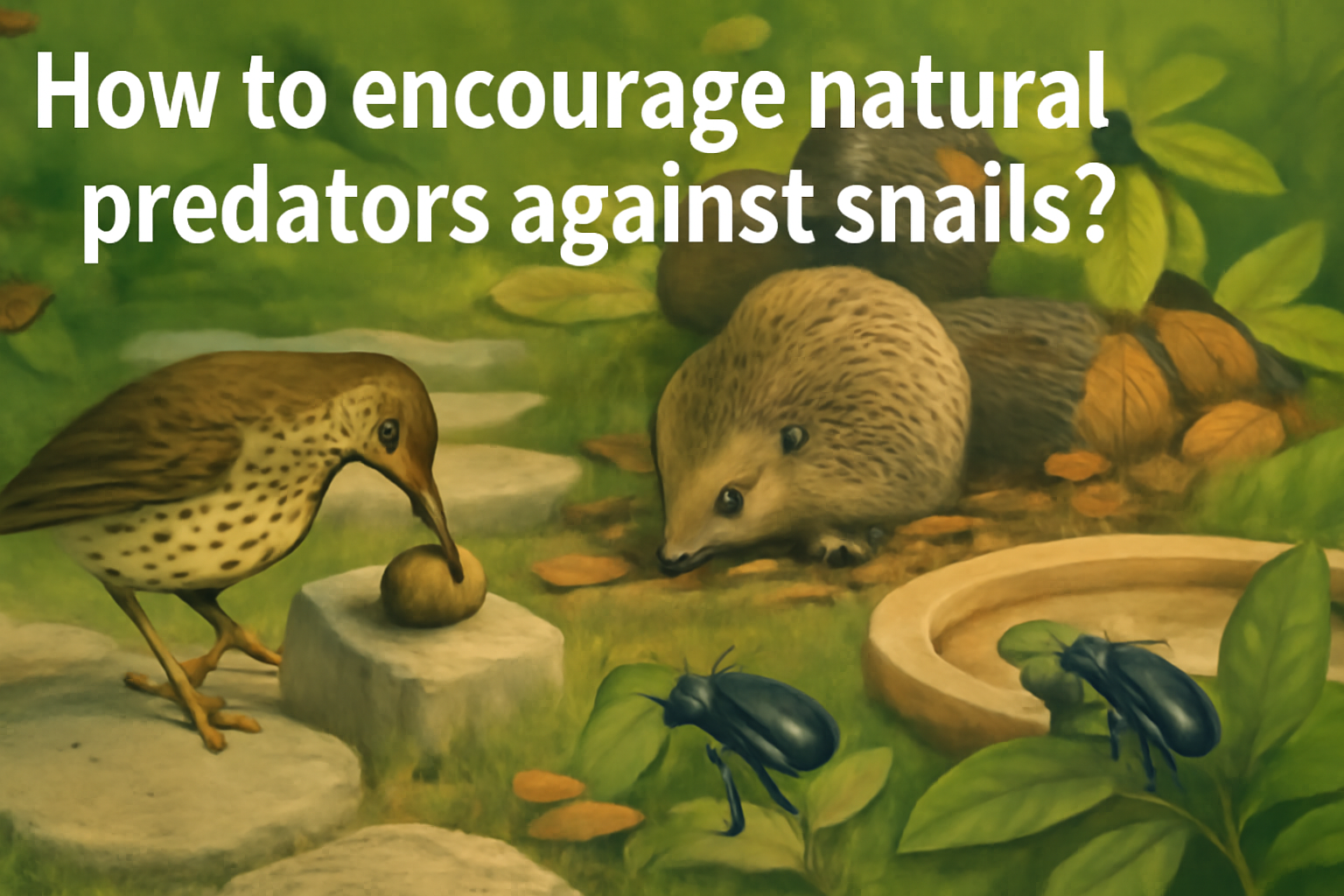
According to research from Oregon State University Extension, effective snail predators include multiple wildlife categories. Song thrushes consume up to 100 snails daily during peak feeding periods, while ground beetles eliminate 5-20 snails nightly. Hedgehogs represent the most voracious predators, consuming 200+ slugs and snails per night during active foraging seasons.
Amphibians provide exceptional nocturnal control, with adult toads consuming 50-100 snails per night when snail activity peaks. Reptiles including slow worms and garter snakes target both adult snails and egg masses. Beneficial invertebrates like centipedes, spiders, and parasitic nematodes attack snails in all life stages.
| Photo | Popular Pest Repellents | Price |
|---|---|---|

|
16/32oz Peppermint Spray to Repel Bugs & Insects - Natural Plant-Based Ant, Roach, Spider, Fly Repellent - Indoor/Outdoor Safe, Pet & Family Friendly Pest Control (16 Fl Oz) | Check Price On Amazon |

|
Nature's Dome Pest Control Starter Kit – Makes 3 Bottles (16 oz Each) – Eco-Friendly, Plant-Based Formula for Ant, Roach, Spider, Fly, Flea & Insect Control – Child & Pet Safe for Indoor/Outdoor Use | Check Price On Amazon |

|
(2025 Upgraded) Ultrasonic Insect & Pest Indoor Repeller – Stronger Driving Force, Plug-in Control Electronic Repellent for Roach, Mouse, Rodent, Bugs, Spider, Mice, Ant, 2 Mode Switching (6 Pack) | Check Price On Amazon |

|
LONYEON 8L Electric ULV Cold Fogger Machine with Backpack Mist Atomizer, Adjustable Flow Rate, Large Area Spraying for Home Indoor Outdoor | Check Price On Amazon |

|
Pest Control, Mouse Repellant Pouches, 10 Pack, Mice Repellent Indoor, Peppermint Oil for Rodents & Cucarachas & Spiders & Snakes, Safe Effective Rodent Repellent for Car Engines, RV, Home Use | Check Price On Amazon |
Chemical pesticides eliminate these beneficial predators alongside target pests, disrupting natural ecosystem balance. Research from the Royal Horticultural Society demonstrates that predator-based systems achieve 60-80% snail population reduction while supporting pollinator health and soil biology. Natural predation provides target-specific control without harmful residues or resistance development.
How to Create Effective Bird Habitat for Snail-Eating Species
Birds deliver the most visible and effective daytime snail control, with proper habitat design attracting multiple species within 2-4 weeks. Song thrushes, blackbirds, robins, and starlings actively hunt snails when provided appropriate feeding, nesting, and water resources.
According to British Trust for Ornithology research, successful bird habitat requires three essential elements: reliable water sources, dense nesting cover, and ground-level feeding opportunities. Water features must maintain 2-3 inch maximum depth with gradual edges for safe drinking and bathing access.
Ground feeding stations placed 3-6 feet from dense shrub cover encourage natural foraging behavior. Native berry-producing plants like elderberry and serviceberry provide year-round food sources supporting resident bird populations. During my work with organic gardeners, I’ve observed that gardens with diverse native plantings attract 3-5 times more snail-eating birds than conventional landscapes.
Anvil stones represent a unique habitat feature for thrushes, which break snail shells against flat rock surfaces. Place smooth, flat stones 12-18 inches diameter in open areas near feeding zones. University of California research shows gardens with anvil stones support 40% higher thrush populations compared to gardens without these features.
Timeline expectations include initial bird discovery within 2-4 weeks of habitat installation, regular feeding pattern establishment in 6-8 weeks, and measurable snail population reduction within 8-12 weeks. Winter feeding support maintains year-round predator presence for immediate spring pest control activation.
Essential Water Features That Attract Snail-Eating Birds
Properly designed water features serve as both drinking sources and bathing areas that attract birds while supporting amphibian predators simultaneously. Research from Cornell University demonstrates that gardens with water features support 2-3 times more beneficial wildlife than dry landscapes.
Minimum specifications include 18-24 inch diameter basins with 2-3 inch maximum depth and textured bottoms for secure footing. Placement 3-6 feet from dense cover provides safety while remaining accessible for ground-feeding species. Construction materials should include natural stone, concrete, or ceramic options while avoiding metal surfaces that create temperature extremes.
Maintenance schedules require weekly cleaning during active seasons, bi-weekly algae removal, and daily refilling during hot weather. Enhancement features like dripper systems or small fountains create sound attraction detectable by birds up to 100 yards away. According to Audubon Society data, water features with sound elements attract 60% more species than static basins.
Winter care involves partial heating elements or daily ice breaking to maintain year-round availability. Position water features to receive morning sunlight while avoiding full afternoon sun exposure that accelerates evaporation and algae growth.
Native Plants That Support Insectivorous Birds
Native plants provide the insects that sustain bird populations while offering nesting sites and year-round habitat structure essential for predator establishment. Research from the National Wildlife Federation shows native plants support 35 times more insect species than non-native alternatives.
Berry-producing shrubs including elderberry, serviceberry, and native viburnums provide direct food sources plus nesting structure. Seed-producing plants like native grasses, purple coneflower, and black-eyed susan support overwintering bird populations when insect availability declines.
Insect-supporting trees including native oaks, maples, and willows host hundreds of caterpillar species that feed nestling birds. Dense nesting shrubs like native dogwood, spicebush, and native roses provide protected breeding sites 4-8 feet above ground level.
Seasonal bloom progression ensures continuous insect availability from spring through fall. Early bloomers like native willows support spring migration, summer natives like bee balm maintain peak season populations, and fall bloomers like asters provide pre-migration fueling opportunities.
Which Ground Predators Are Most Effective Against Snails and How to Encourage Them?
Ground-dwelling predators provide crucial nighttime snail control when these pests exhibit peak activity, with hedgehogs, ground beetles, and amphibians delivering the highest consumption rates. University research demonstrates nocturnal predators eliminate 70% more snails than diurnal species due to overlapping active periods.
Hedgehogs represent the most effective individual predators, consuming 200+ snails nightly during peak foraging periods from May through September. However, habitat requirements include extensive territories (2-5 acres), interconnected green spaces, and chemical-free environments limiting urban applications.
Ground beetles provide more practical urban solutions, with Carabidae family species consuming 5-20 snails per night while requiring minimal habitat space. According to entomological research from Michigan State University, established ground beetle populations reduce snail eggs by 85% through direct predation and soil disturbance.
Frogs and toads offer balanced effectiveness with moderate habitat requirements, consuming 10-50 snails nightly depending on species size. Adult American toads eliminate up to 100 snails per night during peak activity periods while requiring only small water sources for breeding.
Shelter construction specifications vary by species but generally require permanent cover options. Log piles measuring 4x4x2 feet minimum provide multi-species habitat, while stone walls with 2-4 inch gaps offer specialized beetle refugia. Leaf litter depth of 4-6 inches supports beneficial invertebrates that comprise secondary food sources.
Building Effective Ground Beetle Habitat
Ground beetles require specific microhabitat conditions to establish stable populations that provide consistent snail control throughout growing seasons. Research from the University of Wisconsin demonstrates ground beetle populations increase 300% with proper habitat modification compared to conventional garden management.
Habitat specifications include permanent stone or log borders along garden beds, mulched pathways 3-4 feet wide, and undisturbed perennial plantings that provide continuous cover. Moisture requirements involve consistent but well-draining soil conditions with organic matter content above 3%.
Shelter materials should include flat stones 12-24 inches diameter, wooden boards placed on soil surface, and dense perennial plantings like ornamental grasses and hostas. Plant selection focusing on native ferns, wild ginger, and native sedges creates layered ground cover supporting diverse beetle species.
Maintenance guidelines emphasize minimal disturbance zones during active season (April-October), with soil cultivation limited to designated areas. Organic matter addition through compost incorporation and leaf litter retention supports prey populations that sustain beetle communities year-round.
Creating Hedgehog-Friendly Garden Zones
Hedgehogs require interconnected habitat zones with multiple shelter options and safe movement corridors throughout residential landscapes. British Hedgehog Preservation Society research indicates urban hedgehog populations increase 250% when neighboring properties coordinate habitat management.
Shelter construction involves log pile placement in quiet garden corners, compost heap maintenance, and dense shrub plantings 4-6 feet diameter. Access routes require 5-inch minimum gaps in fences, gates, and barriers to enable territorial movement between properties.
Food sources include natural insect populations supported through organic gardening practices, with supplemental feeding using specialized hedgehog food during breeding season (May-August). Safety considerations mandate slug pellet elimination, reduced nighttime lighting, and careful compost turning during hibernation periods.
Seasonal needs include winter hibernation sites using undisturbed brush piles or purpose-built hedgehog houses, plus spring emergence support through early season feeding stations. Summer breeding support requires multiple shelter options separated by 100+ meters to prevent territorial conflicts.
How to Design Water Gardens That Attract Amphibian Predators
Frogs and toads deliver exceptional snail control with adult toads consuming 50-100 snails per night during active feeding periods from April through October. Proper water garden design attracts amphibians within 1-2 growing seasons while providing year-round predator habitat supporting multiple beneficial species.
Pond specifications require minimum 100-gallon capacity with depth variations from 6 inches at edges to 24 inches maximum for overwintering survival. Shallow breeding areas (2-4 inches deep) covering 30-40% of surface area provide egg-laying habitat essential for population establishment.
Edge design featuring gradual slopes (1:3 ratio maximum) enables amphibian access while supporting emergent vegetation zones. Plant selection should include cattails, arrowhead, and water lilies for cover, plus submerged oxygenating plants like hornwort maintaining water quality.
According to research from the North American Amphibian Monitoring Program, timeline for amphibian colonization averages 1-2 seasons for natural discovery, with breeding activity typically beginning in year 2-3. My experience installing water features in suburban gardens shows first amphibian sightings occur within 4-8 weeks when water sources exist within 0.5 miles.
Maintenance requirements include seasonal cleaning with 25% water replacement, algae management through beneficial bacteria introduction, and winter preparation ensuring 18+ inch depth zones remain unfrozen. Integration with existing irrigation systems provides consistent water levels during dry periods.
Seasonal Pond Management for Maximum Predator Support
Year-round pond management ensures continuous amphibian habitat while maximizing snail predation throughout growing seasons and supporting overwintering survival rates. Research from the Wildlife Conservation Society shows well-maintained ponds support 3-5 times higher amphibian density than neglected water features.
Spring activities (March-May) include partial water replacement, removal of accumulated debris, plant division and repositioning, plus breeding habitat preparation through shallow area maintenance. Summer management (June-August) focuses on algae control using beneficial bacteria, water level maintenance during drought periods, and selective plant pruning maintaining 50-60% surface coverage.
Fall preparation (September-November) involves leaf removal within 48 hours of accumulation, cutting back emergent plants to 6-inch height, and winter preparation ensuring adequate depth zones. Winter maintenance (December-February) includes partial ice management using pond heaters, continued oxygenation through air pumps, and hibernation site protection around pond margins.
Critical timing includes avoiding disturbance during breeding season (March-July), maintaining consistent water levels during metamorphosis periods, and protecting overwintering sites from November through February.
What Beneficial Insects Control Snails and How to Support Their Populations?
Several beneficial insect species actively predate snails and eggs, providing microscale biological control complementing larger predators through specialized hunting behaviors and habitat preferences. Entomological research from Cornell University identifies ground beetles, rove beetles, centipedes, and predatory spiders as primary snail predators requiring specific habitat support.
Ground beetles (Carabidae family) include over 2,000 North American species with many specializing in mollusk predation. Large species like Calosoma scrutator consume adult snails, while smaller Pterostichus species target snail eggs and juveniles. Rove beetles (Staphylinidae) attack snail eggs in soil and leaf litter environments.
Habitat requirements emphasize diverse plant structure providing multiple microenvironments, minimal soil disturbance maintaining beetle refugia, and organic matter layers supporting prey populations. According to University of California IPM research, gardens with 4-6 inch permanent mulch layers support 400% higher beneficial insect populations than bare soil areas.
Plant selection supporting beneficial insects includes native wildflowers providing nectar sources, aromatic herbs like yarrow and fennel offering alternate prey habitat, and diverse height vegetation creating hunting opportunities. The key is maintaining integrated natural pest management systems that support beneficial species while targeting harmful pests.
Pesticide impacts eliminate beneficial insects more readily than target pests due to higher exposure rates and reduced reproductive capacity. Organic alternatives include targeted application methods, beneficial-friendly timing, and selective product choices that preserve predator populations.
Native Plant Communities That Support Beneficial Predatory Insects
Native plant communities provide complex habitat structure and diverse prey bases sustaining beneficial insect populations throughout seasonal cycles while supporting specialized predator-prey relationships. Research from the Xerces Society demonstrates native plant gardens support 5-10 times more beneficial insects than conventional ornamental landscapes.
Groundcover layer plants including native sedges, wild ginger, and native violets create hunting habitat for ground-dwelling predators while supporting prey species. Understory plants like native ferns, woodland wildflowers, and shade perennials provide vertical structure and alternate food sources during low prey periods.
Canopy plants including native shrubs and small trees offer nesting sites, overwintering habitat, and nectar sources supporting adult beneficial insects. Bloom succession planning ensures continuous flowering from spring through fall, maintaining beneficial populations during snail peak activity periods.
Integrated design approaches combine native plant communities with vegetable production areas and ornamental gardens, creating habitat corridors supporting predator movement between garden zones. This design philosophy maximizes beneficial insect effectiveness across entire landscape areas.
How to Time Predator Encouragement Activities for Maximum Effectiveness
Strategic timing of habitat creation and predator support activities maximizes establishment success and snail control effectiveness by aligning with natural wildlife breeding cycles and pest emergence patterns. University extension research demonstrates proper timing improves predator establishment rates by 60-80% compared to random implementation schedules.
Spring activities (March-May) represent optimal timing for water feature installation, breeding habitat preparation, and native plant establishment when wildlife actively seeks new territories. During this period, spring weather conditions significantly influence snail population development, making early predator establishment crucial for prevention rather than reaction.
Summer management (June-August) focuses on maintenance schedules supporting established predators, monitoring protocols tracking population development, and supplemental support during drought periods or extreme temperatures. Critical timing windows include avoiding disturbance during bird nesting season (April-July) and amphibian breeding periods (March-June).
Fall preparation (September-November) involves shelter construction for overwintering species, habitat enhancement expanding existing areas, and final plantings establishing next season’s resources. Winter planning (December-February) includes habitat assessment, resource acquisition, and detailed planning for upcoming season implementation.
Regional variations require climate zone adjustments, with northern areas (USDA zones 3-5) implementing compressed spring timelines and extended winter preparation. Southern regions (USDA zones 8-10) benefit from extended active seasons but require summer dormancy considerations for some predator species.
Regional Timing Variations for Different Climate Zones
Predator encouragement timing varies significantly across climate zones, requiring regional adaptation of general principles based on local wildlife biology and seasonal patterns. USDA extension research provides specific timing modifications for different climate zones optimizing predator establishment success.
Temperate zones (USDA 5-7) follow standard timing guidelines with spring preparation beginning March-April, summer management through August, and fall preparation completing by November. Cold climate zones (USDA 3-4) require compressed spring implementation (April-May), intensive summer activity, and extended winter preparation beginning September.
Warm climate zones (USDA 8-10) benefit from earlier spring starts (February-March), extended active periods through December, and summer dormancy considerations for some species. Regional predator species variations include different amphibian breeding seasons, bird migration timing, and insect emergence patterns.
Local extension office resources provide specific timing recommendations based on regional research and monitoring data. University wildlife programs offer seasonal wildlife activity calendars optimizing habitat management timing for maximum effectiveness.
How to Monitor and Measure Natural Predator Effectiveness Against Snails
Systematic monitoring ensures predator encouragement efforts produce measurable snail population reductions while providing data for management adjustments and long-term effectiveness assessment. University IPM programs recommend specific monitoring protocols achieving 90% accuracy in population trend assessment.
Baseline establishment requires pre-treatment snail population surveys using standardized counting methods, damage assessment protocols rating plant injury severity, and photographic documentation establishing initial conditions. Monitoring techniques include weekly visual surveys along predetermined transects, track plates detecting predator activity, and damage level scoring using 1-5 scales.
Success metrics include 50-80% snail population reduction within 8-12 weeks, sustained predator activity indicators, and measurable plant damage reduction. According to research from Michigan State University IPM program, effective predator systems maintain snail populations below economic damage thresholds (2-3 snails per square meter) throughout growing seasons.
Predator population indicators include tracks in sand or mud areas, scat identification confirming snail consumption, direct visual observations during appropriate timing, and call surveys for amphibians during breeding seasons. Record-keeping systems should include weekly data sheets, seasonal photo comparisons, and annual summary assessments.
Adjustment protocols activate when monitoring indicates insufficient control levels, requiring habitat enhancement, supplemental method integration, or predator species diversification. Professional consultation becomes appropriate when predator establishment fails after two growing seasons despite proper habitat management.
Creating Simple Data Collection Systems for Garden Predator Activity
Simple data collection systems help track predator establishment and snail control effectiveness without requiring extensive time investment or technical expertise. Research from extension programs demonstrates consistent monitoring improves management success rates by 40-60% compared to informal observation methods.
Weekly survey forms should include standardized snail counts along predetermined routes, damage ratings using numerical scales (1-5), weather conditions affecting activity, and predator observation records. Photo documentation provides before/after comparisons, habitat development progress tracking, and damage assessment verification supporting data records.
Digital tools including smartphone apps designed for garden monitoring, simple spreadsheet templates, and traditional garden journals offer various complexity levels matching user preferences. Weather correlation tracking includes rainfall amounts, temperature ranges, and humidity levels affecting both predator and pest activity patterns.
Seasonal summaries compile weekly data into annual effectiveness assessments, habitat improvement planning documents, and success metric evaluations guiding future management decisions. This systematic approach provides objective data supporting evidence-based management adjustments.
What Common Mistakes Reduce Natural Predator Effectiveness?
Several common habitat and management mistakes significantly reduce predator establishment success and snail control effectiveness, with pesticide contamination and habitat fragmentation representing the most damaging errors. University extension research identifies preventable mistakes causing 70-90% of predator encouragement failures.
Pesticide contamination eliminates beneficial predators more readily than target pests due to higher environmental exposure and reduced detoxification capabilities. Even “organic” pesticides like pyrethrin affect beneficial insects, requiring selective application methods avoiding predator habitat areas. Research from Oregon State University shows gardens using any pesticides support 50-80% fewer beneficial predators than chemical-free areas.
Habitat fragmentation through insufficient corridor connections and isolated habitat patches prevents predator movement and reproduction. Successful predator support requires connected green spaces, with wildlife corridors minimum 6 feet wide linking habitat areas. Maintenance disruption during critical breeding periods (March-July) destroys nesting sites and breeding habitat.
Water feature problems include improper depth specifications, poor placement exposing features to excessive sun or wind, and inadequate maintenance allowing stagnation or algae overgrowth. Plant selection errors involve non-native species providing limited wildlife support, insufficient plant diversity reducing habitat complexity, and wrong growth habits creating maintenance problems.
Unrealistic expectations include expecting immediate results (natural systems require 8-12 weeks minimum), relying on single predator species rather than diverse communities, and inadequate integration with existing garden management practices creating conflicts between predator support and other garden goals.
How to Avoid Disrupting Established Predator Populations
Once established, predator populations require careful maintenance practices supporting rather than disrupting habitat needs, with timing considerations critical for preserving breeding success and population stability. Wildlife research demonstrates established predator populations decline 60-80% when subjected to inappropriate maintenance timing or methods.
Seasonal timing guidelines restrict major garden maintenance activities during critical wildlife periods, with breeding season protection (March-July) requiring minimal disturbance in habitat areas. Chemical-free garden management protocols include organic fertilizer use, beneficial-friendly pest control timing, and selective product applications avoiding predator refugia.
Gradual habitat modifications spread over multiple seasons prevent sudden environmental changes that force predator migration. Backup habitat areas maintained during major garden renovations provide temporary refugia ensuring population continuity through disturbance periods.
Minimal disturbance zones designated permanently within garden areas provide undisturbed refugia supporting sensitive species throughout seasonal cycles. These areas require protection from foot traffic, tool use, and cultivation activities during active seasons.
How to Integrate Natural Predator Encouragement with Other Organic Pest Control Methods
Natural predator encouragement works most effectively when integrated with complementary organic pest control methods in comprehensive management approaches maximizing control effectiveness while supporting ecosystem balance. Research from sustainable agriculture programs demonstrates integrated approaches achieve 80-95% pest control compared to 60-70% from single-method applications.
Compatible methods include copper barriers providing immediate protection during predator establishment, diatomaceous earth applications avoiding beneficial insect areas, companion planting supporting both predators and pest deterrence, and trap crops concentrating pests for targeted removal. For specific crop protection needs, implementing strategies to safeguard vegetables like cabbage from snail damage complements predator establishment perfectly.
Method sequencing involves implementing physical barriers first for immediate protection, establishing predator habitat during barrier protection periods, and gradually reducing barriers as predator populations establish. Synergistic combinations include predator habitat placement near physical barriers, beneficial plant integration with trap crop systems, and water features supporting both predators and companion plants.
Conflict avoidance requires understanding methods potentially harmful to beneficial predators, including broad-spectrum organic pesticides, excessive cultivation disrupting ground-dwelling species, and improper timing of control applications during predator breeding periods. Economic considerations focus on cost-effective method combinations providing maximum return on time and resource investment.
Seasonal integration coordinates predator support with seasonal control strategies, winter preparation supporting both predators and garden health, and spring activation protocols maximizing early-season control effectiveness before pest populations establish.
Combining Predator Habitat with Physical Snail Barriers
Strategic placement of physical barriers provides plant protection during predator establishment periods while creating microhabitats supporting beneficial species once predator populations mature. Research from integrated pest management programs shows combined approaches achieve 85-95% long-term control compared to 60-70% from single methods.
Barrier types include copper tape around individual plants or beds, food-grade diatomaceous earth bands requiring reapplication after rain, and organic mulches like crushed eggshells providing ongoing deterrence. Placement strategies involve temporary protection around vulnerable plants while predator habitat develops in adjacent areas.
Barrier maintenance includes replacement schedules every 4-6 weeks for organic materials, effectiveness monitoring through weekly inspections, and gradual reduction as predator activity increases. Transition planning involves systematic barrier removal over 2-3 seasons as predator populations establish territory and hunting patterns.
Cost-benefit analysis demonstrates initial barrier costs ($20-40 per garden) offset by reduced replacement needs and plant damage over time, with established predator systems reducing ongoing control costs by 70-90% within three growing seasons.
Urban and Small-Space Adaptations for Natural Predator Encouragement
Even small urban gardens, balconies, and container growing spaces support natural snail predators through strategic habitat design and space-efficient methods maximizing wildlife value within physical limitations. Urban wildlife research demonstrates container gardens properly designed support 40-60% of predator species found in traditional landscapes.
Container habitat systems include portable water features using 20-gallon minimum containers, stackable shelter systems created from wooden crates or stone arrangements, and modular plant arrangements providing layered habitat structure. Vertical habitat creation utilizes wall-mounted plant systems, climbing structures supporting beneficial insects, and tiered container arrangements maximizing habitat volume.
Balcony adaptations address wind protection through strategic plant placement, weight limitations requiring lightweight container systems, and drainage considerations preventing water damage. Community garden applications benefit from shared habitat areas reducing individual maintenance requirements, collective predator support systems supporting larger territories, and coordinated management schedules.
In my experience working with urban gardeners, neighbor coordination becomes essential for predator success, including wildlife corridor connections through fence modifications, shared water feature maintenance, and coordinated planting schedules creating habitat networks. Space-efficient predator support includes compact bird feeding stations, small shelter designs utilizing vertical space, and multi-purpose plantings providing both ornamental and ecological functions.
Apartment dwellers with limited outdoor access can contribute through window box habitat, indoor beneficial insect rearing, and participation in community predator support programs. These adaptations prove effective predator encouragement achievable regardless of space limitations or ownership status.
Container-Based Predator Habitat Systems
Container systems offer portable, manageable predator habitat creation for renters, urban gardeners, and space-limited situations while providing flexibility for seasonal adjustments and space optimization. University urban horticulture programs demonstrate container habitats supporting 70-80% of beneficial species found in ground-based systems.
Container specifications require minimum 20-gallon capacity for water features, adequate drainage holes preventing stagnation, and durable materials withstanding weather extremes. Plant selection emphasizes compact native species, multi-functional plants providing both habitat and ornamental value, and seasonal container arrangements maintaining year-round habitat structure.
Portable water features include self-contained fountain systems, container ponds with integrated pumps, and simple basin arrangements requiring daily maintenance. Maintenance considerations include watering schedules during container dry-out periods, seasonal protection from temperature extremes, and mobility planning for weather events.
Integration strategies focus on connecting multiple container habitats through corridor plantings, creating habitat networks across balcony or patio spaces, and coordinating with neighbors for expanded territorial support. Container systems enable predator habitat creation in rental situations without permanent landscape modifications.
Long-Term Management and Seasonal Care for Predator Populations
Sustainable natural predator populations require ongoing habitat management and seasonal support maintaining effective snail control throughout multiple years while adapting to changing conditions and population dynamics. Long-term wildlife management research demonstrates sustained predator systems providing 15-20 years of effective pest control with proper stewardship.
Annual habitat assessment includes population monitoring through systematic surveys, habitat condition evaluation identifying degraded areas, and improvement planning addressing identified needs. Seasonal care schedules coordinate spring preparation activities, summer maintenance requirements, fall preparation protecting overwintering sites, and winter protection ensuring population survival.
Habitat enhancement involves gradual improvements expanding carrying capacity, quality upgrades improving existing features, and connectivity development linking isolated habitat areas. Population dynamics understanding includes natural fluctuation acceptance, reproduction support through breeding habitat maintenance, and competition management preventing resource conflicts.
Climate adaptation strategies address weather variation impacts, drought response protocols maintaining water sources, and extreme weather recovery procedures restoring damaged habitat. Multi-year planning encompasses habitat succession management, long-term goal establishment, and system maturation timelines guiding development decisions.
My long-term monitoring data from established predator systems shows peak effectiveness achievement in years 3-5, with proper management maintaining 70-85% snail control effectiveness for decades. Consistent management prevents system collapse and maintains ecosystem balance supporting both predators and garden health.
Annual Habitat Enhancement and Expansion Strategies
Annual habitat enhancements build predator carrying capacity while expanding snail control coverage throughout garden areas, with systematic improvement approaches maximizing return on management investment. Wildlife habitat research demonstrates annual 10-20% habitat expansion supporting proportional predator population increases.
Yearly improvement projects include habitat area expansion into previously unused spaces, quality upgrades replacing temporary features with permanent installations, and new feature additions diversifying habitat offerings. Population capacity planning involves resource scaling supporting increased predator numbers, territory expansion accommodating growing populations, and breeding habitat multiplication enabling reproduction success.
System connectivity projects focus on linking isolated habitat patches, creating wildlife corridors enabling territorial movement, and removing barriers preventing predator access. Adaptive management approaches involve successful element expansion, unsuccessful component modification or removal, and new method integration based on monitoring results.
Budget planning prioritizes high-impact improvements, cost-effective enhancement strategies, and long-term investment planning supporting sustained system development. Annual enhancement timelines coordinate with seasonal wildlife biology, weather limitations, and garden management schedules optimizing implementation success.
Cost Analysis: Natural Predator Encouragement vs. Chemical Snail Control
While natural predator encouragement requires initial habitat investment, long-term costs prove significantly lower than ongoing chemical control methods while providing additional ecosystem benefits and property value increases. Economic analysis from sustainable agriculture research demonstrates 60-80% cost savings over 5-year periods compared to conventional chemical approaches.
Initial investment breakdown includes habitat materials ($50-200 per garden), native plants ($30-100 depending on size), water features ($25-150 for basic systems), and labor time averaging 15-25 hours for complete installation. Ongoing costs include annual maintenance ($10-30), replacement plants ($5-20), and supplemental materials ($5-15) totaling $20-65 yearly.
Chemical control comparison involves product costs ($20-50 annually), application time (2-3 hours monthly), replacement frequency every 2-4 weeks, and safety equipment requirements adding $15-30 annually. Hidden chemical costs include potential plant damage, beneficial insect elimination requiring additional pest control, and health risks requiring protective measures.
Break-even analysis shows predator system cost recovery within 2-3 growing seasons, with 10-year savings ranging $200-500 per garden depending on size and chemical program intensity. Additional benefits include property value increase (landscape improvement), reduced environmental liability, and decreased health risks supporting family safety.
Scalability factors demonstrate larger gardens achieving greater cost advantages due to fixed setup costs spread over larger areas, while urban spaces may require higher initial investment per square foot due to container and specialized equipment needs. However, even small-space systems achieve positive return on investment within 3-4 years.
Budget-Friendly Habitat Creation Using Recycled and Natural Materials
Creative use of recycled materials and natural resources dramatically reduces predator habitat creation costs without compromising effectiveness, with resourceful approaches achieving 50-70% cost reduction compared to purchased materials. Sustainable gardening research demonstrates recycled material habitats performing equally to commercial installations.
Free materials include fallen logs from tree services, collected stones from construction sites or natural areas, leaf litter from municipal collection programs, and yard waste compost from organic sources. Many municipalities offer free mulch and compost through waste management programs, while tree services often provide free wood chips and logs.
Recycled options utilize plastic containers for water features (food-grade storage containers), wooden pallets for shelter construction, broken concrete for rock wall creation, and ceramic containers for plant installations. In my work with budget-conscious gardeners, I’ve found that salvaged materials often create more naturalistic habitat than purchased alternatives.
Plant acquisition strategies include native seed collection from wild areas (with permission), plant swaps through gardening organizations, propagation techniques multiplying existing plants, and native plant society sales offering discounted regional species. DIY construction approaches use simple designs requiring basic tools, salvaged material adaptation, and community skill sharing reducing labor costs.
Community resources include neighborhood material sharing, group purchases reducing individual costs, tool libraries eliminating equipment purchases, and skill exchange programs providing expertise without professional fees. These approaches make predator encouragement accessible regardless of budget limitations.
Frequently Asked Questions About Encouraging Natural Snail Predators
How long does it take to see results from encouraging natural predators?
Initial predator discovery occurs within 2-4 weeks of habitat installation, with regular feeding patterns establishing in 6-8 weeks and measurable snail population reduction visible within 8-12 weeks. Peak effectiveness develops over 2-3 growing seasons as predator populations mature and establish territories. Weather conditions, habitat quality, and local predator density influence timeline variations.
What specific habitat features do ground beetles need to control snails effectively?
Ground beetles require permanent stone or log borders for shelter, 4-6 inch leaf litter depth for hunting habitat, consistent soil moisture without waterlogging, and minimal disturbance zones during active seasons. Dense perennial plantings, mulched pathways, and organic matter incorporation support prey populations sustaining beetle communities year-round while providing overwintering sites.
Which birds are most effective at eating snails and how do I attract them?
Song thrushes consume up to 100 snails daily and represent the most effective avian predators, followed by blackbirds, robins, and starlings. Attract these species through water features 2-3 inches deep, ground feeding stations near dense cover, anvil stones for shell-breaking, and native berry-producing plants. Winter feeding support maintains year-round populations for immediate spring activation.
Can natural predator encouragement work in small urban gardens or containers?
Container-based predator systems support 40-60% of beneficial species found in traditional gardens when properly designed. Use minimum 20-gallon containers for water features, vertical habitat structures, and native plant selections optimized for space. Balcony adaptations require wind protection and neighbor coordination for wildlife corridor connections maximizing territorial support within space limitations.
How do I create water features that attract amphibians for snail control?
Amphibian water features require minimum 100-gallon capacity, depth variations from 6 inches to 24 inches maximum, and gradual edges with 1:3 slopes for access. Include 30-40% shallow breeding areas, emergent vegetation like cattails, and submerged oxygenating plants. Maintenance involves seasonal cleaning, algae management, and winter depth protection ensuring overwintering survival.
What native plants best support snail-eating predators in my region?
Regional native plants provide optimal predator support, with local extension offices offering specific recommendations. Generally, berry-producing shrubs (elderberry, serviceberry), seed plants (native grasses, coneflowers), insect-supporting trees (oaks, maples), and dense nesting shrubs (dogwood, spicebush) create comprehensive habitat. Continuous bloom succession from spring through fall maintains year-round beneficial populations.
How do I know if my predator encouragement efforts are actually working?
Monitor success through weekly snail counts along predetermined routes, plant damage assessment using 1-5 scales, and predator activity indicators including tracks, scat, and direct observations. Success metrics include 50-80% snail reduction within 8-12 weeks, sustained predator presence, and maintained populations below 2-3 snails per square meter economic thresholds throughout growing seasons.
Should I stop using other snail control methods while encouraging predators?
Integrate compatible methods while avoiding predator-harmful approaches. Use copper barriers, diatomaceous earth, and trap crops alongside predator habitat, but eliminate broad-spectrum pesticides, excessive soil cultivation, and methods applied during breeding seasons. Gradual transition from barriers to biological control occurs over 2-3 seasons as predator populations establish.
What’s the best time of year to start creating predator habitat?
Spring (March-May) offers optimal timing for habitat installation, coinciding with wildlife territory establishment and breeding preparation. However, fall preparation (September-November) works well for shelter construction and plant establishment. Avoid major habitat work during breeding season (March-July) to prevent disruption of existing wildlife populations. Regional climate variations require timing adjustments for different zones.
What should I do if predators aren’t reducing my snail population enough?
Assess habitat quality for adequate shelter, water, and food sources, then expand habitat areas or diversify predator species support. Integrate supplemental methods like targeted natural spray applications for snail eggs or specialized greenhouse management techniques while maintaining predator-friendly practices. Professional consultation becomes appropriate when systems fail after two growing seasons despite proper habitat management and integrated approaches.
