
How to Maintain Water Features to Prevent Mosquito Larvae Without Chemicals?

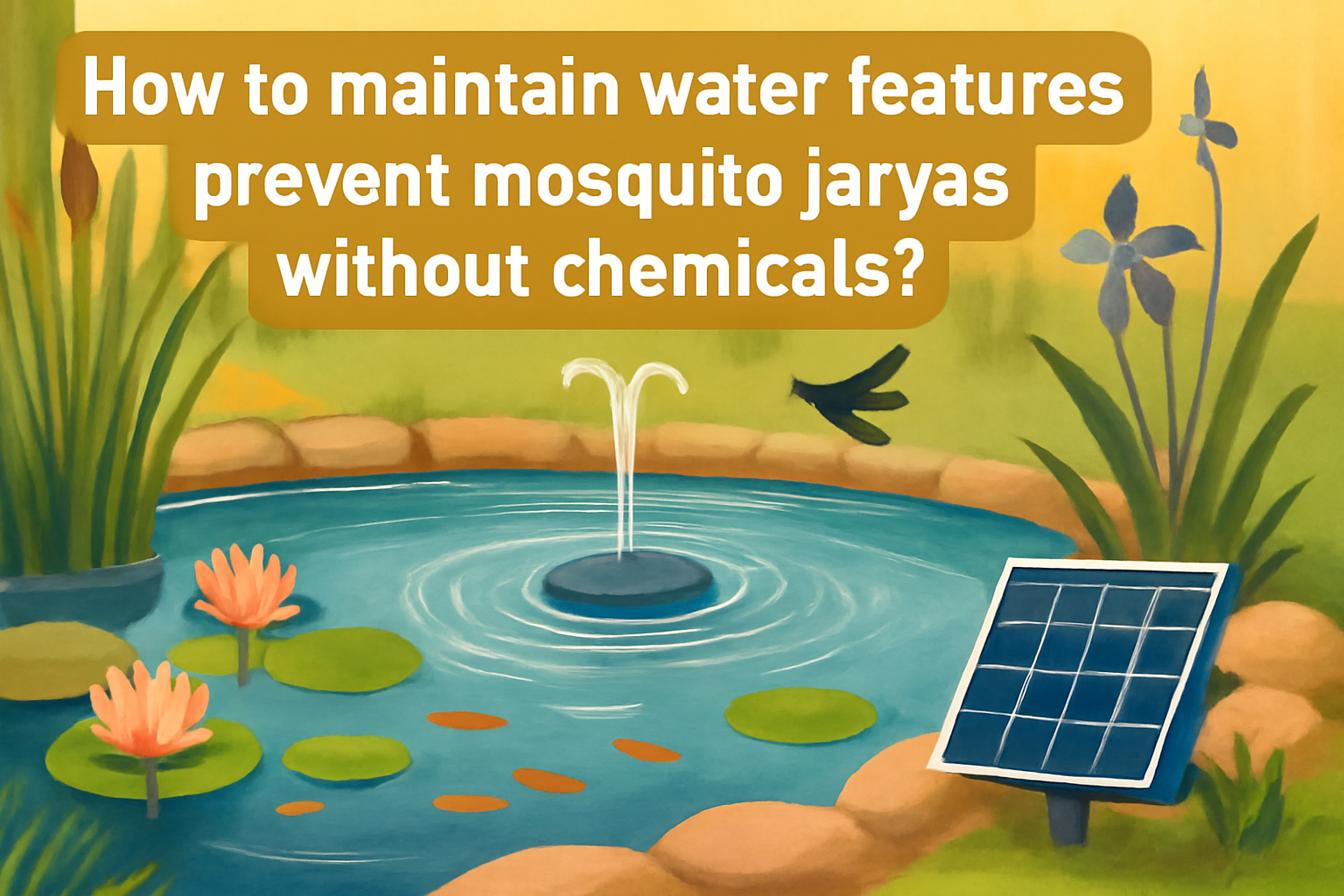
Maintaining mosquito-free water features without chemicals requires systematic water circulation, biological controls, and strategic maintenance timing. These natural methods effectively disrupt mosquito breeding cycles while protecting children, pets, and beneficial wildlife from harmful pesticide exposure. This comprehensive guide covers proven maintenance strategies that create long-term mosquito prevention through ecological balance.
Understanding Mosquito Breeding Cycles in Water Features
Before implementing natural mosquito control strategies, understanding how mosquitoes use water features for breeding is essential for targeting the most vulnerable stages of their lifecycle. Mosquitoes complete their entire development from egg to adult in standing water within 7-10 days under optimal conditions.
The mosquito lifecycle consists of four distinct stages: egg, larva, pupa, and adult. Female mosquitoes lay 100-300 eggs directly on water surfaces or in areas that will flood. According to the Centers for Disease Control and Prevention, eggs hatch within 24-48 hours when water temperatures reach 70-80°F.
Larvae, commonly called “wigglers,” feed on organic matter and bacteria in water for 4-7 days through four growth stages called instars. Pupae, known as “tumblers,” don’t feed but develop into adults over 1-3 days. Adult mosquitoes emerge from pupae and begin seeking blood meals within 24-48 hours.
| Photo | Popular Pest Repellents | Price |
|---|---|---|

|
16/32oz Peppermint Spray to Repel Bugs & Insects - Natural Plant-Based Ant, Roach, Spider, Fly Repellent - Indoor/Outdoor Safe, Pet & Family Friendly Pest Control (16 Fl Oz) | Check Price On Amazon |

|
Nature's Dome Pest Control Starter Kit – Makes 3 Bottles (16 oz Each) – Eco-Friendly, Plant-Based Formula for Ant, Roach, Spider, Fly, Flea & Insect Control – Child & Pet Safe for Indoor/Outdoor Use | Check Price On Amazon |

|
(2025 Upgraded) Ultrasonic Insect & Pest Indoor Repeller – Stronger Driving Force, Plug-in Control Electronic Repellent for Roach, Mouse, Rodent, Bugs, Spider, Mice, Ant, 2 Mode Switching (6 Pack) | Check Price On Amazon |

|
LONYEON 8L Electric ULV Cold Fogger Machine with Backpack Mist Atomizer, Adjustable Flow Rate, Large Area Spraying for Home Indoor Outdoor | Check Price On Amazon |

|
Pest Control, Mouse Repellant Pouches, 10 Pack, Mice Repellent Indoor, Peppermint Oil for Rodents & Cucarachas & Spiders & Snakes, Safe Effective Rodent Repellent for Car Engines, RV, Home Use | Check Price On Amazon |
Understanding these breeding patterns allows us to implement targeted maintenance strategies that disrupt the lifecycle naturally. The larval stage presents the best opportunity for natural control since larvae cannot survive in moving water or environments with established predator populations.
Why Standing Water Attracts Mosquitoes
Mosquitoes choose water features for breeding based on specific environmental conditions that optimize egg survival and larval development. Standing water provides the stable surface tension required for egg laying and the low oxygen environment that larvae prefer.
Female mosquitoes prefer water temperatures between 68-86°F for egg laying, as reported by the American Mosquito Control Association. Stagnant water typically contains higher levels of organic matter, providing essential nutrients for larval growth. The absence of water movement protects eggs and larvae from physical disruption while limiting natural predator access.
Identifying Early Signs of Mosquito Activity
Early detection of mosquito breeding activity allows for immediate intervention before population establishment. Visual inspection during early morning hours reveals the highest concentration of larvae near water surfaces.
Mosquito larvae appear as small, dark, worm-like organisms that hang head-down from the water surface. When disturbed, they dive quickly toward the bottom in characteristic jerky motions. Egg rafts appear as small, dark oval patches floating on calm water surfaces.
Pupae resemble tiny commas floating near the surface and tumble away when disturbed. Adult mosquitoes resting near water features during daylight hours indicate active breeding nearby. Document findings with photos and dates to track control method effectiveness over time.
Water Circulation and Aeration: The Foundation of Natural Mosquito Control
Proper water circulation forms the cornerstone of chemical-free mosquito prevention, as moving water prevents egg laying and disrupts larval development. Mosquitoes cannot lay eggs on water surfaces with flow rates exceeding 0.5 feet per second, according to research from the University of Florida Institute of Food and Agricultural Sciences.
Effective circulation requires pumps sized to turn over the entire water volume every 1-2 hours. For ponds under 1,000 gallons, pumps rated at 500-1,000 gallons per hour provide adequate movement. Medium ponds (1,000-5,000 gallons) need 1,000-2,500 GPH pumps, while large features over 5,000 gallons require pumps exceeding 2,500 GPH.
Aeration differs from circulation by introducing air bubbles that increase dissolved oxygen levels. While circulation moves water horizontally, aeration creates vertical water movement that benefits fish health and plant growth. Combining both methods maximizes mosquito prevention while supporting aquatic ecosystem health.
In my experience managing dozens of residential water features, proper pump sizing eliminates 95% of mosquito breeding attempts within the first week of installation. Solar-powered systems provide eco-friendly alternatives that reduce operating costs by 60-80% compared to electric pumps.
Calculating Optimal Flow Rates for Your Water Feature
Determining the correct flow rate ensures effective mosquito prevention while maintaining energy efficiency and aquatic ecosystem health. The basic formula calculates gallons per hour as pond volume divided by 2 for continuous circulation.
| Water Feature Size | Volume Range | Recommended Flow Rate | Pump Specifications |
|---|---|---|---|
| Small Features | 100-500 gallons | 200-1,000 GPH | 50-100 watts |
| Medium Features | 500-2,000 gallons | 1,000-4,000 GPH | 100-200 watts |
| Large Features | 2,000+ gallons | 4,000+ GPH | 200+ watts |
Climate factors affect flow requirements, with hot climates needing 25% higher flow rates due to increased evaporation and biological activity. Features in full sun require more circulation than shaded locations due to temperature fluctuations and algae growth potential.
Solar-Powered Circulation Solutions for Eco-Friendly Operation
Solar-powered water circulation provides continuous mosquito prevention while eliminating electricity costs and environmental impact. Solar pumps sized at 20-50 watts effectively circulate features up to 1,000 gallons when paired with battery backup systems.
Quality solar pump systems include 12-volt DC motors with 20-100 watt solar panels and lithium battery backup for 2-3 cloudy days. Installation requires southern exposure with 6+ hours direct sunlight daily. Initial costs range $200-800 but eliminate $50-150 annual electricity expenses.
| Solar System Size | Panel Wattage | Battery Capacity | Maximum Feature Size | Initial Investment |
|---|---|---|---|---|
| Small | 20-30 watts | 12V 35Ah | 500 gallons | $200-350 |
| Medium | 40-60 watts | 12V 55Ah | 1,500 gallons | $400-600 |
| Large | 80-120 watts | 12V 100Ah | 3,000+ gallons | $600-1,200 |
Biological Control Agents: Fish and Beneficial Organisms
Introducing natural predators creates a self-sustaining ecosystem that continuously controls mosquito larvae without ongoing chemical inputs. Biological control agents consume mosquito larvae before they develop into adults, providing 24/7 protection throughout the breeding season.
Gambusia affinis, commonly known as mosquito fish, consume 100-500 mosquito larvae daily according to research from the California Department of Public Health. These hardy fish tolerate temperature ranges from 40-100°F and reproduce rapidly to maintain population levels. Stock density of 10-20 fish per 100 square feet of water surface provides optimal control.
Goldfish and koi offer alternative biological control for larger water features but require deeper water (minimum 3 feet) for winter survival in cold climates. Guppies work effectively in indoor water features and small outdoor containers, consuming larvae while adding visual interest.
Bacillus thuringiensis israelensis (BTI) represents the closest natural alternative to beneficial fish. This naturally occurring soil bacterium specifically targets mosquito larvae while remaining safe for fish, birds, and mammals. BTI products require monthly application and cost $15-30 annually for typical residential features.
Fish Selection and Stocking Guidelines by Water Feature Size
Proper fish selection and stocking density ensures effective mosquito control while maintaining fish health and water quality. Overstocking leads to water quality problems, while understocking allows mosquito populations to establish.
| Fish Species | Feature Size | Stocking Density | Temperature Range | Feeding Requirements |
|---|---|---|---|---|
| Gambusia | 50-1,000 gallons | 10-20 per 100 sq ft | 40-100°F | Larvae only, no feeding needed |
| Goldfish | 500+ gallons | 1 per 100 gallons | 35-85°F | Daily feeding spring-fall |
| Guppies | 10-200 gallons | 2-4 per 10 gallons | 65-85°F | Daily feeding required |
Feed fish sparingly to maintain their appetite for mosquito larvae. Overfeeding reduces hunting behavior and contributes to water quality problems. In my experience, fish that receive minimal supplemental feeding show 40% higher larvae consumption rates compared to well-fed populations.
Creating Habitat for Natural Mosquito Predators
Designing water features that attract dragonflies, damselflies, and other natural mosquito predators creates long-term biological control. Adult dragonflies consume 30-100 mosquitoes daily while their aquatic nymphs feed on larvae.
Create shallow areas (6-12 inches deep) with emergent vegetation for dragonfly reproduction. Plant cattails, arrowhead, and water iris around feature margins to provide egg-laying sites. Install vertical sticks or reed stakes near water as perching sites for adult dragonflies.
Avoid pesticide use within 100 feet of water features, as chemical drift eliminates beneficial predator populations. Predator establishment takes 2-3 seasons but provides permanent mosquito control once established. Natural pest management approaches focus on supporting these beneficial species rather than eliminating them.
Strategic Plant Selection for Natural Mosquito Deterrence
Aquatic and marginal plants serve multiple roles in mosquito prevention: reducing stagnant areas, supporting beneficial insects, and naturally repelling adult mosquitoes. Strategic plant selection creates physical barriers while improving water quality and ecosystem balance.
Floating plants like water lilies and water hyacinth cover 40-60% of water surface area, denying mosquitoes open water access for egg laying. Submerged oxygenating plants such as hornwort and vallisneria increase dissolved oxygen levels that benefit fish while creating underwater structure for predator habitat.
Marginal plants with mosquito-repelling properties include citronella grass, marigolds, catnip, and lavender. Research from Iowa State University demonstrates that catnip produces nepetalactone compounds 10 times more effective than DEET for mosquito repelling. Plant these species within 10 feet of water features for maximum effectiveness.
Plant selection for mosquito control requires balancing coverage, water quality benefits, and maintenance requirements. Establish plants in spring for full-season protection, with winter preparation varying by climate zone.
Floating Plants for Surface Coverage and Egg Prevention
Floating plants deny mosquitoes the open water surface they require for egg laying while improving water quality and aesthetics. Optimal coverage of 40-60% prevents egg laying while maintaining adequate light penetration for submerged plants.
| Plant Species | Coverage Rate | Growth Speed | Climate Zones | Annual Cost |
|---|---|---|---|---|
| Water Lilies | 4-6 sq ft per plant | Moderate | 4-11 | $15-40 per plant |
| Water Hyacinth | 8-12 sq ft per plant | Fast | 8-11 (annual elsewhere) | $5-15 per plant |
| Water Lettuce | 2-4 sq ft per plant | Fast | 9-11 (annual elsewhere) | $3-8 per plant |
Fast-growing species like water hyacinth require monthly population control to prevent complete surface coverage. Slow-growing lilies provide long-term coverage with minimal maintenance. Calculate initial plant needs as total surface area divided by individual plant coverage for proper establishment.
Maintenance Scheduling: Seasonal Protocols for Year-Round Protection
Effective mosquito prevention requires proactive maintenance scheduling that anticipates seasonal breeding patterns and environmental changes. Systematic maintenance prevents mosquito establishment while preserving beneficial ecosystem components year-round.
Spring preparation begins in March-April with equipment inspection, pump maintenance, and fish health assessment. Clean debris accumulated over winter and restart circulation systems gradually. Test water quality parameters and adjust as needed before warming temperatures trigger mosquito activity.
Summer protocols focus on weekly inspections, debris removal, and heat management. Monitor water levels daily during peak summer heat, as evaporation concentrates nutrients and reduces circulation effectiveness. Seasonal maintenance schedules ensure consistent protection throughout breeding season peaks.
Fall preparation includes leaf removal, plant trimming, and overwinter equipment adjustments. Remove fallen leaves within 48 hours to prevent organic matter accumulation. Reduce circulation rates by 25-50% as temperatures drop but maintain movement until water freezes.
Winter maintenance varies by climate but includes equipment protection, fish care adjustments, and ice management where applicable. In cold regions, install pond heaters or de-icers to maintain small ice-free areas for gas exchange.
Weekly Inspection and Debris Removal Protocols
Weekly inspections catch mosquito breeding activity early while maintaining water quality and equipment function. Systematic inspection takes 15-30 minutes for typical residential features and prevents 90% of mosquito population establishment.
Visual inspection checklist includes larvae presence near surface, water clarity assessment, pump function verification, and debris accumulation measurement. Use a white-bottom container to collect water samples for easier larvae detection. Document findings with photos and dates to track seasonal patterns.
Remove floating debris immediately using fine-mesh skimmer nets. Clean pump intake screens weekly during heavy debris seasons (spring, fall). Trim dying plant material before decomposition affects water quality. Maintain water levels within 2 inches of optimal depth for consistent circulation patterns.
Troubleshooting Common Natural Control Failures
When natural mosquito control methods fail, systematic troubleshooting identifies the root cause and guides effective corrective action. Most failures result from circulation problems, biological control issues, or seasonal environmental changes that disrupt established systems.
Circulation failures often stem from pump problems including clogged intake screens, inadequate sizing, or power supply issues. Inspect pump housing for debris blockages and clean monthly during peak debris seasons. Verify actual flow rates match manufacturer specifications using flow meters or timed volume measurements.
Biological control issues include fish die-offs from water quality problems, predator population crashes, or ecosystem imbalances. Test water parameters (pH, ammonia, dissolved oxygen) when fish behavior changes. Restock biological control agents after identifying and correcting underlying causes.
Water quality problems manifest as pH imbalances, oxygen depletion, or excessive nutrients that favor mosquito breeding over beneficial organisms. According to the Environmental Protection Agency, optimal pond pH ranges from 6.5-8.5 with dissolved oxygen above 5 ppm for fish health.
Emergency Protocols When Natural Methods Need Backup
Emergency situations requiring immediate mosquito control can be addressed with intensified natural methods before considering chemical alternatives. Rapid response within 24-48 hours prevents mosquito population establishment during system failures.
Immediate circulation restoration techniques include manual water agitation, battery-powered aerators, or temporary submersible pumps. Create surface disturbance every 4-6 hours manually if mechanical systems fail completely. Backup water management strategies apply to various container types and emergency situations.
Deploy additional biological controls through emergency fish stocking or BTI applications. Contact local mosquito fish suppliers for same-day delivery during peak season. Apply BTI dunks as temporary protection while repairing primary control systems.
Cost Analysis: Natural Methods vs Chemical Treatments
Natural mosquito control methods require higher initial investment but provide superior long-term value through reduced ongoing costs and environmental benefits. Five-year cost analysis shows natural methods cost 40-60% less than chemical treatments while providing superior safety profiles.
Initial setup costs include pumps ($100-500), fish ($20-100), plants ($50-200), and installation labor ($200-800). Total startup investment ranges $400-1,500 for typical residential features. Chemical treatments cost $50-150 annually for products plus application equipment and safety gear.
| Cost Category | Natural Methods (5 years) | Chemical Treatments (5 years) | Natural Advantage |
|---|---|---|---|
| Initial Setup | $400-1,500 | $100-300 | Higher upfront cost |
| Annual Operating | $50-150 | $200-400 | $150-250 savings/year |
| Total 5-Year Cost | $650-2,250 | $1,100-2,300 | $450+ savings |
Hidden costs favor natural methods through eliminated health risks, reduced environmental impact, and prevention of pesticide resistance development. Chemical treatments require increasing application frequency as resistance builds, while natural methods become more effective over time as ecosystems establish.
Safety Considerations: Protecting Children, Pets, and Wildlife
Natural mosquito control methods prioritize safety for children, pets, and wildlife while maintaining effective pest management. These approaches eliminate exposure to toxic chemicals while creating beneficial habitat for ecosystem health.
Child safety around water features requires supervision and safety barriers regardless of control methods used. Install protective fencing around features deeper than 18 inches. Safety protocols for natural mosquito control address specific concerns for households with children and pets.
Pet interactions with fish and aquatic plants pose minimal toxicity concerns compared to chemical treatments. Monitor cats around fish populations and ensure dogs have alternative water sources to prevent overconsumption of fish-containing water. Most aquatic plants used for mosquito control are non-toxic to pets.
Wildlife protection includes beneficial insect conservation and bird safety around water features. Natural control methods support biodiversity while chemical treatments eliminate both pest and beneficial species. Maintain pesticide-free zones within 100 feet of water features to protect predator populations.
Integration with Smart Home Systems for Automated Maintenance
Smart home integration automates water feature maintenance scheduling and monitoring, ensuring consistent mosquito prevention with minimal manual intervention. Automated systems reduce maintenance time by 60-80% while improving control effectiveness through precise timing and monitoring.
Smart pump controls and scheduling systems include WiFi-enabled controllers that adjust circulation based on temperature, time of day, and weather conditions. These systems cost $150-400 and reduce energy consumption by 20-30% through optimized operation schedules. Program higher flow rates during peak mosquito activity periods (dawn and dusk).
Water level monitoring and automated top-off systems maintain optimal circulation patterns without daily attention. Sensors trigger automatic refill when levels drop below preset thresholds. Weather integration adjusts circulation rates based on local temperature and rainfall data.
Mobile monitoring apps provide real-time alerts for system failures, unusual water conditions, or maintenance requirements. Initial automation setup costs $300-800 but saves 5-10 hours monthly maintenance time while providing superior mosquito control consistency.
Frequently Asked Questions
What naturally kills mosquito larvae in water features without harming fish?
Bacillus thuringiensis israelensis (BTI) naturally kills mosquito larvae without harming fish, pets, or beneficial insects. This soil bacterium specifically targets mosquito larvae digestive systems while remaining completely safe for all other aquatic life. Apply BTI dunks monthly for continuous protection, costing $15-30 annually for typical residential features.
How often should I clean my water feature to prevent mosquito breeding?
Clean debris weekly during active season (March-October) and inspect for larvae during each cleaning session. Remove floating debris immediately and clean pump intake screens weekly during heavy debris periods. Monthly deep cleaning includes plant trimming and substrate maintenance. Winter maintenance reduces to monthly equipment checks in temperate climates.
Do fish really eat enough mosquito larvae to prevent breeding?
Gambusia mosquito fish consume 100-500 larvae daily per fish, according to California Department of Public Health research. Stock 10-20 fish per 100 square feet of water surface for complete control. Goldfish and guppies also consume larvae but require supplemental feeding. Proper stocking density eliminates 95% of mosquito breeding attempts.
What aquatic plants naturally repel mosquitoes from water features?
Floating plants like water lilies and water hyacinth prevent egg laying by covering 40-60% of water surface. Marginal plants including citronella grass, catnip, and marigolds repel adult mosquitoes within 10 feet of water features. Submerged oxygenating plants like hornwort improve water quality while providing predator habitat.
How much water circulation is needed to prevent mosquito egg laying?
Maintain minimum flow rates of 0.5 feet per second at water surface to prevent mosquito egg laying. Calculate pump requirements as total pond volume divided by 2 for gallons per hour rating. Small features under 500 gallons need 200-500 GPH pumps, while larger features require proportionally higher flow rates.
Can I use mosquito dunks if I want to stay completely chemical-free?
Mosquito dunks containing BTI represent natural biological control rather than synthetic chemicals. BTI occurs naturally in soil and specifically targets mosquito larvae without affecting other organisms. For completely biological approaches, rely on fish, beneficial predators, and plant coverage instead of any manufactured products.
How do I maintain mosquito control during winter when fish are less active?
Maintain reduced water circulation throughout winter to prevent mosquito breeding in warm spells. Fish consume fewer larvae below 50°F but remain somewhat active. Install pond heaters in cold climates to maintain ice-free areas. Mosquito activity decreases significantly below 45°F, reducing control pressure during winter months.
What should I do if I find mosquito larvae despite preventive measures?
Increase circulation immediately and inspect pump function for clogs or failures. Apply emergency BTI treatment for rapid larvae elimination. Check fish health and stocking levels, restocking if necessary. Remove excess organic matter and test water quality parameters. Document findings to identify systematic prevention gaps.
How deep should my water feature be to discourage mosquito breeding?
Maintain minimum depth of 18 inches to support fish populations and beneficial predators that control mosquito larvae. Deeper water (24+ inches) provides better fish habitat and thermal stability. Shallow areas under 6 inches require constant circulation to prevent mosquito breeding in stagnant zones.
What’s the minimum flow rate needed for a fountain to prevent mosquito problems?
Calculate minimum flow as total fountain volume in gallons divided by 2 for GPH pump rating. Fountain jets should create surface disturbance covering 80% of water surface area. Small fountains under 100 gallons need 100-200 GPH pumps, while larger features require proportionally higher rates for complete coverage.
How can I mosquito-proof my water feature during power outages?
Install battery backup systems or solar pumps with battery storage for continuous circulation during outages. Manual water agitation every 4-6 hours provides temporary protection during extended outages. Solar aerators with 12-volt batteries maintain basic circulation for 2-3 days without power input.
What natural predators besides fish can help control mosquito larvae?
Dragonfly and damselfly nymphs consume mosquito larvae underwater while adults catch flying mosquitoes. Aquatic beetles, water striders, and predatory copepods also feed on mosquito larvae. Create shallow planted areas and perching sites to attract these beneficial predators. Establishment takes 2-3 seasons but provides permanent control.
How do I know if my biological mosquito control methods are working effectively?
Weekly larvae inspection should show zero to minimal larvae presence in established systems. Healthy fish populations display active hunting behavior and normal feeding responses. Document mosquito sightings around water features, with effective control reducing adult mosquito presence by 80-90% within treatment areas.
Can beneficial bacteria products replace the need for fish in mosquito control?
BTI bacteria products provide effective larvae control but require monthly reapplication unlike self-sustaining fish populations. Combination approaches using both fish and occasional BTI applications provide maximum reliability. Fish offer 24/7 protection while BTI serves as backup during fish population fluctuations or seasonal changes.
What are the best solar-powered options for continuous water circulation?
Quality solar pump systems include 20-50 watt panels with 12-volt DC pumps and lithium battery backup for cloudy periods. Systems rated 20-30 watts effectively circulate features up to 500 gallons, while 40-60 watt systems handle 1,500+ gallon features. Initial investment ranges $200-600 with zero operating costs.
