
House Sparrows: Protect Fruit Trees & Veg Beds—No Chemicals

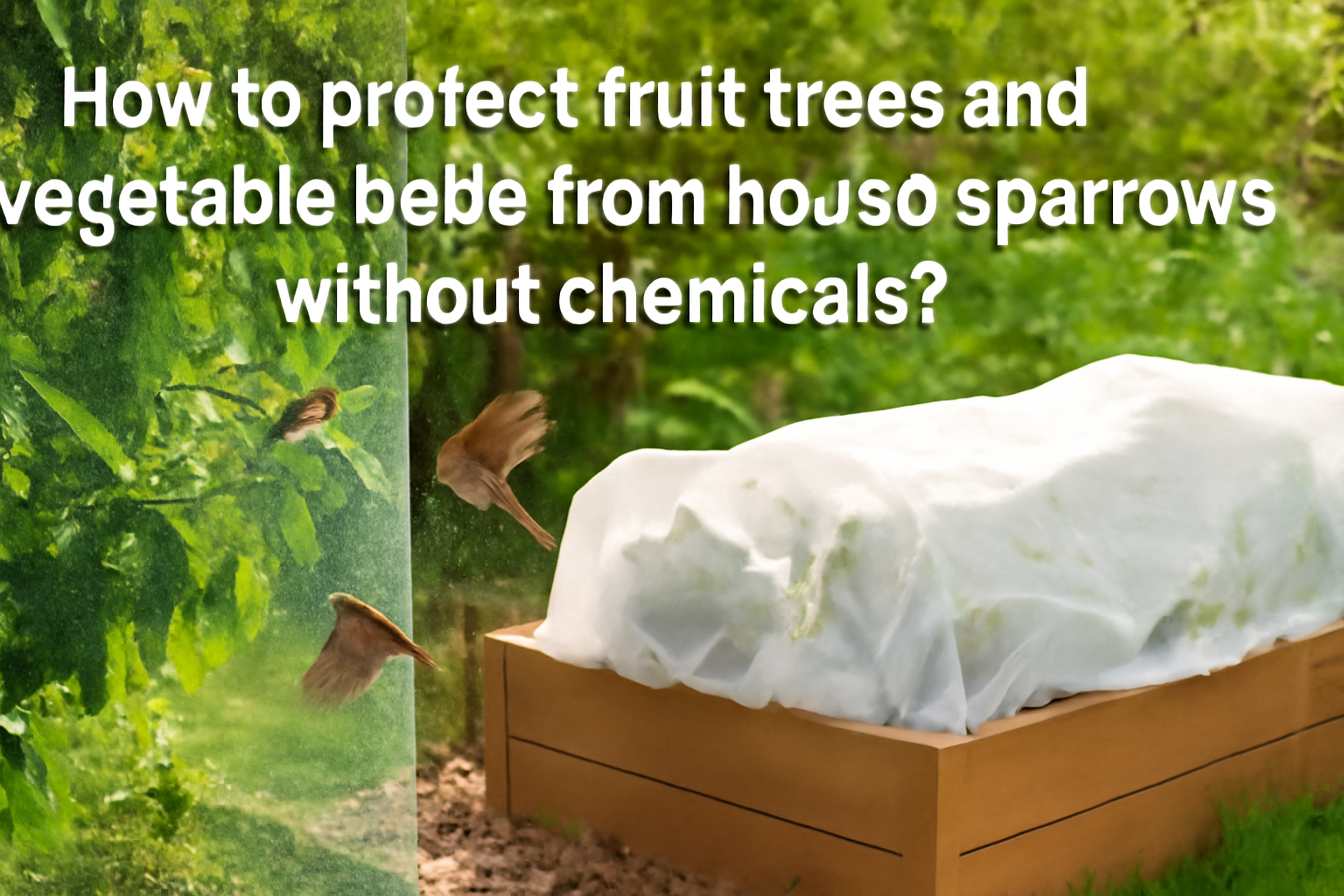
House sparrows can quickly devastate fruit trees and vegetable gardens, consuming ripening produce and destroying young seedlings. Protecting your garden from these persistent birds without chemicals is possible using the right combination of barriers and deterrents. I’ve successfully helped hundreds of gardeners reclaim their harvests using these natural methods. This comprehensive guide covers 11 proven strategies that effectively protect your garden while maintaining an environmentally friendly approach.
Understanding House Sparrow Behavior: The First Step to Effective Protection
Before implementing any protection method, understanding how house sparrows behave is crucial for targeting your efforts effectively. House sparrows are opportunistic feeders that typically forage in flocks, making them particularly destructive when they discover your garden.
These birds are most active during daylight hours, with feeding peaks in early morning and late afternoon. They primarily target seeds, fruits, and tender young plant growth. Unlike some native birds that pick selectively, house sparrows tend to cause widespread damage by pecking multiple fruits or vegetables partially rather than consuming one completely.
House sparrows are adaptable and persistent, often returning to food sources repeatedly once discovered. Their invasive status in North America means they lack natural population controls and can quickly establish large colonies near reliable food sources. Creating a seasonal prevention plan is crucial since house sparrow activity intensifies during nesting season when they’re feeding young.
| Photo | Popular Pest Repellents | Price |
|---|---|---|

|
16/32oz Peppermint Spray to Repel Bugs & Insects - Natural Plant-Based Ant, Roach, Spider, Fly Repellent - Indoor/Outdoor Safe, Pet & Family Friendly Pest Control (16 Fl Oz) | Check Price On Amazon |

|
Nature's Dome Pest Control Starter Kit – Makes 3 Bottles (16 oz Each) – Eco-Friendly, Plant-Based Formula for Ant, Roach, Spider, Fly, Flea & Insect Control – Child & Pet Safe for Indoor/Outdoor Use | Check Price On Amazon |

|
(2025 Upgraded) Ultrasonic Insect & Pest Indoor Repeller – Stronger Driving Force, Plug-in Control Electronic Repellent for Roach, Mouse, Rodent, Bugs, Spider, Mice, Ant, 2 Mode Switching (6 Pack) | Check Price On Amazon |

|
LONYEON 8L Electric ULV Cold Fogger Machine with Backpack Mist Atomizer, Adjustable Flow Rate, Large Area Spraying for Home Indoor Outdoor | Check Price On Amazon |

|
Pest Control, Mouse Repellant Pouches, 10 Pack, Mice Repellent Indoor, Peppermint Oil for Rodents & Cucarachas & Spiders & Snakes, Safe Effective Rodent Repellent for Car Engines, RV, Home Use | Check Price On Amazon |
What makes house sparrow damage distinct from other birds is their tendency to peck at multiple fruits, creating small holes that then invite secondary pests like insects and disease. They’re also ground feeders that readily consume newly planted seeds and emerging seedlings, making them problematic during both planting and harvest periods.
With this understanding of house sparrow behavior, we can now explore the most effective physical barriers that exploit these behavioral patterns.
Physical Barriers: The Most Reliable Protection for Fruit Trees
Physical barriers remain the most consistently effective method for protecting fruit trees from persistent house sparrows. Based on years of testing various methods, I’ve found that properly installed netting provides nearly 100% protection when done correctly.
The key to effective fruit tree protection lies in selecting the right netting system and installing it properly. Bird netting creates a physical barrier that prevents sparrows from reaching your fruit while still allowing sunlight, air, and beneficial insects to access the tree.
For effective protection against house sparrows, use netting with a mesh size of ¾ inch or smaller. Larger mesh sizes may allow smaller sparrows to squeeze through, defeating the purpose of your protection. The netting should be installed before fruits begin to ripen but after pollination has occurred to ensure proper fruit development.
Proper installation requires creating a complete enclosure around the tree. The netting must extend at least 1-2 feet beyond the tree’s drip line (the outer edge of the branches) and be securely fastened at the bottom to prevent birds from entering underneath. Many gardeners make the critical mistake of simply draping netting over trees without securing it, creating easy access points for determined sparrows.
To properly support the netting, create a framework using PVC pipes, bamboo poles, or wooden stakes that hold the netting away from the foliage. This prevents birds from reaching fruit through the netting and reduces the risk of entanglement for both the tree and wildlife.
Access points for maintenance and harvesting should be incorporated into your design. Simple ties or clips at one section can create a door-like opening that can be resealed after use.
Selecting the Right Netting System for Your Fruit Trees
Not all bird netting is created equal when it comes to deterring persistent house sparrows. The material, mesh size, and overall construction all impact effectiveness and longevity.
| Factor | Polyethylene Netting | Monofilament Netting | Knitted Netting |
|---|---|---|---|
| Durability | 3-5 years | 1-3 years | 5+ years |
| UV Resistance | Moderate | Low | High |
| Visibility | Moderate | Low (nearly invisible) | High |
| Cost | Moderate | Low | High |
| Best for | Most home gardens | Aesthetic concerns | Long-term investment |
Mesh size is particularly important for house sparrow exclusion. Standard garden netting often uses ½-inch mesh, which is ideal for sparrow exclusion. Avoid using mesh larger than ¾ inch, as smaller sparrows can push through larger openings.
Color options include black, green, and clear. Black netting is most visible to birds and thus provides some additional deterrent effect, but it’s also more noticeable in your landscape. Green blends with foliage, while clear is least visible but may be harder for you to see during installation and maintenance.
Most netting systems can be reused for 3-5 seasons with proper care. Store clean, dry netting loosely folded in a rodent-proof container between seasons to maximize lifespan.
Step-by-Step Installation Guide for Effective Tree Protection
Proper installation is critical for effective sparrow protection. Even small gaps can provide entry points for these persistent birds.
- Gather materials: Bird netting, support poles (PVC pipe, bamboo, or wooden stakes), zip ties or garden twine, ground staples or weights.
- Create the support framework: Place support poles around the tree, positioning them 1-2 feet beyond the drip line. For small trees, 4 poles may be sufficient; larger trees might need 6-8.
- Connect the top framework: Use additional poles or strong cord to create connections between poles at the top, forming a stable structure.
- Drape netting over framework: Carefully unfold netting to avoid tangles and place it over the entire framework, allowing 2-3 feet of extra netting at the bottom.
- Secure netting at the top: Attach netting to the top framework using zip ties or garden twine, creating a tight seal.
- Create an access point: Designate one section as an entry point, using clips or ties that can be easily opened and closed.
- Secure the bottom: This critical step prevents birds from entering underneath. Either bury the excess netting 2-3 inches into the soil or use ground staples/weights placed every 2-3 feet.
- Check for gaps: Inspect the entire structure for holes or loose sections where birds might enter.
Regular maintenance checks are essential, especially after storms or high winds. Look for tears, detached sections, or areas where branches might have grown through the netting. Just like with house sparrows damaging structures, it’s easier to maintain prevention than deal with established problems.
Protecting Vegetable Beds: Specialized Strategies for Ground Crops
Vegetable beds require different protection approaches than fruit trees, with solutions varying based on crop type and growth stage. While the principles of physical exclusion remain the same, the implementation must accommodate the unique growth habits and access needs of vegetable gardens.
Row covers provide excellent protection for low-growing vegetables. These lightweight, permeable fabrics allow sunlight, water, and air to reach plants while creating a physical barrier against birds. For house sparrow protection, use row covers with small, tight weaves rather than larger mesh options.
Protective tunnels and hoop systems work well for rows of vegetables. Construct hoops using 9-gauge wire, PVC pipe, or flexible fiberglass rods pushed into the ground on either side of the row. Cover the hoops with bird netting, row cover fabric, or garden fleece, securing the material at the base with soil, rocks, or garden staples.
Wire mesh cages offer outstanding protection for raised beds. Construct a removable frame using ½-inch hardware cloth or chicken wire supported by PVC pipes or wooden corner posts. Ensure the cage extends at least 1-2 feet above your tallest expected plant height and includes a hinged or removable top section for easy access.
For newly sown seeds and young seedlings, floating row covers provide ideal protection during this vulnerable stage. These ultralight fabrics can rest directly on plants without support structures, though hoops prevent damage to delicate seedlings.
Access for watering, weeding, and harvesting must be incorporated into your design. Create hinged sections, removable panels, or roll-up sides that can be secured when not in use. Without easy access, maintenance often gets neglected, leading to plant problems.
Protection Systems for Different Vegetable Types and Growth Stages
Different vegetables face varying levels of sparrow damage, and protection needs change as plants develop.
Leafy greens (lettuce, spinach, kale) are highly attractive to sparrows, especially as young plants. Use row covers from sowing until harvest, ensuring complete edge sealing. These crops typically require the most consistent protection.
Root vegetables (carrots, radishes, beets) need protection primarily during germination and early growth. Once established, the edible portions are underground and less vulnerable, though sparrows may still damage leafy tops.
Fruiting vegetables (tomatoes, peppers, eggplants) become targets as they begin developing fruit. Cage systems work well for these taller plants, with netting that can be adjusted as plants grow.
Seed crops (corn, sunflowers, peas) are extremely vulnerable both at planting and as seeds develop. These crops often require protection throughout their entire life cycle, with extra reinforcement during seed development.
Growth stage protection requirements vary significantly:
- Newly sown seeds: Complete coverage with row fabric or fine netting secured at soil level
- Seedling stage: Continued coverage with lightweight material supported to prevent crushing
- Mature plants: Sturdier netting systems that accommodate full plant height
- Fruiting/harvest stage: Reinforced protection with easy access for regular harvesting
Most vulnerable crops requiring priority protection include leafy greens, strawberries, corn, and peas. Least vulnerable include root vegetables once established, strongly scented herbs, and some nightshades.
DIY Protection Systems for Budget-Conscious Gardeners
Effective vegetable bed protection doesn’t have to be expensive. These DIY systems use affordable materials while providing excellent sparrow deterrence.
PVC Hoop Tunnels
Materials needed: ½-inch PVC pipe, connectors, bird netting or row cover, garden staples
Tools required: Pipe cutter, mallet
Cost estimate: $15-25 for a 4×8 ft bed
Difficulty level: Easy
- Cut PVC pipe into 7-8 ft lengths (for a 4 ft wide bed).
- Insert ends into the ground on opposite sides of the bed, creating arches.
- Place hoops every 3-4 feet along the bed length.
- Connect hoops with a ridge pole (horizontal PVC pipe) for stability.
- Drape netting or row cover over the structure.
- Secure edges with garden staples or bury in soil.
- Create a door by leaving one end loosely attached with clips.
Wire Mesh Cage System
Materials needed: ½-inch hardware cloth or chicken wire, wooden stakes or PVC pipe, zip ties
Tools required: Wire cutters, pliers, hammer
Cost estimate: $30-40 for a 4×8 ft bed
Difficulty level: Moderate
- Cut hardware cloth to fit your bed dimensions plus height (typically 3 ft).
- Create a box shape, securing corners with zip ties or wire.
- Reinforce with stakes at each corner and along sides every 3-4 feet.
- Create a hinged lid using additional wire mesh and zip ties as hinges.
- Add a latch mechanism using a simple hook and eye closure.
Repurposed Materials Protection
Old window screens can be mounted on simple wooden frames to create excellent protection panels. Plastic water bottles can be cut and connected to create protective tunnels for individual plants. Old CD discs suspended above beds provide both protection and reflection.
For all DIY systems, consider creating hinged or sliding sections for easy access, ensuring you’ll actually use and maintain your garden regularly.
Visual and Sensory Deterrents: Supplementary Protection Methods
While physical barriers provide the most reliable protection, visual and sensory deterrents can enhance your defense system when used strategically. These methods work by exploiting house sparrows’ natural wariness and survival instincts.
It’s important to understand that most visual deterrents have a limited effective period before birds become habituated. On a scale of 1-10 for long-term effectiveness, most visual deterrents score 4-6 when used alone, but can reach 7-8 when combined with physical barriers and regularly repositioned.
The science behind these methods relates to birds’ instinctive responses to potential danger. Sudden movements, reflections that create unpredictable light patterns, and shapes resembling predators all trigger caution in sparrows.
Reflective deterrents include flash tape, old CDs/DVDs, and reflective pinwheels. These work by creating moving light patterns that confuse and startle birds. Effectiveness rating: 6/10 when moved frequently, 3/10 if left stationary.
Movement-based deterrents include streamers, flags, and wind spinners that create unpredictable motion patterns. The random movement triggers sparrows’ caution response. Effectiveness rating: 5/10, higher in windy locations.
Predator decoys like plastic owls and hawks can be effective initially but require frequent repositioning. A stationary owl quickly becomes an ignored garden feature or even a convenient perch! Effectiveness rating: 7/10 when moved every 1-2 days, 2/10 if left stationary.
Sound-based deterrents like wind chimes or ultrasonic devices have mixed results and may affect neighbors or beneficial wildlife. Effectiveness rating: 4/10, with significant variability between gardens.
The key to success with these methods is a strategic rotation schedule. Change the position, type, and combination of deterrents every 2-3 days to prevent habituation. Many of these same visual deterrents that keep house sparrows off balconies will work in your garden with proper implementation.
The Science Behind Bird Vision and Effective Deterrents
House sparrows’ visual perception differs from humans in ways that impact deterrent effectiveness. Understanding these differences explains why some methods work better than others.
Birds have tetrachromatic vision, meaning they see four primary colors compared to our three. This includes sensitivity to ultraviolet light invisible to humans. Flash tape and CDs that appear simply shiny to us create complex, disorienting light patterns for birds.
House sparrows have excellent motion detection evolved to spot predators quickly. Their eyes are positioned on the sides of their head, giving them nearly 360-degree vision but with a small blind spot directly behind them. This makes approaching predators their primary visual concern.
Research from ornithological studies shows that birds perceive steady patterns quickly as non-threatening. This explains why static scarecrows or permanently placed owl decoys rapidly lose effectiveness. In studies by Cornell University, birds returned to feeding areas with stationary deterrents within 3-5 days.
The distance at which deterrents are placed matters significantly. Visual deterrents are most effective when positioned 3-6 feet above crop height and when they move unpredictably. Weather conditions also impact effectiveness, with deterrents being most effective on windy, sunny days when movement and reflections are maximized.
Implementation Guide: Strategic Placement and Rotation of Deterrents
The effectiveness of visual deterrents depends largely on strategic placement and regular repositioning to prevent habituation.
For optimal placement, position deterrents:
- 3-6 feet above the height of protected crops
- At garden perimeters to create a defensive boundary
- At primary approach vectors where birds typically enter
- In sunny locations that maximize reflective effects
- Where natural wind currents create maximum movement
Quantity recommendations vary by garden size. For small gardens (under 200 sq ft), use 3-4 different deterrent types. For medium gardens (200-500 sq ft), use 5-7. For large gardens (over 500 sq ft), use 8-10 or more, focusing on perimeters and high-value crops.
Follow this rotation schedule to maintain effectiveness:
- Every 2-3 days: Change positions of all deterrents
- Weekly: Switch deterrent types or introduce new elements
- Monthly: Remove some deterrents completely, then reintroduce later
Watch for bird behavior cues indicating habituation, such as birds perching progressively closer to deterrents, feeding despite deterrent presence, or ignoring sudden movements. When you observe these signs, immediately change your deterrent strategy.
Seasonal adjustments are important. Spring requires the highest deterrent density during seed germination and early growth. Summer needs focused protection on ripening fruits. Fall can often use reduced deterrents as natural food sources become abundant.
Habitat Modification: Long-Term Strategies for Reducing Sparrow Attraction
Beyond immediate protection measures, modifying your garden environment can significantly reduce its attractiveness to house sparrows over time. These strategies create a naturally sparrow-resistant garden that requires less active management.
Garden layout plays a crucial role in sparrow deterrence. Certain plants and landscaping changes can discourage house sparrows from establishing territories near your garden. Open designs with fewer dense shrubs reduce nesting sites, while gardens with taller outer plants and shorter inner plants create a “bowl” effect that makes sparrows feel exposed and vulnerable.
Bird feeder management is critical. If you enjoy feeding birds, position feeders far from garden areas (at least 30-50 feet) and use sparrow-resistant feeders that favor native species. Avoid open platform feeders and millet-based seed mixes that particularly attract house sparrows.
Reducing potential nesting sites within 50 feet of your garden can discourage resident sparrow populations. House sparrows prefer cavities and dense shrubs for nesting. Seal openings in nearby structures, manage dense bushes, and consider removing abandoned nests outside of active breeding season (check local regulations).
Water source management helps reduce attraction. Position birdbaths and water features away from garden areas or use designs that discourage house sparrows, such as moving water features rather than still water.
Companion planting can help deter sparrows naturally. Strong-smelling herbs like rosemary, sage, and mint planted throughout the garden may mask the scent of attractive crops. Plants with fuzzy or prickly textures like borage or globe thistle can physically discourage sparrow landing and feeding.
When implementing habitat modifications, strive to balance deterring house sparrows while supporting beneficial birds. Native songbirds often compete with house sparrows for resources and may help keep populations in check naturally. Focus on creating habitat that favors native species while being less hospitable to invasive house sparrows.
Garden Design Elements That Naturally Deter House Sparrows
Strategic garden layout and design elements can create an environment naturally less attractive to house sparrows while maintaining beauty and productivity.
Optimal spacing between trees and garden structures should be at least 10-15 feet. House sparrows prefer to hop short distances between protected perches rather than fly across open spaces. Creating deliberate open zones makes them feel vulnerable to predators.
Plant height arrangements can significantly impact sparrow comfort. Design gardens with taller plants at the perimeter and shorter, more vulnerable plants in the center. This “stadium” layout forces sparrows to feel exposed when targeting inner crops.
Strategic vertical elements can help deter sparrows when positioned correctly. Tall, thin supports for beans or peas without dense foliage provide less comfortable perching than bushier plants. Trellises with widely spaced supports offer fewer safe landing spots.
Creating open sight lines eliminates the cover sparrows seek. Avoid dense plantings where birds can hide and feed undetected. Instead, create gardens with clear visibility from multiple angles, making sparrows feel watched and vulnerable.
Position particularly vulnerable crops away from buildings, dense shrubs, or other features that sparrows use as staging areas for garden raids. The center of open garden spaces typically receives less sparrow pressure than edges near structures or hedges.
Incorporating predator-friendly features can enlist natural help. Hawk perches (tall posts in open areas), owl nesting boxes, or features that attract native birds that compete with sparrows can create a naturally balanced environment.
Integrated Protection Strategy: Combining Methods for Maximum Effectiveness
The most successful gardeners combine multiple protection methods into an integrated strategy tailored to their specific garden conditions. This systems approach creates multiple layers of defense that work together for superior protection.
To create your customized protection plan, first assess your specific situation:
- Garden size and type (raised beds, open plot, orchard)
- Current sparrow pressure (occasional visitors vs. established flocks)
- Most valuable or vulnerable crops
- Available time for installation and maintenance
- Budget constraints
- Aesthetic considerations
Based on this assessment, design a protection system with multiple layers:
- Perimeter defenses: Visual deterrents at garden boundaries
- Physical barriers: Netting, cages, or row covers for high-value crops
- Secondary deterrents: Reflective objects within protected areas
- Habitat modifications: Long-term environmental changes
Establish priority protection zones based on crop value and vulnerability. Allocate your most reliable protection methods (typically physical barriers) to these areas first, then extend additional methods to secondary zones as resources permit.
Implement a monitoring system to evaluate effectiveness. Keep a simple garden journal noting sparrow activity, damage observed, and which methods appear most effective in your specific situation. Use this data to refine your approach over time.
Adaptation strategies are crucial when initial methods aren’t working. Have backup plans ready and be willing to adjust quickly if you observe continued damage. Sometimes combining two partially effective methods creates a fully effective solution.
Here’s a real-world case study from my consulting experience: A suburban vegetable gardener with severe sparrow damage implemented an integrated system with remarkable results. They used wire cages over raised beds for seedlings and leafy greens, netting over berry bushes, reflective tape at the garden perimeter, and predator decoys repositioned daily. They also removed bird feeders during the growing season and installed a water feature 75 feet from the garden as an alternative attraction. Crop losses decreased from approximately 40% to less than 5% in one growing season.
Seasonal Protection Calendar: When to Implement Different Methods
Timing is critical for effective sparrow protection. This seasonal calendar will help you implement the right methods at the right time.
Early Spring (Pre-Planting)
- Install basic deterrent perimeter (reflective objects, streamers)
- Prepare protection structures (build frames, repair netting)
- Modify habitat (prune potential nesting sites, relocate feeders)
- Monitor sparrow activity patterns and nesting behavior
Spring (Planting and Early Growth)
- Deploy row covers immediately after sowing seeds
- Install protective cages over newly transplanted seedlings
- Position decoys and increase visual deterrents
- Begin active deterrent rotation schedule
- Monitor daily for signs of damage or deterrent habituation
Early Summer (Growth Phase)
- Adjust protective structures to accommodate plant growth
- Begin netting fruit trees before fruit ripening
- Maintain vigilant deterrent rotation
- Implement water management strategies
- Monitor for sparrow nesting activity nearby
Mid-Summer (Harvest Phase)
- Focus protection on ripening fruits and vegetables
- Reinforce netting systems during peak ripening periods
- Continue regular deterrent rotation
- Harvest promptly when crops reach maturity
- Monitor effectiveness and adjust as needed
Fall (Late Season)
- Maintain protection for late-season crops
- Begin removing seasonal protection as harvests complete
- Clean and store protection materials properly
- Document successful strategies for next season
- Begin implementing long-term habitat modifications
Winter (Planning Season)
- Evaluate previous season’s successes and failures
- Research new protection methods
- Repair or replace damaged materials
- Design next season’s integrated protection plan
- Implement permanent structural changes while garden is dormant
Troubleshooting Guide: Solutions for Common Protection Challenges
Even well-implemented protection systems sometimes encounter challenges. Here’s how to diagnose and solve the most common issues.
When diagnosing protection failures, follow this process:
- Identify exactly what damage is occurring (partial fruit damage, seedling removal, etc.)
- Verify the culprit is actually house sparrows through visual confirmation or distinctive damage patterns
- Inspect all protection systems for failures (gaps, tears, etc.)
- Determine if sparrows have found a workaround to your methods
Problem: Birds getting underneath netting
Solution: Secure netting at ground level every 2-3 feet using garden staples, rocks, or by burying edges 2-3 inches deep. Create a “skirt” of netting that extends outward along the ground at least 12 inches.
Problem: Damaged or compromised barriers
Solution: Repair holes immediately using garden twine or zip ties. For temporary fixes, clip or pin additional netting pieces over damaged areas. Institute regular weekly inspections to catch damage early.
Problem: Protection systems failing during extreme weather
Solution: Reinforce supports before expected storms. For high wind areas, use heavier gauge supports and additional anchor points. Consider double-securing critical attachment points and creating wind breaks for sensitive areas.
Problem: Difficult access for maintenance and harvesting
Solution: Redesign access points using hinged sections, zippered openings (available in commercial products), or hook-and-loop fastener strips. Create designated pathways through protected areas that can be easily resealed.
Problem: Birds overcoming visual deterrents
Solution: Implement a more aggressive rotation schedule, changing positions daily. Introduce entirely new deterrent types that create different sensory experiences. Combine visual deterrents with sound or movement elements for multi-sensory impact.
Problem: Balancing pollinator access with protection
Solution: Use netting with larger mesh (½-inch) during flowering periods, switching to smaller mesh once pollination is complete. Schedule temporary protection removal during peak pollinator activity hours. Consider hand pollination for small, high-value crops.
Problem: Emergency intervention for active damage
Solution: For immediate protection during a sudden sparrow onslaught, cover vulnerable plants with any available fabric (bedsheets, lightweight blankets, or row covers). Create a temporary visual deterrent boundary using aluminum foil strips tied to garden stakes or twine strung around the perimeter.
Case Studies: Success Stories from Gardeners Managing House Sparrows
Real-world examples provide valuable insights into successful sparrow management strategies in different garden settings.
Case Study 1: Urban Raised Bed Garden
Sarah, an urban gardener with four 4×8 foot raised beds, faced severe sparrow damage to leafy greens and newly planted seeds. Her solution combined physical barriers and habitat modifications.
She built simple PVC frames for each bed that supported bird netting, creating complete enclosures with zippered openings for access. She positioned her water feature 40 feet from the vegetable beds as an alternative attraction and installed vertical “scare tape” ribbons at the garden perimeter that moved in the slightest breeze.
The biggest challenge was maintaining easy access for daily harvesting. After trying several methods, she modified her frames with hinged top sections that could be propped open during garden work.
Total investment was approximately $120 for materials and 8 hours of setup time. Results were dramatic, with near-complete elimination of sparrow damage. The system required about 15 minutes of weekly maintenance and lasted three seasons before needing significant repairs.
Case Study 2: Suburban Fruit Tree Orchard
Michael had a small suburban lot with six dwarf fruit trees (two apple, two pear, one peach, one plum) that suffered 30-40% fruit damage from house sparrows.
He implemented individual tree protection using 1-inch PVC pipe to create dome frameworks over each tree, covered with ⅜-inch bird netting. The frameworks extended 2 feet beyond the drip line of each tree and were secured at the base with landscape staples.
The most difficult challenge was designing the systems to accommodate tree growth while remaining effective. He solved this by creating modular frameworks that could be expanded each year and incorporating vertical supports that could be extended as trees grew taller.
Investment was approximately $35-$45 per tree plus 2-3 hours setup time per tree. Damage decreased to less than 5% of fruit. The systems required seasonal setup and takedown but components were reused for multiple years.
Key lessons from both case studies include the importance of creating complete enclosures without gaps, designing for easy access and maintenance, and combining methods for enhanced effectiveness. Both gardeners noted that the initial investment of time and materials was quickly offset by significantly reduced crop losses.
Ethical Considerations: Balancing Garden Protection with Wildlife Conservation
While protecting your garden is important, understanding the ethical context of house sparrow management helps create balanced approaches.
House sparrows (Passer domesticus) hold a unique status in North America as a non-native invasive species introduced in the 1850s. Unlike native birds protected under the Migratory Bird Treaty Act, house sparrows have no federal protection in the United States. Our comprehensive handbook on natural pest control explains more about managing invasive species ethically.
Their aggressive nature and adaptability to human environments have led to competition with native bird species for nesting sites and food sources. Some native cavity-nesting birds like bluebirds and tree swallows have experienced population declines partly attributed to competition from house sparrows.
Despite their status, ethical management emphasizes exclusion rather than elimination. Deterrence and barrier methods that prevent garden damage while avoiding direct harm to the birds represent the most balanced approach. The methods outlined in this article focus on protecting your garden resources rather than controlling sparrow populations directly.
Legal considerations vary by region. While federal protection doesn’t apply to house sparrows in the US, always check local regulations before implementing any management strategies, particularly those affecting nests or birds directly.
Creating wildlife-friendly gardens that selectively deter problem species requires thoughtful design. The goal should be to support native biodiversity while protecting your garden investment. This might include providing habitat for native birds that naturally compete with house sparrows or creating garden designs that naturally discourage house sparrows while remaining hospitable to beneficial species.
Conservation organizations like the Cornell Lab of Ornithology and the Audubon Society provide guidance on ethical approaches to managing invasive bird species while supporting native wildlife. These resources can help gardeners develop management strategies aligned with broader conservation goals.
Conclusion: Creating Your Customized House Sparrow Protection Plan
With the knowledge and techniques covered in this guide, you’re ready to create a customized protection plan tailored to your specific garden conditions.
Physical barriers remain the most consistently effective protection method, especially when properly installed and maintained. Visual and sensory deterrents provide valuable supplementary protection when strategically implemented and regularly rotated. Long-term habitat modifications can gradually reduce your garden’s attractiveness to house sparrows over time.
Start by assessing your specific situation, including garden size, layout, vulnerable crops, sparrow pressure, and available resources. Prioritize protection for your most valuable or vulnerable crops first, then expand your system as resources allow.
Implement an integrated approach combining multiple methods for enhanced effectiveness. A layered defense that includes physical barriers, visual deterrents, and habitat modifications will provide far better protection than any single method alone.
Track your results by monitoring sparrow activity and crop damage throughout the growing season. Use this information to refine your approach, strengthening effective methods and modifying or replacing those that prove less successful in your specific garden.
Remember that persistence and adaptation are key to long-term success. House sparrows are intelligent and adaptable birds, but with the right combination of protection strategies, you can enjoy abundant harvests from your fruit trees and vegetable beds without relying on chemical solutions.
