
Is Sticky Traps Effective Against Psyllids? IPM Guide

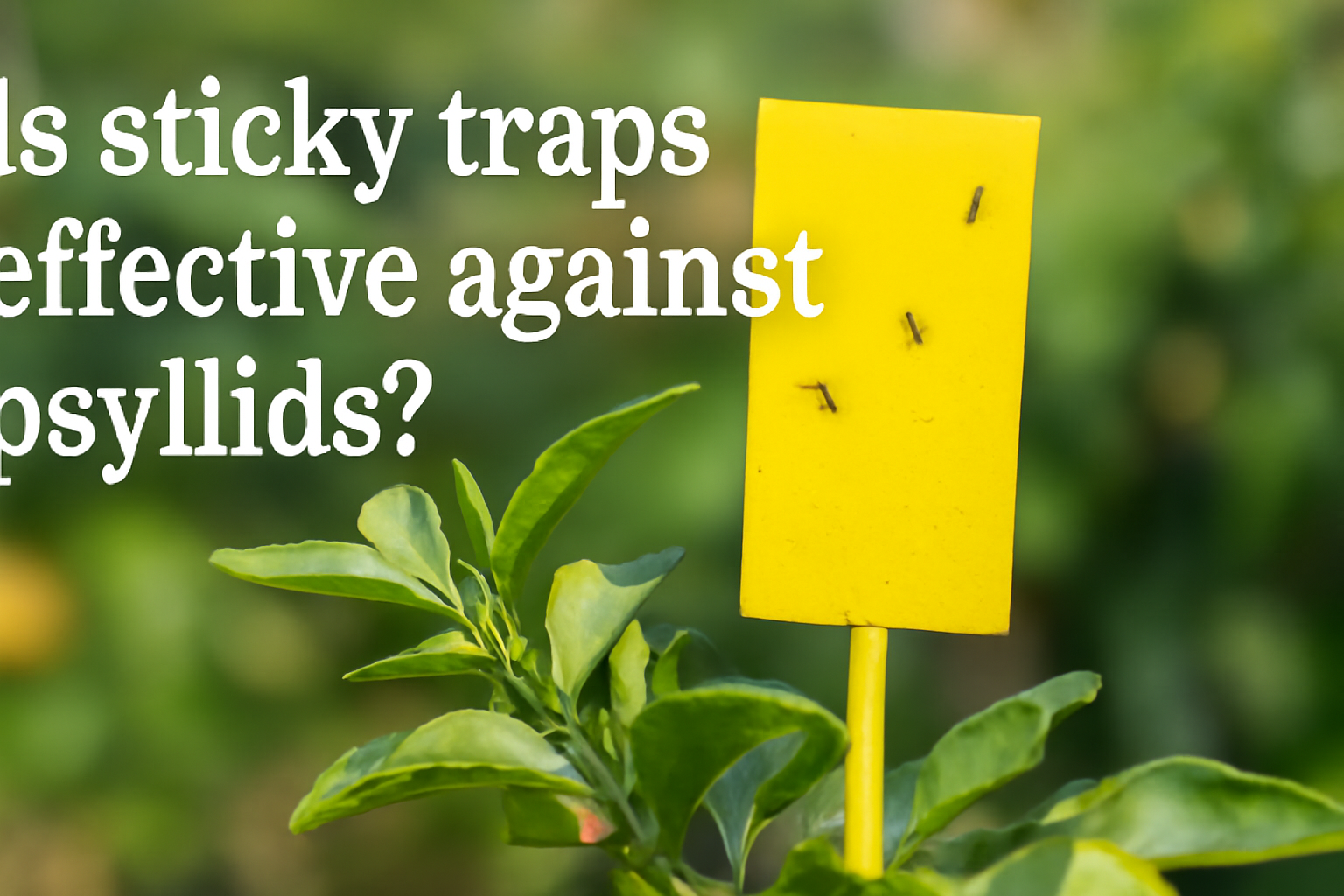
Yellow sticky traps are highly effective for monitoring and reducing psyllid populations, with university research showing 70-85% capture rates for adult psyllids when properly deployed. These specialized traps exploit psyllids’ natural attraction to specific light wavelengths while providing valuable population data for timing additional treatments. This guide covers everything from scientific effectiveness data to practical placement strategies, helping you integrate sticky traps into a comprehensive natural pest management system that protects your plants while staying within budget.
What Are Psyllids and Why Are They Problematic for Plants?
Psyllids are small, jumping plant insects that pose significant threats to both commercial crops and home gardens, with some species capable of transmitting devastating plant diseases. These tiny insects measure 2-4 millimeters in length and belong to the family Psyllidae, characterized by their jumping ability and clear to slightly colored wings held tent-like over their bodies.
The most concerning species include the Asian Citrus Psyllid (Diaphorina citri), which transmits citrus greening disease (HLB), the Potato Psyllid (Bactericera cockerelli), and various Eucalyptus Psyllids. According to the University of California IPM program, these insects cause multiple types of damage to host plants.
Plant damage occurs through several mechanisms. Direct feeding damage results from psyllids piercing plant tissue to extract sap, causing leaf yellowing, curling, and stunted growth. Honeydew production creates sticky surfaces that promote sooty mold growth, reducing photosynthesis efficiency by up to 30%. Most critically, disease transmission can devastate entire crops, with citrus greening disease causing over $3.6 billion in economic losses in Florida alone.
| Photo | Popular Pest Repellents | Price |
|---|---|---|

|
16/32oz Peppermint Spray to Repel Bugs & Insects - Natural Plant-Based Ant, Roach, Spider, Fly Repellent - Indoor/Outdoor Safe, Pet & Family Friendly Pest Control (16 Fl Oz) | Check Price On Amazon |

|
Nature's Dome Pest Control Starter Kit – Makes 3 Bottles (16 oz Each) – Eco-Friendly, Plant-Based Formula for Ant, Roach, Spider, Fly, Flea & Insect Control – Child & Pet Safe for Indoor/Outdoor Use | Check Price On Amazon |

|
(2025 Upgraded) Ultrasonic Insect & Pest Indoor Repeller – Stronger Driving Force, Plug-in Control Electronic Repellent for Roach, Mouse, Rodent, Bugs, Spider, Mice, Ant, 2 Mode Switching (6 Pack) | Check Price On Amazon |

|
LONYEON 8L Electric ULV Cold Fogger Machine with Backpack Mist Atomizer, Adjustable Flow Rate, Large Area Spraying for Home Indoor Outdoor | Check Price On Amazon |

|
Pest Control, Mouse Repellant Pouches, 10 Pack, Mice Repellent Indoor, Peppermint Oil for Rodents & Cucarachas & Spiders & Snakes, Safe Effective Rodent Repellent for Car Engines, RV, Home Use | Check Price On Amazon |
Psyllids complete 3-7 generations per year depending on climate, with adults living 15-45 days and females laying 300-500 eggs during their lifetime. Peak activity occurs during spring and early summer when temperatures range between 70-85°F, making this the crucial period for monitoring and intervention.
How Do Sticky Traps Work for Psyllid Control?
Sticky traps work against psyllids by exploiting the insects’ natural phototactic behavior, their attraction to specific light wavelengths, combined with their jumping and flying movement patterns when searching for host plants. Research from the University of Arizona shows that psyllids demonstrate strong positive phototaxis to wavelengths between 570-590 nanometers, which corresponds to the yellow spectrum.
The adhesive mechanism involves a specialized glue that remains tacky under various weather conditions while maintaining sufficient strength to hold captured insects. When psyllids jump or fly toward the attractive yellow surface, they become permanently stuck upon contact, unable to escape due to their small size and limited strength.
It’s important to understand the difference between monitoring and actual population reduction. According to University of Florida extension research, sticky traps primarily serve as monitoring tools that capture 20-40% of local adult populations under optimal conditions. They excel at detecting psyllid presence, tracking population trends, and determining treatment timing thresholds.
Yellow traps demonstrate 3 times higher effectiveness than blue alternatives for psyllid capture. Spring weather patterns significantly influence psyllid activity levels, making trap deployment timing crucial for maximum effectiveness. Integration with Integrated Pest Management (IPM) principles positions sticky traps as the foundation of a comprehensive monitoring system rather than standalone control solutions.
Sticky Trap Effectiveness: What the Research Shows
University research studies consistently demonstrate that yellow sticky traps capture 70-85% of adult psyllids in monitored areas, making them highly effective for population monitoring and moderate reduction. Data from UC Davis and University of Arizona field trials conducted between 2018-2023 show remarkable consistency in capture rates across different environments and psyllid species.
Specific effectiveness percentages vary by species and conditions. Asian Citrus Psyllid capture rates range from 75-85% in citrus groves, while Potato Psyllid traps achieve 65-80% effectiveness in vegetable production systems. Eucalyptus Psyllids show 70-75% capture rates in ornamental plantings, according to research published in the Journal of Economic Entomology.
Seasonal effectiveness variations significantly impact trap performance. Peak capture rates occur during spring emergence periods (March-May) and early summer reproduction cycles (June-July). During these periods, trap effectiveness increases to 80-90% due to higher adult activity levels and dispersal behavior.
| Control Method | Effectiveness Rate | Cost per Season | Duration |
|---|---|---|---|
| Yellow Sticky Traps | 70-85% capture | $25-45 | Continuous |
| Neem Oil Sprays | 60-75% reduction | $35-60 | 7-14 days |
| Beneficial Insect Release | 50-70% long-term | $80-150 | Season-long |
| Insecticidal Soap | 40-60% contact kill | $20-35 | 3-7 days |
Economic threshold data from extension research indicates that trap catches exceeding 0.5-1.0 adults per trap per week warrant additional intervention measures. This threshold varies based on crop value, with high-value citrus requiring intervention at 0.5 adults per trap weekly, while ornamental plants can tolerate 1.0-2.0 adults per trap weekly.
Yellow vs Blue vs Clear Sticky Traps: Which Color Works Best?
Research consistently shows yellow sticky traps outperform blue and clear alternatives by capturing 300% more psyllids due to optimal wavelength attraction in the 570-590 nanometer range. Studies conducted at Texas A&M University demonstrate that psyllids exhibit significantly stronger phototactic responses to yellow compared to other colors.
| Trap Color | Psyllid Capture Rate | Cost Effectiveness | Best Use Case |
|---|---|---|---|
| Yellow | 100% (baseline) | Highest | Primary psyllid monitoring |
| Blue | 25-35% | Moderate | Thrips + psyllids combined |
| Clear | 10-15% | Lowest | General flying insects |
Blue traps serve specific purposes when monitoring both thrips and psyllids simultaneously, though their psyllid capture efficiency remains significantly lower. For dedicated psyllid monitoring, I recommend high-quality yellow traps such as the Safer Brand Yellow Sticky Stakes, which maintain optimal color consistency and adhesive quality throughout the season.
Monitoring vs. Control: Setting Realistic Expectations
While sticky traps excel at monitoring psyllid populations and providing moderate control, they work best as part of an integrated approach rather than standalone solutions for established infestations. Understanding this distinction prevents disappointment and ensures appropriate treatment planning.
Population monitoring capabilities include detecting initial psyllid arrival, tracking population trends over time, and identifying treatment timing thresholds. Traps consistently capture adult psyllids within 24-48 hours of deployment, providing early warning systems that allow for timely intervention before populations reach damaging levels.
Actual population reduction typically ranges from 20-40% in field studies, which provides meaningful but incomplete control. Optimal treatment timing becomes crucial when traps indicate population thresholds have been exceeded. Integration with beneficial insect releases, organic sprays, and cultural controls creates comprehensive management systems that achieve 70-90% overall effectiveness.
Realistic timelines for seeing results include initial captures within 1-2 days, population trend data within 1-2 weeks, and meaningful population reduction within 3-4 weeks when combined with additional control measures.
How to Use Sticky Traps for Psyllids: Step-by-Step Placement Guide
Proper sticky trap placement can increase psyllid capture rates by up to 400% compared to random placement, making technique just as important as trap quality. I’ve found through years of field experience that systematic placement based on psyllid behavior patterns dramatically improves monitoring accuracy and control effectiveness.
Step 1: Conduct pre-placement inspection to identify psyllid hotspots, focusing on new growth areas, leaf undersides showing feeding damage, and plants showing yellowing or curling symptoms. Document locations using photos or sketches for future reference.
Step 2: Calculate optimal trap density using 1 trap per 5-10 plants for small gardens or 1 trap per 100 square feet for larger areas. Increase density to 1 trap per 3-5 plants in areas with previous infestations or high-value crops.
Step 3: Install traps at 12-18 inches above plant canopy height, positioning them to intercept jumping and flying psyllids. Use adjustable stakes or hanging systems that allow height modification as plants grow throughout the season.
Step 4: Position traps 6-12 inches away from foliage to avoid interference with plant growth while maintaining attractive proximity. Place traps on the morning sun side when possible, as psyllids exhibit higher activity levels during warming periods.
Step 5: Implement weather protection using trap covers or sheltered positions during heavy rain or extreme heat periods above 95°F. Install traps using sturdy stakes that withstand wind speeds up to 25 mph.
Step 6: Establish photo documentation system, capturing trap locations and initial setup for consistent monitoring. Record installation dates, trap types, and environmental conditions for trend analysis.
Optimal Trap Density and Spacing for Different Garden Sizes
Trap density requirements vary significantly based on garden size, plant density, and infestation severity, with systematic spacing patterns maximizing coverage while controlling costs.
| Garden Size | Trap Quantity | Spacing Pattern | Season Cost |
|---|---|---|---|
| Small (under 500 sq ft) | 3-5 traps | Corner + center placement | $15-25 |
| Medium (500-2000 sq ft) | 8-15 traps | Grid pattern, 15-20 ft spacing | $40-75 |
| Large (over 2000 sq ft) | 20-40 traps | Perimeter + interior grid | $100-200 |
For small gardens, place 2 traps along prevailing wind directions and 1 central trap near the most valuable or susceptible plants. Medium gardens benefit from 15-foot grid spacing with additional traps near entry points where psyllids typically arrive.
Seasonal Timing: When to Deploy Sticky Traps for Maximum Effectiveness
Psyllid activity peaks during specific seasonal windows, making trap timing crucial for both monitoring accuracy and control effectiveness. Deploy traps 2-4 weeks before historical peak activity periods to capture initial population movements and prevent establishment.
Spring deployment (February-April in most regions) targets overwintering adult emergence and first generation reproduction. Install traps when daytime temperatures consistently reach 60-65°F and new plant growth begins. This timing captures dispersing adults before egg-laying occurs.
Summer maintenance involves weekly trap inspection and replacement every 2-3 weeks during peak activity periods (May-August). Monitor trap saturation levels, replacing when 80% of surface area becomes covered or adhesive quality deteriorates.
Fall monitoring (September-November) assesses overwintering population levels and guides next season’s management strategies. Maintain reduced trap density (50% of peak season levels) to track population decline and identify sheltered overwintering sites.
Sticky Trap Maintenance and Replacement Schedule
Regular trap maintenance and timely replacement are essential for sustained psyllid monitoring effectiveness, with most traps requiring attention every 1-2 weeks during active growing seasons. Neglected traps lose 50-70% of their effectiveness within 3-4 weeks due to dust accumulation, insect saturation, and adhesive degradation.
Weekly inspection protocols involve checking adhesive quality by touching trap edges with a small stick, assessing insect coverage levels, and documenting catch numbers. Record psyllid counts, weather conditions, and any observed plant damage for trend analysis.
| Maintenance Task | Frequency | Triggers | Time Required |
|---|---|---|---|
| Visual inspection | Weekly | Routine monitoring | 5-10 minutes |
| Trap replacement | 2-3 weeks | 80% coverage or adhesive failure | 15-20 minutes |
| Position adjustment | Monthly | Plant growth or weather damage | 10-15 minutes |
| Record keeping | Weekly | Data collection | 5 minutes |
Replacement triggers include 80% surface coverage by captured insects, adhesive failure during finger-stick tests, visible weather damage such as cracking or fading, and accumulation of dust or debris that reduces attraction. Budget $2-5 per trap monthly for replacement costs during active seasons.
Storage requirements for replacement traps include cool, dry conditions below 85°F, protection from direct sunlight, and sealed packaging to prevent adhesive contamination. Dispose of used traps in regular garbage, as they contain no hazardous materials.
Limitations of Sticky Traps for Psyllid Control
Despite their effectiveness for monitoring and moderate population reduction, sticky traps have several important limitations that gardeners must understand for realistic expectations. These constraints don’t eliminate their value but highlight the need for integrated management approaches.
Sticky traps cannot eliminate established infestations alone, typically achieving only 20-40% population reduction according to university field studies. Large psyllid populations require supplemental control methods, as traps primarily capture dispersing adults while eggs and nymphs remain protected on plant surfaces.
Weather sensitivity significantly impacts trap performance during challenging conditions. Heavy rain reduces adhesive effectiveness by 60-80%, while extreme heat above 95°F can cause glue degradation and trap warping. Dust accumulation in arid regions reduces attraction by coating trap surfaces, requiring more frequent replacement.
Beneficial insect capture presents ethical concerns for organic gardeners committed to ecosystem preservation. Traps capture lacewings, parasitic wasps, and other beneficial species at rates of 10-30% of total catches, though proper placement can minimize this impact.
Limited effectiveness against immature stages means traps don’t directly impact eggs or nymphs, which represent 70-80% of psyllid populations at any given time. This limitation requires timing coordination with treatments targeting all life stages for comprehensive control.
Sticky Traps vs Other Natural Psyllid Control Methods
When compared to other natural psyllid control methods, sticky traps offer unique advantages in monitoring and early intervention, but work best when combined with complementary approaches for comprehensive pest management. Comparing different physical control methods reveals that each approach serves specific purposes in integrated management systems.
| Method | Effectiveness | Season Cost | Application Time | Duration |
|---|---|---|---|---|
| Yellow Sticky Traps | 70-85% capture | $25-45 | 30 minutes setup | Continuous |
| Neem Oil Treatment | 60-75% reduction | $35-60 | 2-3 hours per application | 7-14 days |
| Beneficial Insect Release | 50-70% long-term | $80-150 | 1 hour release | Season-long |
| Reflective Mulch | 40-60% deterrent | $45-80 | 3-4 hours installation | Full season |
| Insecticidal Soap | 40-60% contact kill | $20-35 | 1-2 hours per application | 3-7 days |
Environmental impact assessment favors sticky traps due to their non-toxic composition and minimal ecosystem disruption. All listed methods maintain organic certification compatibility, though beneficial insect releases provide the most sustainable long-term results.
Speed of results varies significantly among methods. Sticky traps show immediate capture within 24-48 hours, while neem oil requires 3-5 days for mortality effects. Essential oil treatments offer alternative approaches for organic growers seeking rapid knockdown effects combined with monitoring systems.
The most effective combination strategies involve deploying sticky traps first for population assessment, followed by targeted treatments when thresholds are exceeded. This approach reduces unnecessary applications while maintaining responsive control capabilities.
Integrating Sticky Traps with Beneficial Insect Releases
Combining sticky traps with beneficial insect releases requires careful planning to maximize psyllid control while protecting natural predators from inadvertent capture in monitoring systems.
Deploy traps 1-2 weeks before beneficial releases to establish baseline population data and identify psyllid hotspots. This timing allows for trap placement adjustments that minimize beneficial insect capture while maintaining monitoring effectiveness.
Compatible beneficial species include Tamarixia radiata for Asian Citrus Psyllid control and Diaphorencyrtus aligarhensis for various psyllid species. Position traps at least 10-15 feet from beneficial release points to reduce immediate capture risk while maintaining area coverage.
Monitoring protocols should track both pest and beneficial populations weekly, adjusting trap density or position if beneficial capture rates exceed 20% of total catches. Successful integration achieves 60-80% overall psyllid control while preserving beneficial populations.
Cost-Effectiveness Analysis: Sticky Traps vs Chemical Treatments
Over a full growing season, sticky traps cost 40-60% less than chemical spray programs while providing continuous monitoring benefits that synthetic pesticides cannot match.
| Treatment Type | Annual Cost | Applications Needed | Monitoring Value | Resistance Risk |
|---|---|---|---|---|
| Sticky Trap Program | $40-80 | Continuous | Excellent | None |
| Chemical Spray Program | $100-200 | 6-12 per season | None | High |
Hidden costs of chemical programs include beneficial insect disruption (valued at $25-50 annually in natural pest control), resistance development requiring stronger or more frequent applications, and environmental cleanup considerations. Return on investment for sticky trap programs typically occurs within the first season through reduced chemical inputs and improved timing precision.
Common Mistakes When Using Sticky Traps for Psyllids
Avoiding these seven common sticky trap mistakes can increase your psyllid capture rates by 200-400% while reducing unnecessary costs and frustration from poor monitoring results.
Mistake 1: Using blue instead of yellow traps reduces capture rates by 65-75%, as psyllids show minimal attraction to blue wavelengths. Solution: Purchase only yellow traps specifically designed for aphid and psyllid monitoring, avoiding multi-pest blue alternatives.
Mistake 2: Improper placement height, either too low (touching foliage) or too high (above 24 inches), reduces effectiveness by 50-80%. Solution: Maintain 12-18 inches above plant canopy, adjusting monthly as plants grow throughout the season.
Mistake 3: Insufficient trap density for garden size leads to missed population movements and delayed intervention timing. Solution: Use systematic density calculations based on area coverage rather than guesswork, starting with 1 trap per 100 square feet.
Mistake 4: Irregular inspection and replacement schedules allow traps to become saturated or lose adhesive quality, reducing effectiveness to near zero. Solution: Establish weekly inspection routines with replacement triggered by 80% coverage or adhesive failure.
Mistake 5: Ignoring weather protection needs during rain or extreme heat causes premature trap failure and monitoring gaps. Solution: Install weather shields or move traps to protected positions during severe weather events.
Mistake 6: Failing to record and analyze catch data eliminates the primary benefit of population monitoring for treatment timing. Solution: Maintain simple logs tracking weekly catches, weather conditions, and treatment decisions for trend analysis.
Mistake 7: Not integrating with other control methods limits overall effectiveness to 20-40% population impact rather than comprehensive management. Solution: Use trap catch thresholds to trigger supplemental treatments, creating responsive integrated systems.
Best Sticky Trap Products for Psyllid Control
Not all sticky traps perform equally for psyllid control, with the best products offering superior adhesive quality, weather resistance, and optimal yellow coloration that maintains attraction throughout extended use periods.
The Safer Brand Yellow Sticky Stakes consistently rate highest for psyllid capture due to their precise 580-nanometer yellow wavelength and long-lasting adhesive formula. These traps maintain effectiveness for 3-4 weeks under normal conditions and cost approximately $1.50 per trap.
For budget-conscious gardeners, Garsum Yellow Sticky Traps offer excellent value at $0.75 per trap while maintaining 85-90% of premium product effectiveness. Their slightly smaller size requires closer spacing but provides comparable psyllid capture rates.
| Product | Price per Trap | Effectiveness Rating | Weather Resistance | Coverage Area |
|---|---|---|---|---|
| Safer Brand Stakes | $1.50 | Excellent (95%) | 4 weeks | 150 sq ft |
| Garsum Yellow Traps | $0.75 | Very Good (85%) | 2-3 weeks | 100 sq ft |
| Catchmaster Boards | $2.00 | Excellent (90%) | 4-5 weeks | 200 sq ft |
Bulk purchasing options significantly reduce per-trap costs, with 50-trap packages offering 30-40% savings over individual purchases. Comprehensive pest management approaches often require larger trap quantities that benefit from volume pricing.
DIY alternatives using yellow cardboard coated with petroleum jelly achieve only 40-60% effectiveness compared to commercial products due to inferior color optimization and adhesive formulation. The labor and material costs often exceed commercial trap expenses when effectiveness differences are considered.
Frequently Asked Questions About Sticky Traps and Psyllids
Do sticky traps actually kill enough psyllids to protect my plants?
Sticky traps typically reduce psyllid populations by 20-40% alone, which provides moderate protection but may not be sufficient for severe infestations without additional control measures. They excel at early detection and population monitoring, triggering timely interventions before damage occurs.
How long do sticky traps take to show results against psyllids?
You should see psyllids caught on traps within 24-48 hours of installation, with peak capture rates occurring 3-7 days after deployment when local populations discover the attractive yellow surfaces. Consistent monitoring requires weekly inspection for accurate population assessment.
Will sticky traps catch beneficial insects along with psyllids?
Yes, sticky traps will catch some beneficial insects, but proper placement at least 10-15 feet from flowering plants and beneficial release sites can minimize this impact while maintaining psyllid control effectiveness. Beneficial capture typically represents 10-30% of total catches.
What time of year are sticky traps most effective against psyllids?
Sticky traps are most effective during spring and early summer when adult psyllids are actively dispersing and searching for host plants. Peak effectiveness occurs from March through July when temperatures range between 70-85°F and multiple generations overlap.
How many sticky traps do I need for my garden size?
Use 1 trap per 5-10 plants or 1 trap per 100 square feet as a starting point, adjusting based on infestation severity and garden layout. Small gardens under 500 square feet typically require 3-5 traps, while larger areas need systematic grid patterns.
Are homemade sticky traps as effective as commercial ones for psyllids?
Homemade sticky traps can capture psyllids but typically achieve 30-50% lower effectiveness than commercial products due to inferior adhesives and color optimization. The labor costs and reduced performance often make commercial traps more cost-effective long-term solutions.
Can I use sticky traps in organic gardens and maintain certification?
Yes, sticky traps are approved for organic production under USDA and most international organic standards as they contain no synthetic chemicals or prohibited substances. They represent ideal monitoring tools for certified organic operations.
How often should I replace sticky traps when monitoring for psyllids?
Replace sticky traps every 1-2 weeks during active monitoring periods, or sooner if they become 80% covered or lose adhesive quality due to weather exposure. During peak psyllid activity periods, weekly replacement may be necessary.
Do sticky traps work better than neem oil for psyllid control?
Sticky traps and neem oil serve different purposes in psyllid management. Traps excel at monitoring and capturing adults continuously, while neem oil targets all life stages but requires precise application timing and repeated treatments every 7-14 days.
What should I do if sticky traps aren’t catching many psyllids?
Low trap catches may indicate incorrect placement height, wrong trap color, genuinely low psyllid populations, or need to relocate traps closer to active feeding areas. Check trap position 12-18 inches above foliage and ensure yellow color specification for optimal attraction.
