
Natural Fungus Gnats Control in Greenhouses Without Harm

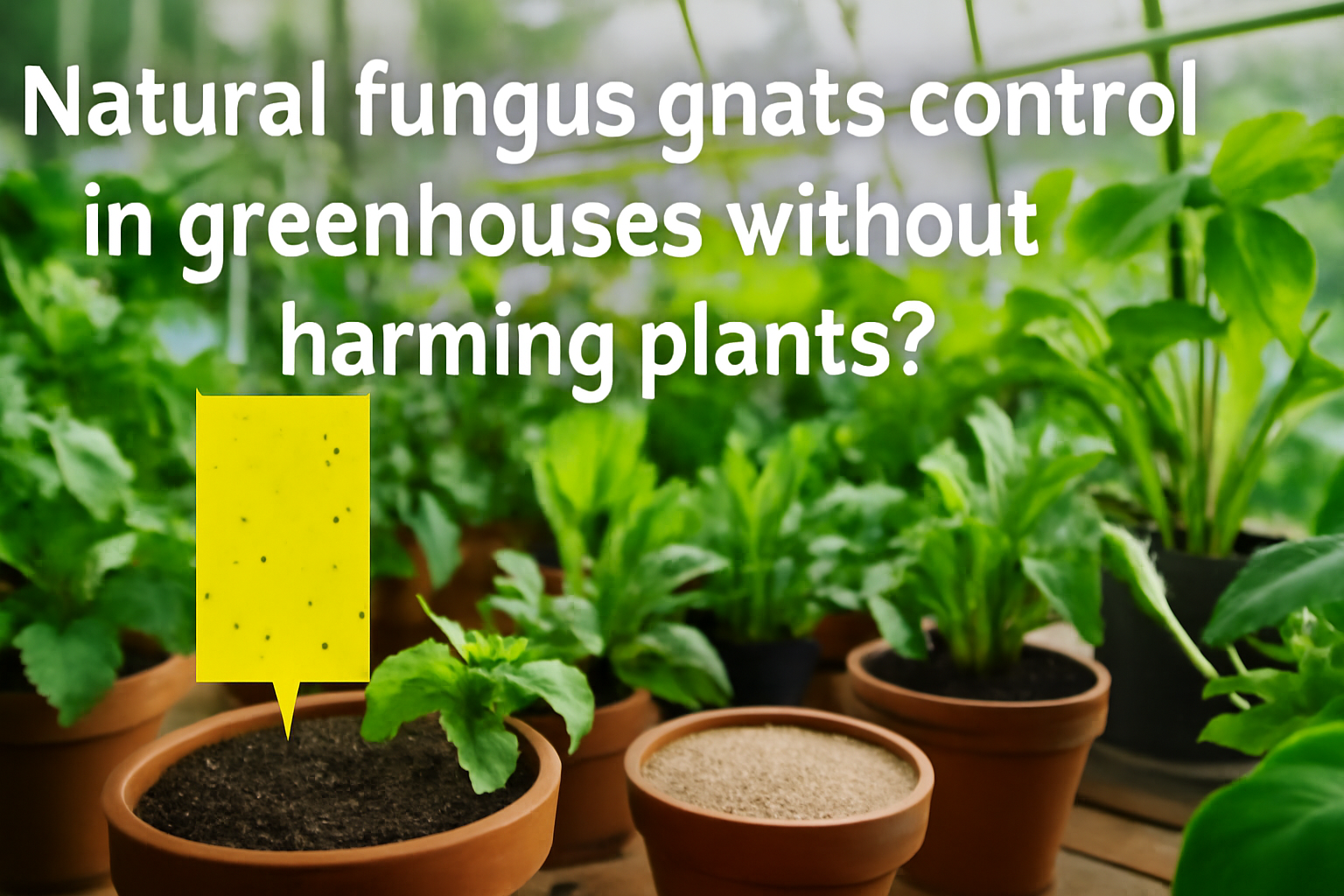
Controlling fungus gnats in greenhouses naturally is possible without harming your precious plants. These tiny black flies can quickly multiply in the warm, moist environment of a greenhouse, damaging roots and spreading plant diseases. In this comprehensive guide, you’ll discover 9 effective natural methods to eliminate fungus gnats while keeping your greenhouse plants healthy and thriving.
What are Fungus Gnats? Understanding Their Life Cycle in Greenhouse Environments
Fungus gnats are small, mosquito-like flies (Bradysia species) measuring about 1/8 inch long with slender legs, transparent wings, and segmented antennae. In greenhouse environments, these pests complete their life cycle in just 3-4 weeks, making rapid population growth a serious concern.
According to researchers at Cornell University, fungus gnats thrive in greenhouse settings because of three key factors: consistent warmth, high humidity, and abundant organic matter in growing media. Unlike other indoor pests, fungus gnats specifically target the moist growing media where they lay eggs that hatch into root-damaging larvae.
The complete life cycle includes:
| Photo | Popular Pest Repellents | Price |
|---|---|---|

|
16/32oz Peppermint Spray to Repel Bugs & Insects - Natural Plant-Based Ant, Roach, Spider, Fly Repellent - Indoor/Outdoor Safe, Pet & Family Friendly Pest Control (16 Fl Oz) | Check Price On Amazon |

|
Nature's Dome Pest Control Starter Kit – Makes 3 Bottles (16 oz Each) – Eco-Friendly, Plant-Based Formula for Ant, Roach, Spider, Fly, Flea & Insect Control – Child & Pet Safe for Indoor/Outdoor Use | Check Price On Amazon |

|
(2025 Upgraded) Ultrasonic Insect & Pest Indoor Repeller – Stronger Driving Force, Plug-in Control Electronic Repellent for Roach, Mouse, Rodent, Bugs, Spider, Mice, Ant, 2 Mode Switching (6 Pack) | Check Price On Amazon |

|
LONYEON 8L Electric ULV Cold Fogger Machine with Backpack Mist Atomizer, Adjustable Flow Rate, Large Area Spraying for Home Indoor Outdoor | Check Price On Amazon |

|
Pest Control, Mouse Repellant Pouches, 10 Pack, Mice Repellent Indoor, Peppermint Oil for Rodents & Cucarachas & Spiders & Snakes, Safe Effective Rodent Repellent for Car Engines, RV, Home Use | Check Price On Amazon |
- Eggs: Laid in moist growing media, hatching within 4-6 days
- Larvae: Feed on plant roots and organic matter for 10-14 days
- Pupae: Develop in growing media for 5-6 days
- Adults: Live 7-10 days, with females laying up to 300 eggs
This rapid reproduction rate explains why small problems quickly become major infestations if not addressed promptly. The damage appears as stunted growth, yellowing leaves, and wilting despite adequate water, as the larvae damage fine root hairs and create entry points for pathogens.
How to Differentiate Fungus Gnats from Other Greenhouse Flying Insects
Greenhouses host several types of small flying insects that are easily confused with fungus gnats, potentially leading to ineffective treatment strategies.
To properly identify fungus gnats, check these distinguishing features:
- Fungus Gnats: Slender body, Y-shaped wing vein pattern, long legs and antennae, attracted to moist soil
- Shore Flies: More robust body, spotted wings, shorter antennae, often found near algae
- Whiteflies: White, moth-like appearance, tend to cluster under leaves
- Fruit Flies: Tan/brown coloration, red eyes, attracted to ripening produce
A simple identification test involves gently disturbing the soil surface near plants. Fungus gnats will immediately fly up in an erratic pattern, while other insects typically don’t respond to soil disturbance. Weather conditions, especially during winter, can affect fungus gnat outbreak patterns in greenhouse environments where temperatures remain warm despite outdoor conditions.
Why Fungus Gnats Thrive in Greenhouse Environments: Risk Factors
Greenhouse environments present a perfect storm of conditions that allow fungus gnat populations to explode rapidly if left unchecked.
Key risk factors include:
- Environmental Conditions: Consistent temperatures between 70-80°F and humidity above 70% create ideal breeding conditions
- Growing Media Composition: High organic matter content (especially peat) provides food for larvae
- Watering Practices: Overwatering and constantly moist media surfaces create perfect egg-laying sites
- Plant Density: Closely spaced plants increase humidity and make monitoring difficult
- Introduction Sources: New plants, contaminated growing media, or open vents can introduce fungus gnats
In my experience managing commercial greenhouses, the moisture level of your growing media is the single most important factor. I’ve seen entire propagation areas become infested within days simply because of inconsistent irrigation practices.
Essential Monitoring Systems: Detecting Fungus Gnats Early in Your Greenhouse
Effective fungus gnat management begins with systematic monitoring that allows for early detection and population tracking.
To establish a proper monitoring system, you need:
- Yellow Sticky Cards: Place cards horizontally 1-2 inches above the growing media surface, using 1 card per 1,000 square feet minimum
- Potato Slice Traps: Press raw potato slices (cut side down) onto the media surface and check after 24-48 hours for larvae
- Media Sampling: Regularly examine growing media samples under magnification for larvae presence
- Record-Keeping System: Track numbers weekly to identify trends and treatment effectiveness
For commercial operations, University of California IPM guidelines recommend taking action when sticky card counts exceed 10-15 adults per card per week. Smaller hobby greenhouses may want to act at lower thresholds to prevent establishment.
I recommend checking sticky cards twice weekly during warm months when reproduction rates are highest. A systematic monitoring approach has helped me detect problems 7-10 days earlier than visual inspection alone.
Creating an Effective Monitoring Schedule for Different Greenhouse Types
The size, type, and purpose of your greenhouse will determine the optimal monitoring approach for fungus gnat detection.
| Greenhouse Type | Monitoring Frequency | Trap Density |
|---|---|---|
| Small Hobby (under 200 sq ft) | Weekly | 1 trap per 100 sq ft |
| Medium Hobby/Small Commercial (200-1,000 sq ft) | Twice weekly | 1 trap per 200 sq ft |
| Commercial (over 1,000 sq ft) | Twice weekly | 1 trap per 500 sq ft |
Propagation areas require increased vigilance with double the trap density and more frequent checks compared to production areas. The best time of day to treat fungus gnats naturally is typically early morning when adults are most active and before watering occurs.
Preventative Growing Media Management: The Foundation of Natural Fungus Gnat Control
The most effective natural fungus gnat control strategy begins before infestation occurs, with careful selection and management of growing media.
Growing media composition has a direct impact on fungus gnat populations. Research from the University of Florida has shown that high-peat mixes support significantly higher fungus gnat reproduction than amended alternatives.
For optimal fungus gnat prevention, consider these growing media strategies:
- Media Selection: Choose mixes with lower organic matter content when possible
- Pre-Treatment: Steam sterilize media at 180°F for 30 minutes before use
- Storage Protection: Store unused media in sealed containers off the ground
- Surface Barriers: Apply a 1/4-inch layer of coarse sand, fine gravel, or diatomaceous earth as a top dressing
- Media Amendments: Incorporate 10-15% perlite or pumice to improve drainage
For propagation areas, I’ve found that a 50/50 blend of coco coir and perlite significantly reduces fungus gnat pressure compared to standard peat-based mixes, while still supporting excellent root development for most greenhouse crops.
Optimal Watering Practices to Minimize Fungus Gnat Breeding
Because fungus gnats require moist conditions to reproduce, precision watering practices form a critical component of any natural control strategy.
To minimize fungus gnat breeding through watering management:
- Allow the top 1-2 inches of growing media to dry between waterings
- Implement bottom watering techniques where feasible using capillary mats or flood benches
- Water early in the day to allow surface drying before evening
- Use moisture meters to monitor actual media moisture rather than following a fixed schedule
- Adjust irrigation frequency seasonally, reducing frequency during lower light periods
Different plant types require different approaches. For moisture-loving plants that can’t tolerate dry media, use coarse sand top dressing to create a dry physical barrier while maintaining root zone moisture.
Growing Media Composition: Selecting and Creating Fungus Gnat-Resistant Substrates
The composition of your growing media can dramatically impact fungus gnat populations, with certain materials naturally deterring these pests.
| Media Component | Fungus Gnat Risk | Optimal Usage |
|---|---|---|
| Peat Moss | High | Limit to 30-40% of mix |
| Coco Coir | Medium | Good alternative to peat |
| Perlite | Very Low | Add 20-30% to improve drainage |
| Vermiculite | Medium | Limit to 10% of mix |
| Compost | Very High | Avoid or ensure fully mature |
| Bark | Medium | Use aged bark only |
While some growers try citronella oil or baking soda to control fungus gnats on herbs, modifying your growing media composition offers a more reliable preventative approach.
For greenhouse vegetable production, I recommend this fungus gnat-resistant mix:
- 40% coco coir
- 30% perlite
- 20% composted pine bark
- 10% worm castings
This blend provides excellent drainage while maintaining adequate water-holding capacity and nutrient exchange.
Biological Control Agents: Complete Implementation Guide for Greenhouse Environments
Biological control agents represent the cornerstone of sustainable fungus gnat management in greenhouse settings, effectively controlling populations without chemical residues.
For comprehensive fungus gnat management, consider these proven biocontrol agents:
- Beneficial Nematodes (Steinernema feltiae): Microscopic organisms that actively hunt and infect fungus gnat larvae
- Predatory Mites (Stratiolaelaps scimitus): Soil-dwelling predators that feed on fungus gnat eggs and larvae
- Rove Beetles (Atheta coriaria): Active predators that consume multiple life stages of fungus gnats
Michigan State University research has shown that integrated biocontrol systems using multiple agents achieve 85-95% reduction in fungus gnat populations within 3-4 weeks when properly implemented.
Application timing is critical. For preventative treatment, introduce biocontrols when plants are first placed in the greenhouse. For active infestations, implement a two-phase approach with nematodes for immediate impact followed by predatory mites and rove beetles for long-term control.
Beneficial Nematodes (Steinernema feltiae): Application Protocol for Maximum Effectiveness
Beneficial nematodes, particularly Steinernema feltiae, are microscopic organisms that actively hunt and infect fungus gnat larvae, providing outstanding control when properly applied.
For optimal nematode application:
- Store nematode products refrigerated until use (never freeze)
- Mix with room-temperature water (60-70°F) in a clean container
- Apply at a rate of 50 million nematodes per 1,000 square feet for preventative treatment, or 100 million per 1,000 square feet for curative treatment
- Apply to moist (not saturated) growing media in early morning or evening
- Keep growing media moist for at least 7 days after application
- Maintain media temperature between 55-85°F for optimal activity
Nematodes will actively seek out fungus gnat larvae in the growing media, entering their bodies and releasing bacteria that kill the larvae within 24-48 hours. The nematodes then reproduce inside the dead larvae, creating a new generation of beneficial nematodes.
For heavy infestations, plan on two applications 10-14 days apart to target newly hatched larvae that weren’t present during the first treatment.
Predatory Mites and Rove Beetles: Establishing Persistent Biocontrol Populations
While nematodes target fungus gnat larvae directly, establishing persistent populations of predatory mites (Stratiolaelaps scimitus) and rove beetles (Atheta coriaria) creates a self-sustaining defense system.
To establish effective predator populations:
- Predatory Mites: Apply at 1 liter per 1,000 square feet (approx. 25,000 mites) by sprinkling evenly across the media surface
- Rove Beetles: Release at 1 container (approximately 500 beetles) per 1,000 square feet, focusing on areas with highest fungus gnat activity
- Create predator “refugia” by placing small piles of moist coconut coir in corners of greenhouse to support breeding
- Maintain temperatures between 65-80°F and relative humidity of 60-80% for optimal predator reproduction
- Avoid disturbing the top layer of growing media for at least 2-3 weeks after introduction
Expect to see significant population reduction within 2-3 weeks as predators establish. These beneficial insects can persist in your greenhouse for months, providing ongoing protection against fungus gnats and other soil-dwelling pests.
BTI (Bacillus thuringiensis israelensis) Applications: Natural Microbial Control Strategy
Bacillus thuringiensis israelensis (BTI) is a naturally occurring soil bacterium that specifically targets fungus gnat larvae while remaining completely safe for plants, humans, and beneficial insects.
BTI works by producing crystal proteins that, when ingested by fungus gnat larvae, destroy their digestive system. This highly specific mode of action makes it safe for beneficial insects, making it an excellent component of integrated pest management.
For effective BTI application:
- Choose a commercial BTI product formulated for soil application (liquid or granular forms available)
- Liquid formulations: Mix at a rate of 1 teaspoon per gallon of water for typical concentrations
- Apply as a thorough soil drench, ensuring even penetration throughout the container
- Treat all plants in the affected area, even those not showing symptoms
- Reapply every 5-7 days for active infestations, as BTI only affects the larval stage
BTI products are approved for organic production and leave no harmful residues on plants or in the environment. For optimal results, apply to moist growing media to ensure the bacteria can disperse effectively.
Creating an Integrated BTI Application Schedule for Ongoing Prevention
For maximum effectiveness, BTI applications must be timed strategically to target successive generations of fungus gnat larvae.
A comprehensive BTI application schedule should include:
- Initial Treatment: Apply to all plants when first placed in the greenhouse
- Preventative Maintenance: Apply every 2-3 weeks during normal conditions
- Active Infestation Response: Apply weekly for 3-4 consecutive weeks
- Seasonal Adjustment: Increase frequency during warm, humid periods when fungus gnat reproduction accelerates
- Post-Introduction Treatment: Apply 3-5 days after bringing in new plants
BTI integrates perfectly with biological controls. Apply BTI 2-3 days before releasing beneficial nematodes to reduce the initial larval population, allowing the nematodes to establish more effectively. Natural pest control approaches like BTI offer effective solutions that align with sustainable greenhouse management practices.
Physical Control Methods: Strategic Tools for Immediate Impact
While biological controls work on the larvae, physical control methods target adult fungus gnats, providing immediate population reduction and preventing further reproduction.
Effective physical control strategies include:
- Mass Trapping: Deploy yellow sticky cards at a high density (1 per 10 square feet) positioned horizontally 1-2 inches above the growing media
- Barrier Tapes: Install 2-inch wide yellow sticky tape around the perimeter of benches to intercept adults
- Light Traps: Position UV light traps with sticky surfaces 2-3 feet above bench level away from entrances
- Vacuum Removal: Use a handheld vacuum with a fine mesh filter covering the intake to capture adults during peak activity
- Isolation: Quarantine heavily infested plants with transparent plastic bags to prevent adult dispersal
For maximum effectiveness, combine multiple physical controls. In commercial operations I’ve managed, we place yellow sticky cards in a grid pattern across benches while also running sticky tape barriers around the perimeter, typically reducing adult populations by 60-70% within the first week.
Advanced Sticky Trap Strategies: Beyond Basic Monitoring
Strategic deployment of sticky traps can go well beyond monitoring to become an effective mass-trapping system for adult fungus gnats.
To implement advanced sticky trap strategies:
- Create “trap zones” near entrances, vents, and alongside new plant areas using double the standard density
- Position traps horizontally rather than vertically to maximize interception of low-flying gnats
- Cut standard sticky sheets into strips and attach to wooden skewers for precise placement
- Create custom-sized sticky barriers by applying pest barrier glue to yellow plastic sheets
- Replace traps weekly during active infestations to maintain effectiveness
For budget-conscious operations, make DIY traps using bright yellow plastic or cardboard coated with petroleum jelly or commercially available sticky sprays. While less convenient than pre-made cards, these can be produced in custom sizes for specific areas.
Natural Soil Treatments and Amendments: Creating Hostile Environments for Fungus Gnats
Several natural substances can be applied to growing media to create conditions that deter or eliminate fungus gnats without harming plants or beneficial organisms.
Effective natural soil treatments include:
- Hydrogen Peroxide Drench: Mix 1 part 3% hydrogen peroxide with 4 parts water and thoroughly drench growing media
- Diatomaceous Earth: Apply a 1/8-inch layer to the media surface, reapplying after watering
- Cinnamon Application: Sprinkle ground cinnamon lightly across the media surface (contains natural antifungal compounds)
- Neem Oil Soil Drench: Mix 2 teaspoons neem oil concentrate with 1 gallon of water plus 1 teaspoon of mild liquid soap
- Sand/Grit Barrier: Apply a 1/4-inch layer of coarse sand or fine gravel to the media surface
These treatments work through different mechanisms: hydrogen peroxide kills larvae directly, diatomaceous earth causes desiccation, cinnamon contains natural fungicides that reduce fungal food sources, neem oil disrupts the larval development cycle, and physical barriers prevent egg-laying and emergence.
Hydrogen Peroxide Soil Drench: Precise Protocol for Plant Safety
Hydrogen peroxide soil drenches can rapidly reduce fungus gnat larvae populations when properly diluted and applied, but precision is essential for plant safety.
For safe and effective hydrogen peroxide application:
- Use fresh hydrogen peroxide (unopened bottles within 6 months of purchase)
- For 3% household hydrogen peroxide: Mix 1 part peroxide with 4 parts water
- For 6% horticultural hydrogen peroxide: Mix 1 part peroxide with 9 parts water
- For 35% food-grade hydrogen peroxide: Mix 1 part peroxide with 59 parts water (CAUTION: extremely caustic at this concentration)
- Apply enough solution to thoroughly saturate the growing media until it drains from the bottom
- Apply only to moist media, never to dry media, to prevent root shock
- Limit applications to once every 7-10 days to prevent root damage
Successful application will result in immediate fizzing as the peroxide contacts organic material and breaks down into water and oxygen. This reaction kills fungus gnat larvae on contact while also increasing oxygen availability in the root zone.
Implementing a Complete Integrated Management Program for Greenhouse Fungus Gnats
Successful natural fungus gnat control in greenhouse environments requires a systematic integrated approach that combines prevention, monitoring, and multiple control strategies.
A comprehensive management program includes these phases:
- Prevention Phase
- Select low-risk growing media with good drainage
- Implement optimal watering practices
- Quarantine new plants for 7-10 days before introduction
- Apply preventative biological controls
- Monitoring Phase
- Install yellow sticky card grid throughout greenhouse
- Conduct weekly growing media checks for larvae
- Record pest numbers to track population trends
- Establish action thresholds appropriate for your operation
- Intervention Phase
- For low-level infestations: Increase trap density and apply BTI
- For moderate infestations: Apply nematodes and reduce irrigation frequency
- For severe infestations: Implement full suite of controls including hydrogen peroxide drench, nematodes, predators, and mass trapping
- Maintenance Phase
- Continue monitoring at reduced frequency
- Maintain predator populations with periodic reintroductions
- Apply preventative BTI on 3-4 week schedule
- Maintain physical barriers and optimal watering practices
For commercial operations, the cost-benefit analysis strongly favors integrated biological control, with an estimated return on investment of 4:1 compared to chemical alternatives when factoring in plant loss, labor, and control costs.
Seasonal Adjustments to Fungus Gnat Management in Greenhouse Environments
Fungus gnat pressure and control effectiveness vary significantly with seasonal changes, requiring strategic adjustments to your management approach throughout the year.
Key seasonal adjustments include:
- Spring (Increasing Light/Temperature)
- Increase monitoring frequency as temperatures rise
- Adjust watering practices to account for increased evaporation
- Plan preventative biocontrol introductions before pest pressure increases
- Summer (Peak Temperature/Humidity)
- Implement maximum ventilation to reduce humidity
- Increase sticky trap density during peak reproduction periods
- Switch to morning-only watering to ensure surface drying
- Apply BTI at the higher end of recommended rates
- Fall (Decreasing Light/Temperature)
- Reduce watering frequency to match decreased evaporation
- Maintain preventative controls as plants are brought in from outdoor areas
- Apply cinnamon or diatomaceous earth to media surface
- Winter (Minimal Light/Artificial Heat)
- Monitor carefully near heating vents where media may dry unevenly
- Adjust humidity management to prevent condensation
- Maintain consistent temperatures for biocontrol effectiveness
Greenhouse microclimates can vary significantly, so customize these adjustments based on your specific conditions. I’ve found that monitoring data from previous seasons is invaluable for anticipating problem periods and implementing proactive measures.
Cost-Benefit Analysis: Selecting the Right Natural Control Methods for Your Greenhouse Operation
Different natural control strategies represent varying investments of time, money, and resources, making cost-benefit analysis essential for sustainable greenhouse management.
| Control Method | Initial Cost | Labor Required | Effectiveness | Duration |
|---|---|---|---|---|
| Sticky Traps/Cards | Low | Low | Moderate (40-60%) | 7-10 days |
| BTI Applications | Low-Medium | Medium | Good (60-80%) | 5-7 days |
| Beneficial Nematodes | Medium | Low | Very Good (70-90%) | 2-3 weeks |
| Predatory Mites | Medium-High | Low | Excellent (80-95%) | Ongoing |
| Hydrogen Peroxide | Very Low | Medium | Good (70-85%) | 3-5 days |
| Full Integrated System | High | Medium | Excellent (90-98%) | Ongoing |
For hobby greenhouses under 200 square feet, a combination of sticky traps, BTI, and media management offers the most cost-effective approach. For commercial operations, the full integrated system with biological controls provides the best long-term return on investment despite higher initial costs.
Case Studies: Successful Natural Fungus Gnat Management in Different Greenhouse Operations
Examining real-world successes in natural fungus gnat management provides valuable insights into effective implementation strategies across different greenhouse environments.
Case Study 1: Hobby Greenhouse (150 square feet)
Sarah, a hobby gardener in Oregon, struggled with persistent fungus gnat issues in her small greenhouse. By implementing a systematic approach focused on prevention and physical controls, she achieved complete control within three weeks.
Her protocol included:
- Replacing standard peat-based mix with a 50/50 coco coir/perlite blend
- Applying a 1/4-inch sand top dressing to all containers
- Installing yellow sticky cards at a density of 1 per 25 square feet
- Applying BTI soil drench every 5 days for three applications
- Converting to bottom-watering using capillary mats
Results: 95% reduction in adult fungus gnats within 21 days, with complete elimination by day 30.
Case Study 2: Medium Commercial Greenhouse (5,000 square feet)
Green Valley Nursery implemented a comprehensive biological control program after chemical approaches failed to provide lasting control of fungus gnats in their propagation house.
Their integrated approach included:
- Installing automated soil moisture monitoring to prevent overwatering
- Applying beneficial nematodes (S. feltiae) at 14-day intervals
- Introducing predatory mites (S. scimitus) to all propagation benches
- Creating predator “refugia” stations throughout the greenhouse
- Installing yellow sticky tape barriers around all bench perimeters
Results: Fungus gnat populations decreased by 85% within the first month and remained at minimal levels for the entire growing season, with a 70% reduction in labor costs previously dedicated to pest management.
Case Study 3: Organic-Certified Vegetable Production (12,000 square feet)
Harmony Farms, an organic vegetable producer, implemented a systems-based approach focusing on growing media management and biological controls.
Their protocol included:
- Reformulating growing media to incorporate 30% composted pine bark and 20% perlite
- Installing precision irrigation with soil moisture sensors
- Implementing a “guardian plants” system with banker plants supporting rove beetle populations
- Applying weekly BTI drenches during propagation phase
- Using yellow sticky rolls suspended horizontally above crop rows
Results: Fungus gnat populations remained below economic thresholds throughout the growing season, crop yields increased by 12%, and biocontrol costs were 25% lower than previous conventional chemical controls.
Troubleshooting Guide: Overcoming Common Challenges in Natural Fungus Gnat Control
Even well-implemented natural control strategies can encounter challenges that require strategic adjustments to achieve successful fungus gnat management.
Common challenges and solutions include:
- Persistent Infestations Despite Treatment
- Problem: Fungus gnat population remains high despite control efforts
- Solution: Check for hidden breeding sites in floor drains, under benches, or in unused pots; treat all potential breeding areas simultaneously
- Poor Biocontrol Establishment
- Problem: Beneficial organisms fail to establish effective populations
- Solution: Verify environmental conditions (temperature, humidity) are within optimal range; check for incompatible practices (fungicides, excessive drying); reintroduce at higher rates
- Ineffective BTI Applications
- Problem: BTI treatments show minimal impact
- Solution: Verify product freshness; increase application frequency to every 3-4 days for three consecutive applications; ensure thorough soil penetration
- Recurring Infestations After Initial Success
- Problem: Fungus gnats return after seemingly successful treatment
- Solution: Implement ongoing preventative program rather than reactive approach; check for new introductions from incoming plants or media
- Resistant Hot Spots
- Problem: Certain areas maintain high populations despite overall reduction
- Solution: Target these areas with concentrated efforts; investigate unique conditions (leaks, condensation) that might support continued breeding
Remember that fungus gnat management requires patience and persistence. Complete elimination can take 3-4 weeks due to the overlapping generations in the life cycle. Maintain control efforts even after populations appear to decline to prevent resurgence.
When Natural Controls Aren’t Working: Assessment and Intervention Protocol
If your natural fungus gnat management program isn’t delivering expected results, a systematic diagnostic approach will identify the specific failure points requiring intervention.
Follow this diagnostic process to evaluate control failures:
- Verify Correct Identification: Confirm you’re actually dealing with fungus gnats rather than shore flies or other pests
- Evaluate Environmental Conditions: Check temperature (should be 65-80°F) and humidity (should be 50-70%)
- Assess Growing Media Moisture: Use a moisture meter to check for overly wet conditions or inconsistent irrigation
- Verify Biocontrol Quality: Check for active beneficial insects by examining growing media samples
- Review Application Timing: Ensure treatments align with the fungus gnat life cycle
- Check for Incompatible Practices: Identify any fungicide applications or sanitizing practices that may impact beneficial organisms
If standard protocols continue to fail, implement this emergency intervention system:
- Apply hydrogen peroxide drench (1:4 dilution) to all affected plants
- Remove and replace the top 1 inch of growing media where possible
- Apply diatomaceous earth as a surface barrier immediately after hydrogen peroxide treatment
- Increase sticky trap density to maximum levels (1 per 10 square feet)
- Reduce irrigation frequency and volume by 25-30% for 10-14 days if plant tolerance allows
- Reintroduce beneficial nematodes at double the standard rate 48 hours after hydrogen peroxide application
Maintaining a Fungus Gnat-Free Greenhouse: Long-term Prevention Strategies
Once fungus gnat populations are under control, a systematic prevention program will maintain a healthy greenhouse environment and prevent future infestations.
Implement these long-term prevention strategies:
- Monitoring System: Maintain yellow sticky cards at a lower density (1 per 500-1,000 square feet) for early detection
- Incoming Plant Protocol: Quarantine all new plant material for 7-10 days with sticky card monitoring before introduction to main greenhouse
- Media Management: Continue using well-drained media with minimal organic matter; store unused media in sealed containers
- Watering Discipline: Maintain consistent irrigation practices that allow surface drying between waterings
- Preventative Biocontrols: Introduce predatory mites quarterly as a preventative measure
- Seasonal BTI Applications: Apply BTI monthly during higher-risk periods (typically spring and fall)
- Sanitation Practices: Promptly remove dead plant material, clean up spilled growing media, and eliminate algae growth
Documentation is essential for long-term success. Maintain records of monitoring results, treatment applications, and environmental conditions to identify patterns and anticipate potential problems before they develop into infestations.
FAQ: Expert Answers to Common Questions About Natural Fungus Gnat Control
These frequently asked questions address the most common concerns and challenges greenhouse operators face when implementing natural fungus gnat management.
How long does it take to completely eliminate fungus gnats using natural methods?
With a comprehensive approach using multiple control methods, expect significant reduction within 7-10 days and near-complete elimination within 3-4 weeks. This timeline accounts for the complete life cycle of fungus gnats, ensuring all generations are targeted.
Are beneficial nematodes safe for all greenhouse plants?
Yes, beneficial nematodes (Steinernema feltiae) are completely safe for all plant types. They specifically target insect larvae and have no effect on plant tissue, beneficial microorganisms, humans, or pets. They can be used on vegetables, herbs, ornamentals, and propagation material with no restrictions.
Will diatomaceous earth harm beneficial insects introduced for fungus gnat control?
Diatomaceous earth can potentially affect beneficial soil insects that come in direct contact with it. For best results, apply diatomaceous earth as a top dressing, wait 7-10 days for it to reduce the fungus gnat population, then introduce beneficial insects like predatory mites and rove beetles, which will primarily operate below the diatomaceous earth layer.
How do I control fungus gnats in a greenhouse with a mix of plant types with different watering needs?
Group plants with similar water requirements together to prevent overwatering some while properly watering others. For moisture-loving plants, use sand or gravel top dressing and bottom watering techniques to maintain root moisture while keeping surfaces dry. Consider using self-watering systems with wicking for plants requiring consistent moisture.
Can I use these natural control methods in an organic-certified greenhouse operation?
Yes, all the control methods discussed (biological controls, BTI, diatomaceous earth, hydrogen peroxide, cinnamon, physical controls) are compliant with organic certification standards when used as directed. Always verify specific product formulations with your certifying agency, as inert ingredients and manufacturing processes must also meet organic standards.
Do fungus gnats develop resistance to BTI or other biological controls?
Unlike chemical pesticides, resistance to BTI and biological predators is extremely rare. BTI works through a complex mechanism involving multiple toxins, making resistance development unlikely. Similarly, predator-prey relationships with biological controls represent natural ecological interactions that have evolved over millions of years, with minimal resistance development.
What’s the most common mistake greenhouse operators make when trying to control fungus gnats naturally?
The most common mistake is inconsistent application of controls without addressing the root causes of infestation. Many growers apply a single treatment without modifying their watering practices or growing media, leading to temporary reduction followed by rapid reinfestation. Successful management requires a systems approach addressing both the pests and the conditions that support them.
How can I tell if my fungus gnat problem is coming from my greenhouse or being introduced from outside?
Place monitoring cards near all entrances, vents, and new plant holding areas. Higher counts near these areas suggest introduction from outside. Also, check new growing media for larvae before use. If fungus gnats appear suddenly in previously pest-free areas following introduction of new plants, this strongly suggests external introduction rather than internal population growth.
