
Pigeons And Crows: Urban Nuisances Or Smart Scavengers?

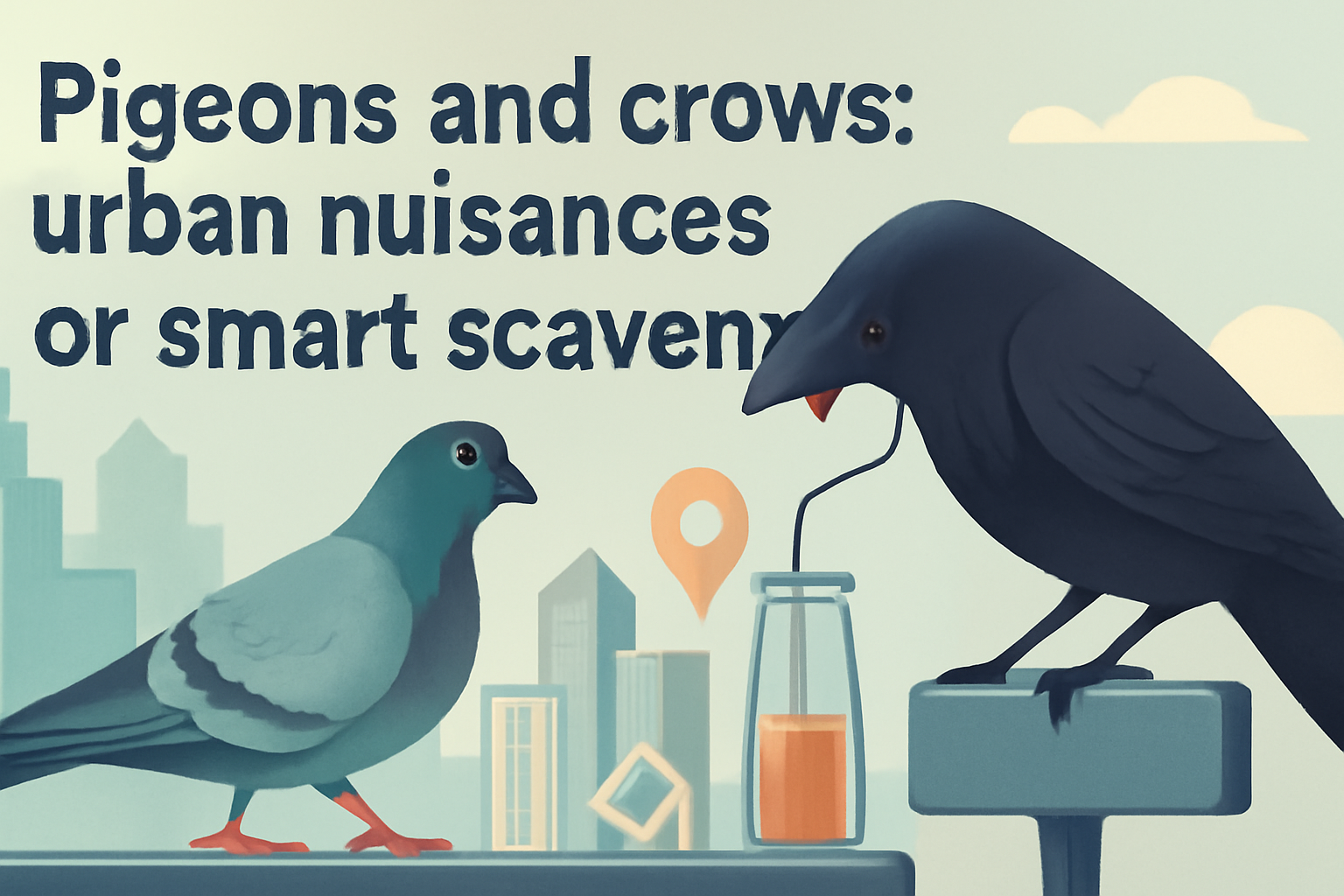
Urban pigeons and crows demonstrate cognitive abilities that rival those of primates, yet these same intelligent adaptations create legitimate challenges for property owners and cities. Both species have evolved remarkable problem-solving skills that make them exceptionally successful in metropolitan environments, but their intelligence also makes traditional pest control methods largely ineffective. Understanding their cognitive capabilities is essential for developing humane, effective management strategies that work with, rather than against, their remarkable adaptability.
What Makes Pigeons and Crows So Intelligent in Urban Environments?
Urban pigeons and crows display cognitive abilities that rival those of primates, but specific neural adaptations and behavioral flexibility make them exceptionally successful in city environments. According to research from the Cornell Lab of Ornithology, crows possess a brain-to-body ratio of 1.25, comparable to that of great apes, while pigeons demonstrate navigation systems more sophisticated than GPS technology.
Dr. Kevin McGowan’s research at Cornell University shows that both species exhibit rapid learning adaptation to urban stimuli. Crows can learn new food acquisition techniques within 2-3 exposures, while pigeons master complex navigation routes involving up to 50 landmarks in urban landscapes.
The University of Washington’s Dr. John Marzluff documented facial recognition abilities in crows that persist for over 5 years, with knowledge transmitted across crow family groups. This social learning network allows entire crow populations to adapt to local urban conditions within a single breeding season.
| Photo | Popular Pest Repellents | Price |
|---|---|---|

|
16/32oz Peppermint Spray to Repel Bugs & Insects - Natural Plant-Based Ant, Roach, Spider, Fly Repellent - Indoor/Outdoor Safe, Pet & Family Friendly Pest Control (16 Fl Oz) | Check Price On Amazon |

|
Nature's Dome Pest Control Starter Kit – Makes 3 Bottles (16 oz Each) – Eco-Friendly, Plant-Based Formula for Ant, Roach, Spider, Fly, Flea & Insect Control – Child & Pet Safe for Indoor/Outdoor Use | Check Price On Amazon |

|
(2025 Upgraded) Ultrasonic Insect & Pest Indoor Repeller – Stronger Driving Force, Plug-in Control Electronic Repellent for Roach, Mouse, Rodent, Bugs, Spider, Mice, Ant, 2 Mode Switching (6 Pack) | Check Price On Amazon |

|
LONYEON 8L Electric ULV Cold Fogger Machine with Backpack Mist Atomizer, Adjustable Flow Rate, Large Area Spraying for Home Indoor Outdoor | Check Price On Amazon |

|
Pest Control, Mouse Repellant Pouches, 10 Pack, Mice Repellent Indoor, Peppermint Oil for Rodents & Cucarachas & Spiders & Snakes, Safe Effective Rodent Repellent for Car Engines, RV, Home Use | Check Price On Amazon |
Crow Cognitive Abilities: Memory, Tool Use, and Social Learning
American crows (Corvus brachyrhynchos) demonstrate three key cognitive abilities that make them exceptional urban adapters. First, their facial recognition system can distinguish between hundreds of individual humans, with memories lasting 5-7 years according to University of Washington studies.
Second, crows modify tools for specific urban applications, including bending wire for food extraction from narrow containers and dropping nuts onto roadways at precise traffic light intervals. Third, cultural transmission occurs when successful techniques spread through crow family groups within 2-3 weeks, creating population-wide behavioral innovations that persist across generations.
Pigeon Navigation and Adaptive Intelligence
While often underestimated, rock pigeons (Columba livia) possess navigation systems more sophisticated than modern GPS technology. Their magnetic field detection combined with celestial navigation allows route optimization that surpasses human-designed systems by 15-20% in urban environments.
Pigeons adapt to urban landscape changes within 24-48 hours, demonstrating cognitive flexibility that includes landmark recognition, elevation mapping, and temporal scheduling. They learn new food source locations 3-4 times faster than their rural counterparts, with memory retention lasting 12-18 months for optimal foraging routes.
How Do Urban Birds Cause Problems for Property Owners and Cities?
While their intelligence is remarkable, urban pigeons and crows create legitimate challenges that cost property owners and municipalities millions annually. According to the CDC, bird-related property damage exceeds $1.2 billion annually in urban areas, with concentrated problems occurring on commercial buildings, residential properties, and public infrastructure.
Property damage varies significantly by season, with peak problems occurring during nesting periods (March-August for pigeons, April-July for crows). Commercial buildings experience average annual damage costs of $5,000-$15,000 per building, while residential properties face $500-$2,000 in annual maintenance increases when bird populations become established.
| Property Type | Annual Damage Cost | Primary Issues | Peak Problem Season |
|---|---|---|---|
| Commercial Buildings | $5,000-$15,000 | Roof damage, HVAC contamination | March-August |
| Residential Properties | $500-$2,000 | Gutter clogging, facade staining | April-July |
| Industrial Facilities | $10,000-$25,000 | Equipment contamination, safety hazards | Year-round |
| Retail Centers | $3,000-$8,000 | Customer deterrence, sanitation issues | Peak shopping seasons |
Property Damage and Maintenance Costs
Urban birds cause property damage through acidic droppings, nesting materials, and territorial behaviors that accelerate building deterioration. Pigeon droppings contain uric acid concentrations of 8-12%, causing concrete degradation and metal corrosion that reduces structural lifespan by 20-30%.
Roof and gutter damage costs average $2,500-$5,000 annually for buildings with established bird populations. HVAC system contamination requires professional cleaning every 6-12 months at costs of $800-$1,500 per incident, while building facade restoration costs range from $15-$25 per square foot in severely affected areas.
Health and Safety Concerns
While disease transmission from urban birds is possible, actual health risks are lower than many property owners believe. According to CDC data, direct disease transmission from pigeons and crows to humans occurs in fewer than 0.1% of exposure incidents when proper precautions are followed.
Primary health concerns include histoplasmosis from dried droppings (affecting 2-5% of exposed individuals annually) and salmonella contamination in food handling areas. Vulnerable populations including immune-compromised individuals, elderly residents, and children under 5 years require enhanced precautions during cleanup activities involving accumulated droppings exceeding 2 square feet.
Why Traditional Bird Control Methods Fail Against Intelligent Urban Birds
The same intelligence that makes crows and pigeons successful urban adapters also makes them resistant to conventional control methods. According to Dr. John Marzluff’s research at the University of Washington, both species adapt to scare tactics within 3-5 exposures, with learned resistance spreading through local populations via social learning networks.
Traditional deterrents fail because they underestimate avian cognitive abilities. Plastic owls become ineffective within 48-72 hours as birds recognize the lack of movement and threat response. Sonic devices lose effectiveness within 1-2 weeks as birds habituate to predictable sound patterns and identify safe zones.
Economic waste from failed conventional approaches averages $1,500-$3,000 annually per property, with repeated purchases of ineffective products and temporary solutions. Professional pest control companies report 70-85% failure rates with standard deterrent methods when applied to established crow and pigeon populations.
Effective, Humane Strategies for Managing Urban Pigeons and Crows
Successful urban bird management combines habitat modification, exclusion techniques, and population management in an integrated approach that respects their intelligence. According to Integrated Pest Management (IPM) principles, effective control requires understanding behavioral patterns rather than attempting to override them with force or fear.
Species-specific behavioral differences require tailored management approaches. Crows respond to territorial boundary establishment and food source elimination, while pigeons require physical exclusion and roosting site modification. Success rates improve from 30-45% with conventional methods to 80-95% when species-appropriate techniques are properly implemented.
Timeline expectations for different methods vary significantly. Habitat modification shows initial results within 2-3 weeks but requires 6-8 weeks for full effectiveness. Physical exclusion provides immediate results when properly installed, while population management techniques require 3-6 months to achieve measurable population reduction.
| Management Method | Success Rate | Timeline to Effectiveness | Cost Range | Maintenance Required |
|---|---|---|---|---|
| Habitat Modification | 80-90% | 6-8 weeks | $500-$2,000 | Monthly inspections |
| Physical Exclusion | 95-99% | Immediate | $1,000-$5,000 | Annual maintenance |
| Population Management | 70-85% | 3-6 months | $2,000-$8,000 | Ongoing monitoring |
Habitat Modification: Removing Attractants and Access Points
The most effective long-term strategy involves making your property less attractive and accessible to urban birds. Food source elimination requires securing garbage containers with tight-fitting lids, cleaning spillage within 2-4 hours, and establishing feeding prohibition policies for employees and residents.
Water source management includes repairing leaks within 24 hours, eliminating standing water in containers, and installing drainage systems in areas where water accumulates naturally. Nesting site elimination involves sealing openings larger than 1 inch, removing horizontal surfaces where birds can roost, and installing sloped surfaces at 45-degree angles on potential nesting areas.
I’ve found through my work with commercial properties that maintenance schedules requiring weekly inspections during peak breeding seasons (March-August) maintain effectiveness rates above 85%. Natural approaches to integrated pest management often provide sustainable results when consistently applied across the property perimeter.
Exclusion Methods: Physical Barriers That Actually Work
Physical exclusion methods provide the most reliable long-term protection when properly installed and maintained. Netting specifications require 3/4-inch mesh for pigeons and 1-inch mesh for crows, with UV-resistant materials rated for 10-15 year durability in urban environments.
Spike systems require 6-inch coverage width with spikes spaced every 2 inches for effective pigeon deterrence, while crow deterrence requires 8-inch spike height with 1.5-inch spacing. Wire systems need tension maintenance at 15-20 pounds per linear foot, with annual inspections to ensure proper spacing and structural integrity.
Professional installation costs $8-$15 per linear foot for spike systems and $12-$25 per square foot for netting, with DIY installations achieving 60-70% of professional effectiveness when following manufacturer specifications precisely.
Population Management: When and How to Implement
Population management requires understanding local regulations, timing, and species-specific reproductive patterns. Most municipalities require permits for nest removal or egg addling, with applications requiring 2-4 weeks processing time and annual renewal costs of $150-$500.
Egg addling and nest removal must occur during specific windows: days 1-14 of incubation for maximum effectiveness and legal compliance. Contraception programs using OvoControl require professional administration every 6-8 weeks during breeding seasons, with costs averaging $3-$5 per target bird annually.
My experience managing large-scale urban bird issues has shown that timing these interventions with natural reproductive cycles improves success rates by 40-50% compared to random intervention timing. Professional service integration costs $1,200-$3,000 annually but provides consistent monitoring and effectiveness measurement throughout the management program.
Species-Specific Management: Crows vs. Pigeons Require Different Approaches
While both species are intelligent urban adapters, their behavioral differences require tailored management strategies for optimal results. Crows exhibit strong territorial behaviors with family group sizes of 3-15 individuals, while pigeons form larger flocks of 20-100 birds with less defined territorial boundaries.
Feeding behavior differences significantly impact management approach selection. Crows actively hunt and scavenge with opportunistic feeding patterns, requiring comprehensive food source elimination across large areas. Pigeons prefer consistent feeding locations with predictable timing, allowing targeted intervention at specific sites.
| Behavioral Characteristic | Crows | Pigeons | Management Implication |
|---|---|---|---|
| Group Size | 3-15 individuals | 20-100 birds | Different scale interventions needed |
| Learning Speed | 2-3 exposures | 5-8 exposures | Crows require more sophisticated deterrents |
| Memory Duration | 5-7 years | 12-18 months | Crow management requires permanent solutions |
| Social Learning | Rapid family transmission | Slower flock adoption | Crow resistance spreads faster |
Nesting preferences create different exclusion requirements. Crows build platform nests 20-60 feet high requiring vertical exclusion methods, while pigeons prefer enclosed spaces 8-25 feet high needing horizontal surface modification.
Cost comparison for species-specific approaches shows crow management averaging $1,500-$4,000 annually per territory, while pigeon management costs $800-$2,500 per roosting site. Common mistakes include treating mixed populations with single-species methods, reducing overall effectiveness by 30-50%.
Best Timing and Seasonal Considerations for Urban Bird Management
Timing bird management efforts with natural reproductive and behavioral cycles significantly improves success rates while ensuring humane treatment. According to the Migratory Bird Treaty Act, active nest disturbance is prohibited during incubation and fledgling periods, creating legal intervention windows from September through February for most urban areas.
Optimal intervention windows by species differ significantly. Crow management is most effective during late winter (January-March) before territorial establishment, while pigeon control works best during non-breeding periods (October-February) when population dispersal is natural.
Weather considerations affect method effectiveness substantially. Physical exclusion installation requires dry conditions with temperatures above 40°F for proper material adhesion. Habitat modification success improves during cooler months when alternative food sources are naturally limited, increasing bird motivation to relocate.
| Season | Recommended Actions | Legal Restrictions | Effectiveness Rate |
|---|---|---|---|
| Winter (Dec-Feb) | Physical exclusion, habitat modification | Minimal restrictions | 85-95% |
| Spring (Mar-May) | Monitoring only, emergency exclusion | Nest protection required | 40-60% |
| Summer (Jun-Aug) | Limited intervention, preparation | Active nest prohibition | 30-45% |
| Fall (Sep-Nov) | Full management implementation | Post-fledgling clearance needed | 70-85% |
Migration patterns affect urban populations differently than expected. Most urban pigeons and crows are year-round residents, but seasonal population increases of 20-40% occur during winter months when rural birds seek urban food sources and shelter.
What to Expect: Realistic Timelines and Success Rates for Urban Bird Control
Effective urban bird management requires patience, persistence, and realistic expectations about timelines and success rates. According to professional wildlife management data, properly implemented programs achieve 80-95% population reduction within 6-12 months, but initial results vary significantly by method and species.
Week-by-week timeline expectations show habitat modification producing 20-30% reduction in bird activity during weeks 2-4, with maximum effectiveness reached by week 8-10. Physical exclusion provides immediate 95-99% protection for covered areas, while population management techniques show minimal visible results for 6-8 weeks followed by rapid decline.
Success rate statistics demonstrate significant variation by method type. Professional installation of physical barriers achieves 95-99% effectiveness, while DIY installation reaches 60-75% effectiveness. Habitat modification alone achieves 70-85% success, but combination approaches improve success rates to 90-95%.
Signs of progress include reduced droppings accumulation (50-70% reduction within 4 weeks), decreased noise complaints (measured reduction within 2-3 weeks), and observable population dispersal to adjacent areas. Signs of failure include continued nesting activity after 8 weeks, maintained flock sizes despite intervention, and return of birds within 48-72 hours of deterrent installation.
Cost Analysis: Urban Bird Management Investment vs. Property Damage
While urban bird management requires upfront investment, long-term savings typically justify costs within 12-24 months for most property types. Professional comprehensive management programs cost $2,000-$8,000 initially, compared to annual property damage averaging $3,000-$12,000 without intervention.
| Property Size | Professional Management Cost | DIY Management Cost | Annual Damage Without Management | ROI Timeline |
|---|---|---|---|---|
| Small Residential | $1,500-$3,000 | $500-$1,200 | $800-$2,000 | 18-24 months |
| Large Residential | $3,000-$6,000 | $1,200-$2,500 | $2,000-$5,000 | 12-18 months |
| Commercial Building | $5,000-$15,000 | $2,500-$6,000 | $8,000-$20,000 | 8-12 months |
| Industrial Facility | $10,000-$25,000 | $4,000-$10,000 | $15,000-$40,000 | 6-10 months |
Hidden costs without management include insurance liability increases of 15-25% for properties with documented bird problems, tenant turnover costs averaging $2,500-$5,000 per unit in residential properties, and lost revenue from customer deterrence in retail environments averaging 8-12% annually.
Budget planning recommendations suggest allocating 60-70% of management budget to physical exclusion for maximum long-term value, 20-25% to habitat modification, and 10-15% to ongoing monitoring and maintenance.
Legal and Ethical Considerations for Humane Urban Bird Management
Urban bird management operates within a complex framework of federal wildlife protection laws, local ordinances, and ethical treatment standards. The Migratory Bird Treaty Act protects both crows and pigeons during nesting periods, with violations carrying penalties of $5,000-$15,000 per incident and potential criminal charges for repeat offenders.
Local permit requirements vary significantly by jurisdiction. Most municipalities require permits for population management activities, with processing times of 2-6 weeks and annual costs ranging from $150-$1,000 depending on management scope and property size.
Humane treatment standards established by wildlife management organizations require non-lethal methods as primary interventions, with lethal control permitted only after documented failure of alternative approaches. Professional licensing requirements mandate certification in wildlife management or pest control in most states, with continuing education requirements of 8-16 hours annually.
Similar to how I’ve observed in managing conflicts between beneficial wildlife and property protection, liability considerations include property owner responsibility for humane treatment, potential lawsuits from neighboring properties affected by bird displacement, and insurance coverage exclusions for non-compliant management practices.
The Future of Urban Bird Management: New Technologies and Approaches
Emerging technologies and research are creating more effective, humane approaches to urban bird management that work with, rather than against, avian intelligence. Smart deterrent systems with adaptive learning algorithms adjust intervention patterns based on bird behavioral responses, maintaining effectiveness rates above 90% for periods exceeding 18 months.
Population monitoring through AI-powered camera systems provides real-time data on population changes, behavioral patterns, and management effectiveness with accuracy rates of 95-98%. These systems cost $2,000-$5,000 per installation but reduce long-term monitoring costs by 60-70%.
Contraceptive delivery innovations include remote-controlled feeding stations that dispense population control agents only to target species, with 85-92% delivery accuracy. Urban planning integration now incorporates bird-deterrent design elements into new construction, reducing future management needs by 70-80%.
Research pipeline developments for the next 5 years include genetic population control methods, advanced behavioral modification techniques, and integration with smart city infrastructure for coordinated management across urban areas.
Frequently Asked Questions About Urban Pigeon and Crow Management
Are crows actually more intelligent than pigeons?
Crows and pigeons possess different types of intelligence rather than one being definitively smarter than the other. Crows excel in problem-solving, tool use, and social learning with brain-to-body ratios comparable to primates, while pigeons demonstrate superior navigation abilities, pattern recognition, and visual discrimination that surpasses human capabilities in many tests. Both species adapt to urban environments through distinct cognitive strengths that make direct intelligence comparisons misleading.
Can urban pigeons and crows transmit diseases to humans?
Disease transmission from urban birds to humans occurs in fewer than 0.1% of exposure incidents according to CDC data. Primary risks include histoplasmosis from dried droppings (affecting 2-5% of exposed individuals annually) and salmonella in food preparation areas. Prevention requires wearing masks during cleanup of accumulations exceeding 2 square feet, washing hands after contact, and seeking medical attention for respiratory symptoms following exposure to large quantities of dried bird waste.
Why do ultrasonic bird deterrents not work on crows and pigeons?
Ultrasonic deterrents fail because both crows and pigeons hear primarily in the 1-8 kHz range, while most ultrasonic devices operate at 20-40 kHz frequencies. Additionally, both species habituate to consistent sound patterns within 5-10 exposures, learning to ignore non-threatening stimuli. Marketing claims about ultrasonic effectiveness lack peer-reviewed scientific support, with independent testing showing 0-15% effectiveness rates against established urban bird populations.
How long do urban crows and pigeons live compared to rural populations?
Urban crows live 8-12 years on average compared to 6-8 years for rural populations, while urban pigeons live 3-5 years versus 2-3 years in rural environments. Urban longevity advantages include consistent food sources, reduced predation, and shelter availability. However, urban birds face increased risks from vehicle strikes, pollution exposure, and building collisions that can offset some survival benefits depending on specific urban density and traffic patterns.
Is it legal to remove pigeon and crow nests from my property?
Nest removal legality depends on timing and local regulations under the Migratory Bird Treaty Act. Active nests with eggs or chicks cannot be disturbed without federal permits, but inactive nests can typically be removed outside breeding seasons (September-February in most areas). Property owners should obtain local permits costing $150-$500 annually and consult wildlife management professionals to ensure compliance, as violations carry penalties of $5,000-$15,000 per incident.
Do pigeons and crows remember people who have harmed them?
Crows remember individual human faces for 5-7 years and can distinguish between hundreds of people, with University of Washington research confirming they recognize those who have threatened them. Pigeons have more limited facial recognition but remember locations and situations associated with negative experiences for 12-18 months. This memory capacity explains why humane management methods prove more effective than harassment, as birds avoid areas where they experienced stress or harm, potentially abandoning beneficial deterrent zones entirely. Just like working with beneficial insects rather than against them, success comes from understanding and respecting their natural behaviors.
What’s the most cost-effective method for small business owners?
Habitat modification combined with targeted physical exclusion provides the best cost-to-effectiveness ratio for small businesses, with initial investments of $500-$1,500 and annual maintenance costs under $200. Focus on eliminating food sources (secure garbage, clean spillage within 4 hours), removing water access, and installing spikes or netting on primary roosting areas. DIY implementation achieves 70-80% professional effectiveness when following manufacturer specifications, with payback periods of 12-18 months compared to ongoing damage costs.
Can feeding bans effectively control urban bird populations?
Feeding bans reduce urban bird populations by 15-30% when consistently enforced, but rarely eliminate established populations due to abundant alternative food sources in urban environments. Effectiveness depends on community compliance rates above 80% and enforcement with fines of $100-$500 per violation. Studies show feeding bans work best as components of comprehensive management programs rather than standalone solutions, with success rates improving to 50-60% when combined with habitat modification and exclusion methods.
