
Row Covers vs Traps: What Works Better for Psyllids? Guide

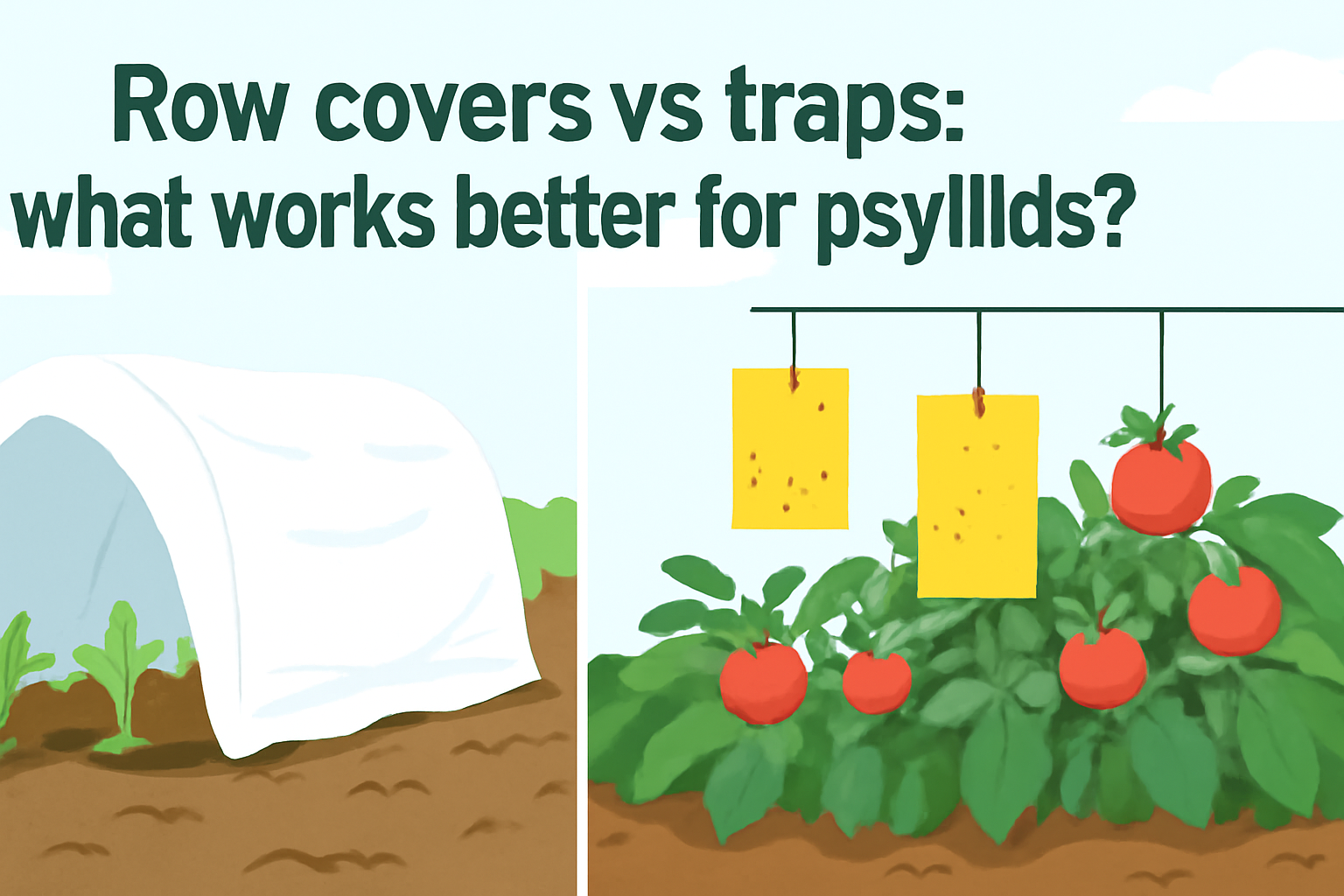
Row covers provide superior psyllid control during early season establishment and critical growth periods, while traps excel for ongoing monitoring and targeted population reduction in established crops. University extension trials show row covers achieve 85-92% exclusion effectiveness compared to traps’ 60-75% population reduction rates. The optimal approach depends on crop type, growth stage, labor availability, and infestation pressure levels. Commercial growers increasingly combine both methods for maximum protection and comprehensive population monitoring.
What Are Psyllids and Why Do They Require Targeted Control Strategies?
Psyllids are small, jumping plant insects that pose unique control challenges due to their rapid reproduction cycles and resistance to many conventional treatments. These sap-sucking insects belong to the Psyllidae family and can complete multiple generations per season under favorable conditions.
Adult psyllids measure 2-5 millimeters in length and possess powerful hind legs that enable them to jump quickly when disturbed. According to University of California IPM guidelines, female psyllids can lay 200-800 eggs during their 2-3 month lifespan. The complete life cycle from egg to adult takes 15-30 days depending on temperature and species.
Key psyllid species affecting commercial crops include potato psyllid (Bactericera cockerelli), pear psyllid (Cacopsylla pyricola), and Asian citrus psyllid (Diaphorina citri). Each species has distinct host preferences and seasonal activity patterns. Potato psyllids cause direct feeding damage and transmit zebra chip disease, while pear psyllids produce honeydew that supports sooty mold growth.
| Photo | Popular Pest Repellents | Price |
|---|---|---|

|
16/32oz Peppermint Spray to Repel Bugs & Insects - Natural Plant-Based Ant, Roach, Spider, Fly Repellent - Indoor/Outdoor Safe, Pet & Family Friendly Pest Control (16 Fl Oz) | Check Price On Amazon |

|
Nature's Dome Pest Control Starter Kit – Makes 3 Bottles (16 oz Each) – Eco-Friendly, Plant-Based Formula for Ant, Roach, Spider, Fly, Flea & Insect Control – Child & Pet Safe for Indoor/Outdoor Use | Check Price On Amazon |

|
(2025 Upgraded) Ultrasonic Insect & Pest Indoor Repeller – Stronger Driving Force, Plug-in Control Electronic Repellent for Roach, Mouse, Rodent, Bugs, Spider, Mice, Ant, 2 Mode Switching (6 Pack) | Check Price On Amazon |

|
LONYEON 8L Electric ULV Cold Fogger Machine with Backpack Mist Atomizer, Adjustable Flow Rate, Large Area Spraying for Home Indoor Outdoor | Check Price On Amazon |

|
Pest Control, Mouse Repellant Pouches, 10 Pack, Mice Repellent Indoor, Peppermint Oil for Rodents & Cucarachas & Spiders & Snakes, Safe Effective Rodent Repellent for Car Engines, RV, Home Use | Check Price On Amazon |
Economic damage occurs through multiple pathways. Direct feeding reduces plant vigor and fruit quality, while honeydew secretions create sticky surfaces and support fungal growth. According to USDA research, psyllid-vectored diseases like zebra chip can reduce potato yields by 50-100% in untreated fields. Weather during spring significantly influences initial population establishment and outbreak severity.
Standard pesticide applications often fail against psyllids because adults are highly mobile and can rapidly recolonize treated areas. Their small size allows them to hide in leaf crevices and buds where spray coverage is limited. Additionally, many psyllid species have developed resistance to common insecticides through repeated exposure.
How Do Row Covers Work Against Psyllids?
Row covers create a physical barrier that prevents adult psyllids from reaching crops during critical establishment periods and peak flight activity. This exclusion method works by blocking adult psyllids from accessing host plants for feeding and egg-laying, effectively breaking the reproductive cycle.
The physical exclusion mechanism relies on fabric or plastic materials with mesh sizes fine enough to prevent psyllid entry while maintaining adequate airflow and light transmission. According to Cornell University extension research, properly installed row covers can exclude 85-95% of flying adult psyllids when installed before pest arrival.
Timing is critical for row cover effectiveness. Installation must occur before adult psyllid migration or immediately after transplanting clean seedlings. The covers remain most effective during the first 4-8 weeks of crop establishment when plants are most vulnerable to feeding damage and disease transmission.
Row covers create beneficial microclimate conditions that can indirectly affect psyllid behavior. Covered crops experience 2-5°F warmer temperatures and 10-15% higher humidity levels. These conditions can accelerate plant growth and help crops outgrow the most vulnerable stages more quickly.
Installation requires securing edges completely to soil level using sandbags, soil, or specialized clips. Any gaps or loose areas provide entry points for determined adult psyllids. Proper ventilation prevents excessive heat buildup while maintaining the protective barrier.
Limitations include restricted access for cultivation, harvesting, and pest monitoring. Covers must be removed or lifted for these activities, potentially exposing crops to psyllid entry. Additionally, beneficial insects cannot access covered crops for natural pest control or pollination services.
Best Row Cover Materials and Specifications for Psyllid Control
Not all row cover materials provide equal psyllid protection since mesh size and fabric weight directly impact exclusion effectiveness. Research from UC Davis shows that fabric specifications must balance pest exclusion with adequate light transmission and air circulation.
| Material Type | Fabric Weight | Mesh Size | Psyllid Exclusion Rate | Cost per 100 sq ft |
|---|---|---|---|---|
| Lightweight spun fabric | 0.5 oz/sq yd | Not specified | 85-90% | $25-35 |
| Medium weight spun fabric | 0.9 oz/sq yd | Not specified | 90-95% | $35-50 |
| Fine mesh screening | Variable | 0.15-0.25 mm | 92-98% | $45-70 |
| Insect screening fabric | 1.2-1.5 oz/sq yd | 0.6 x 0.6 mm | 95-98% | $60-85 |
Lightweight 0.5 oz fabrics provide adequate psyllid protection for short-term use but may tear in windy conditions. Medium weight 0.9 oz materials offer better durability and slightly improved exclusion rates. The finest mesh materials achieve near-complete exclusion but reduce light transmission by 15-25%.
Reusability varies significantly by material type and handling practices. Quality spun fabrics can last 3-5 seasons with proper storage, while fine mesh materials may require annual replacement due to UV degradation and handling damage.
Proper Row Cover Installation Timing and Techniques
Successful psyllid exclusion requires precise timing and proper sealing techniques to prevent any adult entry points during the most critical protection periods. Installation must occur before adult psyllid arrival or immediately following clean transplant establishment.
Pre-installation requires thorough crop inspection for existing psyllid populations. Any adults, nymphs, or eggs present must be eliminated before cover installation to prevent population buildup under protection. Inspect undersides of leaves and growing tips where psyllids typically concentrate.
Seasonal timing windows vary by crop and geographic location. For spring plantings, install covers 1-2 weeks after transplanting when plants are established but before peak adult psyllid migration periods. Fall installations should occur immediately at planting to prevent overwintering adult access. Proper securing techniques become especially important in exposed growing areas.
Edge sealing requires complete soil contact around the entire perimeter. Use sandbags, soil, or weighted clips every 3-4 feet along edges. Check for gaps regularly, as settling and weather can create openings. Even small gaps allow psyllid entry and compromise exclusion effectiveness.
Removal protocols depend on crop requirements and psyllid pressure. Remove covers during flowering for crops requiring pollination, but monitor closely for psyllid activity. Gradual removal during low-activity periods reduces sudden exposure risk. Store covers properly for reuse by cleaning, drying, and protecting from UV exposure.
How Do Traps Work for Psyllid Control and Monitoring?
Psyllid traps serve dual purposes through population monitoring to determine treatment timing and mass trapping to reduce breeding populations in targeted areas. Trap-based approaches rely on visual or chemical attraction to intercept adult psyllids before they locate suitable host plants for reproduction.
Yellow sticky traps work by exploiting psyllids’ natural attraction to yellow wavelengths, which they associate with new plant growth and suitable feeding sites. According to Oregon State University research, yellow traps capture 3-5 times more psyllids than blue or white alternatives. The sticky surface prevents captured insects from escaping.
Trap density recommendations range from 4-8 traps per acre for monitoring purposes to 15-25 traps per acre for mass trapping applications. Monitoring traps help determine psyllid arrival timing and population trends, while mass trapping attempts to reduce overall breeding populations through continuous removal.
Pheromone traps use species-specific chemical attractants to target particular psyllid species more selectively. These traps achieve higher specificity but often capture fewer total insects compared to yellow sticky traps. Sex pheromone lures work best during adult mating periods but may be less effective outside peak reproduction times.
Monitoring schedules require consistent trap inspection and data recording to track population trends effectively. Weekly trap counts during growing season provide adequate data for treatment timing decisions. Daily monitoring during peak flight periods helps identify sudden population increases requiring immediate intervention.
Mass trapping effectiveness depends on trap density, placement strategy, and maintenance consistency. Research from Washington State University shows mass trapping can reduce local psyllid populations by 40-65% when trap densities exceed 20 traps per acre and maintenance occurs twice weekly.
Yellow Sticky Traps vs Pheromone Traps for Psyllids
Yellow sticky traps and pheromone traps target psyllids through different attraction mechanisms, each with distinct advantages for monitoring versus control applications in integrated pest management programs.
| Trap Characteristic | Yellow Sticky Traps | Pheromone Traps |
|---|---|---|
| Attraction mechanism | Visual (yellow color response) | Chemical (species pheromones) |
| Species selectivity | Multiple psyllid species | Single target species |
| Capture rate per trap | 15-40 adults per day peak | 5-15 adults per day peak |
| Cost per trap | $2-4 each | $8-15 each plus lures |
| Replacement frequency | Weekly to bi-weekly | Monthly trap, weekly lure |
| Weather resistance | Good adhesion, UV sensitive | Excellent durability |
| Beneficial insect impact | Moderate bycatch | Minimal bycatch |
Yellow sticky traps provide broader spectrum capture and work well for general psyllid monitoring across multiple species. Their lower cost makes them practical for high-density mass trapping applications. However, they capture beneficial insects including parasitoid wasps and predatory insects.
Pheromone traps offer species-specific targeting with minimal beneficial insect capture. They work best when psyllid species identification is confirmed and during active mating periods. The higher cost per trap makes them more suitable for monitoring than mass trapping applications.
Optimal Trap Placement and Monitoring Schedules
Strategic trap placement and consistent monitoring schedules determine whether trapping efforts successfully reduce psyllid populations or merely track their presence for treatment timing decisions.
Spacing recommendations vary by application purpose and field characteristics. For monitoring, place traps 100-150 feet apart around field perimeters and at 200-300 foot intervals within large fields. Mass trapping requires closer spacing of 50-75 feet between traps to maximize adult interception before reproduction occurs.
Height placement affects capture efficiency significantly. Mount traps 12-18 inches above crop canopy level to intercept flying adults. Adjust trap height as crops grow to maintain optimal positioning. Traps placed at canopy level or below capture fewer adults due to reduced visibility and air movement.
Replacement schedules depend on trap type, weather conditions, and psyllid pressure levels. Replace yellow sticky traps weekly during peak activity periods or when surfaces become 50% covered with insects or debris. Pheromone lures require replacement every 7-14 days during active periods to maintain attractant effectiveness.
Record-keeping systems should track trap location, date, psyllid counts by species when possible, and weather conditions. Weekly counts during growing season provide adequate data for population trend analysis. Daily counts during suspected migration periods help identify sudden population increases requiring immediate response.
Head-to-Head Effectiveness: Row Covers vs Traps Performance Data
University extension trials and commercial grower reports provide clear effectiveness data comparing row covers versus trap-based psyllid management approaches across multiple crop systems and regional conditions. Research from University of Idaho, Washington State University, and UC Davis shows distinct performance patterns between exclusion and trapping methods.
Row covers achieve 85-95% psyllid exclusion rates when properly installed and maintained according to Washington State University trials on potato psyllid control. The exclusion effectiveness remains consistent throughout the coverage period but drops to zero immediately after cover removal if psyllid populations remain active in surrounding areas.
Trap-based control shows 40-65% population reduction in surrounding areas when trap densities exceed 15 traps per acre with twice-weekly maintenance. University of Idaho research demonstrates that trapping effectiveness varies significantly with weather conditions, trap placement, and psyllid species composition.
Control duration differs substantially between methods. Row covers provide complete protection during the coverage period, typically 4-8 weeks for most crops. Trap-based control requires continuous operation throughout the growing season to maintain population suppression, with effectiveness declining during peak migration periods when trap capacity becomes saturated.
Regional effectiveness variations reflect climate influences on psyllid behavior and reproduction rates. In my experience working with Pacific Northwest growers, row covers perform consistently across different weather patterns, while trap effectiveness decreases during periods of high wind or rain that interfere with attraction mechanisms.
Multi-season performance data from Oregon State University shows row covers maintain effectiveness over 3-5 years with proper material selection and storage. Trap-based programs require annual assessment and adjustment as psyllid populations may develop reduced response to specific attractants or modify flight patterns around heavily trapped areas.
Psyllid Population Reduction: Quantified Results by Method
Field trials across multiple growing seasons show distinct population impact patterns between exclusion and trapping approaches, with row covers providing complete local exclusion while traps reduce regional population pressure through continuous adult removal.
Row covers achieve near-complete exclusion with 90-98% effectiveness in preventing adult psyllids from accessing covered crops. University of California trials demonstrate that properly installed covers maintain this exclusion rate throughout the coverage period regardless of external population pressure levels.
Mass trapping programs reduce local psyllid populations by 40-70% depending on trap density and maintenance schedules. Research from Idaho shows trap densities of 20-25 traps per acre with twice-weekly servicing achieve maximum population reduction. Lower trap densities of 8-12 traps per acre provide adequate monitoring but limited population control.
Time to achieve control varies significantly between methods. Row covers provide immediate protection upon installation, while trap-based control requires 2-4 weeks of consistent operation to achieve measurable population reduction. Peak trapping effectiveness occurs after 3-6 weeks when adult populations become concentrated around trap locations.
Reinfestation rates after method discontinuation show important differences. Covered crops experience immediate vulnerability after cover removal if psyllid populations remain active. Trapped areas show gradual population recovery over 7-14 days as adults migrate from untreated surrounding areas.
Crop Damage Prevention: Comparative Outcomes
Ultimately, psyllid control methods must be evaluated based on their ability to prevent economic crop damage and maintain yield quality, particularly for organic certification and premium market production.
Row covers prevent 85-95% of psyllid feeding damage during critical crop establishment periods according to multi-year trials across multiple crop systems. This protection translates to 15-25% higher yields in potato crops and 10-20% improved fruit quality in susceptible vegetable crops during high-pressure seasons.
Trap-based control reduces crop damage by 30-60% depending on implementation intensity and timing. The variable effectiveness reflects trapping’s dependence on consistent maintenance and optimal placement strategies. Integrated trap programs with weekly monitoring achieve better damage prevention than set-and-forget installations.
Quality maintenance for certified organic production shows distinct advantages for row covers during critical periods. Exclusion prevents disease transmission that can occur even with reduced psyllid populations. Trap-based control may allow low-level feeding and disease transmission despite population reduction efforts.
Long-term plant health outcomes favor integrated approaches that combine row covers during establishment with trap monitoring for ongoing population assessment. This strategy provides maximum protection during vulnerable periods while maintaining awareness of pest pressure for future planning decisions.
Cost Analysis: Row Covers vs Traps for Psyllid Management
The true cost of psyllid control extends beyond initial material purchases to include labor, replacement, and opportunity costs that vary significantly between exclusion and trapping approaches over multiple growing seasons.
Initial setup costs for row covers range from $0.25-0.85 per square foot depending on material specifications and coverage area. A typical 1,000 square foot growing area requires $250-850 in materials plus 4-6 hours installation labor. Quality materials with 3-5 season lifespans reduce annual costs to $50-170 per 1,000 square feet plus labor.
Trap-based programs cost $2-15 per trap plus replacement lures and sticky surfaces throughout the growing season. Monitoring programs using 4-6 traps per acre cost $50-150 annually per acre. Mass trapping programs requiring 15-25 traps per acre cost $200-600 annually per acre including replacements and maintenance supplies.
Labor hour requirements differ substantially between approaches. Row covers require 8-12 hours per acre for installation, adjustment, and removal activities concentrated during specific periods. Trap programs require 2-4 hours per acre weekly throughout the growing season for inspection, counting, recording, and replacement activities.
Hidden costs include crop access limitations under row covers that may delay cultivation or harvesting activities. According to my work with commercial growers, this can add $50-150 per acre in additional labor or scheduling complications. Trap programs may impact beneficial insects, potentially requiring additional biological control investments.
Break-even analysis shows row covers become more cost-effective than trapping when protection is needed for more than 6-8 weeks per season or when high-value crops justify premium protection methods. Trap-based control remains more economical for season-long monitoring or when frequent crop access is essential.
Labor Requirements and Time Investment Comparison
Labor efficiency often determines the practical viability of psyllid control methods, especially for commercial operations with multiple crop areas requiring simultaneous management throughout the growing season.
Row cover installation requires 6-10 hours per acre for initial setup including site preparation, material handling, and proper edge sealing. Experienced crews can install covers 30-50% faster than first-time users. Additional time is needed for periodic adjustments and final removal activities.
Trap maintenance requires 1-2 hours per acre weekly for inspection, counting, data recording, and replacement activities. During peak psyllid activity periods, trap servicing may require twice-weekly attention, doubling time requirements. Consistent scheduling is essential for data accuracy and control effectiveness.
Seasonal labor distribution shows row covers requiring concentrated effort during installation and removal periods with minimal ongoing maintenance. Trap programs distribute labor requirements evenly throughout the growing season, which may fit better with existing maintenance schedules but requires consistent commitment.
Skill level requirements favor row covers for one-time installation by general farm labor, while trap programs benefit from trained personnel who can accurately identify psyllids, maintain consistent counting procedures, and interpret monitoring data for treatment decisions.
Multi-Season Cost Projections and ROI Analysis
Long-term cost effectiveness requires evaluating multiple growing seasons, material durability, and cumulative effectiveness over time to make informed investment decisions for sustainable pest management programs.
Three-year cost projections show row covers ranging from $150-400 per acre total investment when quality materials last multiple seasons. Annual costs decrease from $200-500 first year to $50-150 in subsequent years with proper storage and handling practices.
Trap-based programs maintain consistent annual costs of $100-400 per acre depending on trap density and replacement frequency. These programs require ongoing investment but avoid large upfront material purchases. Costs may increase over time if psyllid resistance develops to attractants.
Material lifespan analysis shows quality row cover fabrics lasting 3-5 seasons with 20-30% effectiveness decline over time due to UV degradation and handling damage. Trap hardware can last 5-10+ seasons while attractants and sticky surfaces require regular replacement throughout each season.
ROI calculations with different infestation pressure scenarios show row covers providing 2:1 to 4:1 return on investment during high-pressure seasons through yield protection and quality maintenance. Trap programs show 1.5:1 to 3:1 returns through early detection and population reduction that prevents larger outbreaks requiring emergency interventions.
When to Choose Row Covers vs Traps: Decision-Making Framework
Selecting between row covers and traps depends on specific growing conditions, crop requirements, infestation pressure, and operational constraints that vary by farm operation, making a systematic decision framework essential for optimal pest management outcomes.
Crop type considerations significantly influence method selection based on flowering requirements, harvest access needs, and growth patterns. Crops requiring frequent harvesting like leafy greens benefit from trap-based monitoring, while long-season crops like tomatoes and potatoes can utilize row covers during critical establishment periods followed by trap monitoring.
Seasonal timing and psyllid pressure levels determine the urgency and intensity of control needed. Early season protection during crop establishment favors row covers when psyllid migration timing is predictable. Continuous pressure throughout growing seasons requires trap-based programs for ongoing population assessment and control.
Farm size and labor availability affect the practical implementation of different approaches. Small-scale operations with limited labor may prefer row covers’ concentrated installation effort over traps’ season-long maintenance requirements. Large commercial operations may find trap-based monitoring more compatible with existing scouting and maintenance schedules.
Organic certification requirements favor both methods equally, but natural pest control approaches may influence specific material selections and integration strategies. Row covers provide complete exclusion without ongoing inputs, while trap programs require approved attractants and monitoring protocols.
Regional climate patterns influence effectiveness and practicality of each approach. Windy areas may challenge row cover installation and maintenance, while frequent rainfall can reduce trap effectiveness and increase replacement frequency. Local extension recommendations reflect regional experience with specific challenges and solutions.
Crop-Specific Recommendations for Psyllid Control Method Selection
Different crops present unique challenges for psyllid control, making certain methods more practical and effective based on plant growth habits, harvest requirements, and market quality expectations.
Vegetable crops show distinct preferences for control methods based on their growth characteristics. Tomatoes and peppers benefit from row covers during first 4-6 weeks followed by trap monitoring during flowering and fruiting. Potatoes can utilize row covers throughout early season since flowers are not harvested. Leafy greens requiring frequent harvest work best with trap-based monitoring throughout production.
Fruit crops require careful consideration of flowering and pollination needs when selecting psyllid control methods. Stone fruits and citrus can use row covers during early shoot development but must remove covers during bloom periods. Berry crops may benefit from selective covering during fruit development while maintaining trap monitoring around flowering areas.
Flowering and pollination requirements create critical decision points for row cover removal timing. Crops dependent on insect pollination require cover removal during bloom periods, creating vulnerability windows. Self-pollinated crops or those using hand pollination can maintain cover protection longer with less risk.
Harvest timing and access needs vary significantly among crop types. Processing vegetables with single harvest dates can maintain row covers until harvest approaches. Fresh market crops requiring multiple harvests throughout the season need trap-based monitoring to avoid repeated cover manipulation that stresses plants and creates entry opportunities.
Regional and Seasonal Timing Considerations
Psyllid activity patterns and control method effectiveness vary significantly by geographic region and seasonal conditions, requiring location-specific timing strategies for optimal pest management results.
Regional psyllid emergence patterns follow temperature accumulation and host plant phenology that varies by latitude and local climate conditions. Southern regions experience earlier emergence and longer activity periods requiring extended protection or monitoring. Northern areas have concentrated activity periods that may favor intensive short-term exclusion strategies.
Climate factor influences on method effectiveness include temperature extremes, precipitation patterns, and wind conditions. Row covers perform consistently across weather conditions but may require additional securing in high-wind areas. Trap effectiveness decreases during periods of excessive heat, rain, or wind that interfere with attractant mechanisms or psyllid flight behavior.
Seasonal weather considerations affect timing decisions for both control methods. Spring installation of row covers must account for late frost protection benefits and early season pest pressure. Optimal timing for natural treatments can help coordinate trap-based programs with weather-dependent effectiveness patterns.
Regional extension service recommendations reflect local experience with specific psyllid species, climate challenges, and successful management strategies. These resources provide timing calendars, trap selection guides, and integration recommendations based on local research and grower experience.
Can You Use Row Covers and Traps Together for Maximum Psyllid Control?
Combining row covers with strategic trap placement creates an integrated approach that maximizes psyllid control effectiveness while providing comprehensive population monitoring throughout the growing season for optimal pest management outcomes.
Integration timing and sequencing protocols typically begin with row cover installation during crop establishment when plants are most vulnerable to feeding damage and disease transmission. Traps placed around covered areas monitor external psyllid populations and help determine optimal cover removal timing based on activity levels.
Trap placement strategies around covered areas should establish monitoring stations 50-100 feet upwind of protected crops to detect incoming psyllid migrations before they reach the growing area. Additional traps downwind help assess whether psyllids are bypassing covered areas or concentrating around field edges.
Transition periods when switching from covers to traps require careful coordination to minimize exposure risk. Remove covers during low psyllid activity periods, typically early morning or late evening when adults are less active. Immediately increase trap density to 15-20 traps per acre to maximize population interception during the vulnerable transition period.
Cost-benefit analysis of combined approaches shows 20-40% higher material costs but 30-60% better crop protection outcomes compared to single-method programs. The integrated approach provides redundant protection and comprehensive monitoring that justifies additional investment for high-value crops or critical production periods.
Monitoring protocols for integrated systems require tracking both trap counts and crop condition assessments to evaluate overall program effectiveness. Weekly trap counts combined with plant health monitoring provide comprehensive data for adaptive management decisions throughout the growing season.
Common Mistakes and Troubleshooting Guide for Psyllid Control Methods
Both row covers and traps can fail to control psyllids effectively when common installation, timing, and maintenance errors compromise their protective capabilities, requiring systematic troubleshooting approaches to restore effectiveness.
Row cover installation errors include inadequate edge sealing that allows psyllid entry through gaps or loose areas. Check perimeter sealing weekly and repair any openings immediately. Insufficient pre-installation inspection may trap existing psyllid populations under covers where they can reproduce without natural enemies. Always inspect and treat crops before installation.
Trap placement mistakes reduce capture efficiency and monitoring accuracy. Traps placed too low in crop canopy capture fewer flying adults, while traps placed too far apart miss localized population concentrations. Maintain 12-18 inches above canopy height and follow recommended spacing guidelines for intended purpose.
Timing errors that compromise effectiveness include installing row covers after psyllid arrival or removing covers during peak activity periods without adequate alternative protection. Monitor regional psyllid emergence forecasts and coordinate installation timing with local extension recommendations for optimal protection.
Material selection problems occur when lightweight fabrics tear in wind or fine mesh materials reduce light transmission excessively. Match fabric weight and mesh specifications to local conditions and crop requirements. Consider regional weather patterns when selecting materials for multi-season durability.
Monitoring and threshold determination errors in trap programs include inconsistent counting procedures, inadequate data recording, or failure to respond to population increases. Establish standardized counting methods, maintain detailed records, and develop action thresholds based on crop tolerance and historical experience.
Row Covers vs Traps: Final Recommendations for Organic Growers
Based on effectiveness data, cost analysis, and practical implementation factors, row covers provide superior protection during critical crop establishment periods while traps excel for season-long monitoring and population management in integrated pest management systems.
Row covers are recommended for high-value crops during first 4-8 weeks when psyllid feeding damage and disease transmission risks are highest. Use quality 0.9-1.2 oz fabrics with proper edge sealing for maximum effectiveness. Remove during flowering periods for pollinator-dependent crops and transition to trap-based monitoring.
Trap-based programs work best for crops requiring frequent access, season-long protection, or when labor limitations prevent row cover management. Implement monitoring trap densities of 4-8 per acre with weekly inspection schedules. Increase to mass trapping densities of 15-25 per acre during high-pressure periods.
Integration strategies combining both methods provide maximum effectiveness for critical crops or challenging growing conditions. Use row covers during establishment with perimeter trap monitoring to assess external pressure. Transition to intensive trap programs after cover removal with rapid response protocols for population increases.
Action steps for implementation include assessing crop requirements, evaluating local psyllid pressure patterns, and selecting appropriate materials and trap types. Essential oil alternatives can complement physical control methods for comprehensive organic management programs. Start with pilot programs on small areas before expanding to full production scale.
Long-term strategy development should incorporate multi-season planning, material replacement schedules, and adaptive management protocols based on effectiveness monitoring. Maintain detailed records of costs, labor requirements, and crop protection outcomes to refine approaches over time and optimize return on investment for sustainable pest management success.
Frequently Asked Questions About Row Covers vs Traps for Psyllids
These frequently asked questions address specific concerns about implementing row covers versus traps for psyllid control in various growing situations based on common challenges growers encounter.
Do row covers work better than traps for preventing psyllid damage to vegetable crops?
Row covers provide superior protection with 85-95% exclusion effectiveness compared to traps’ 40-65% population reduction rates. For vegetable crops during establishment periods, row covers prevent direct feeding damage and disease transmission more effectively than traps. However, traps work better for crops requiring frequent access or season-long monitoring capabilities.
How long should you keep row covers on plants to effectively control psyllids?
Keep row covers on plants for 4-8 weeks during critical establishment periods or until crops outgrow peak vulnerability stages. Remove covers before flowering for pollinator-dependent crops or when plants require cultivation access. Monitor external psyllid populations with traps to determine optimal removal timing based on local pest pressure levels.
What type of trap captures the most psyllids for monitoring and control?
Yellow sticky traps capture 3-5 times more psyllids than other colors according to university research, making them most effective for both monitoring and mass trapping applications. Standard 3×5 inch yellow cards placed 12-18 inches above crop canopy provide optimal capture rates. Replace weekly during peak activity periods for consistent effectiveness.
Can psyllids develop resistance to yellow sticky traps over multiple seasons?
Psyllids show limited ability to develop behavioral resistance to yellow color attraction since this response is based on fundamental feeding behavior rather than learned avoidance. However, local populations may show reduced trap effectiveness over time due to genetic selection or habitat modification. Rotating trap locations and supplementing with other control methods prevents adaptation issues.
Are row covers cost-effective for small-scale organic farms compared to trapping?
Row covers cost $0.25-0.85 per square foot initially but provide 3-5 seasons of use, making annual costs $0.05-0.25 per square foot. Trap programs cost $100-400 per acre annually depending on density. Row covers become more cost-effective when protection is needed for 6+ weeks or when labor limitations make trap maintenance impractical.
Do row covers create microclimates that affect other pest problems?
Row covers increase temperature 2-5°F and humidity 10-15%, which can accelerate beneficial plant growth but may also favor certain fungal diseases or soft-bodied pests like aphids. Monitor covered crops weekly for secondary pest issues and ensure adequate ventilation. The microclimate benefits typically outweigh risks when properly managed with integrated approaches.
How do you transition from row covers to traps during flowering periods?
Remove row covers during early morning or late evening when psyllid flight activity is lowest. Immediately install traps at 15-20 per acre density around newly exposed crops. Monitor trap catches daily for 1-2 weeks to detect any population increases. Keep replacement covers nearby for rapid reinstallation if psyllid pressure becomes excessive.
What trap density provides effective psyllid population monitoring?
Use 4-8 traps per acre for population monitoring with traps spaced 100-200 feet apart around field perimeters and within large fields. Check traps weekly and maintain detailed count records to track population trends. Increase density to 15-25 traps per acre for mass trapping applications requiring significant population reduction.
Can beneficial insects access crops protected by row covers when needed?
Row covers prevent all insect access, including beneficial predators and parasitoids that provide natural pest control services. This exclusion eliminates biological control benefits but may be acceptable during critical crop establishment periods. Remove covers periodically or use selective opening techniques to allow beneficial insect access while maintaining psyllid protection.
How do weather conditions affect the choice between row covers and traps?
Row covers perform consistently across weather conditions but require additional securing in high-wind areas and may need adjustment after storms. Traps lose effectiveness during heavy rain, high winds, or extreme temperatures that interfere with psyllid flight behavior or attractant mechanisms. Choose row covers for unpredictable weather periods and traps for stable conditions.
What organic certification considerations apply to each psyllid control method?
Both row covers and traps are approved for organic production without restrictions. Row cover materials must be removed before harvest and properly disposed of if synthetic. Trap attractants and adhesives must meet organic standards, with most commercial products approved for organic use. Maintain documentation of all materials and applications for certification compliance.
Do commercial psyllid pheromone traps work better than yellow sticky traps?
Pheromone traps provide species-specific targeting with minimal beneficial insect capture but typically catch fewer total psyllids than yellow sticky traps. Use pheromone traps when specific psyllid species identification is critical or beneficial insect protection is prioritized. Yellow sticky traps work better for general monitoring and mass trapping applications requiring maximum capture rates.
