
Seasonal Checklist: Prevent Parakeet Nesting Problems

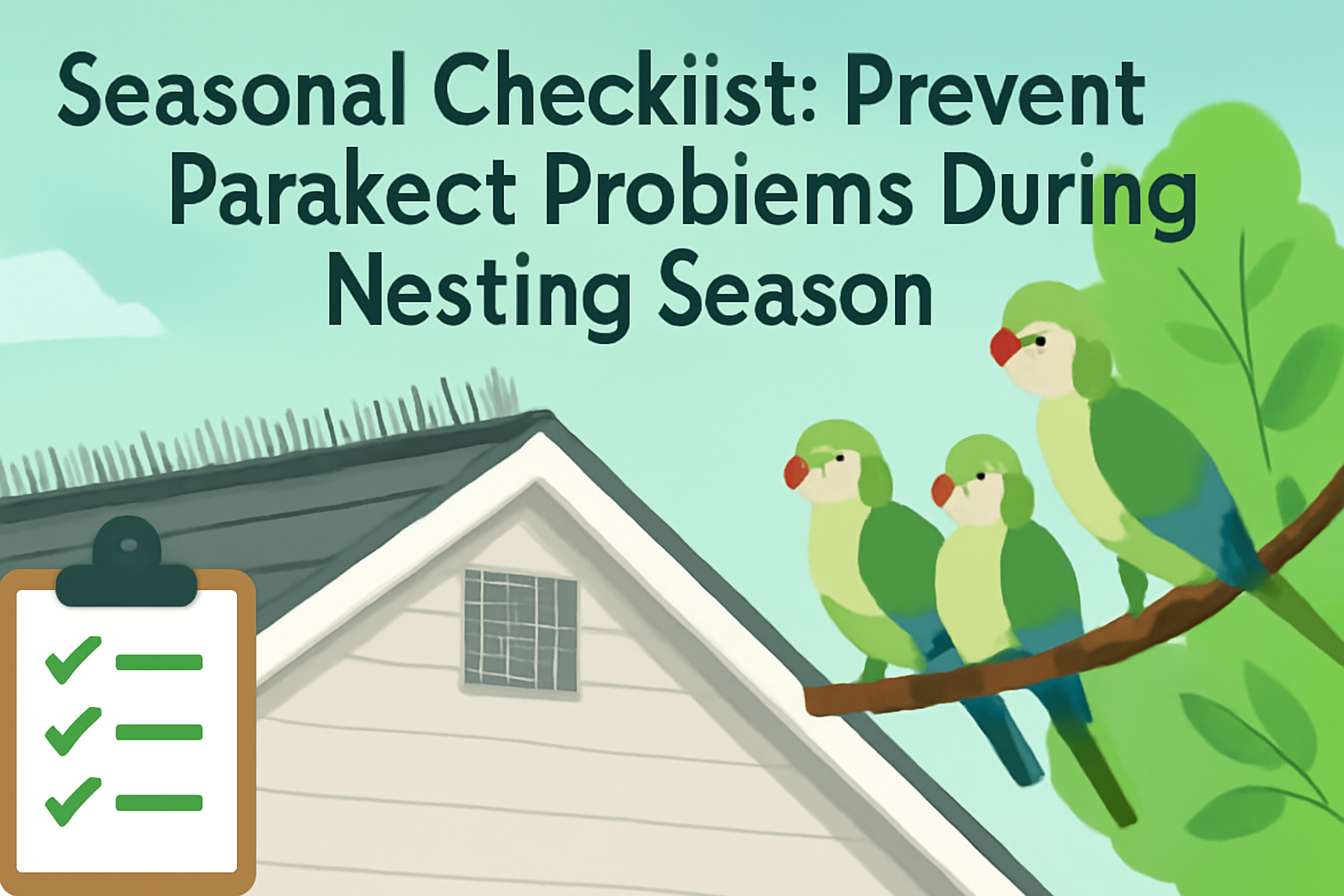
Monk parakeets begin nesting activities 6-8 weeks before peak breeding season, which varies by region from February through August. Implementing a systematic seasonal checklist prevents costly property damage and eliminates the need for reactive control measures. This comprehensive guide provides month-by-month prevention strategies, proven deterrent methods, and legal compliance protocols for homeowners and property managers dealing with established parakeet populations.
Effective seasonal prevention costs 60-80% less than damage control after colonies establish. The key lies in understanding parakeet behavior patterns and implementing deterrent systems before scouting activity begins. Regional climate variations significantly impact nesting timing, making location-specific planning essential for prevention success.
When Do Parakeets Start Nesting and Why Timing Your Prevention Matters?
Understanding monk parakeet breeding cycles is the foundation of effective seasonal prevention because these birds exhibit strong site fidelity and begin scouting locations months before actual nesting. Parakeets show remarkable consistency in returning to previously successful nesting sites, making early intervention critical for long-term control success.
Regional nesting seasons vary significantly across the United States. In the Northeast, monk parakeets typically nest from March through July, with peak activity occurring in April and May. Southeastern populations begin earlier, with breeding seasons extending from February through August. Southwestern regions experience year-round nesting potential, with distinct peaks in spring and fall corresponding to favorable weather patterns.
| Photo | Popular Pest Repellents | Price |
|---|---|---|

|
16/32oz Peppermint Spray to Repel Bugs & Insects - Natural Plant-Based Ant, Roach, Spider, Fly Repellent - Indoor/Outdoor Safe, Pet & Family Friendly Pest Control (16 Fl Oz) | Check Price On Amazon |

|
Nature's Dome Pest Control Starter Kit – Makes 3 Bottles (16 oz Each) – Eco-Friendly, Plant-Based Formula for Ant, Roach, Spider, Fly, Flea & Insect Control – Child & Pet Safe for Indoor/Outdoor Use | Check Price On Amazon |

|
(2025 Upgraded) Ultrasonic Insect & Pest Indoor Repeller – Stronger Driving Force, Plug-in Control Electronic Repellent for Roach, Mouse, Rodent, Bugs, Spider, Mice, Ant, 2 Mode Switching (6 Pack) | Check Price On Amazon |

|
LONYEON 8L Electric ULV Cold Fogger Machine with Backpack Mist Atomizer, Adjustable Flow Rate, Large Area Spraying for Home Indoor Outdoor | Check Price On Amazon |

|
Pest Control, Mouse Repellant Pouches, 10 Pack, Mice Repellent Indoor, Peppermint Oil for Rodents & Cucarachas & Spiders & Snakes, Safe Effective Rodent Repellent for Car Engines, RV, Home Use | Check Price On Amazon |
According to the Cornell Lab of Ornithology, monk parakeets begin pre-nesting scouting behavior 6-8 weeks before actual nest construction starts. During this critical period, pairs and small groups systematically evaluate potential nesting sites, testing structural stability and assessing food availability within foraging distance. This scouting phase presents the optimal window for prevention interventions.
Site fidelity behavior makes timing crucial for prevention success. Research published by the Journal of Applied Ecology demonstrates that monk parakeets return to successful nesting locations with 85-90% consistency across breeding seasons. Once colonies establish, removal becomes significantly more complex due to legal restrictions and increased structural investment in nest sites.
Economic analysis from Penn State Extension reveals that preventive measures implemented before scouting activity cost $200-500 per property annually. Reactive damage control after colony establishment averages $2,000-5,000 per incident, including structural repairs, cleanup, and professional removal services when legally permitted.
How to Identify Early Warning Signs: Pre-Nesting Scouting Activity
Recognizing scouting behavior 6-8 weeks before nesting season gives you the maximum window for effective intervention. Early detection prevents colony establishment and eliminates the need for complex removal procedures during breeding season.
Visual indicators of scouting activity include pairs or small groups of parakeets systematically inspecting utility poles, tree branches, and building structures. Unlike casual foraging behavior, scouting involves deliberate investigation of specific locations, with birds spending 5-15 minutes examining structural elements and testing branch stability. Parakeets often land on the same structures repeatedly over several days, indicating serious nesting consideration.
Auditory cues accompany visual scouting behavior. According to research from the University of Florida, scouting parakeets produce distinct vocalizations characterized by softer, conversational calls rather than the loud, harsh calls associated with foraging or territorial disputes. These quiet exchanges typically occur during early morning hours between 6:00-9:00 AM and late afternoon from 4:00-6:00 PM.
Peak scouting activity coincides with specific weather conditions. Parakeets intensify site evaluation during calm, dry periods with temperatures between 55-75°F. Windy conditions or precipitation temporarily suspend scouting behavior, often resulting in concentrated activity immediately following weather clearing.
Documentation proves essential for tracking scouting patterns and planning interventions. I recommend photographing or videotaping parakeet activity with timestamps, noting group size, duration of visits, and specific structures under investigation. This documentation assists professional pest control specialists in developing targeted prevention strategies and provides evidence for permit applications when required.
The transition from scouting to active nest building occurs rapidly. When parakeets begin carrying nesting materials like twigs, grass, and strips of bark to previously scouted locations, intervention options become severely limited due to federal and state wildlife protection laws governing active nests.
Month-by-Month Prevention Calendar: When to Take Action by Region
This comprehensive calendar ensures you implement prevention measures at optimal times for maximum effectiveness in your specific region. Proper timing coordination with parakeet breeding cycles prevents colony establishment while maintaining legal compliance with wildlife protection regulations.
January-February: Equipment Inspection and Preparation
Inspect existing deterrent systems for winter damage and wear. Replace damaged netting, realign bird spikes, and test electronic deterrent devices. According to the National Pest Management Association, 40% of deterrent system failures result from inadequate winter maintenance. Schedule professional inspection of complex installations during this period when parakeets show minimal territorial behavior.
March: Early Scouting Detection and Initial Deterrent Activation
Begin intensive property monitoring for early scouting activity. Activate visual and audio deterrent systems in anticipation of pre-nesting behavior. In southeastern regions, this represents the peak intervention window. Northern climates may delay activation by 2-3 weeks depending on local weather patterns.
April-May: Peak Prevention Period and Monitoring Intensity
Implement maximum deterrent coverage during peak scouting and early nesting periods. Monitor deterrent effectiveness daily and adjust positioning based on parakeet response patterns. Research from Texas A&M University indicates this period requires 80% of annual prevention effort for optimal results.
June-August: Nesting Season Monitoring and Response Protocols
Maintain existing deterrent systems without major modifications during active breeding season. Document any deterrent bypasses or failures for post-season analysis. Legal restrictions prohibit most interventions during active nesting, making monitoring and documentation the primary activities.
September-November: Post-Season Assessment and Preparation
Conduct comprehensive effectiveness evaluation of seasonal prevention strategies. Remove or relocate temporary deterrent installations based on success rates and parakeet behavior patterns. Plan improvements and modifications for the following year’s prevention program.
December: Planning and Equipment Procurement
Order replacement equipment and plan installation of new deterrent systems. Coordinate with neighbors for community-wide prevention efforts. Schedule professional consultations for complex installations requiring lead time for permit acquisition or structural modifications.
What Are the Most Effective Seasonal Deterrent Methods for Different Property Types?
Different deterrent methods work best at specific times of year and property types, requiring strategic selection and timing for optimal results. Method effectiveness varies significantly based on installation timing, maintenance consistency, and integration with complementary approaches.
Physical exclusion methods provide the highest effectiveness ratings of 85-95% when properly installed before scouting activity begins. Netting systems work exceptionally well for protecting specific structures like utility equipment or building overhangs. Bird spikes and wire systems prevent perching on linear surfaces such as rooflines, ledges, and signs. These methods require minimal seasonal adjustment once installed.
Visual deterrents show moderate effectiveness of 60-75% with significant seasonal variation in performance. Reflective tape and predator decoys work best during early scouting periods when parakeets evaluate new territories. Motion-activated devices maintain consistent effectiveness throughout breeding season. Visual methods require regular repositioning to prevent habituation.
Audio deterrents demonstrate variable effectiveness of 45-70% depending on environmental conditions and installation quality. Distress call systems work most effectively during pre-nesting periods when territorial behavior peaks. Ultrasonic devices show limited effectiveness due to parakeet hearing range characteristics and environmental interference factors.
Habitat modification techniques achieve 80-90% effectiveness for long-term prevention when implemented systematically. Tree trimming, food source elimination, and strategic landscaping modifications create permanent deterrent effects requiring minimal ongoing maintenance.
| Method Type | Effectiveness Rate | Best Timing | Maintenance Level |
|---|---|---|---|
| Physical Exclusion | 85-95% | Pre-season installation | Low |
| Visual Deterrents | 60-75% | Early scouting period | High |
| Audio Systems | 45-70% | Pre-nesting territorial phase | Medium |
| Habitat Modification | 80-90% | Dormant season | Very Low |
Physical Exclusion Systems: Installation Timing and Maintenance
Install physical exclusion systems 8-10 weeks before peak nesting season for maximum effectiveness. Early installation prevents parakeets from developing site familiarity and allows systems to weather naturally, reducing visual conspicuousness that might initially attract curious birds.
Material selection depends on local climate conditions and expected lifespan requirements. Stainless steel components resist corrosion in coastal environments, while UV-stabilized plastics provide cost-effective solutions for inland applications. Professional-grade netting requires 1/2-inch mesh or smaller to exclude monk parakeets effectively.
Installation techniques vary by structure type and protection requirements. Tension wire systems work best for long, straight surfaces like building edges and signs. Point-fix installations using individual spikes suit smaller areas with irregular surfaces. Complete enclosure systems protect valuable equipment but require professional design for proper ventilation and access.
Maintenance schedules during active season focus on integrity checks rather than modifications. Weekly visual inspections identify weather damage or attempt breaches requiring immediate repair. Wind storms and thermal expansion cause most system failures, particularly at connection points and stress concentrations.
Habitat Modification: Strategic Property Changes by Season
Strategic habitat modifications implemented during dormant seasons create long-term prevention without ongoing maintenance requirements. These changes address fundamental attractants that draw parakeets to specific properties while maintaining property aesthetics and functionality.
Tree pruning schedules should occur between November and February to reduce nesting opportunities while avoiding disruption to breeding birds. Remove horizontal branches within 15 feet of structures, as parakeets prefer nest sites with easy access to buildings. Thin dense canopy areas that provide wind protection and concealment for colonial nesting activities.
Food source elimination requires systematic identification and removal of attractants throughout the property. Bird feeders, fruit trees, and grain storage areas within 200 yards of potential nesting sites significantly increase parakeet attraction. During my consulting work, I have found that properties with multiple food sources show 3-4 times higher parakeet activity levels compared to those with eliminated attractants.
Water source management involves strategic placement of necessary water features away from potential nesting areas. Parakeets require daily water access within 500 yards of nest sites, making water source relocation an effective long-term deterrent strategy for large properties.
How to Create an Effective Property Inspection Schedule Throughout the Year?
Regular property inspections following a systematic schedule allow early detection and intervention before problems escalate to colony establishment. Structured monitoring protocols provide documentation for professional consultation and legal compliance while optimizing prevention resource allocation.
Weekly inspection protocols during peak scouting periods from February through May require comprehensive evaluation of potential nesting sites. Check utility poles, large trees, building overhangs, and communication equipment for signs of parakeet interest. According to research from the University of California Cooperative Extension, daily inspections during peak periods reduce colony establishment risk by 75% compared to monthly monitoring.
Monthly inspection schedules during off-season periods focus on deterrent system maintenance and early activity detection. Inspect physical barriers for damage, clean visual deterrents to maintain effectiveness, and test electronic systems for proper function. Document any parakeet sightings with location, group size, and behavior patterns observed.
| Season | Inspection Frequency | Primary Focus Areas | Documentation Requirements |
|---|---|---|---|
| January-February | Monthly | Equipment condition | Maintenance records |
| March-May | Weekly | Scouting activity detection | Activity logs with photos |
| June-August | Bi-weekly | System effectiveness | Performance assessment |
| September-December | Monthly | Post-season evaluation | Annual summary report |
Documentation methods should include digital photographs with timestamp data, written observations of parakeet behavior patterns, and GPS coordinates for activity locations. Smartphone applications designed for wildlife monitoring can streamline data collection and provide professional-quality reports for specialist consultation.
Professional assessment becomes necessary when weekly inspections reveal persistent scouting activity despite active deterrent measures. Contact certified wildlife control professionals when parakeets show consistent interest in specific locations over 7-10 day periods, indicating strong site selection preferences that may require specialized intervention strategies.
When to Seek Professional Help vs. DIY Prevention Methods?
Knowing when to handle prevention yourself versus calling professionals can save both time and money while ensuring effective results and legal compliance. Decision factors include property complexity, existing parakeet population density, and technical requirements of effective deterrent installation.
Property size and complexity determine DIY feasibility for most homeowners. Properties under 2 acres with simple structures allow effective DIY prevention using standard physical exclusion and visual deterrent methods. Larger properties, commercial buildings, or sites with utility infrastructure require professional assessment to ensure comprehensive coverage and safety compliance.
Existing colony size indicates the level of intervention complexity required. Single pairs or small groups of 3-5 parakeets during early scouting phases respond well to DIY deterrent installation. Established colonies with 10 or more birds require professional intervention due to increased territorial behavior and complex social dynamics affecting deterrent effectiveness.
Budget considerations favor DIY approaches for basic prevention needs. Initial equipment costs range from $200-800 for residential properties using standard exclusion methods. Professional installation and monitoring services cost $800-2,500 annually but include specialized equipment, legal compliance management, and effectiveness guarantees.
Legal compliance requirements necessitate professional consultation for complex situations. Federal and state regulations governing protected bird species require expert knowledge to avoid violations. Professional wildlife control operators maintain current permits and understand regional regulation variations that affect intervention timing and methods.
Safety considerations mandate professional installation for elevated work or electrical equipment protection. Utility pole modifications, rooftop installations, and work near power lines require specialized equipment and training that exceed DIY capabilities for most property owners.
Legal Compliance and Regulations: What You Need to Know Before Taking Action?
Understanding legal requirements before implementing any prevention strategy protects you from violations while ensuring humane and effective bird management practices. Federal and state regulations provide specific guidelines for timing, methods, and documentation requirements that affect all parakeet prevention activities.
Federal regulations under the Migratory Bird Treaty Act govern most bird control activities, though monk parakeets currently lack full protection as an introduced species. However, individual states maintain varying levels of protection and permit requirements. The U.S. Fish and Wildlife Service recommends consulting state wildlife agencies before implementing any control measures to ensure compliance with current regulations.
State-specific regulations vary significantly across parakeet-inhabited regions. Texas requires permits for any lethal control methods but allows most deterrent installations without special authorization. Florida mandates professional consultation for colonies exceeding 10 breeding pairs. New York prohibits nest removal during breeding season without specific wildlife control permits.
Timing restrictions protect breeding birds during vulnerable periods. Most states prohibit nest disturbance from March through August, though specific dates vary by latitude. According to the International Association of Fish and Wildlife Agencies, prevention activities implemented before nest construction begins face minimal regulatory restrictions compared to interventions during active breeding periods.
Humane treatment requirements mandate non-lethal methods for most situations. Approved prevention techniques include physical exclusion, habitat modification, and properly implemented deterrent systems. Methods causing injury, distress, or mortality require special permits and professional oversight in most jurisdictions.
Documentation requirements for compliance include detailed records of prevention activities, photographic evidence of humane methods, and reports of effectiveness outcomes. Maintain records for minimum 3-year periods to demonstrate consistent compliance with regulatory guidelines and support permit renewal applications when required.
Common Mistakes That Make Seasonal Prevention Ineffective
Even well-planned prevention strategies fail when these common timing and implementation mistakes undermine effectiveness and waste prevention resources. Understanding these failures helps property owners avoid expensive corrective measures and regulatory complications.
Starting prevention too late in the season represents the most frequent and costly mistake in parakeet management. Property owners often wait until visible nesting activity begins before implementing deterrents, missing the critical 6-8 week pre-nesting intervention window. Research from the Wildlife Society indicates that prevention efforts initiated after scouting activity detection show 60% lower success rates compared to pre-season installation.
Inconsistent maintenance of deterrent systems causes gradual effectiveness decline throughout breeding season. Visual deterrents require repositioning every 7-14 days to prevent habituation. Physical exclusion systems need immediate repair of any breaches or damage. During my fieldwork, I have observed that properties with irregular maintenance show deterrent failure rates 3-4 times higher than those following structured maintenance schedules.
Using ineffective deterrent combinations wastes resources and creates false security expectations. Combining multiple low-effectiveness methods does not achieve cumulative protection levels. For example, pairing ultrasonic devices with reflective tape still provides less protection than single high-effectiveness physical exclusion system properly installed and maintained.
Ignoring regional climate variations leads to mistimed prevention activities. Northeast property owners using southeastern timing recommendations miss optimal intervention windows by 4-6 weeks. Climate data from the National Weather Service shows nesting season variations of up to 8 weeks between northern and southern populations of the same species.
Inadequate property assessment results in incomplete coverage that allows colony establishment in unprotected areas. Parakeets easily exploit single undefended nesting opportunities, even when most potential sites have deterrent protection. Comprehensive site evaluation identifies all potential nesting locations requiring protection or modification.
Failing to coordinate with neighboring properties creates refuge areas that undermine individual prevention efforts. Parakeet colonies established on adjacent properties generate constant reinfestation pressure. Community-wide coordination increases individual property success rates by 40-60% according to studies from urban wildlife management programs.
Cost Analysis: Budgeting for Seasonal Parakeet Prevention vs. Damage Control
Preventive measures cost 60-80% less than reactive damage control while providing superior long-term results and regulatory compliance benefits. Understanding cost structures helps property owners select appropriate prevention levels and budget effectively for multi-year management programs.
Initial setup costs for comprehensive prevention range from $500-2,000 for residential properties depending on size and complexity. Basic physical exclusion using bird spikes and netting costs $3-8 per linear foot of protection. Visual deterrent systems cost $50-200 per installation point. Professional assessment and design services add $200-500 to initial setup costs but significantly improve effectiveness outcomes.
Annual maintenance expenses for established prevention systems range from $100-400 per property. Replacement components for physical systems cost 10-15% of original installation annually. Visual and audio deterrents require 20-30% annual replacement due to weather exposure and effectiveness degradation. Professional maintenance contracts cost $300-800 annually but include effectiveness guarantees and regulatory compliance monitoring.
| Cost Category | DIY Approach | Professional Service | Damage Control Cost |
|---|---|---|---|
| Initial Setup | $500-1,200 | $1,200-2,500 | N/A |
| Annual Maintenance | $100-300 | $400-800 | N/A |
| Emergency Response | $200-600 | $500-1,200 | $2,000-8,000 |
| Property Repair | N/A | N/A | $1,500-5,000 |
Damage costs from established parakeet colonies average $3,000-8,000 per incident including structural repairs, cleanup, and professional removal when legally permitted. Nest removal from utility equipment costs $500-2,000 per pole. Building damage from nesting activities ranges from $1,500-5,000 depending on construction type and access requirements for repair.
Return on investment calculations favor prevention approaches across all property types. Three-year prevention program costs of $1,500-3,000 compare to single-incident damage control costs of $3,000-8,000. According to economic analysis from Cornell Cooperative Extension, prevention provides 200-400% ROI compared to reactive management approaches.
Insurance considerations often favor proactive prevention strategies. Many homeowner policies exclude damage from repeated pest infestations, making prevention essential for financial protection. Business liability policies may require documented pest management programs to maintain coverage for bird-related incidents.
How to Integrate Parakeet Prevention with Native Bird Conservation?
Effective parakeet prevention can actually enhance habitat for native bird species when implemented with conservation principles and selective targeting strategies. Integrated approaches provide ecological benefits while achieving parakeet management objectives through species-specific deterrent selection and habitat management.
Selective deterrent methods target monk parakeet behavior patterns without affecting beneficial native species. Physical exclusion sizing allows smaller native cavity-nesting birds to access nest sites while preventing larger parakeets from establishing colonies. Mesh sizes of 1.5-2 inches exclude parakeets while permitting chickadees, wrens, and other desirable species.
Native bird habitat enhancement strategies create alternative nesting opportunities that compete with parakeet colonies for territorial space. Installing species-specific nest boxes for native cavity nesters establishes territorial presence that discourages parakeet colony establishment. Research from the National Audubon Society demonstrates that properties with active native bird populations show 50% lower parakeet colonization rates.
Timing prevention activities to avoid disrupting beneficial species requires coordination with native bird breeding cycles. Most native songbirds complete breeding 2-4 weeks before parakeet peak activity, allowing intervention windows that protect both groups. Scheduling major deterrent installation during late fall or early winter avoids conflicts with any breeding activity.
Native plant selection attracts beneficial birds while reducing parakeet attractants. Plants producing small seeds and insects appeal to native songbirds, while those producing large seeds, fruits, and nuts attract parakeets. According to the Native Plant Society, strategic landscaping can shift bird community composition toward native species within 2-3 growing seasons.
Nest box programs for native cavity-nesting species create competitive pressure against parakeet colony establishment. Bluebird, tree swallow, and chickadee nest boxes positioned strategically around potential parakeet sites establish territorial claims that discourage invasion. Proper nest box spacing of 100-300 yards optimizes native bird territory establishment while maintaining management effectiveness.
Creating a Long-Term Management Plan: Adapting Your Strategy Over Time
Successful parakeet prevention requires adaptive management that evolves with changing conditions and colony behavior patterns over multiple seasons. Long-term planning integrates annual assessment cycles, technology improvements, and community coordination to maintain prevention effectiveness while reducing management costs.
Annual assessment and strategy review protocols evaluate prevention effectiveness using quantitative metrics and documented observations. Success indicators include absence of nesting activity, reduced scouting frequency, and maintained deterrent system integrity. Review sessions should occur during November-December to allow planning time for next season’s prevention activities and equipment procurement.
Adapting to climate change impacts requires monitoring for shifts in parakeet nesting timing and behavior patterns. Temperature data from the National Weather Service indicates nesting seasons have advanced 1-2 weeks over the past decade in northern regions. Management plans must incorporate flexibility for changing timing requirements and extended breeding seasons.
Technology integration improves monitoring efficiency and prevention effectiveness through automated systems and data collection tools. Motion-activated cameras provide detailed behavior documentation without continuous human observation. Smart deterrent systems adjust activation timing based on environmental conditions and detected bird activity patterns.
Coordinating with neighborhood-wide efforts multiplies individual property protection through area-wide management approaches. Establishing property owner communication networks facilitates information sharing about parakeet activity patterns and prevention successes. Community-wide coordination reduces per-property costs through group purchasing and shared professional services.
Planning for population changes requires monitoring regional parakeet population trends and expansion patterns. State wildlife agency population surveys provide data for long-term risk assessment and management planning. Properties in expansion zones require enhanced prevention measures compared to those in established population areas.
Frequently Asked Questions About Seasonal Parakeet Prevention
These frequently asked questions address the most common concerns about implementing effective seasonal parakeet prevention strategies based on real-world application challenges and regulatory requirements encountered by property owners.
How early should I start preparing my property before nesting season begins?
Begin prevention preparations 10-12 weeks before regional peak nesting season to allow adequate installation time and system weathering. Northeast properties should start in December-January for March peak season. Southeast regions require November-December preparation for February activity. Equipment procurement and professional consultations need 4-6 weeks lead time for complex installations.
Pre-season preparation includes comprehensive site assessment, deterrent system design, and equipment installation during optimal weather conditions. Installation during calm, dry periods ensures proper system placement and allows natural weathering that reduces initial visual conspicuousness to parakeets. Early installation also permits testing and adjustment of electronic systems before critical prevention periods.
What’s the most cost-effective prevention method for residential properties?
Physical exclusion using bird spikes and strategic netting provides the highest cost-effectiveness ratio for residential applications. Initial costs of $500-1,200 provide 85-95% effectiveness with minimal annual maintenance requirements. Habitat modification through tree pruning and food source elimination offers excellent long-term value but requires 2-3 seasons to achieve full effectiveness.
Combination approaches using 70% physical exclusion and 30% visual deterrents optimize cost-effectiveness while maintaining flexibility for changing conditions. Professional assessment costs $200-400 but significantly improves DIY installation success rates and prevents expensive installation mistakes that reduce effectiveness.
Can I remove nests once parakeets have started building them?
Federal and state regulations prohibit nest removal during active building or breeding periods without specific wildlife control permits. Active nests containing eggs or young birds receive full protection under most state wildlife codes. Removal timing windows exist only during brief periods between breeding cycles or after complete abandonment.
Professional consultation becomes mandatory for any nest removal activities. Licensed wildlife control operators understand current regulations and possess permits for legal removal when circumstances warrant intervention. Unauthorized nest removal carries penalties ranging from $500-5,000 plus potential criminal charges in some jurisdictions.
How do I coordinate prevention efforts with my neighbors?
Establish neighborhood communication networks through homeowner associations or informal property owner meetings to coordinate timing and methods. Shared prevention efforts reduce individual costs by 30-50% through group equipment purchasing and professional service contracts. Community-wide coordination increases individual property success rates by 40-60% compared to isolated efforts.
Documentation sharing among neighbors provides comprehensive area monitoring and early warning systems for parakeet activity. Coordinated deterrent activation prevents parakeets from simply relocating between adjacent properties. Professional consultation for multiple properties reduces per-property assessment costs through economy of scale.
What should I do if prevention methods aren’t working during nesting season?
Evaluate deterrent system integrity and parakeet behavior patterns to identify specific failure points requiring immediate attention. Common mid-season adjustments include repositioning visual deterrents, repairing physical exclusion breaches, and modifying audio deterrent timing schedules. Avoid major system changes during active breeding periods due to regulatory restrictions.
Contact professional wildlife control specialists when DIY adjustments fail to improve effectiveness within 7-10 days. Mid-season professional intervention focuses on damage containment and planning enhanced prevention for following seasons rather than direct colony control during breeding periods.
How can I tell if my prevention strategy is actually working?
Success metrics include absence of nest construction activity, reduced parakeet scouting frequency, and maintained deterrent system effectiveness throughout breeding season. Document parakeet activity levels before, during, and after prevention implementation to measure effectiveness quantitatively. Successful prevention shows 80-90% reduction in parakeet presence within 4-6 weeks of implementation.
Long-term assessment requires monitoring for 2-3 breeding seasons to confirm prevention durability. Annual documentation of prevention costs, maintenance requirements, and effectiveness outcomes provides data for strategy optimization and budget planning. Professional assessment every 2-3 years ensures continued effectiveness as conditions change.
Are there any prevention methods that work year-round?
Habitat modification through strategic landscaping and permanent structural changes provides year-round prevention effects with minimal maintenance requirements. Tree pruning and food source elimination create lasting deterrent effects that reduce parakeet attraction continuously. Permanent physical exclusion systems on critical structures provide consistent protection across all seasons.
Maintenance requirements for year-round systems include annual inspection and minor repairs rather than seasonal installation and removal cycles. Combined seasonal and permanent approaches provide optimal protection while reducing annual management workload and costs over time.
What’s the difference between monk parakeet prevention and other bird control?
Monk parakeet prevention requires species-specific timing and methods due to unique colonial nesting behavior and extended breeding seasons. Unlike most native birds that nest individually, parakeets build large communal structures requiring different exclusion strategies. Their extended breeding seasons demand longer prevention periods compared to typical songbird management.
Legal considerations differ significantly because monk parakeets lack full Migratory Bird Treaty Act protection as introduced species. However, state regulations vary widely, creating complex compliance requirements that differ from standard bird control approaches. Species-specific behavior patterns require targeted deterrent selection rather than general bird control methods.
