
What Food Sources Attract Raccoons and How to Remove Them?

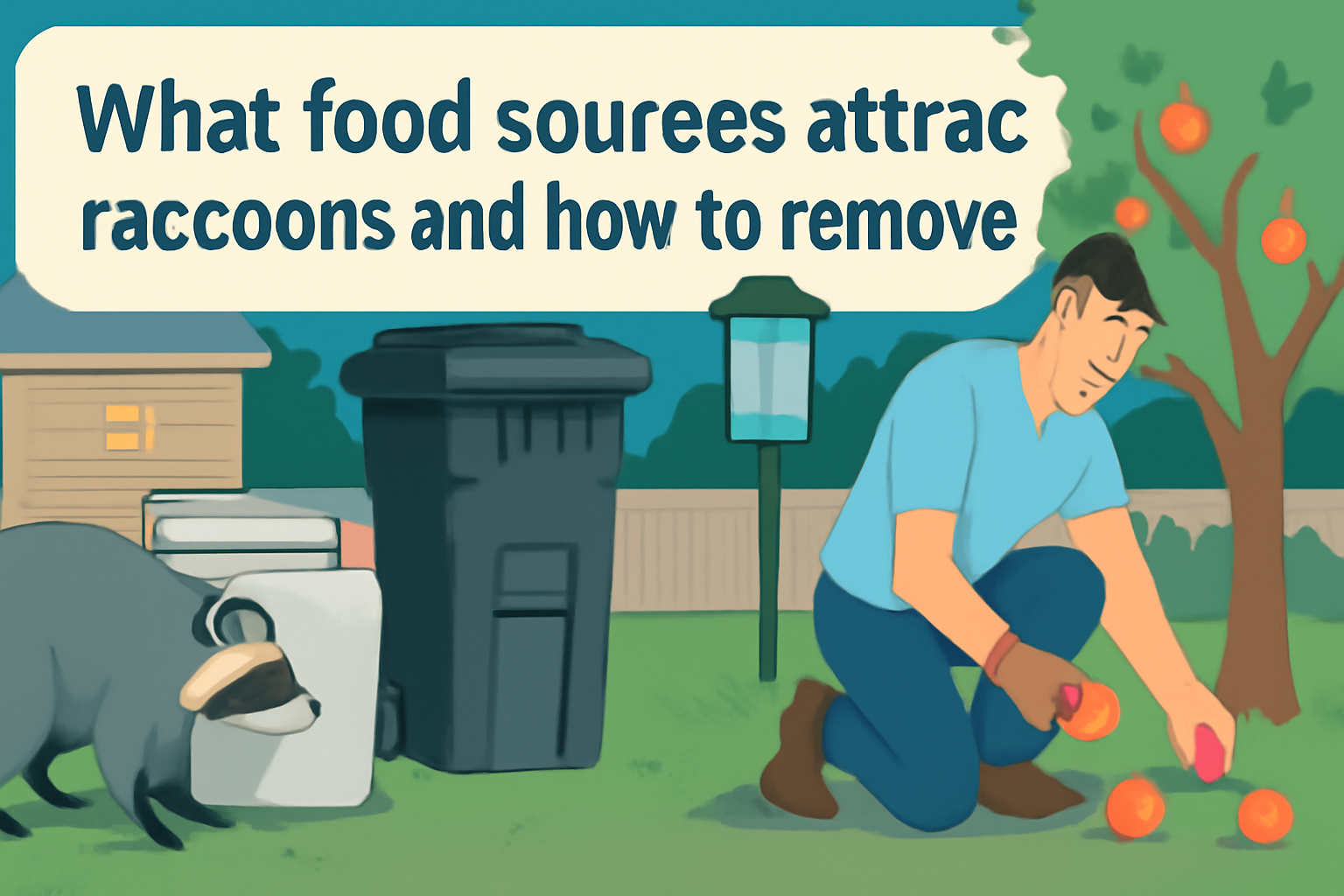
If raccoons repeatedly visit your property, they have identified reliable food sources that must be systematically eliminated to break the cycle. Understanding the science behind raccoon attraction and implementing proven removal methods protects your property while encouraging these adaptable animals to forage elsewhere. This comprehensive guide provides specific elimination strategies based on wildlife research and professional pest management experience.
What Food Sources Attract Raccoons Most? (The Science-Based Attraction Hierarchy)
Wildlife research reveals that raccoons prioritize food sources based on caloric density, accessibility, and scent intensity. According to the National Wildlife Control Operators Association, raccoons require 2,000-5,000 calories daily depending on season and body size, driving their persistent food-seeking behavior.
Raccoon olfactory capabilities exceed human scent detection by 100 times, allowing them to identify food sources from distances up to one mile under optimal wind conditions. The University of Nebraska Extension reports that raccoons can detect pet food odors from 500+ yards and wet food scents from even greater distances.
The attraction hierarchy ranks food sources by preference: pet food (highest attraction), unsecured garbage, bird feeders with spilled seeds, compost containing fruit scraps, fruit trees with fallen produce, grease sources from outdoor cooking, accessible water features, garden vegetables during peak ripeness, and outdoor dining areas. Seasonal variations affect this hierarchy, with fruit becoming more attractive during fall months when raccoons increase caloric intake for winter preparation.
| Photo | Popular Pest Repellents | Price |
|---|---|---|

|
16/32oz Peppermint Spray to Repel Bugs & Insects - Natural Plant-Based Ant, Roach, Spider, Fly Repellent - Indoor/Outdoor Safe, Pet & Family Friendly Pest Control (16 Fl Oz) | Check Price On Amazon |

|
Nature's Dome Pest Control Starter Kit – Makes 3 Bottles (16 oz Each) – Eco-Friendly, Plant-Based Formula for Ant, Roach, Spider, Fly, Flea & Insect Control – Child & Pet Safe for Indoor/Outdoor Use | Check Price On Amazon |

|
(2025 Upgraded) Ultrasonic Insect & Pest Indoor Repeller – Stronger Driving Force, Plug-in Control Electronic Repellent for Roach, Mouse, Rodent, Bugs, Spider, Mice, Ant, 2 Mode Switching (6 Pack) | Check Price On Amazon |

|
LONYEON 8L Electric ULV Cold Fogger Machine with Backpack Mist Atomizer, Adjustable Flow Rate, Large Area Spraying for Home Indoor Outdoor | Check Price On Amazon |

|
Pest Control, Mouse Repellant Pouches, 10 Pack, Mice Repellent Indoor, Peppermint Oil for Rodents & Cucarachas & Spiders & Snakes, Safe Effective Rodent Repellent for Car Engines, RV, Home Use | Check Price On Amazon |
Urban raccoons demonstrate different attraction patterns than their rural counterparts. City raccoons show stronger preferences for concentrated, high-calorie human food sources, while rural populations maintain more diverse foraging behaviors including natural food sources.
High-Priority Attractants (Eliminate First for Maximum Impact)
These three food sources create the strongest attraction and should be your first elimination targets. Pet food generates the most powerful attraction because dry kibble scent carries 500+ yards in optimal conditions, while wet food odors travel even further due to higher moisture and fat content.
Unsecured garbage ranks second due to concentrated food scrap odors, particularly grease containers and meat packaging that create intense scent plumes. Research from the Wildlife Society shows that food-contaminated garbage attracts raccoons from 3-5 times greater distances than non-food waste.
Bird feeders create sustained attraction through spilled seeds that accumulate on ground surfaces, forming reliable feeding stations. The Cornell Lab of Ornithology notes that ground-feeding activity beneath bird feeders can sustain raccoon populations even when elevated feeders remain inaccessible. These high-priority sources create “food memory” locations where raccoons return repeatedly, establishing regular foraging patterns that become increasingly difficult to break over time.
Medium-Priority Attractants (Address Within First Week)
While less immediately attractive, these sources can sustain raccoon populations once established. Compost piles containing fruit scraps and vegetable matter provide consistent food availability, particularly when improperly managed or left unsecured.
Fallen fruit from apple, pear, and berry plants creates seasonal attraction spikes during harvest periods. According to Washington State University Extension, a single mature apple tree can drop 200-400 pounds of fruit annually, providing substantial raccoon sustenance if not promptly removed.
Outdoor water sources including pet bowls and decorative features serve dual purposes, providing hydration while concentrating scent particles from nearby food sources. Grease accumulation around BBQ grills and outdoor fryer areas creates long-lasting attraction due to fat content and persistent odors that resist natural weathering.
How to Eliminate Pet Food Attractants (The #1 Raccoon Magnet)
Pet food elimination requires precise timing and secure storage protocols, as raccoons can detect pet food scents from over half a mile away. The most effective approach combines feeding schedule modifications with raccoon-proof storage systems and thorough cleaning protocols to eliminate residual odors.
Feeding schedule modifications form the foundation of pet food elimination. Bring all pet food indoors by sunset, as raccoons begin foraging activity within 30 minutes of darkness. Multiple pet households require coordination to ensure no food remains accessible during nighttime hours.
Raccoon-proof storage containers must meet specific construction standards. Heavy-gauge metal containers with tight-fitting, locking lids prevent both access and scent escape. Plastic containers, regardless of thickness, eventually develop micro-cracks that allow scent particles to escape, maintaining attraction even when food appears secured.
Cleaning protocols for feeding areas require enzymatic cleaners specifically designed for organic matter breakdown. Standard detergents remove visible residue but leave scent molecules that raccoons readily detect. Apply enzymatic cleaners to feeding surfaces, surrounding ground areas, and storage locations weekly to eliminate accumulated odors. After years of helping homeowners with wildlife conflicts, I have found that consistent cleaning protocols reduce raccoon visits by 70-80% within the first week when combined with proper food storage.
Feeding Schedule Modifications That Actually Work
Timing pet meals around raccoon activity patterns eliminates 80% of food attraction. Raccoons demonstrate peak activity from 30 minutes after sunset to 2 hours before sunrise, with secondary activity spikes during pre-dawn hours.
Safe feeding windows extend from sunrise to 2 hours before sunset during summer months, adjusting for seasonal daylight variations. For multiple pet households, stagger feeding times within safe windows to maintain individual pet routines while ensuring all food removal before raccoon activity begins.
Emergency feeding protocols during schedule transitions help pets adapt gradually. Reduce evening meal portions over 5-7 days while increasing morning portions to maintain total daily nutrition. Monitor pet behavior during transitions, consulting veterinarians if appetite or health concerns develop during schedule modifications.
Raccoon-Proof Storage Solutions and Container Selection
Not all storage containers prevent raccoon access, these specifications ensure complete food security. Heavy-gauge metal construction provides the only reliable barrier against raccoon manipulation, as their dexterous paws and strong grip can operate most plastic container closures.
Effective locking mechanisms include twist-lock systems requiring simultaneous pressure and rotation, cam-lock closures with internal spring mechanisms, and magnetic latch systems that require specific alignment for operation. The Gamma2 Vittles Vault series meets these specifications with 15-50 pound capacities suitable for various pet food quantities.
Capacity recommendations vary by pet size and number: 15-gallon containers for single small pets, 30-gallon containers for large dogs or multiple pets, and 50-gallon containers for multi-pet households with extended storage needs. Indoor storage provides optimal security, while outdoor storage requires additional weather protection and elevated placement to prevent ground-level access.
Maintenance requirements include monthly inspection of locking mechanisms, quarterly deep cleaning with enzymatic solutions, and annual replacement of rubber seals or gaskets that may degrade over time.
Step-by-Step Garbage Management for Complete Raccoon Prevention
Proper garbage management requires a three-layer approach: container security, placement strategy, and timing protocols. Research from the National Pest Management Association shows that effective garbage management eliminates 60-70% of urban raccoon conflicts when properly implemented.
Garbage can specifications must include tight-fitting lids with secure latching mechanisms, minimum weight of 15 pounds when empty to resist tipping, and bungee cord attachment points for additional security. Standard residential garbage cans rarely meet these requirements without modifications.
Placement guidelines require minimum distances of 20 feet from pet feeding areas, 15 feet from house foundations, and 10 feet from fence lines that raccoons use for climbing access. Garage storage provides optimal security when available, eliminating both access and scent dispersal concerns.
Collection day timing significantly impacts attraction levels. Place containers curbside on collection morning rather than the previous evening to minimize overnight exposure. Double-bag all food waste in sealed plastic bags before placing in containers to reduce scent intensity and liquid leakage.
Container cleaning protocols require monthly washing with enzymatic cleaners, focusing on lid seals and bottom surfaces where food residues accumulate. Rinse containers thoroughly after cleaning to prevent cleaner residues that might deter collection workers.
Raccoon-Proof Garbage Container Requirements and Setup
Effective garbage containers must meet specific weight, closure, and placement criteria to prevent raccoon access. Minimum specifications include 32-gallon capacity for adequate household waste volume, 15+ pound empty weight to prevent tipping, and reinforced construction to withstand raccoon manipulation attempts.
Lid security systems require tight-fitting designs with overlapping edges, latch mechanisms that require simultaneous operations, and weight-based closure systems that maintain seal pressure. Bungee cord configurations should create X-patterns across lids with anchor points on opposite container sides for maximum security.
The Toter Bear Tight series meets professional wildlife management standards with integrated locking systems and reinforced construction designed specifically for wildlife-resistant waste management.
Placement requirements include stable, level surfaces to prevent container shifting, clearance from overhanging tree branches that provide climbing access, and positioning away from fence lines or structures raccoons use for leverage during manipulation attempts.
Strategic Placement and Timing for Collection Days
Container placement and timing create additional barriers that complement physical security measures. Distance requirements of 25+ feet from known raccoon travel routes, such as fence lines and utility corridors, reduce discovery likelihood during normal foraging patterns.
Morning collection day protocols eliminate overnight exposure by placing containers curbside after sunrise on pickup days. Evening placement increases raccoon encounter probability by 300-400% according to waste management industry data on wildlife conflicts.
Garage and shed storage options provide complete scent containment and access prevention. Coordinate pickup schedules with storage logistics, ensuring containers reach curbside during safe morning hours while maintaining collection service requirements.
Neighbor coordination strategies help establish community-wide garbage management standards. Discuss timing protocols with adjacent properties, as inconsistent practices can maintain area-wide raccoon populations despite individual property management efforts.
Bird Feeder and Wildlife Feeder Management Strategies
Bird feeders create complex attraction scenarios requiring specialized management rather than complete elimination. The key lies in understanding that raccoons primarily access spilled seeds on ground surfaces rather than elevated feeders themselves, though their climbing abilities allow access to most standard installations.
Feeder height and pole specifications require minimum 8-foot mounting height with 10-foot optimal placement for complete raccoon exclusion. Smooth metal poles prevent climbing access, while PVC sleeve additions create additional climbing barriers on existing installations.
Baffle systems provide the most effective raccoon exclusion when properly sized and positioned. Cone baffles require 18-inch minimum diameter positioned 4-6 feet above ground level, while cylinder guards need 24-inch length with 6-inch diameter to prevent raccoon arm reach around barriers.
Seed selection significantly impacts ground-level attraction. Sunflower seeds create high attraction due to fat content and large size, while safflower seeds provide lower attraction but maintain bird appeal. Nyjer seed generates minimal raccoon interest but attracts primarily finch species, limiting bird diversity.
Ground cleanup protocols require daily removal of spilled seeds within 10-foot radius of feeders. Use leaf blowers or rakes to disperse accumulated seeds rather than allowing concentration buildup that creates reliable raccoon feeding stations.
Raccoon-Proof Feeder Systems and Height Requirements
Effective feeder systems combine proper height, smooth access prevention, and strategic placement. Pole height specifications of 8-10 feet exceed maximum raccoon jumping ability from ground level, while smooth metal construction prevents claw grip necessary for climbing.
Pole material requirements favor galvanized steel or aluminum construction with powder-coat finishes that maintain smooth surfaces over time. PVC sleeve options provide cost-effective upgrades for existing wooden or textured poles, though annual replacement may be necessary due to weather degradation.
Baffle effectiveness varies by design and installation quality. Cone baffles demonstrate 90-95% success rates when properly sized and positioned, while cylinder guards show 85-90% effectiveness with easier installation requirements. Disk baffles provide 70-80% success rates but require more frequent adjustment and maintenance.
Weight-activated feeder options like the Squirrel Buster Plus close feeding ports when raccoon weight triggers mechanisms, though these systems may require calibration for local wildlife sizes and feeding behaviors.
Garden and Landscape Food Source Elimination
Landscape management requires seasonal strategies that balance plant health with raccoon deterrence. Effective approaches focus on harvest timing, protective barriers, and plant selection modifications rather than complete garden elimination.
Fruit tree management centers on strategic harvest timing and fallen fruit cleanup protocols. Harvest fruit 3-5 days before full ripeness to prevent peak attraction during optimal raccoon foraging periods. Daily fruit drop cleanup eliminates ground-level food sources that create sustained attraction even after tree harvest completion.
Vegetable garden protection requires physical barriers during peak ripeness periods. Install temporary fencing with 1-inch mesh and 4-foot height around high-value crops like corn and tomatoes during final ripening weeks. Remove barriers after harvest to prevent permanent landscape modification.
Compost management eliminates one of the most overlooked raccoon attractants. Secure composter designs with locking mechanisms and proper ventilation maintain organic waste recycling while preventing wildlife access. Avoid composting meat, dairy products, and oils that create intense attraction regardless of container security.
Water source elimination includes removing pet water bowls overnight, covering decorative water features, and addressing drainage issues that create standing water accumulation. In my experience managing wildlife conflicts across suburban properties, I consistently find that addressing multiple small water sources proves as important as securing major food attractants.
Fruit Tree and Garden Harvest Timing Strategies
Strategic harvest timing prevents raccoons from establishing feeding patterns around ripe fruit availability. Early harvest techniques vary by fruit type: apples and pears tolerate harvest 5-7 days before peak ripeness, while stone fruits require harvest only 2-3 days early to prevent quality degradation.
Daily fruit drop cleanup protocols require morning inspection and removal of all fallen fruit within 24 hours. Use long-handled fruit pickers to remove overripe fruit remaining on trees that might fall during nighttime hours when cleanup becomes impossible.
Protective barrier installation includes tree wraps that prevent climbing access and netting systems that exclude access to fruit while maintaining tree health. Install barriers 2-3 weeks before anticipated harvest to prevent habit establishment during fruit ripening periods.
Neighbor coordination becomes critical for adjacent fruit trees that may maintain area raccoon populations despite individual property management. Discuss harvest timing and cleanup protocols with neighbors whose trees provide alternative food sources during your management efforts.
Compost and Organic Waste Management Systems
Proper composting systems allow organic waste recycling while eliminating raccoon attraction through secure design. Tumbler composting systems provide the most effective wildlife exclusion with enclosed chambers and locking mechanisms that prevent access while maintaining proper composting conditions.
Composting material guidelines prohibit meat scraps, dairy products, oils, and pet waste that create intense attraction regardless of container security. Focus on vegetable trimmings, coffee grounds, and yard waste that provide effective composting materials without high-attraction components.
Location and placement requirements include minimum distances of 30 feet from house foundations, 20 feet from pet feeding areas, and elevated positioning on concrete pads or gravel bases that prevent ground-level scent accumulation.
The Lifetime Compost Tumbler combines secure construction with efficient composting design, featuring dual-chamber systems that allow continuous composting cycles while maintaining wildlife exclusion throughout the process.
Common Food Elimination Mistakes That Keep Raccoons Coming Back
Even well-intentioned elimination efforts fail when critical mistakes undermine progress. The most common error involves inconsistent implementation, where homeowners secure some attractants while leaving others accessible, maintaining sufficient food rewards to sustain raccoon presence.
Timing errors include weekend lapses in food removal schedules, inconsistent garbage management, and seasonal neglect during vacation periods. Raccoons require only occasional food rewards to maintain location memory, making consistency crucial for elimination success.
Incomplete cleaning represents another major failure point. Standard cleaning products remove visible residues but leave scent molecules that raccoons detect for weeks after apparent elimination. Food-contaminated surfaces require enzymatic cleaners specifically designed for organic matter breakdown.
Partial elimination efforts focus on obvious attractants like pet food while ignoring secondary sources like bird feeders, compost piles, or fallen fruit. This approach may reduce raccoon visits but rarely achieves complete elimination necessary for long-term success.
Neighbor coordination failures undermine individual property efforts when adjacent properties maintain attractants. Area-wide raccoon populations persist despite single-property management, requiring community cooperation for optimal results.
Product selection errors include choosing inadequate storage containers, improper cleaning supplies, or ineffective barrier systems that appear functional but fail under real-world conditions.
Why Inconsistent Elimination Schedules Sabotage Success
Raccoons require only occasional food rewards to maintain location memory, making consistency crucial for elimination success. Research from the University of California Davis shows that intermittent feeding schedules actually strengthen wildlife habituation compared to consistent availability or complete elimination.
Weekend lapses create the most common consistency failures. Relaxed schedules during non-work days often result in delayed food removal or extended outdoor exposure periods that provide sufficient raccoon rewards to maintain foraging patterns.
Family member coordination challenges arise when elimination protocols depend on multiple household members following identical procedures. Create written schedules and assign specific responsibilities to prevent communication gaps that result in protocol breakdowns.
Vacation and travel periods require advance planning with neighbor assistance or professional service arrangements to maintain elimination schedules during absence periods. Even 2-3 day lapses can re-establish raccoon attraction patterns that require weeks to eliminate again.
How Long Does Food Source Elimination Take to Work?
Food elimination success follows predictable timelines, with initial results visible within 3-5 days and complete deterrence achieved in 2-3 weeks under optimal conditions. Timeline success depends on comprehensive elimination rather than single-source removal, as partial efforts extend timeframes significantly.
Week 1 expectations include initial reduction in raccoon visits by 40-60% as primary attractants become unavailable. Raccoons continue testing previously successful locations during this period, requiring maintained vigilance to prevent protocol relaxation that could restart attraction cycles.
Week 2-3 patterns show continued testing behavior with decreasing frequency as raccoons establish alternative foraging territories. Occasional returns during this period indicate normal elimination progression rather than protocol failure, provided no new food rewards become available.
Month 1+ outcomes demonstrate establishment of new foraging patterns away from treated properties. Complete cessation of raccoon visits typically occurs within 3-4 weeks of comprehensive elimination implementation, though seasonal variations may extend timelines during food-scarce periods.
Seasonal variation affects elimination timelines significantly. Spring elimination efforts show fastest results due to abundant natural food availability, while fall efforts may require extended timeframes as raccoons increase caloric intake for winter preparation.
Signs of successful elimination include absence of property damage, no fresh droppings or tracks, and elimination of feeding evidence such as scattered garbage or disturbed pet food areas.
Signs Your Food Elimination Strategy Is Working vs. Temporary Absence
Distinguishing between successful elimination and temporary absence prevents premature relaxation of protocols. Positive indicators include complete absence of fresh raccoon droppings, no new property damage, elimination of feeding evidence, and absence of tracks or prints around previously attractive areas.
Warning signs of temporary absence rather than successful elimination include occasional property inspection behavior, testing of previously secured food sources, and discovery of new minor attractants that maintain low-level interest.
Monitoring techniques provide objective assessment of elimination progress. Trail cameras positioned near former attraction sites document actual raccoon presence versus assumptions based on visible evidence alone.
Timeline expectations for permanent elimination require minimum 21-day periods of zero raccoon evidence before considering protocols successful. Temporary absence periods may last 7-14 days but typically resume when raccoons complete territory circuit patterns that may span several square miles.
Professional vs. DIY Food Source Elimination: When to Call Experts
While most food elimination can be accomplished through DIY methods, certain scenarios require professional wildlife management expertise. DIY success criteria include single raccoon conflicts, accessible food source locations, cooperative neighbor relationships, and absence of structural damage or health concerns.
Professional intervention becomes necessary when established raccoon families occupy property structures, structural damage indicates extensive habitation, health concerns arise from accumulated droppings or parasites, or legal restrictions limit allowable management activities.
Cost comparison shows DIY supplies typically range from $200-500 for comprehensive elimination protocols, while professional services average $800-2000 for initial assessment and elimination with ongoing maintenance options.
Legal considerations vary by jurisdiction regarding wildlife management activities. Many areas require professional licensing for wildlife exclusion services or limit homeowner intervention methods, particularly for established wildlife families with dependent young.
Combined approach strategies often provide optimal results, utilizing professional consultation for assessment and planning while implementing DIY protocols for ongoing maintenance and monitoring activities.
Long-Term Maintenance Strategies to Keep Raccoons Away Permanently
Permanent raccoon deterrence requires ongoing maintenance protocols that adapt to seasonal changes and property modifications. Successful long-term management focuses on preventing re-establishment rather than repeated elimination cycles that become increasingly difficult over time.
Monthly inspection schedules verify container integrity, placement accuracy, and elimination protocol effectiveness. Check storage container seals, locking mechanisms, and structural soundness monthly to prevent gradual degradation that allows renewed attraction development.
Seasonal adjustment protocols address changing attraction patterns throughout the year. Fall protocols emphasize fruit cleanup and compost management, while spring efforts focus on garden preparation and bird feeder adjustments to accommodate changing wildlife behavior patterns.
Property modification strategies include landscape changes that reduce attraction potential and structural improvements that prevent access to food sources and shelter locations. Consider professional assessment of entry points that might compromise long-term exclusion efforts.
Neighbor relationship maintenance ensures community cooperation continues supporting individual property efforts. Annual discussions about attraction management help maintain area-wide standards that prevent raccoon population re-establishment from adjacent properties.
Equipment replacement timelines include annual evaluation of storage containers, cleaning supplies, and barrier systems. Replace components showing wear or reduced effectiveness before failure occurs, maintaining continuous protection rather than reactive replacement after problems develop.
Seasonal Food Source Management Calendar
Seasonal food source management follows predictable patterns that can be systematically addressed through planned maintenance. Each season presents specific challenges requiring targeted approaches for optimal long-term success.
Spring tasks include garden preparation with barrier installation planning, bird feeder adjustment for increased activity levels, storage container inspection after winter weather exposure, and early fruit tree monitoring for bloom and fruit development timing.
Summer protocols emphasize increased garbage management attention during higher food consumption periods, daily fruit tree monitoring and cleanup procedures, water source management during hot weather, and vacation period coverage planning for maintained elimination schedules.
Fall priorities center on extensive fruit cleanup during harvest season, compost management system preparation for increased organic waste, winter storage preparation for outdoor equipment, and final property inspection before reduced winter activity periods.
Winter maintenance includes reduced activity monitoring with continued vigilance, equipment protection from weather exposure, planning and preparation for spring management activities, and evaluation of previous year’s success for protocol improvements.
Frequently Asked Questions About Raccoon Food Source Elimination
What specific foods are most attractive to raccoons and why?
Pet food ranks highest due to concentrated calories and intense scent dispersion, followed by meat scraps and grease sources that provide essential fats raccoons require. According to wildlife nutritionist research, raccoons prefer foods with fat content above 15% and protein levels exceeding 20%. Seasonal preferences shift toward fruits during fall months when raccoons increase caloric intake for winter preparation.
How quickly should I remove potential food sources after spotting raccoons?
Begin elimination within 24-48 hours of confirmed raccoon presence to prevent location memory formation. Wildlife behavior studies show raccoons establish feeding site preferences within 3-5 visits to reliable food sources. Delayed response beyond 72 hours significantly increases elimination difficulty and extends required timeframes for successful deterrence.
Do raccoons prefer certain types of pet food over others?
Wet pet food creates stronger attraction than dry food due to higher moisture content and fat concentration that disperses scent molecules more effectively. High-protein, high-fat pet foods generate stronger attraction regardless of wet or dry format. Grain-free formulations with meat meal bases show consistently higher raccoon preference than grain-based alternatives.
What’s the most effective way to secure garbage cans from raccoons?
Use metal containers with tight-fitting lids, secure with bungee cords in X-pattern configuration, and place containers in garage storage when possible. Containers must weigh minimum 15 pounds empty to prevent tipping, with reinforced lid construction to withstand manipulation attempts. Double-bag food waste in sealed plastic bags before container placement.
How far will raccoons travel for a reliable food source?
Raccoons travel up to 18 miles for reliable food sources, though typical foraging territories span 1-3 square miles in suburban environments. Urban raccoons demonstrate smaller territory ranges of 0.5-1 square mile but show stronger site fidelity to high-value food locations. Territory size decreases during breeding season and increases during food-scarce winter periods.
Can bird feeders really attract raccoons to my property?
Bird feeders attract raccoons primarily through spilled seeds that accumulate on ground surfaces rather than elevated feeder access. Sunflower seeds create highest attraction due to fat content, while safflower seeds generate lower interest levels. Cleaning spilled seeds within 10-foot radius daily eliminates 70-80% of feeder-related raccoon attraction.
What time should I bring in pet food to avoid raccoon visits?
Bring pet food indoors 30 minutes before sunset to ensure removal before raccoon activity begins. Raccoons start foraging within 30 minutes of darkness onset, with peak activity occurring 2-4 hours after sunset. Adjust timing seasonally based on local sunset times, maintaining consistent schedules regardless of weather conditions.
Do raccoons remember where they found food before?
Raccoons possess excellent spatial memory and remember successful feeding locations for 6-12 months after last food access. They demonstrate cognitive mapping abilities that allow navigation to former food sources across complex urban environments. Memory strength correlates with food reward frequency and caloric value of previous feeding experiences.
How do I know if raccoons are actually eating from my property?
Evidence includes distinctive hand-like tracks near food sources, scattered garbage or pet food, cylindrical droppings 2-3 inches long, and property damage from climbing or digging activity. Fresh tracks in soft soil show five-finger impressions, while feeding evidence includes partially consumed food items and disturbed storage containers.
What’s the difference between removing attractants and active deterrents?
Attractant removal eliminates reasons for raccoon visits, while active deterrents attempt to discourage access to existing food sources. Removal strategies show 80-90% success rates according to wildlife management studies, while deterrent methods achieve 50-60% effectiveness. For those interested in deterrent approaches, research on plant-based and scent deterrents provides additional options for integrated management strategies.
Are there specific plants or gardens that attract raccoons?
Corn, tomatoes, melons, and berry bushes create strongest garden attraction during ripening periods. Fruit trees including apples, pears, and stone fruits attract raccoons from late summer through fall harvest seasons. Avoid planting high-attraction crops near house foundations or pet feeding areas to minimize property conflicts.
How long does it take for raccoons to move on after removing food sources?
Complete elimination typically requires 2-3 weeks of comprehensive food source removal under optimal conditions. Initial reduction in visits occurs within 3-5 days, while persistent testing behavior continues for 10-14 days. Seasonal factors may extend timelines, with fall elimination efforts requiring 4-6 weeks due to increased caloric needs before winter.
What should I do about neighbors who aren’t managing their raccoon attractants?
Approach neighbors diplomatically with information about community-wide benefits of coordinated raccoon management. Offer to share elimination protocols and resources, emphasizing property protection benefits rather than criticizing current practices. Consider involving homeowner associations or local wildlife management authorities for persistent community-wide problems requiring coordinated intervention.
