
What Natural Ways Keep Ravens Off Balconies & Window Ledges

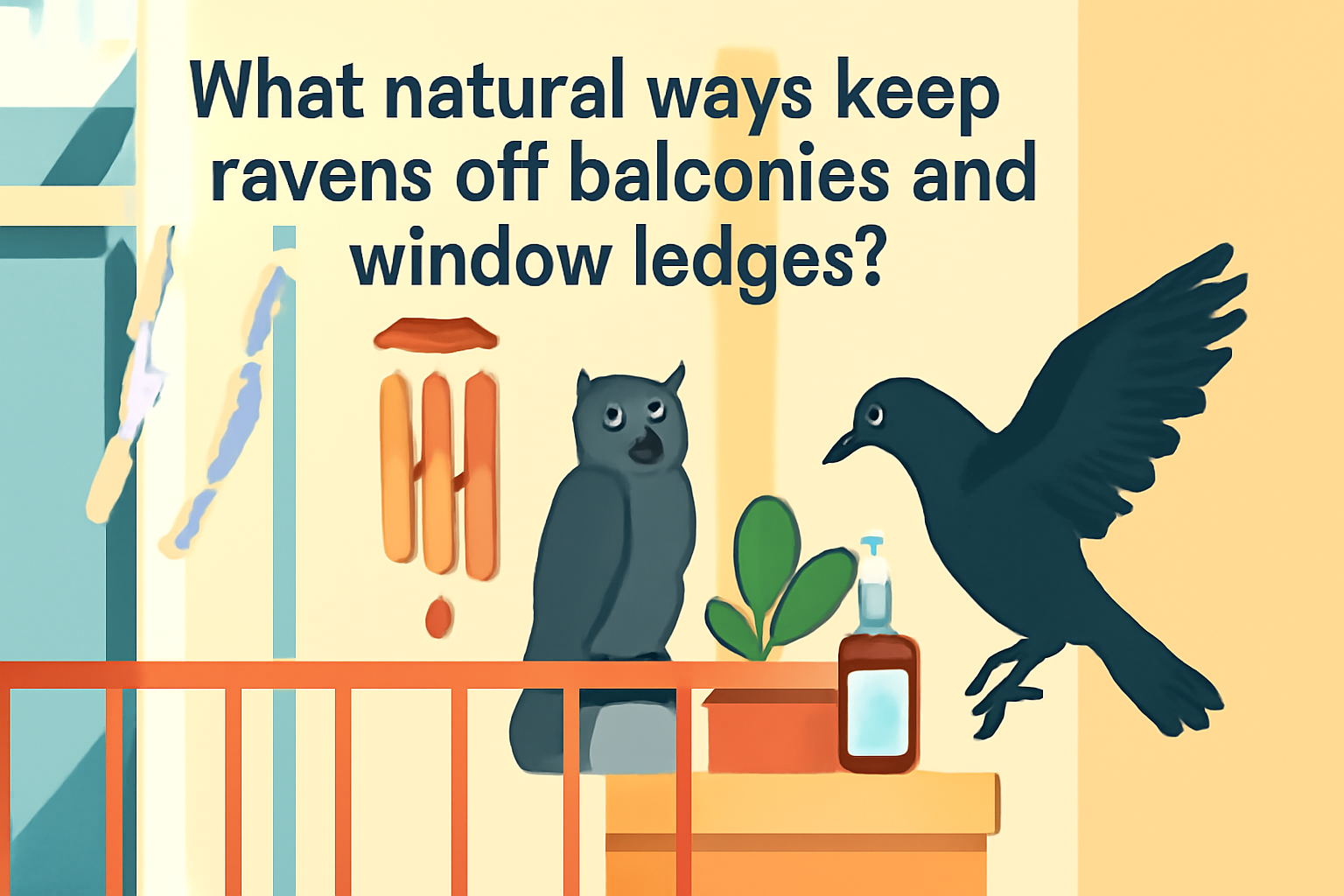
Ravens use their exceptional intelligence to adapt and overcome most standard bird deterrents. Unlike simpler bird species, ravens can solve complex problems, remember successful strategies, and even teach other ravens to bypass barriers. This makes natural deterrent methods both more challenging and more important to implement correctly.
These 13 proven natural methods work specifically against ravens by targeting their behavior patterns and preferences. Each approach exploits different aspects of raven psychology while remaining completely humane and family-safe.
You will learn how to combine visual, scent-based, and environmental modifications into an integrated strategy that ravens cannot simply outsmart. Most importantly, these methods respect the legal protections ravens enjoy under the Migratory Bird Treaty Act while effectively protecting your property.
Why Standard Bird Deterrents Fail Against Ravens (Understanding Corvid Intelligence)
Ravens aren’t just larger crows. They rank among the most intelligent birds on Earth, with problem-solving abilities comparable to a 7-year-old child.
| Photo | Popular Pest Repellents | Price |
|---|---|---|

|
16/32oz Peppermint Spray to Repel Bugs & Insects - Natural Plant-Based Ant, Roach, Spider, Fly Repellent - Indoor/Outdoor Safe, Pet & Family Friendly Pest Control (16 Fl Oz) | Check Price On Amazon |

|
Nature's Dome Pest Control Starter Kit – Makes 3 Bottles (16 oz Each) – Eco-Friendly, Plant-Based Formula for Ant, Roach, Spider, Fly, Flea & Insect Control – Child & Pet Safe for Indoor/Outdoor Use | Check Price On Amazon |

|
(2025 Upgraded) Ultrasonic Insect & Pest Indoor Repeller – Stronger Driving Force, Plug-in Control Electronic Repellent for Roach, Mouse, Rodent, Bugs, Spider, Mice, Ant, 2 Mode Switching (6 Pack) | Check Price On Amazon |

|
LONYEON 8L Electric ULV Cold Fogger Machine with Backpack Mist Atomizer, Adjustable Flow Rate, Large Area Spraying for Home Indoor Outdoor | Check Price On Amazon |

|
Pest Control, Mouse Repellant Pouches, 10 Pack, Mice Repellent Indoor, Peppermint Oil for Rodents & Cucarachas & Spiders & Snakes, Safe Effective Rodent Repellent for Car Engines, RV, Home Use | Check Price On Amazon |
According to Cornell Lab of Ornithology research, ravens can use tools, plan for future events, and demonstrate abstract reasoning. They remember human faces for years and can solve multi-step puzzles that stump other bird species.
Ravens adapt to simple deterrents within 24-48 hours. A plastic owl that scares pigeons for weeks becomes invisible to ravens after two days. Reflective tape loses effectiveness as ravens learn the pattern of movement and realize no actual threat exists.
Common ravens weigh 2-3 pounds compared to crows at 1 pound. This size difference allows ravens to manipulate objects and overcome physical barriers that stop smaller birds. They can move lightweight deterrents, untie loose materials, and even work cooperatively to bypass obstacles.
Urban ravens establish territories spanning 2-3 city blocks. Once they claim your balcony as part of their domain, they will persistently test and overcome single-method deterrents. This territorial behavior requires multi-layered approaches that ravens cannot easily adapt to or circumvent.
What Attracts Ravens to Balconies and Window Ledges in the First Place?
Before implementing deterrents, identify what draws ravens to your specific location. Eliminating attractions proves more effective than adding repellents after ravens have established your space as a resource site.
Food sources rank as the primary attraction. Pet food left on balconies, accessible garbage containers, and bird feeders within 50 feet all signal abundant resources to ravens. According to wildlife management studies, ravens can detect food sources from over 1 mile away and remember their locations for months.
Nesting opportunities appear most critical during February through June breeding season. Window ledges wider than 6 inches, balcony railings, and any sheltered horizontal surfaces provide ideal nesting platforms. Ravens prefer elevated sites with clear sight lines for predator detection.
Water sources include pet water bowls, plant saucers, and areas where rain collects. Ravens require daily water access and will establish territories around reliable sources within urban environments where natural water may be scarce.
Territorial advantages draw ravens to high perches offering visibility and control. Balconies on upper floors provide strategic observation points for monitoring their territory and detecting both threats and opportunities across their domain.
Visual Deterrents That Actually Work Against Ravens
Ravens respond differently to visual stimuli than other birds due to their intelligence. Static displays lose effectiveness quickly, requiring strategic rotation and movement to maintain deterrent value.
Reflective materials work best when they create unpredictable light patterns. According to pest control research from UC Davis, reflective tape must be repositioned every 3-4 days to prevent ravens from habituating to the pattern. Simple hanging strips lose effectiveness within one week.
Predator decoys require realistic sizing and positioning to fool ravens. Great horned owl decoys must be at least 18 inches tall and positioned at raven eye level. Ravens will investigate smaller or poorly positioned decoys, quickly determining they pose no actual threat.
Wind-activated devices provide the movement crucial for maintaining raven wariness. Pinwheels, streamers, and rotating mirrors create constantly changing visual stimuli that ravens cannot easily predict or dismiss.
Holographic deterrents and prismatic materials create rainbow light effects that ravens find disorienting. These work particularly well in morning and late afternoon when sun angles maximize the visual impact.
How to Use Reflective Tape and Materials Effectively
Reflective tape must be installed strategically and rotated regularly to maintain effectiveness against ravens’ adaptive intelligence.
Use tape at least 2 inches wide for maximum light reflection. Narrow tape lacks sufficient reflective surface area to create the disorienting effect that deters ravens. Silver or holographic tape outperforms colored alternatives in field tests.
Install tape at 4-6 foot intervals along railings and ledges. Position strips to catch morning and afternoon sunlight when ravens are most active. Angled installation at 45 degrees creates broader light distribution than vertical hanging.
Rotate tape positions every 3-4 days to prevent habituation. Ravens learn static patterns quickly, so varying heights, angles, and locations maintains unpredictability. Replace weathered tape monthly as effectiveness diminishes when reflective surfaces become dull.
Positioning Predator Decoys to Fool Intelligent Ravens
Unlike other birds, ravens will investigate and test predator decoys. This requires realistic positioning and regular repositioning to maintain the illusion of genuine threats.
Position great horned owl decoys at least 8 feet high with clear sight lines. Ravens recognize proper predator behavior and will dismiss decoys placed in unrealistic locations. Owls perch in elevated, protected positions with visibility across their hunting territory.
Move decoys to new positions every 2-3 days. Ravens study their environment intensively and will notice static objects. Rotating between 4-5 predetermined positions maintains unpredictability without requiring daily attention.
Add subtle movement with fishing line attachments. Light breezes should cause slight head or body movement that simulates alert predator behavior. Completely motionless decoys lose effectiveness faster than those with minimal natural-appearing movement.
Natural Scent-Based Raven Deterrents for Balconies
Ravens have excellent olfactory capabilities and actively avoid certain natural scents. Application must be consistent and weather-resistant to maintain effectiveness against their persistent territorial behavior.
Essential oil combinations create scent profiles that ravens find unpleasant without harming them or surrounding plants. According to research from the National Wildlife Research Center, peppermint, eucalyptus, and citrus oils rank most effective when combined in specific ratios.
Natural ingredient sprays using garlic, cayenne, and vinegar create lasting deterrent effects. These household items contain compounds that ravens instinctively associate with spoiled food or potential toxins. Proper dilution ratios ensure plant safety while maintaining deterrent strength.
Application frequency depends on weather conditions and surface materials. Porous surfaces like wood require reapplication every 4-5 days, while metal and glass surfaces maintain scent effectiveness for 7-10 days. Rain eliminates most natural scents within 24 hours.
Weather protection extends scent effectiveness through strategic application timing and coverage methods. Apply deterrent scents during dry weather forecasts and focus on sheltered areas that receive minimal direct rain exposure.
DIY Essential Oil Spray Recipes That Ravens Avoid
These tested essential oil combinations create scent profiles that ravens find unpleasant without harming them or your plants.
Mix 20 drops peppermint oil, 15 drops eucalyptus oil, and 10 drops lemon oil in 16 ounces of water. Add 1 teaspoon dish soap as an emulsifier to prevent oil separation. This ratio provides optimal scent strength without plant damage.
Store mixed spray in dark containers for up to 2 weeks. Essential oils degrade in sunlight and lose potency quickly when exposed to UV radiation. Refrigerated storage extends effectiveness up to 1 month.
Apply spray in early morning or late evening when temperatures are cooler. Hot conditions cause rapid evaporation that reduces scent duration. Target application to railing tops, ledge edges, and areas where ravens typically land.
Using Natural Spices and Household Items as Deterrents
Common household spices and ingredients create effective raven deterrents when applied correctly and consistently.
Cayenne pepper mixed with black pepper creates a dual-action deterrent that ravens avoid through both scent and taste. Mix 2 tablespoons cayenne with 1 tablespoon black pepper per cup of water. Add liquid dish soap for adhesion to surfaces.
Garlic powder and onion powder dissolved in water create sulfur-based scents that ravens associate with spoiled food. Use 3 tablespoons of each powder per 16 ounces of water. Strain mixture before application to prevent nozzle clogging.
Cinnamon and ground cloves provide aromatic deterrents safe around pets and children. These spices contain natural compounds that ravens find overwhelming in concentrated applications. Reapply every 3-4 days for sustained effectiveness.
Sound-Based Natural Deterrents for Urban Environments
Sound deterrents must be loud enough to discourage ravens while remaining considerate of neighbors and local noise ordinances. Ravens adapt to predictable sounds, requiring variation in timing and intensity.
Wind chimes create unpredictable noise patterns that ravens cannot anticipate or ignore. Large, deep-toned chimes prove most effective, as ravens are less sensitive to high-pitched sounds. Aluminum and bamboo chimes produce different tonal qualities that prevent auditory habituation.
Recorded predator calls work temporarily but require strategic use to prevent habituation. Great horned owl calls and red-tailed hawk screams trigger ravens’ natural predator avoidance responses. Limit playback to 2-3 times daily for maximum impact.
Motion-activated sound devices provide the unpredictability that prevents ravens from adapting. These systems activate only when ravens approach, maintaining the surprise element crucial for long-term effectiveness. Sound deterrents designed specifically for ravens must balance effectiveness with humane treatment standards.
Volume and timing considerations become critical in apartment settings. Most municipal noise ordinances restrict sound levels above 55-60 decibels during evening hours. Check local regulations before installing any sound-based deterrent system.
Wind Chimes and Natural Noise Makers That Deter Ravens
Large, deep-toned wind chimes create unpredictable sounds that ravens associate with territorial threats and avoid.
Choose chimes with tubes at least 12 inches long for adequate volume and tonal depth. Short chimes produce high-pitched sounds that ravens easily ignore. Aluminum tubes create sharper tones while bamboo produces mellower sounds that blend better in residential settings.
Position chimes to catch prevailing winds for consistent activation. Install at least 7 feet high to prevent ravens from investigating or manipulating the chimes directly. Multiple smaller chime sets outperform single large installations by creating varied sound patterns.
Maintain chime movement mechanisms monthly to ensure reliable activation. Clean tubes and striking elements to prevent weather buildup that dampens sound production. Replace worn cord or chain connections before failure eliminates deterrent effectiveness.
Physical Barriers and Environmental Modifications
Physical modifications make balconies and ledges unsuitable for raven perching and nesting while maintaining space usability for residents. These changes provide the most permanent solution when combined with active deterrent methods.
Angled surfaces prevent ravens from landing by eliminating the flat, stable platforms they require. Ravens need at least 6 inches of flat surface for comfortable perching. Angles steeper than 45 degrees make landing impossible while maintaining balcony functionality.
Wire and string barrier systems create invisible obstacles that ravens cannot see until contact. Properly tensioned barriers prevent access without creating visual obstructions for residents. Fishing line works effectively due to its near-invisibility and adequate strength.
Netting installation covers larger areas but requires careful sizing to prevent raven entanglement. Mesh spacing must be either too small for raven heads (less than 1 inch) or too large for foot purchase (greater than 4 inches). Intermediate sizes create dangerous entrapment risks.
Furniture and planter arrangement strategies eliminate attractive perching spots while enhancing balcony aesthetics. Strategic placement of tall plants, decorative screens, or furniture removes flat surfaces and creates visual barriers that discourage raven investigation.
Balcony rail modifications work effectively for renters who cannot make permanent structural changes. Removable angle attachments, clip-on barriers, and temporary surface modifications provide deterrent effects without lease violations.
Creating Angled Surfaces Ravens Cannot Land On
Ravens require flat, stable surfaces for landing. Creating angles steeper than 45 degrees prevents successful perching without affecting balcony aesthetics.
Install angled strips along railing tops using wood or plastic materials cut to 45-60 degree angles. Secure with screws or strong adhesive depending on surface material and rental restrictions. Angled surfaces should extend the full length of potential perching areas.
Use weather-resistant materials like cedar, treated lumber, or outdoor-rated plastic for longevity. Untreated wood degrades quickly in outdoor conditions and loses deterrent effectiveness as edges round over time.
Create removable angle systems for rental properties using clamps or weighted bases. These temporary modifications provide effective deterrence without permanent installation that might violate lease agreements or deposit requirements.
Wire and String Barriers for Window Ledges
Properly tensioned wire or fishing line creates invisible barriers that prevent ravens from accessing preferred perching spots.
Use 20-30 pound test fishing line for adequate strength without visibility concerns. Install anchor points at 18-24 inch intervals along ledges for proper tension distribution. Closer spacing prevents line sagging that ravens could exploit.
Position lines 2-3 inches above ledge surfaces to interfere with landing attempts. Multiple parallel lines at slightly different heights create more effective barriers than single line installations. Ravens can sometimes navigate single-wire obstacles.
Check tension monthly and retighten as needed to maintain effectiveness. Weather changes cause expansion and contraction that loosens line tension over time. Replace fishing line annually as UV exposure weakens material integrity.
Habitat Modification: Making Your Space Less Attractive to Ravens
Long-term success requires making your balcony and surrounding area unsuitable for raven territory establishment and resource gathering. Habitat modification provides the foundation for all other deterrent methods to work effectively.
Food source elimination ranks as the most critical modification. Ravens remember productive feeding locations for months and will return repeatedly to investigate previously successful sites. Complete removal of all food sources forces ravens to establish territories elsewhere.
Water source management prevents ravens from including your balcony in their daily resource circuit. According to urban wildlife studies, ravens travel up to 10 miles daily between feeding, water, and roosting sites. Eliminating any component disrupts their territorial routine.
Nesting material availability must be reduced during late winter and early spring when ravens begin territory selection. They collect nesting materials months before actual breeding, so early intervention prevents territorial establishment. I have observed ravens gathering materials as early as January in urban environments.
Shelter and hiding spot elimination removes the secondary benefits that make balconies attractive to ravens. These intelligent birds value locations that offer multiple advantages including food, water, nesting sites, and protective cover.
Maintenance schedules ensure ongoing deterrent effectiveness through seasonal changes. Natural pest control approaches require consistent application and monitoring to maintain long-term success against intelligent species like ravens.
Eliminating Food and Water Sources
Ravens have excellent memories for food locations. Complete elimination of food and water access is crucial for permanent deterrence success.
Store pet food in sealed containers inside your home rather than leaving bowls on balconies. Ravens can detect pet food odors from significant distances and will investigate any area with food scents. Even crumbs or residual odors attract their attention.
Manage garbage containers with tight-fitting lids and secure them against tipping. Ravens can manipulate loose lids and will scatter contents while searching for food items. Position garbage storage away from balconies and window access points.
Remove or relocate bird feeders beyond 100 feet from your balcony. Seeds and attracted smaller birds create a food source that ravens exploit. The presence of bird feeders signals abundant resources that ravens will investigate thoroughly.
Removing Nesting Materials and Shelter Options
Ravens collect nesting materials months before breeding season. Early removal prevents territory establishment in your area.
Clear twigs, leaves, and debris from balconies and ledges weekly during winter months. Ravens begin material collection as early as January for spring breeding season. Regular cleaning prevents accumulation that signals suitable nesting habitat.
Eliminate shelter gaps under railings, behind planters, or in decorative elements. Ravens prefer nesting sites with wind protection and predator concealment. Blocking access to these areas removes critical habitat requirements.
Time removal activities carefully to avoid disrupting active nests during breeding season (February through August). Federal law protects active raven nests, making removal illegal once eggs or young are present.
Timing Your Deterrent Methods for Maximum Effectiveness
Ravens follow predictable seasonal patterns. Timing deterrent installation and intensity to match raven behavior dramatically improves success rates and reduces the effort required for effective deterrence.
Breeding season considerations span February through June when ravens are most territorial and persistent. During this period, ravens will aggressively defend established territories and challenge deterrents more intensively. Deterrent methods must be fully established before February to prevent territorial claims on your property.
Migration timing affects urban raven populations differently than rural populations. Urban ravens typically remain year-round but may shift territories based on resource availability. Late fall (October-November) provides the optimal window for establishing deterrents before winter territory consolidation.
Daily activity patterns show ravens are most active during morning hours (6-9 AM) and late afternoon (4-7 PM). Timing maintenance activities, scent applications, and deterrent adjustments during midday hours minimizes direct confrontation with ravens and reduces their opportunity to observe your activities.
Weather-dependent method adjustments maintain effectiveness through seasonal changes. Rain eliminates scent deterrents, wind affects visual deterrents, and temperature changes alter raven behavior patterns. Adapting methods to seasonal conditions prevents effectiveness gaps.
Combining Multiple Methods: Creating an Integrated Raven Deterrent Strategy
Ravens’ intelligence requires layered deterrent approaches. Single methods fail as ravens adapt, but strategic combinations maintain long-term effectiveness by overwhelming their problem-solving capabilities.
Method combination principles focus on targeting different raven senses and behaviors simultaneously. Visual deterrents affect their sight, scent deterrents target smell and taste, physical barriers block access, and habitat modification eliminates attractions. Combining methods prevents ravens from simply adapting to any single approach.
Rotation schedules prevent adaptation by changing deterrent patterns before ravens can develop countermeasures. According to wildlife behavior research, ravens typically adapt to consistent stimuli within 5-7 days. Rotating methods every 3-4 days maintains unpredictability.
Intensity escalation strategies begin with subtle deterrents and increase pressure gradually. Starting with minimal intervention allows ravens to relocate voluntarily. Immediate high-intensity approaches can trigger aggressive territorial defense behaviors that make ravens more difficult to deter.
Monitoring and adjustment protocols track deterrent effectiveness and identify when changes are needed. Daily observation during peak raven activity periods reveals adaptation behaviors early, allowing proactive method adjustments before deterrents lose effectiveness completely.
Sample 30-Day Implementation Schedule
This proven 30-day schedule introduces deterrent methods strategically, allowing ravens to relocate gradually without creating aggressive territorial responses.
Week 1 focuses on habitat modification and subtle visual deterrents. Remove all food and water sources, install basic reflective tape, and begin position rotation schedules. Monitor raven response and document behavioral changes during this initial phase.
Week 2 adds scent deterrents and increases visual deterrent intensity. Apply essential oil sprays, install predator decoys, and add wind chimes or sound elements. Continue habitat modification and increase monitoring frequency to track adaptation signs.
Week 3 introduces physical barriers and combines all previous methods. Install angled surfaces or wire barriers while maintaining visual and scent deterrents. This multi-method approach should show significant reduction in raven presence.
Week 4 establishes long-term maintenance routines and adjusts methods based on effectiveness. Fine-tune deterrent combinations, establish rotation schedules, and develop monitoring protocols for ongoing success.
Legal Considerations and Humane Practices for Raven Deterrence
Ravens are protected under federal law, making humane deterrence not just ethical but legally required. Understanding these regulations protects both ravens and property owners from legal complications.
Migratory Bird Treaty Act protections cover ravens under federal jurisdiction, prohibiting harm, harassment, or killing. This law applies to ravens, their nests, eggs, and young. Violations carry fines up to $15,000 and potential imprisonment for intentional violations.
State and local wildlife regulations may impose additional restrictions beyond federal law. Some municipalities prohibit specific deterrent methods or require permits for wildlife management activities. Contact local wildlife agencies before implementing extensive deterrent programs.
Prohibited harmful deterrent methods include poisoning, shooting, trapping, or any action that could injure ravens. Sticky traps, electrified devices, and sharp barriers that could cause injury are also illegal. All deterrent methods must allow ravens to escape unharmed.
Humane practice standards require that deterrents discourage ravens without causing pain, injury, or extreme stress. Methods should encourage relocation rather than create suffering. Professional wildlife managers follow established protocols that balance property protection with animal welfare.
Troubleshooting Common Raven Deterrent Failures
When ravens adapt to or ignore your deterrent methods, systematic troubleshooting and strategy adjustment can restore effectiveness without starting over completely.
Adaptation signs include ravens landing despite deterrents, investigating deterrent devices, or showing decreased wariness around deterrent elements. Early intervention prevents complete deterrent failure and maintains some effectiveness while adjustments are made.
Method rotation and intensity adjustment strategies restore effectiveness when adaptation occurs. Switching visual deterrents to new positions, changing scent combinations, or adding sound elements can re-establish deterrent effects. Increased frequency of deterrent maintenance often resolves effectiveness issues.
Common installation errors include inadequate coverage, poor positioning, and inconsistent application. Ravens exploit gaps in deterrent coverage and will focus activity on unprotected areas. Reviewing installation against manufacturer guidelines often reveals simple corrections that restore effectiveness.
Escalation steps for persistent ravens include combining additional methods, increasing deterrent intensity, and expanding deterrent coverage to surrounding areas. Some ravens prove more persistent than others and require enhanced deterrent approaches.
Cost Analysis: Natural vs Chemical Raven Deterrents
Natural raven deterrents often provide better long-term value than chemical alternatives while eliminating health and environmental concerns.
Initial setup costs for natural methods range from $50-200 for basic visual and scent deterrents compared to $100-400 for chemical systems. Physical barriers add $100-300 depending on balcony size and complexity. Professional chemical applications cost $200-500 initially.
Ongoing maintenance expenses favor natural approaches with monthly costs of $10-25 for scent reapplication and deterrent maintenance. Chemical deterrents require reapplication every 2-4 weeks at $50-100 per treatment when professionally applied.
Effectiveness duration varies significantly between methods. Natural deterrents maintain effectiveness for years with proper maintenance and rotation. Chemical deterrents lose potency after 2-4 weeks and may face regulatory restrictions that limit long-term availability.
Health and safety considerations eliminate chemical exposure risks for family members and pets. Natural methods pose minimal health risks while chemical deterrents may cause respiratory irritation or require evacuation during application.
When to Call Wildlife Professionals for Raven Problems
Certain raven situations require professional wildlife management expertise. Recognizing these scenarios prevents property damage and legal complications while ensuring appropriate intervention.
Aggressive raven behavior including dive-bombing, loud vocalizations directed at humans, or persistent territorial defense requires professional assessment. These behaviors may indicate nesting activity or territorial disputes that require specialized management approaches.
Large flock problems or community-wide issues exceed individual property management capabilities. When multiple ravens establish territories across neighborhoods, coordinated management efforts prove more effective than individual deterrent attempts.
Property damage assessment becomes necessary when ravens cause significant structural damage, create health hazards, or interfere with building systems. Documentation of damage supports insurance claims and provides evidence for professional intervention decisions.
Professional service types include wildlife control specialists, pest management companies with wildlife certification, and municipal animal control services. Landscaping modifications that discourage ravens may also require consultation with landscape professionals familiar with wildlife deterrence principles.
Frequently Asked Questions About Natural Raven Deterrents
Do natural deterrents work as well as chemical repellents against ravens?
Natural deterrents often outperform chemical repellents against ravens due to their multi-sensory approach and adaptability. Chemical repellents target only scent or taste, while natural methods combine visual, auditory, and physical deterrents that ravens cannot easily overcome through adaptation.
How long does it take for natural raven deterrents to show results?
Most natural deterrents show initial results within 24-48 hours for new raven problems. Established territories require 1-2 weeks of consistent deterrent application before ravens relocate. Breeding season territories may take 3-4 weeks to abandon as ravens are more persistent during reproductive periods.
Will these methods harm beneficial birds that I want to keep around?
Properly applied natural deterrents target raven-specific behaviors and preferences without harming smaller beneficial birds. Ravens require different landing surfaces, food sources, and nesting sites than most beneficial species. Selective application allows beneficial birds to continue using your area while deterring ravens.
Can I use these deterrents if I live in an apartment or rental property?
Most natural deterrents work effectively in rental situations without violating lease agreements. Removable visual deterrents, scent applications, and temporary physical barriers provide effective deterrence without permanent modifications. Check lease terms before installing any attached devices.
What should I do if ravens become aggressive when I install deterrents?
Aggressive raven behavior typically indicates established territory or active nesting. Reduce deterrent intensity temporarily and implement methods gradually. If aggression continues or involves dive-bombing, contact wildlife professionals immediately as this may indicate protected nesting activity requiring specialized management.
Are there any natural deterrents that work in all weather conditions?
Physical barriers and structural modifications provide the most weather-resistant deterrence. Angled surfaces, wire barriers, and habitat modifications work regardless of weather conditions. Visual and scent deterrents require weather protection and seasonal adjustment to maintain effectiveness through all conditions.
How do I know if I’m dealing with ravens or crows?
Ravens measure 24-27 inches long with thick, curved beaks and wedge-shaped tails visible in flight. Crows are smaller at 17-21 inches with straight beaks and fan-shaped tails. Ravens produce deeper croaking calls while crows make sharp cawing sounds. Ravens typically travel alone or in pairs while crows form large flocks.
Can ravens learn to overcome these natural deterrent methods?
Ravens can adapt to individual deterrent methods within 5-7 days, which is why combination approaches and rotation schedules are essential. Multiple simultaneous deterrents overwhelm ravens’ adaptation capabilities, while regular rotation prevents them from developing countermeasures to any single method.
Is it legal to use sound deterrents in urban residential areas?
Sound deterrents must comply with local noise ordinances which typically limit residential noise to 55-60 decibels during evening hours. Wind chimes and natural sound makers generally fall within acceptable limits while recorded calls or electronic devices may require volume control or time restrictions.
What time of year is best to start implementing raven deterrents?
Late fall through early winter (October-January) provides the optimal window for establishing deterrents before ravens select breeding territories. Deterrents installed during this period prevent territorial establishment rather than requiring ravens to abandon established territories.
How much should I expect to spend on natural raven deterrent methods?
Basic natural deterrent systems cost $75-150 for materials including reflective tape, essential oils, predator decoys, and basic physical barriers. Comprehensive systems with multiple methods cost $200-400 initially. Monthly maintenance costs range from $15-30 for scent reapplication and material replacement.
Will these methods prevent ravens from helping control other pests?
Ravens do consume some pest insects and small rodents, but their territorial behavior and property damage typically outweigh pest control benefits in residential settings. Other beneficial species like smaller songbirds provide more effective pest control without the territorial issues ravens create.
Can I use multiple scent deterrents together without reducing effectiveness?
Combining compatible scent deterrents often increases effectiveness by creating complex odor profiles ravens cannot easily adapt to. Avoid mixing competing scents like citrus and mint that may neutralize each other. Layer different scent types (essential oils, spice mixtures, natural repellents) in different areas rather than combining in single applications.
What should I do if my neighbors aren’t cooperating with raven deterrence?
Focus deterrent efforts on your property while documenting raven behavior and property damage. Share information about effective deterrent methods with neighbors and explain how coordinated efforts benefit everyone. Consider mediation through homeowners associations or municipal animal control if raven problems create neighborhood disputes.
How do I maintain deterrent effectiveness during breeding season?
Increase deterrent intensity and monitoring frequency during February-August breeding season when ravens become more territorial and persistent. Apply scent deterrents more frequently, rotate visual deterrents every 2-3 days instead of weekly, and add sound elements during peak activity periods. Avoid disturbing any established nests as this violates federal protection laws.
