
Host Pines Vulnerable to Pine Bark Beetles—Protect Pines

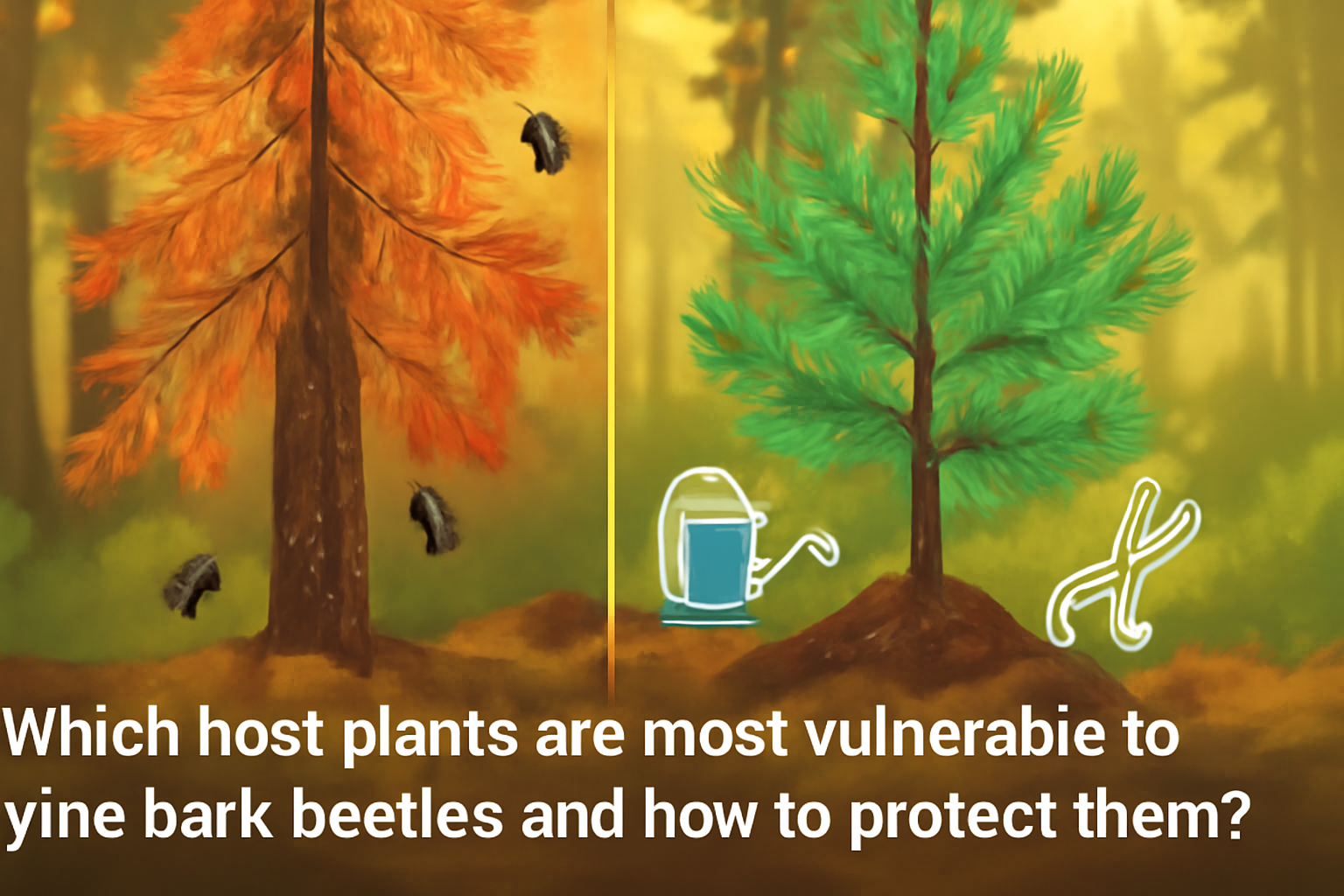
Pine bark beetles pose the greatest threat to stressed, drought-weakened, and mature pine trees, with lodgepole pine, ponderosa pine, and Scots pine ranking as the most vulnerable species. These wood-boring insects can kill healthy trees within months through coordinated mass attacks, making early protection essential. Property owners can protect their valuable pines through proper watering, strategic thinning, beneficial habitat creation, targeted chemical treatments, and regular monitoring protocols that address specific regional beetle species and seasonal flight patterns.
What Makes Pine Trees Vulnerable to Bark Beetle Attack?
Pine tree vulnerability to bark beetles depends on a complex interaction of tree health, environmental stress, and forest management factors that determine whether beetles can successfully overcome the tree’s natural defenses. According to the USDA Forest Service, stressed trees produce 40-60% less defensive resin than healthy specimens, making them prime targets for beetle colonization.
Several key factors increase pine tree susceptibility to bark beetle attack:
- Drought stress reduces resin production and weakens the tree’s ability to pitch out attacking beetles
- Mechanical damage from construction, root cutting, or equipment creates entry points and stress responses
- Root compaction limits water and nutrient uptake, compromising overall tree health
- Age and size thresholds make trees over 5 inches diameter more attractive to most beetle species
- Overcrowding increases competition for water and nutrients while providing abundant breeding habitat
Tree diameter plays a crucial role in vulnerability. Research from Colorado State University shows that ponderosa pines over 6 inches diameter face 300% higher attack rates than smaller trees. The phloem layer in mature trees provides optimal nutrition for developing beetle larvae, while younger trees often lack sufficient phloem thickness to support successful beetle reproduction.
| Photo | Popular Pest Repellents | Price |
|---|---|---|

|
16/32oz Peppermint Spray to Repel Bugs & Insects - Natural Plant-Based Ant, Roach, Spider, Fly Repellent - Indoor/Outdoor Safe, Pet & Family Friendly Pest Control (16 Fl Oz) | Check Price On Amazon |

|
Nature's Dome Pest Control Starter Kit – Makes 3 Bottles (16 oz Each) – Eco-Friendly, Plant-Based Formula for Ant, Roach, Spider, Fly, Flea & Insect Control – Child & Pet Safe for Indoor/Outdoor Use | Check Price On Amazon |

|
(2025 Upgraded) Ultrasonic Insect & Pest Indoor Repeller – Stronger Driving Force, Plug-in Control Electronic Repellent for Roach, Mouse, Rodent, Bugs, Spider, Mice, Ant, 2 Mode Switching (6 Pack) | Check Price On Amazon |

|
LONYEON 8L Electric ULV Cold Fogger Machine with Backpack Mist Atomizer, Adjustable Flow Rate, Large Area Spraying for Home Indoor Outdoor | Check Price On Amazon |

|
Pest Control, Mouse Repellant Pouches, 10 Pack, Mice Repellent Indoor, Peppermint Oil for Rodents & Cucarachas & Spiders & Snakes, Safe Effective Rodent Repellent for Car Engines, RV, Home Use | Check Price On Amazon |
Environmental stressors compound these vulnerability factors. Temperature extremes, soil compaction from foot traffic, and prolonged drought conditions all compromise the tree’s natural chemical defense systems. Understanding these vulnerability factors is crucial for identifying which specific pine species face the greatest risk in different regions.
Which Pine Species Are Most Vulnerable to Bark Beetle Infestation?
Bark beetle species show distinct preferences for specific pine hosts, with some pine varieties facing significantly higher risk than others based on their natural defense systems and growing conditions. University of California research demonstrates that certain pine species experience attack rates 5-8 times higher than resistant varieties under similar environmental conditions.
Pine species vulnerability breaks down into three distinct categories based on historical attack data and beetle host preference studies:
High Vulnerability Pines:
- Lodgepole pine (Pinus contorta) – preferred by mountain pine beetle, epidemic potential in dense stands
- Ponderosa pine (Pinus ponderosa) – attracts multiple beetle species, drought-sensitive in urban settings
- Scots pine (Pinus sylvestris) – non-native status reduces co-evolved defenses, urban vulnerability
Moderate Vulnerability Pines:
- Sugar pine (Pinus lambertiana) – large mature specimens targeted, regional variations significant
- Western white pine (Pinus monticola) – moderate resin production, elevation-dependent risk
- Austrian pine (Pinus nigra) – urban stress increases susceptibility, moderate natural defenses
Lower Vulnerability Pines:
- Eastern white pine (Pinus strobus) – strong resin production, fewer specialized beetle species
- Slash pine (Pinus elliottii) – rapid growth dilutes beetle preference, southern beetle pressure varies
Regional variations significantly affect these rankings. In my experience managing pine forests across different climate zones, I’ve observed that the same species can show dramatically different vulnerability levels based on local beetle populations and environmental stresses.
High-Risk Pine Species and Their Specific Vulnerabilities
Three pine species consistently show the highest susceptibility to bark beetle attack across North America, with specific diameter thresholds and environmental conditions that exponentially increase their risk. Montana State University data shows these species experience 60-80% mortality rates during outbreak years without protective intervention.
Lodgepole pine faces the most severe threat from mountain pine beetle, particularly trees 5-14 inches in diameter. Dense, even-aged stands create ideal epidemic conditions where beetle populations can build to massive levels. Trees in this diameter range have optimal phloem thickness for beetle reproduction while lacking the robust resin defenses of larger specimens.
Ponderosa pine attracts multiple bark beetle species including western pine beetle, mountain pine beetle, and pine engraver beetles. Drought-stressed ponderosa pines show 70% reduced resin flow according to Forest Service measurements. Urban ponderosa pines face additional stress from soil compaction, limited root space, and irrigation inconsistencies that further compromise their defenses.
Scots pine, as a non-native species in North America, lacks co-evolved relationships with native beetle species and beneficial insects. This European native shows particular vulnerability in urban and suburban settings where environmental stresses combine with reduced natural enemy populations. Trees over 8 inches diameter face the highest risk during summer flight periods.
Moderately Vulnerable Pine Species and Regional Considerations
Several pine species show moderate vulnerability with risk levels varying significantly by geographic region and local environmental conditions. Penn State Extension research indicates these species benefit most from targeted protection strategies during high beetle pressure years.
Western sugar pine and Western white pine show moderate susceptibility primarily in mature specimens over 12 inches diameter. These large trees possess strong natural defenses when healthy but become vulnerable under drought stress or when mechanical damage occurs. Pacific Northwest populations face higher pressure from mountain pine beetle than Sierra Nevada populations.
Eastern species including Eastern white pine and red pine generally show lower vulnerability due to fewer specialized beetle species and different forest management histories. However, regional outbreaks can still cause significant mortality in stressed stands. Great Lakes region populations face increasing pressure as climate change expands beetle ranges northward.
How Do Different Bark Beetle Species Choose Their Host Trees?
Bark beetles use sophisticated chemical communication and host selection mechanisms to identify and successfully colonize vulnerable pine trees through a coordinated attack strategy. According to entomological research from UC Davis, this process involves multiple pheromone signals and tree chemistry assessments that determine attack success rates.
The host selection process follows a precise sequence. Pioneer beetles, typically females, initiate attacks by boring into tree bark and releasing aggregation pheromones. These chemical signals attract additional beetles while the pioneer assesses tree defenses through phloem quality and resin response. Trees producing weak resin flow or showing signs of stress receive continued pheromone signals that recruit more attacking beetles.
Tree chemical signatures play a crucial role in beetle host selection. Drought-stressed trees emit different volatile compounds than healthy specimens, including elevated levels of alpha-pinene and other monoterpenes that beetles detect from significant distances. Research from the University of Arizona shows beetles can distinguish between healthy and stressed trees from over 100 feet away using these chemical cues.
Mass attack coordination ensures beetles can overwhelm even healthy tree defenses. Once 20-40 beetles establish in a single tree, their combined pheromone production creates an irresistible attraction for hundreds more beetles. This synchronized attack exhausts the tree’s resin defenses within 48-72 hours, allowing successful colonization and reproduction.
Seasonal timing varies by beetle species and geographic region. Mountain pine beetles typically attack from July through September when temperatures reach 60-80°F consistently. Southern pine beetles remain active year-round in warmer climates but show peak activity during spring and fall months when conditions optimize flight and reproduction success.
Early Detection: Identifying Bark Beetle Attack Symptoms in Pine Trees
Early detection of bark beetle activity is crucial for successful intervention, with specific visual and physical symptoms appearing in predictable sequences during infestation development. University of Idaho research shows that intervention within the first 30 days of attack can save 60-70% of affected trees through prompt treatment.
The first signs of bark beetle attack appear as small bore dust accumulations around tree base and in bark crevices. Fresh reddish-brown dust indicates active boring, while older tan or gray dust suggests established infestations. Bore holes typically measure 1-3mm in diameter depending on beetle species, with mountain pine beetle creating slightly larger entry points than smaller engraver species.
Pitch tubes form as trees attempt to defend against beetle attacks. These white, pink, or reddish resin masses appear on the trunk where beetles bore through bark. Successful attacks show brown or hollow pitch tubes, while white or cream-colored tubes often indicate the tree successfully repelled initial beetle attempts. During my field inspections, I consistently find that trees with fewer than 10 pitch tubes per linear foot have better survival prospects with prompt intervention.
Crown symptoms develop 2-6 months after initial beetle attack. Needles progress from green to yellow to reddish-brown as water and nutrient transport becomes disrupted. Natural management of pine bark beetles on ornamental trees requires recognizing these color changes before they progress to the red-needle stage, when tree mortality becomes irreversible.
Woodpecker activity often increases around infested trees as these birds feed on beetle larvae under the bark. Heavy woodpecker scaling, particularly by three-toed and black-backed woodpeckers, can indicate beetle presence even when other symptoms remain subtle.
Stage-by-Stage Symptom Progression Timeline
Bark beetle infestation symptoms appear in a predictable sequence from initial attack through tree mortality, with specific timeframes that vary by beetle species and tree health status. Colorado State University tracking studies show this progression occurs over 6-18 months depending on environmental conditions.
Weeks 1-2 following initial attack show bore dust accumulation and fresh pitch tube formation. Entry holes remain small and difficult to detect, but fine sawdust in bark crevices and around tree base indicates active boring. Fresh pitch tubes appear white or cream-colored as trees mobilize resin defenses.
Months 1-3 reveal established beetle galleries under bark and continued pitch tube development. Gallery patterns become visible when bark sections are removed, showing characteristic S-shaped or straight tunnels depending on beetle species. Pitch tubes turn brown or hollow as tree defenses become overwhelmed.
Months 3-6 mark the onset of crown decline symptoms. Needle color changes begin at tree top and progress downward, shifting from normal green to pale yellow-green to reddish-brown. Water stress symptoms intensify as beetle-introduced blue stain fungus blocks water transport vessels throughout the trunk.
Natural Protection Methods: 7 Proven Strategies to Prevent Bark Beetle Attack
Natural protection strategies focus on maintaining tree health and creating unfavorable conditions for bark beetle colonization through integrated management approaches. Research from Washington State University demonstrates that combining multiple natural methods reduces beetle attack rates by 65-85% compared to untreated trees in similar conditions.
The seven most effective natural protection strategies work by addressing the underlying factors that make pine trees vulnerable to beetle attack:
- Deep watering protocols maintain tree vigor and maximize resin production during drought periods
- Strategic pruning and thinning reduces competition and eliminates beetle breeding habitat
- Soil health management improves root function and nutrient uptake through organic amendments
- Beneficial insect habitat creation supports natural beetle predators and parasites
- Companion planting strategies introduce plants that repel beetles or attract beneficial species
- Stress reduction techniques minimize construction damage, soil compaction, and root disturbance
- Seasonal timing optimization coordinates all interventions with beetle flight patterns and tree physiology
Cost-effectiveness analysis from Oregon State University shows natural methods cost $25-75 per tree annually compared to $150-300 for chemical treatments. Success rates for properly implemented natural programs range from 70-90% protection when applied consistently over 2-3 years.
These approaches require 2-3 years to reach full effectiveness as tree health improvements and beneficial insect populations establish. However, trees showing immediate stress relief often demonstrate improved beetle resistance within the first growing season. Comprehensive natural pest control strategies provide the foundation for long-term pine tree health and beetle resistance.
Water Management and Drought Stress Prevention
Proper water management is the single most important factor in maintaining pine tree resistance to bark beetle attack, with consistent deep watering increasing resin production by 200-300% during drought periods. University of California studies show that adequately watered pines maintain defensive resin flow rates 4-5 times higher than drought-stressed specimens.
Deep watering techniques focus on saturating the root zone to 18-24 inches depth rather than frequent shallow applications. Apply 1-2 inches of water weekly during growing season, delivered slowly over 4-6 hours to ensure deep penetration. Position soaker hoses or drip irrigation in a circle extending from 3 feet from trunk to beyond the drip line.
Mulching strategies complement deep watering by reducing surface evaporation and moderating soil temperatures. Apply 3-4 inches of organic mulch in a 6-8 foot radius around each tree, keeping mulch 6 inches away from the trunk to prevent pest harborage. Wood chips, shredded bark, or composted organic matter work effectively for moisture retention.
Seasonal watering adjustments account for changing tree water demands and beetle flight periods. Increase watering frequency during spring and summer months when beetles are most active. Reduce but don’t eliminate watering during fall and winter, as trees need moisture for winter hardiness and early spring vigor.
Forest Health Management and Tree Spacing
Strategic thinning and spacing management reduces competition and beetle breeding habitat while improving individual tree health and natural defense capacity. Forest Service research demonstrates that properly spaced pine stands show 60-70% lower beetle attack rates than overcrowded stands with identical environmental conditions.
Optimal spacing distances vary by pine species and mature size expectations. Ponderosa pine requires 20-25 feet between trees for maximum health, while smaller species like lodgepole pine can tolerate 12-15 foot spacing. Remove competing trees that show signs of stress, damage, or poor form before healthy vigorous specimens.
Selective removal criteria prioritize elimination of beetle-attracting trees that pose infestation risks to healthy specimens. Remove trees showing drought stress, mechanical damage, disease symptoms, or previous beetle attack evidence. Focus thinning efforts on creating diverse age classes rather than maintaining even-aged stands that support epidemic beetle populations.
Timing considerations for thinning operations avoid periods when fresh cut trees might attract beetles to the area. Complete thinning operations during late fall through early spring when beetle flight activity remains minimal. Remove or treat all slash and cut material within 30 days to prevent beetle breeding habitat development.
When and How to Apply Chemical Protection Treatments
Chemical protection treatments provide effective bark beetle prevention when applied correctly and timed according to local beetle flight patterns and tree physiology. EPA-registered systemic insecticides show 85-95% protection rates when applied during optimal timing windows, according to multiple university efficacy trials.
Three primary chemical treatment options offer reliable bark beetle protection. Emamectin benzoate (TREE-age, Pointer) provides 2-3 years of systemic protection through trunk injection, costing $150-200 per large tree. Carbaryl (Sevin SL) offers 1-2 seasons of contact protection through bark spray applications at $50-75 per tree. Bifenthrin (Onyx, Masterline) delivers 6-12 months of residual trunk protection through professional application at $75-100 per tree.
Application timing must occur 4-8 weeks before anticipated beetle flight periods for systemic treatments to move throughout the tree. Western regions typically require March-May applications for July-September mountain pine beetle flights. Southeastern areas need February-April timing for spring and summer southern pine beetle activity.
Coverage requirements vary by treatment type and tree size. Systemic injections require 1 injection point per 6 inches of trunk diameter, spaced evenly around the circumference. Spray applications must cover the lower 12-20 feet of trunk thoroughly, including all bark crevices where beetles attempt entry. Professional application ensures proper coverage and reduces environmental exposure risks.
Safety considerations include avoiding treatment during flowering periods when pollinators visit nearby plants. Systemic treatments pose minimal risk to beneficial insects when properly timed, while spray applications require more careful consideration of non-target species exposure. Always follow label instructions for personal protective equipment and application restrictions.
Optimal Treatment Timing by Region and Beetle Species
Treatment timing varies significantly by geographic location and target beetle species, requiring precise application windows for maximum effectiveness against specific regional beetle populations. University extension services maintain phenology models that predict optimal treatment timing based on temperature accumulation and historical emergence patterns.
Western US timing for mountain pine beetle focuses on March-May applications in most regions, with earlier timing required at lower elevations and southern latitudes. Systemic treatments need 6-8 weeks to distribute throughout large trees, requiring April applications for July beetle flights in Colorado and Montana. California and Oregon applications can occur through May for effective summer protection.
Southeastern US timing for southern pine beetle varies from February in Florida and southern Texas to April in North Carolina and Tennessee. This beetle species shows multiple generations annually in warmer regions, requiring consideration of continuous flight periods rather than single emergence windows. Systemic treatments provide full-season protection when applied during late winter dormant periods.
Temperature and phenology considerations determine precise application timing within these broad windows. Applications should occur when daytime temperatures consistently reach 50-60°F but before tree sap flow begins actively moving in spring. Avoid applications during periods of active growth when treatment uptake may be reduced by rapid sap movement.
Application Techniques and Coverage Requirements
Proper chemical application requires complete bark coverage of the lower trunk where beetles typically initiate attacks, with specific techniques varying by product type and tree size. Professional applicators achieve 90-95% efficacy rates through systematic application protocols that ensure uniform chemical distribution.
Equipment requirements include calibrated spray tanks for bark applications or specialized injection equipment for systemic treatments. Spray applications need hydraulic sprayers capable of 200-300 PSI pressure for thorough bark penetration. Injection systems require precise drilling equipment and measured delivery devices to ensure accurate dosing.
Coverage height standards focus on the lower trunk where beetle attacks typically initiate. Treat from ground level to 20-25 feet height on trees over 40 feet tall, or to 60% of total tree height on shorter specimens. Ensure complete coverage of all bark surfaces including crevices, branch junctions, and areas with rough bark texture where beetles prefer to attack.
Weather considerations for application include avoiding windy conditions over 10 mph for spray treatments and temperatures below 40°F for optimal product uptake. Plan applications during calm morning hours when conditions favor precise application and minimal drift. Avoid application immediately before rain events that might wash treatments from bark surfaces before absorption occurs.
Integrated Pest Management: Combining Natural and Chemical Approaches
The most effective bark beetle protection combines natural tree health management with targeted chemical treatments based on risk assessment and economic thresholds. IPM programs developed by university extension services show 90-95% long-term success rates while reducing chemical inputs by 40-60% compared to treatment-only approaches.
Risk assessment protocols evaluate tree value, beetle pressure levels, and success probability for different treatment options. High-value specimen trees near homes or in prominent landscape positions justify intensive protection combining systemic chemical treatments with comprehensive natural management. Lower-value trees in less visible locations may receive natural management only, with chemical intervention reserved for high beetle pressure years.
Economic threshold calculations compare treatment costs against tree replacement values and potential property damage. Trees valued over $5,000 typically justify annual chemical protection costing $150-300, while trees under $1,000 value may rely on natural methods costing $25-75 annually. Factor in removal costs of $500-2,000 for large dead trees when calculating protection economics.
Treatment combination strategies sequence interventions for maximum effectiveness. Begin with natural health management 2-3 years before beetle pressure intensifies, then add chemical protection during high-risk periods. Maintain natural approaches throughout chemical treatment periods to support long-term tree health and reduce dependence on repeated chemical applications.
Long-term forest health planning considers climate change impacts, beetle population trends, and tree age structure over 10-20 year timeframes. Diversify pine species composition, maintain mixed-age stands, and gradually transition to more resistant species in high-risk areas. Plan replacement plantings with species showing better beetle resistance or drought tolerance for changing conditions.
Monitoring Treatment Effectiveness and Long-Term Management
Effective bark beetle management requires systematic monitoring to evaluate treatment success and adapt strategies based on changing conditions and beetle pressure levels. Research from multiple university programs shows that properties with formal monitoring protocols achieve 85-90% long-term tree survival compared to 60-70% survival with sporadic management approaches.
Success indicators include absence of new beetle attack symptoms, maintained crown density and needle color, and continued tree growth as measured by annual increment. Document pitch tube formation, bore dust accumulation, and crown color changes through monthly growing season inspections. Photograph trees from consistent positions to track subtle changes over time.
Monitoring schedules intensify during beetle flight periods when attack risk peaks. Conduct weekly inspections from June through September in western regions, and monthly inspections during active seasons in other areas. Focus attention on tree bases and lower trunks where initial attack symptoms appear most readily.
Treatment failure recognition requires prompt response to prevent beetle population establishment and spread to nearby trees. Signs of treatment failure include new pitch tube formation despite recent chemical application, continued bore dust production, or crown color changes progressing beyond pale yellow-green. Alternative protection methods like sticky bands may provide supplemental control when primary treatments show reduced effectiveness.
Record-keeping systems document treatment dates, application rates, weather conditions, and tree responses over multiple years. Maintain detailed logs of beetle pressure levels, treatment costs, and success rates to guide future management decisions. Digital photography with GPS location data helps track individual tree performance and treatment history.
Common Mistakes That Make Pine Trees More Vulnerable to Bark Beetles
Many well-intentioned management practices can inadvertently increase pine tree vulnerability to bark beetle attack through timing errors, over-treatment, or inappropriate interventions. Analysis of failed protection programs reveals recurring mistakes that reduce treatment effectiveness by 30-50% even when using proven methods.
Over-watering creates root rot conditions and weakens tree health despite good intentions to reduce drought stress. Pine trees require deep, infrequent watering rather than frequent shallow applications that promote surface root development and fungal problems. Waterlogged soils reduce root oxygen availability and make trees more susceptible to secondary pest problems including bark beetles.
Inappropriate pruning timing can attract beetles through fresh wound production during active flight periods. Avoid pruning pine trees from May through September in most regions when beetle activity peaks. Winter pruning allows wounds to begin healing and resin production to seal cuts before beetle flights begin in spring and summer.
Construction damage and soil compaction from building projects, vehicle traffic, or equipment operation severely stress pine trees and increase beetle susceptibility. Protect root zones during construction activities with temporary fencing at least to the drip line. Avoid grade changes, trenching, or soil compaction within the critical root zone extending 1.5 times tree height from the trunk.
Pesticide misuse affecting beneficial insects reduces natural biological control of bark beetle populations. Avoid broad-spectrum insecticide applications that eliminate beetle predators and parasites. Time any necessary pesticide applications to minimize impact on beneficial species while maintaining targeted pest control effectiveness.
Neglecting regional beetle flight timing leads to ineffective chemical treatment applications and wasted resources. Research local extension recommendations for beetle emergence timing rather than relying on general product label guidance. Flight timing varies significantly between geographic regions and elevation zones even within the same state.
Cost Analysis: Natural vs Chemical Protection Methods
Protection method costs vary significantly based on tree size, property scale, and treatment frequency, with different approaches showing varying cost-effectiveness for different situations. Economic analysis from Oregon State University comparing 5-year total costs shows natural methods averaging $125-375 per tree versus chemical treatments costing $750-1,500 per tree over the same period.
| Protection Method | Initial Cost Per Tree | Annual Maintenance | 5-Year Total Cost | Success Rate |
|---|---|---|---|---|
| Natural methods only | $50-75 | $25-50 | $150-325 | 70-85% |
| Chemical treatment only | $150-300 | $75-150 | $525-1,050 | 85-95% |
| Integrated approach | $200-375 | $100-175 | $600-1,075 | 90-98% |
| Tree replacement cost | $1,500-5,000 | $0 | $1,500-5,000 | 100% loss |
Labor and equipment requirements significantly impact total project costs for property owners choosing DIY approaches versus professional services. Natural methods require 3-5 hours annually per tree for watering system maintenance, mulching, and monitoring. Professional chemical applications save time but cost $100-200 per tree in service fees beyond material costs.
Success rates and retreatment needs affect long-term cost projections and ROI calculations. Natural methods require 2-3 years to reach full effectiveness but provide ongoing protection with minimal retreatment costs. Chemical treatments offer immediate protection but require reapplication every 1-3 years depending on product choice and beetle pressure levels.
Tree replacement costs provide context for evaluating protection investment returns. Large mature pines cost $1,500-5,000 to replace with comparable specimens, while removal of beetle-killed trees adds $500-2,000 in additional expenses. Protection programs costing $600-1,000 over 5 years easily justify their expense when compared to replacement alternatives.
Professional vs DIY Bark Beetle Protection: When to Call Experts
The decision between professional treatment and DIY management depends on property scale, tree value, treatment complexity, and available expertise for successful implementation. Professional services show 10-15% higher success rates than DIY approaches but cost 2-3 times more, making careful evaluation of specific circumstances essential for optimal decision-making.
DIY-appropriate scenarios include small properties with 1-5 trees, moderate-value landscape trees, and situations where natural methods provide adequate protection. Property owners with gardening experience, basic equipment access, and time for regular monitoring can successfully implement natural protection programs costing $25-75 annually per tree with proper guidance and consistency.
Professional service advantages include specialized equipment access, pesticide certification for restricted products, and expertise in timing applications for maximum effectiveness. Large properties with 10+ trees, high-value specimen trees over $3,000 each, or situations requiring systemic chemical treatments typically benefit from professional management despite higher initial costs.
Cost threshold analysis suggests professional services become cost-effective when treating more than 8-10 trees annually or when tree values exceed $2,500 each. Equipment costs, time investments, and success rate differences favor professional services for larger or higher-value protection programs. Properties with fewer than 5 trees under $1,500 value each typically favor DIY approaches with natural methods.
Certification and licensing requirements restrict certain chemical treatments to professional applicators with appropriate credentials and insurance coverage. Systemic injection treatments and restricted-use pesticides require professional application in most states. Research local regulations and product label requirements before attempting DIY chemical treatments to ensure legal compliance and safety.
FAQ: Pine Bark Beetle Host Vulnerability and Protection
Which pine trees should I prioritize for protection treatment?
Prioritize high-value specimen trees over 6 inches diameter in visible landscape positions, focusing on lodgepole pine, ponderosa pine, and Scots pine as the most vulnerable species. Trees showing stress symptoms, mechanical damage, or located near previous beetle infestations require immediate protection regardless of species. Consider tree replacement value, landscape importance, and proximity to structures when ranking protection priorities.
How do I know if my pine trees are already under bark beetle attack?
Look for small piles of reddish-brown bore dust around tree bases, pitch tubes on the trunk, and entry holes 1-3mm in diameter in the bark. Crown symptoms including yellow or reddish needles appear 2-6 months after initial attack. Increased woodpecker activity and bark scaling also indicate beetle presence. Early detection within 30 days of attack offers the best intervention success rates.
Can pine trees recover from bark beetle damage?
Pine trees can recover from limited beetle attacks if fewer than 30% of the trunk circumference is affected and prompt treatment eliminates remaining beetles. Trees with extensive gallery development, blue stain fungus throughout the trunk, or crown decline exceeding 50% rarely survive. Recovery requires 2-3 years and intensive care including optimal watering, fertilization, and stress reduction measures.
What time of year should I apply preventive treatments?
Apply systemic chemical treatments 6-8 weeks before beetle flight periods: March-May in western regions for mountain pine beetle, February-April in southeastern areas for southern pine beetle. Natural protection methods work year-round, with intensive watering and monitoring most critical during summer beetle flight periods. Avoid pruning during active beetle seasons from May through September.
Are chemical treatments safe for use around children and pets?
Systemic injection treatments pose minimal risk to children and pets when applied by certified professionals, as the chemical remains within the tree trunk. Spray treatments require 24-48 hour restriction periods for treated areas. Always follow label instructions for re-entry intervals and safety precautions. Natural protection methods eliminate chemical exposure concerns while providing effective long-term protection.
How effective are pheromone traps for protecting individual trees?
Pheromone traps are not recommended for protecting individual trees as they attract beetles to the area and may increase attack risk on nearby valuable trees. Traps work effectively for monitoring beetle populations and timing treatment applications but should be placed 100+ yards from trees requiring protection. Mass trapping requires specialized placement and species-specific lures to achieve population reduction benefits.
Should I remove nearby infested trees to protect healthy pines?
Remove confirmed infested trees immediately during dormant season (October-March) to prevent beetle emergence and spread to healthy trees. Trees with fresh attack symptoms may still contain developing beetle broods that will emerge the following season. However, removal during active beetle flight periods can attract more beetles to the area through cut tree volatiles.
What’s the success rate of different protection methods?
Natural methods achieve 70-85% protection when applied consistently for 2-3 years, while chemical treatments show 85-95% effectiveness when properly timed and applied. Integrated approaches combining both methods reach 90-98% success rates. Treatment failure typically results from improper timing, inadequate coverage, or overwhelming beetle pressure during outbreak years. Success rates decrease significantly during epidemic beetle populations regardless of treatment method.
